 For Steven, a Tower Urology patient for decades, life had gradually become dictated by one thing: finding the nearest bathroom. He had tried multiple medications, but nothing had helped. His card games were interrupted. His golf rounds required constant breaks. Even a vacation in Maui ended with an emergency room visit and a flight home with a catheter.
His urologist, Dr. Desai, recommended that he undergo a robotic simple prostatectomy, but Steven resisted until the day he physically couldn’t urinate at all. Now, years after finally agreeing to surgery, he hugs his surgeon at every appointment.
He also tells every friend he has dealing with urinary issues: “Don’t wait like I did.”
The retirement of one doctor led Steven to a new beginning with Dr. Desai
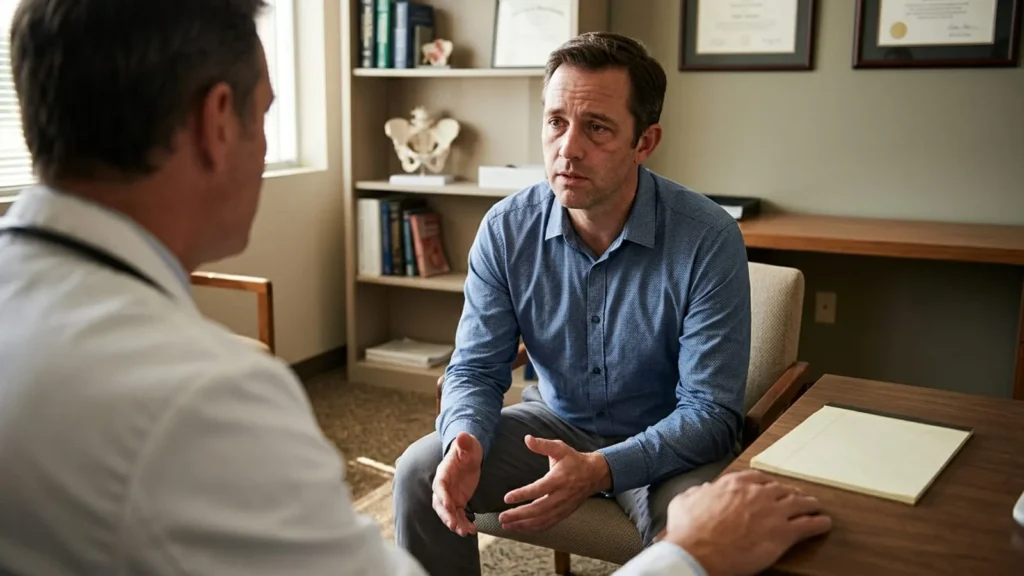
“I had been with Tower Urology for decades, and my usual doctor retired,” Steven explains. “And it was recommended that I should see Dr. Desai, which I did.”
Starting afresh with a new urologist after years of continuity and familiarity isn’t easy, especially when you’re dealing with ongoing issues as Steven was. He had an enlarged prostate and elevated prostate-specific antigen (PSA), a protein produced by the prostate gland. PSA levels are indicators used to screen for prostate cancer, infections, or prostate enlargement (BPH).
But the transition to Dr. Desai turned out to be one of the most important turning points in Steven’s life.
“For several years, I was getting an elevated PSA,” Steven continues. Like many men, he compared notes with friends. “I play cards once a week with a group of similarly aged guys, and we talk about our health sometimes. So I could see that waking up once or twice a night to urinate (nocturia) was probably due to my prostate, but was nothing out of the ordinary.”
What seemed normal among his peer group, and accepted as inevitable aging, was actually a treatable condition, although Steven wasn’t yet prepared to consider surgical options.
Dr. Desai recommended a prostatectomy, but Steven wasn’t ready
“Dr. Desai tried to convince me that I should have a prostatectomy,” Steven admits. “But I was reluctant to consider surgery. I wanted to just continue with the medication, even though it wasn’t working.”
Hesitancy about a prostate surgical procedure can be common. Many men try one medication after another, hoping to avoid more invasive treatments. There are a variety of drug therapies available; however, these medications for enlarged prostate and obstructive urinary symptoms work for some individuals but not others. And when they don’t work, symptoms can continue to gradually deteriorate, so that patients may not realize how much it’s affecting their quality of life.
“Looking back, my life was becoming increasingly affected by my frequent urination,” Steven reflects. “And even though Dr. Desai tried to convince me that my best option was surgery, I fought it.”
Looking back, he understands Dr. Desai was right. But at that time, the idea of a procedure to remove the entire prostate felt drastic, risky, and final. So, he continued taking medications that weren’t really helping, and his constant need for bathroom access began to take over his life.
What happens when an enlarged prostate becomes a medical emergency in Maui
“I was on vacation in Maui, and things became so bad that I had to go to the hospital and have a catheter inserted,” Steven recalls. “I had to cut my trip short.”
Urinary retention — the inability to empty your bladder — is more than uncomfortable. It’s agonizing and dangerous. The pressure builds until the pain becomes unbearable. In Steven’s case, what began as a vacation in paradise turned into an unwelcome emergency room visit, a catheter insertion, and an abrupt end to his trip.
“I flew home the next day, and Dr. Desai saw me first thing the next Monday morning,” Steven says. Even on short notice, Dr. Desai made himself available, understanding the urgency of the situation.
“Dr. Desai said, ‘Okay, Steven, it’s time for the surgery,'” Steven remembers. “I was feeling the need to urinate every hour, but I just couldn’t physically go.”
The contradiction of a constant urge with the inability to empty the bladder is one of the most frustrating aspects of severe obstruction. The prostate gland, enlarged to the point of blocking the urethra, creates a situation where medication simply can’t provide relief.
Dr. Desai honestly explained robotic simple prostatectomy treatment options for an enlarged prostate
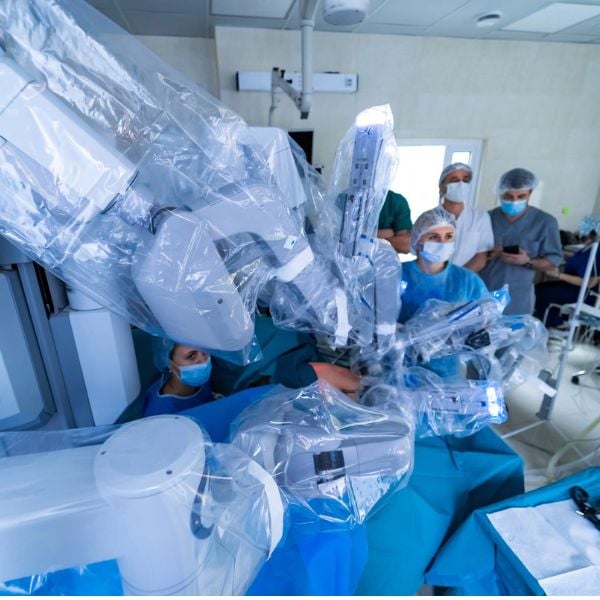
“Dr. Desai discussed the procedure with me and gave me choices, but said the robotic simple prostatectomy was likely the best choice at that stage given the size of my prostate and symptoms,” Steven explains. “I trusted his advice and decided to have the procedure.”
Unlike radical prostatectomy performed for prostate cancer, simple prostatectomy removes only the obstructing portion of the prostate tissue while leaving the outer capsule intact. Using robotic surgery with robotic arms and small incisions instead of open surgery means less blood loss, shorter hospital stays, and faster recovery time compared to traditional open simple prostatectomy approaches. It also retains sexual function and urinary continence.
The procedure still requires temporary use of a urinary catheter during initial healing, and that first week tested Steven’s resolve.
Why the first week after prostate surgery almost made Steven regret his decision
“I was able to go home not long after the surgery, but the first days after the procedure were difficult,” Steven honestly admits. “I was catheterized, and I remember thinking, ‘Darn it, I shouldn’t have had this.’”
This immediate post-operative period, when you’re healing from small cuts and dealing with a catheter, can feel worse than the original problem. Having moments of doubt, as Steven had at that stage, isn’t uncommon. The surgical tools have done their work, but you can’t yet feel the benefits. All you feel is discomfort and inconvenience.
“But after one week, when I went back, and the catheter was removed, my life was changed,” Steven says, his voice filled with emotion. “And it was all because of Dr. Desai.”
After removal of the catheter, Steven regained normal urinary function, and with it the freedom to go about his life without worrying about where the nearest bathroom was.
What complete urinary freedom feels like after years of constant bathroom trips
“Every time I see Dr. Desai now, I give him a hug,” Steven says warmly. It’s the kind of spontaneous gesture and honest admission that reveals how deeply the surgery affected his life.
“I used to urinate several times during a round of golf; now I don’t need to go at all,” he explains. “I don’t wake up during the night anymore, and even when I get up in the morning, I don’t run to the restroom,” Steven continues.
Unbroken sleep, mornings without urgency, rounds of leisurely, uninterrupted golf: these simple things, taken for granted by most people, become precious when you’ve lost them.
Why Dr. Desai’s personal approach made all the difference when Steven was apprehensive about prostate surgery
“Dr. Desai is a gentleman. I go to appointments with a smile,” Steven says. “He follows up with me. He doesn’t send results; he calls and tells me and shares with me everything I need to know about my situation.”
In healthcare systems increasingly dominated by patient portals and automated communications, having a surgeon personally call with PSA level results and follow-up information is becoming the exception — it creates a different kind of relationship and improves patient confidence.
“The procedure changed my life,” Steven emphasizes simply. “My friends encouraged me to stay on the medicine, but Dr. Desai convinced me to have the surgery, and the outcome has been just wonderful.”
Dr. Desai’s persistence in recommending surgical intervention while compassionately but honestly detailing the pros and cons of every option came from years of professional experience and medical knowledge.
What Steven tells his golf buddies and card partners about waiting for urinary surgery
“I’ve been telling my friends and acquaintances with urinary issues, don’t wait, have the surgery now. It’s life-changing,” Steven says passionately. “My golf friends will always have to stop mid-game for a bathroom break, and those I play cards with still mention waking up multiple times a night, and I urge them, ‘Have this procedure.'”
He’s become an informal advocate, sharing his experience with anyone struggling with similar symptoms.
“It hasn’t affected my sexual function, which is what most guys want to know,” Steven addresses directly. “Dr. Desai explained the risks, and they were low enough so that I was comfortable going ahead with the procedure. But it has not been impacted at all.”
This honest discussion of erectile function, one of the primary fears that men have about any prostate surgery, alongside urinary function, helped Steven make an informed decision. (this is more related to radical prostatectomy)
How frequent appointments became annual visits after successful robotic surgery results
“I used to have to see him every three months, but now it’s once a year,” Steven notes. “I trust him for my callbacks, but they’ve been extended to annual checks, and I’ve been very comfortable and happy with the results.”
After years of frequent urination adversely affecting his daily life, flying home from a vacation in Maui in pain, and finally a life-changing prostatectomy, Steven now lives without the constant awareness of his bladder that once dominated every decision. He plays golf uninterrupted. He sleeps through the night. He travels without anxiety.
And every time he sees Dr. Desai, he gives him a hug.
Why choose Tower Urology for enlarged prostate treatment?
At Tower Urology, specialists such as Dr. Desai combine advanced robotic surgery techniques with patient-centered care that transforms lives. Whether you’re struggling with medications that aren’t working, experiencing frequent urination that disrupts your life, or dealing with elevated PSA levels requiring monitoring, comprehensive evaluation and treatment options are available.
We invite you to establish a care plan with Tower Urology. Please make an appointment online or call us at (310) 854-9898.
Tower Urology is a proud affiliate of Cedars-Sinai Medical Center, ranked #1 in California and #2 nationwide by U.S. News & World Report. Our years of experience and access to world-class facilities ensure exceptional urological care.
Tower Urology is conveniently located for patients throughout Southern California and Los Angeles, including Beverly Hills, Santa Monica, West Los Angeles, West Hollywood, Culver City, Hollywood, Venice, Marina del Rey, Burbank, Glendale, and Downtown Los Angeles.
Frequently Asked Questions About Robotic Prostatectomy for Enlarged Prostate

Fear about prostate surgery side effects, such as erectile dysfunction, urinary incontinence, and recovery time, can keep some men on ineffective medications. These concerns can make surgical options feel drastic, even when quality of life deteriorates. robotic-assisted laparoscopic techniques and honest discussions about sexual function can help patients make informed decisions about treatment options.
You’ll have a urinary catheter for about one week while the small incisions and internal tissues heal. This period can be uncomfortable, but once the catheter is removed at your follow-up appointment, most patients experience immediate improvement. Shorter hospital stays and faster recovery time with laparoscopic techniques compared to open surgery mean quicker return to normal activities.
Robotic arms provide enhanced precision to only remove the obstructive tissue of the prostate, leaving the capsule intact. This protects the nerves responsible for sexual function and the urinary sphincter, which controls urinary function. The small cuts and 3D visualization mean less trauma than the large incision in open radical prostatectomy. Dr. Desai provided honest probability statistics so that Steven understood the potential outcomes. Fortunately, almost all patients like Steven maintain unchanged sexual function after robotic-assisted laparoscopic simple/subtotal prostatectomy.
Sources:
Benign Prostatic Hyperplasia
https://www.ncbi.nlm.nih.gov/books/NBK558920/
Current Treatment for Benign Prostatic Hyperplasia
https://pubmed.ncbi.nlm.nih.gov/33593479/