What is the bladder?
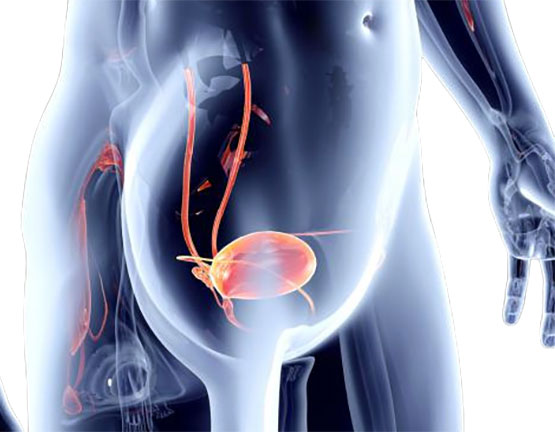
The bladder is a balloon-like organ located in the lower abdomen.
It constantly inflates and shrinks to store urine. It connects to the rest of the urinary system via thin tubes: the ureters (which bring filtered urine from the kidneys) and the urethra (which carries the urine on its way out).
What is bladder cancer?
Bladder cancer is a disease where malignant (cancerous) cells develop in the bladder’s tissues and then start growing uncontrollably.
According to the American Cancer Society, the American healthcare system will see approximately 84,000 new cases of bladder cancer every year. These newly diagnosed patients will need reliable information to make informed treatment decisions.
A patient’s first visit to a cancer center is often marked by a barrage of difficult questions, covering everything from technicalities about the urinary system to experimental treatment options and their success rates. By learning the basics first, you and your loved ones can quickly build an effective partnership with the cancer care team and then focus on the significant decisions to come.
What are bladder cancer’s symptoms?
Typically, bladder cancer is diagnosed after noticing one of the following red flags:
Blood in the urine (hematuria) – the most common first symptom, occurring in roughly 80% of bladder cancer cases. The blood may be visible to the naked eye (gross hematuria) or detectable only under a microscope (microscopic hematuria). Importantly, the bleeding is often painless and may come and go, which can give patients a false sense of reassurance.
A painful or burning feeling when urinating
Chronic pain in the lower back
Pelvic pain or pressure, which may develop as a tumor grows within or around the bladder wall
Difficulty urinating or an inability to urinate, which can occur when a tumor partially or fully obstructs the flow of urine
These symptoms are not exclusive to bladder cancer, and they may indicate anything from a urinary tract infection (UTI) to kidney stones or prostate cancer. That said, any episode of blood in the urine – even a single occurrence – should always be evaluated by a urologist promptly. Early detection makes a meaningful difference in outcomes, and it is never worth waiting to see if the symptom resolves on its own.
To narrow down the possibilities, doctors can try to find the mass via a CT scan or an MRI, or look inside the bladder by inserting a camera through the urethra (a procedure known as a cystoscopy). During this procedure, they will also try to perform a biopsy (removing a small piece of suspicious tissue, which a pathologist will then examine).
How is bladder cancer diagnosed?
If your symptoms raise concern for bladder cancer, your urologist will walk you through a series of tests designed to confirm – or rule out – a diagnosis. The process is thorough, but each step gives your care team the precision they need to build the most effective treatment plan for you.
Here’s what a comprehensive diagnostic workup typically looks like:
Urine tests. Your doctor will start with a urinalysis to check for blood and abnormal cells, along with urine cytology – a lab analysis that looks for cancerous cells shed into your urine. These are simple, non-invasive first steps.
Cystoscopy. This is the gold standard for diagnosing bladder cancer. A thin, flexible scope is gently passed through the urethra into the bladder, allowing your urologist to directly visualize the bladder lining and identify any suspicious growths or lesions.
TURBT (Transurethral Resection of Bladder Tumor). If a tumor is spotted during cystoscopy, your urologist will often perform a TURBT – a minimally invasive procedure that removes the tumor and sends it to a pathologist for biopsy. This step both treats and stages the cancer simultaneously.
CT urogram or MRI. Advanced imaging gives your team a detailed look at the entire urinary tract, helping identify whether cancer has spread beyond the bladder wall to nearby lymph nodes or other organs.
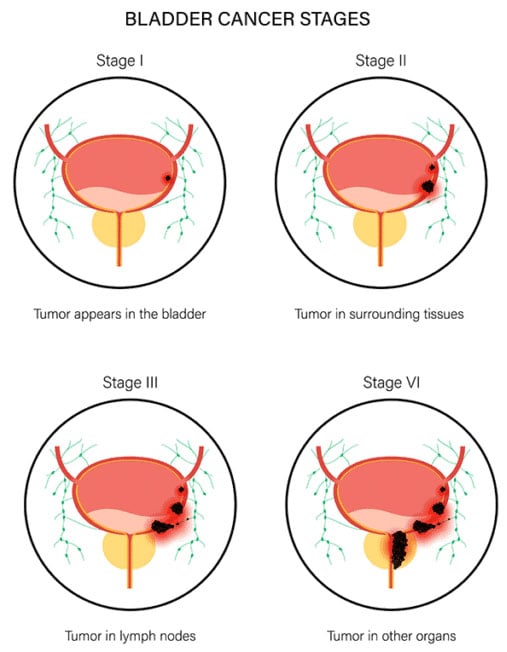
Once all results are in, your urologist will determine the stage of your bladder cancer. Broadly, this falls into three categories: non-muscle-invasive bladder cancer (NMIBC), muscle-invasive bladder cancer (MIBC), or metastatic disease. Staging is critical – it directly shapes every treatment decision that follows.
At Tower Urology, our nationally recognized team uses state-of-the-art diagnostic tools and a team-based approach to ensure nothing is missed, giving you clarity and confidence from the very first appointment.
What are the different types of bladder cancer?
Bladder cancer specialists usually describe the disease using three different criteria:
Where it starts (cancer type)
How far it has spread (cancer stage)
Most cases of bladder cancer originate in the cells lining the bladder. Depending on the specific cell involved, the tumor may be classified as:
Transitional cell carcinoma
Also known as urothelial cells, transitional cells are flexible and can change their shape, allowing the bladder to expand and contract. Transitional cell carcinomas account for 90% of all new cases of bladder tumors, and they are considered the fourth most common cancer among American men.
Since it affects the inside of the bladder, this type of cancer will also cause symptoms earlier on. Approximately 70% of patients with transitional cell carcinoma will have their tumors caught early before they have invaded the surrounding muscle or organs.
Unfortunately, the outlook is not nearly as optimistic if left to its own devices. Once it becomes a “muscle-invasive bladder cancer,” the two-year survival rate drops to just 15% – meaning up to 85% of all people who develop a muscle-invasive case will die from the disease within two years.
Squamous cell carcinoma
Squamous cells are flat, rough cells that resemble fish scales. They are not normal in the bladder, but they can grow after repeated UTIs or from the chronic irritation of having a bladder catheter for a long time.
Adenocarcinoma
This type of cancer originates in secretory cells, which are small glands that produce mucus to help the bladder cope with long-term irritation. Like its squamous cell counterpart, it is associated with frequent infections or prolonged catheter use. However, adenocarcinoma is rare, accounting for 0.5-2% of all bladder tumors.
Any of these types of cancer also has several subtypes or specific mutations that can make it more or less aggressive. Noninvasive or “low-grade” cancer cells are unlikely to grow back after removal, whereas a high-grade lesion may reappear a few years later and require more aggressive treatment.
Bladder cancer staging: how far has it spread?
Once a tumor is identified, your care team will determine its stage – essentially, how deeply it has grown into the bladder wall and whether it has spread beyond it. Staging drives every treatment decision that follows, so understanding it matters.
- Non-muscle-invasive bladder cancer (NMIBC): The tumor is confined to the inner lining of the bladder and has not grown into the surrounding muscle. This is the earliest and most treatable stage, and it accounts for roughly 70% of new diagnoses. The trade-off is a meaningful risk of recurrence, which is why close long-term monitoring is essential.
- Muscle-invasive bladder cancer (MIBC): The cancer has grown through the bladder’s inner lining and into – or through – the muscular wall. It has not yet spread to distant organs, but it carries a far more serious prognosis and typically requires more aggressive treatment such as radical cystectomy or a combination of chemotherapy and radiation.
- Metastatic bladder cancer: The cancer has spread beyond the bladder to nearby lymph nodes, distant organs such as the lungs, liver, or bones, or both. Treatment at this stage focuses on systemic therapies – including chemotherapy, immunotherapy, and targeted agents – aimed at controlling the disease and preserving quality of life for as long as possible.
Knowing your stage and cancer type gives your urologist the precision needed to build a personalized care plan – one designed around your specific tumor biology, your overall health, and your goals.
What causes bladder cancer?
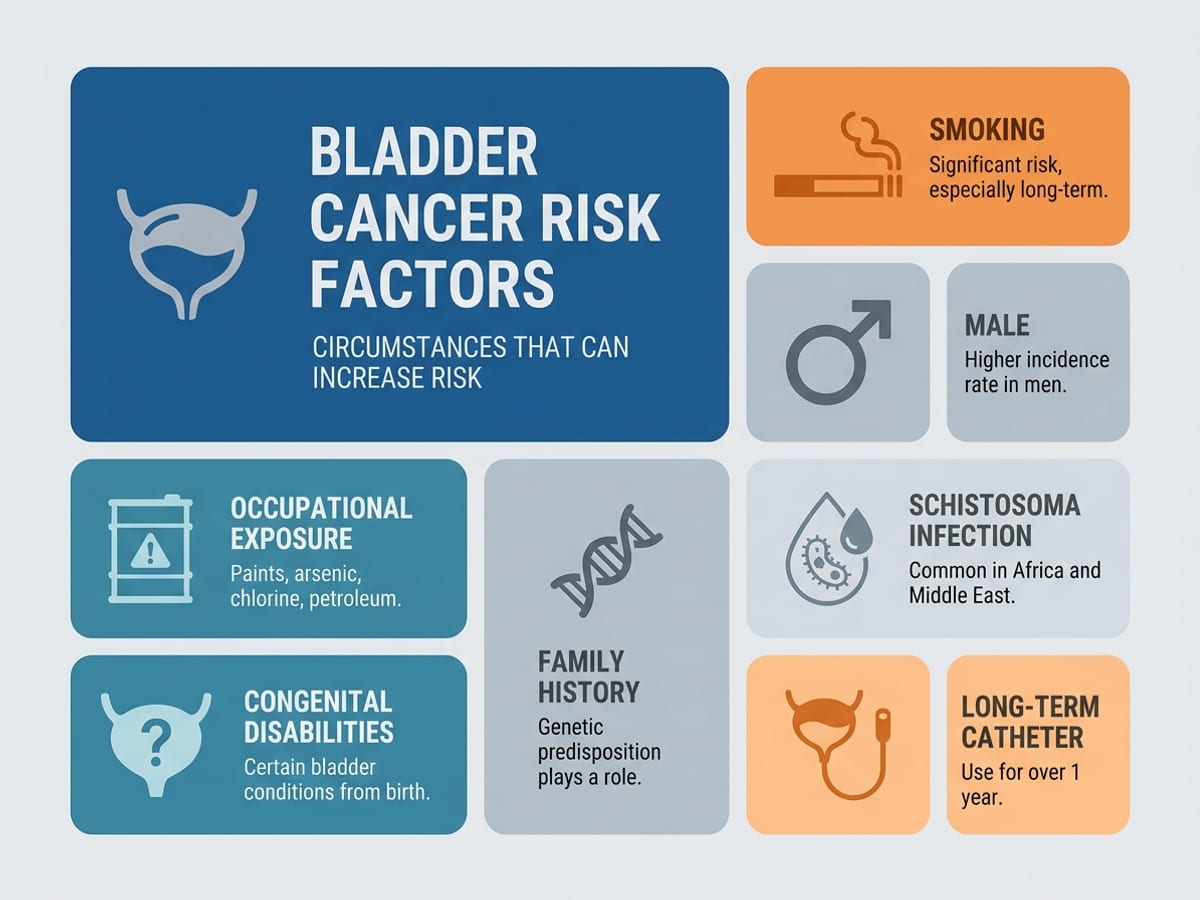
For most cases of transitional cell carcinoma, it is not possible to pinpoint a direct cause of the disease. However, some circumstances can increase a person’s risk of developing it. These risk factors include:
- Being male
- A family history of bladder cancer
- Occupational exposure to paints, arsenic, chlorine, and petroleum
- Smoking
- Using urinary catheters for a long time (over 1 year)
- Some bladder congenital disabilities
- Infections with Schistosoma haematobium, a type of parasite common in Africa and the Middle East
Can bladder cancer be prevented?
There’s no guaranteed way to prevent bladder cancer entirely, but there are meaningful steps you can take to significantly lower your risk. Understanding what causes bladder cancer – as we covered above – makes it easier to see where lifestyle changes can have the biggest impact.
Without question, quitting smoking is the single most powerful thing you can do. Smokers are two to three times more likely to develop bladder cancer than non-smokers, and the harmful chemicals in tobacco are filtered directly through the kidneys and into the bladder, where they sit in contact with the bladder lining for extended periods. The good news? Your risk begins to drop as soon as you quit, and it continues to fall the longer you stay smoke-free.
Beyond smoking cessation, here are other practical risk-reduction strategies worth adopting:
- Stay well hydrated. Drinking plenty of water throughout the day helps dilute potential carcinogens in your urine and flushes them out of the bladder more quickly.
- Limit occupational chemical exposure. If your work involves aromatic amines, industrial dyes, or other known bladder carcinogens, follow all recommended safety protocols and use proper protective equipment.
- Eat a balanced, plant-rich diet. Some research suggests that fruits and vegetables high in antioxidants may offer a modest protective effect against bladder cancer.
- Get regular check-ups. If you have known risk factors – a long smoking history, family history of bladder cancer, or significant chemical exposure – talk to a urologist about personalized monitoring.
Proactive, personalized care is always the best approach. The compassionate, board-certified team at Tower Urology is here to help you understand your individual risk and take the right steps to protect your urological health.
Bladder cancer treatment: How to get started?

When caught early, a contained bladder tumor can be removed entirely without damaging the surrounding organs. However, for more advanced cases, cancer specialists generally recommend a combination of oncology treatments and surgery.
After the initial cancer diagnosis, the treatment plan will depend mainly on how advanced the disease is. It can involve cancer surgery alone or combined with chemotherapy, radiation therapy, or immunotherapy.
For patients with a superficial disease and a low-grade lesion, a simple surgery known as transurethral resection or TUR may be enough. This involves entering the bladder with a cystoscope and either scraping or burning the tumor away.
If the cancer has invaded the wall of the bladder and not just the inner lining, doctors may resort to more complex surgeries.
Partial cystectomies
This surgery involves removing part of the bladder. It is typically used when a TUR is insufficient, but the tumor is confined to one side of the bladder.
After removing the affected part, surgeons will then stitch the bladder back together. The result will generally be a smaller but still functional bladder. After a partial cystectomy, patients can still urinate normally, although they may need to do it more often.
Complete and radical cystectomies
Complete and radical cystectomies involve removing the entire bladder (complete procedure) or the full bladder, surrounding lymph nodes, and occasionally, the prostate, ovaries, and uterus.
Creating an alternative path for urine to flow without a bladder is necessary. This is a type of reconstructive surgery known as a urinary diversion. There are many ways to do this:
- An old-school ileal conduit, where a new bladder is created from the small intestine and connected to an external bag
- A continent cutaneous or “Indian pouch” creates a more flexible bladder that can be emptied using a thin tube 4 times daily.
- An orthotopic bladder or neobladder is created using small intestine tissue and connects it to the urethra, allowing the patient to urinate normally.
Nowadays, cutting-edge techniques such as robotic surgery and bioprosthetics can produce more precise results. However, the more the cancer has spread, the more complex and riskier it will be to perform a high-tech neobladder procedure.
Localized oncology treatments
After a TUR or partial cystectomy, medical oncologists can deliver anti-cancer treatments directly inside the bladder. In this way, they can “kill” any cancer cells that may have been left behind after surgery.
They are usually delivered using a thin tube and essentially “flush” the inside of the bladder with either chemotherapy or immunotherapy drugs. As they remain inside the bladder, they generally have milder side effects than traditional treatments.
Systemic anti-cancer treatments
Systemic, or “whole body” treatments include:
- Traditional chemotherapy, given via IV, to stop the growth of cancer cells
- Radiation oncology therapy uses external beam rays to kill cancer cells
- Targeted immunotherapy drugs help a patient’s immune system identify and target specific cancerous cells.
Advanced or recurrent bladder cancer is considered a potentially lethal disease. It typically requires consultation with various specialists, including hematology, medical oncology, and radiation oncology. In addition, patients recovering from a complete or radical cystectomy can also benefit from enlisting other support services, such as counselors or occupational therapists.
Bladder cancer outlook and survival rates
One of the first questions patients ask after a bladder cancer diagnosis is, “What are my chances?” It’s a completely understandable question, and the honest answer is that outlook varies significantly depending on how early the cancer is caught and how aggressively it’s treated.
For non-muscle-invasive bladder cancer (NMIBC) – the most common form, where the tumor is confined to the inner lining of the bladder – the five-year survival rate is generally very high, often exceeding 90%. That’s genuinely encouraging news, and it’s one of the strongest arguments for acting quickly when symptoms like blood in the urine appear.
Muscle-invasive bladder cancer (MIBC) tells a different story. Once the cancer has grown into the muscular wall of the bladder, the five-year survival rate drops considerably, and for metastatic disease that has spread to distant organs, long-term survival becomes far more challenging. This is why early detection and comprehensive, precision-driven treatment matter so much.
It’s also important to understand that bladder cancer has one of the highest recurrence rates of any cancer type. Even after successful treatment of early-stage disease, regular cystoscopy and monitoring are essential – often for the rest of a patient’s life. Staying consistent with follow-up appointments isn’t optional; it’s a lifesaving part of the care plan.
At Tower Urology, our nationally recognized team takes a personalized, team-based approach to every patient’s prognosis and long-term monitoring strategy. We believe that with unparalleled expertise and compassionate care, vastly improved outcomes are absolutely within reach – no matter where you are in your bladder cancer journey.
Why trust Tower Urology for your bladder cancer care?
Tower Urology’s board-certified urological team has been a leader in effectively diagnosing and treating bladder cancer for over two decades, with specialists trained in all aspects of bladder health – from early-stage surveillance to complex surgical reconstruction.
Our urologists bring unparalleled expertise to every stage of the bladder cancer journey. Whether you’re navigating a new diagnosis of non-muscle-invasive bladder cancer or facing the decision between radical cystectomy and urinary diversion options, our team delivers personalized care grounded in the latest evidence and surgical innovation. We understand how frightening a bladder cancer diagnosis can feel, and we’re committed to being a safe space where your questions are answered and your concerns are heard.
Tower Urology is a proud affiliate of Cedars-Sinai Medical Center, ranked #1 in California and #2 nationwide by U.S. News & World Report. This partnership gives our bladder cancer patients direct access to world-class imaging, pathology, and multidisciplinary oncology resources – ensuring that every treatment decision is backed by the most comprehensive diagnostic picture possible. This reflects our dedication to delivering the highest standard of urologic care alongside the best urologists in Los Angeles.
Our patients feel that difference. Barbara, a Tower Urology patient treated for bladder cancer, shared: “The team at Tower Urology made me feel like I was in the best possible hands from day one. They explained every step clearly, moved quickly when it mattered, and never made me feel like just another case.” Stories like Barbara’s reflect the compassionate, team-based approach we bring to every bladder cancer diagnosis.
Our years of experience and access to Cedars-Sinai’s state-of-the-art facilities ensure that our innovative urological care – including minimally invasive robotic surgery, intravesical therapy, and advanced urinary diversion techniques – positions Tower Urology as a leader in bladder cancer treatment across Southern California.
We invite you to establish care with Tower Urology.
Tower Urology is conveniently located for patients throughout Southern California and the Los Angeles area, including Beverly Hills, Santa Monica, West Los Angeles, West Hollywood, Culver City, Hollywood, Venice, Marina del Rey, and Downtown Los Angeles.
Our services include treatment for bladder and urologic cancer, kidney cancer, prostate cancer, testicular cancer, and cancer fertility management.
Frequently asked questions about bladder cancer

Nowadays, it is easy to assume that the best doctors are the most specialized ones. However, this is not necessarily the best choice for a new patient. Many specialists are naturally biased toward the type of treatment they perform the most: surgeons want to operate immediately, radiation oncologists will immediately propose radiation, and so on. In such cases, we should not overlook the value of a slightly less “zoomed-in” approach. An experienced urologist should be the first port of call, and even after involving another specialist, they can continue to provide more holistic patient care — while still deferring to the experts when necessary.
The hematology/oncology fields are among the most rapidly changing. Many experts are continuously testing new protocols and treatment combinations for all types of cancer. Advanced cases or rare mutations can offer opportunities that a regular cancer center can’t. Many clinical trials have specific criteria for their volunteers, from age and gender to particular mutations. Current trials can be viewed at ClinicalTrials.gov or the National Cancer Institute’s database.
Patients facing a complete or radical cystectomy are often understandably anxious about life after surgery. The initial recovery usually takes 6 to 8 weeks. Following this, it will depend on the exact type of diversion done. If you have an ileal conduit, you will need to learn how to deal with an external pouch — which may require you to alter your clothes slightly, change the bag, and care for the opening or stoma at home. An Indian pouch offers more privacy, but learning to empty it quickly may take some practice. Finally, patients who opt for a neobladder will also need to relearn bladder control to prevent incontinence and retention. Sometimes, the surgery can affect nearby nerves, which may result in sexual dysfunction.
Despite these changes, most patients adapt well to their new routine with proper support and education. Regular follow-up care will help monitor your recovery and address any concerns.
We believe patient experience speaks for itself. You can explore real stories and outcomes from men treated at our Los Angeles practice on our urological cancer testimonials page.
Yes – especially when caught early. Non-muscle-invasive bladder cancer (NMIBC) has excellent outcomes, with many patients achieving full remission after minimally invasive treatment. Even muscle-invasive cases can be treated successfully with the right combination of surgery, chemotherapy, and immunotherapy.
It depends on the stage and treatment plan. A TURBT procedure is typically outpatient, while a full course of intravesical BCG therapy spans several weeks. Radical cystectomy followed by chemotherapy can mean several months of active treatment, plus ongoing monitoring afterward.
Recurrence is one of the defining challenges of bladder cancer – particularly for NMIBC, which can return in up to 70 percent of cases. That’s why long-term surveillance with regular cystoscopy is a critical part of any personalized care plan.
Absolutely. With state-of-the-art urinary diversion options and compassionate, team-based support, most patients return to full, active lives. Our nationally recognized team at Tower Urology is here to guide you every step of the way.