What Does a Female Urologist Specialize In?
A female urologist is a physician who has completed a five-year urology residency and is board-certified by the American Board of Urology. She treats the full spectrum of urological conditions in both men and women, including kidney stones, bladder infections, urinary tract infections, bladder cancer, and voiding dysfunction. Many female urologists in Los Angeles also develop focused expertise in women’s health concerns such as overactive bladder treatment, stress incontinence, and sexual health, even without formal FPMRS subspecialty certification.
What Is the Difference Between a Urogynecologist and a Female Urologist?

A urogynecologist is an OB-GYN who completed additional fellowship training in FPMRS, while a female urologist with FPMRS training is a urologist who completed the same fellowship from the urology side. Both are board-eligible for the same FPMRS subspecialty certification.
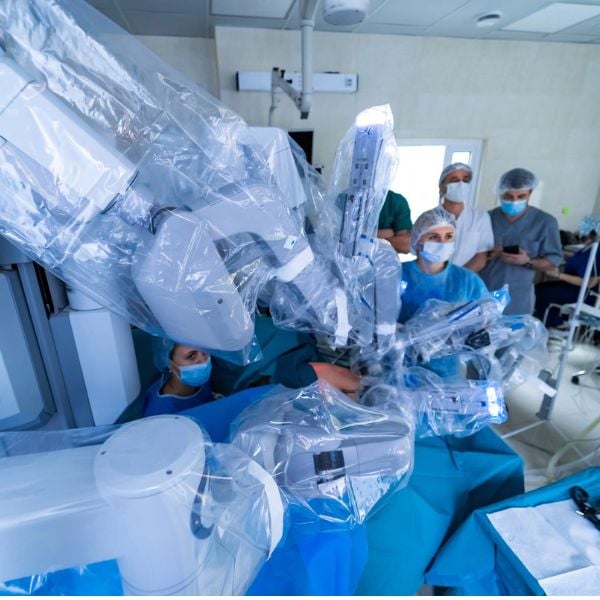
The practical difference lies in their surgical backgrounds: urogynecologists approach pelvic reconstruction from a gynaecologic perspective, while urologist-trained FPMRS specialists bring a broader urologic surgical skill set, including experience with robotic-assisted surgery and urodynamic testing.
A small number of physicians are dual-trained on both sides, combining a urology residency with a urogynecology and reconstructive pelvic surgery fellowship. For conditions involving both the bladder and pelvic organs, this dual perspective in a single clinician is a significant advantage.
The best choice often depends on the doctor’s specific experience with your condition, so ask directly about surgical volume.
Female Urologist vs. Female Urology Subspecialist: Why the Difference in Training Matters for Your Care
Most women searching for a female urologist in Los Angeles don’t realize they are actually looking for two different things. The first is a female physician who practices general urology. The second is a doctor who has completed additional fellowship training in the sub-specialty formally known as Female Pelvic Medicine and Reconstructive Surgery, or FPMRS.
This distinction is not just academic. If you are dealing with stress urinary incontinence, pelvic organ prolapse, or complex pelvic floor dysfunction, an FPMRS-certified sub-specialist has completed two to three years of training beyond urology or gynecology residency specifically focused on those conditions. A general urologist, even a highly skilled one, may not have that depth of reconstructive surgical experience.
The American Urological Association recognizes FPMRS as a distinct sub-specialty with its own board certification pathway. That certification signals a specific level of expertise in pelvic reconstruction, sacral neuromodulation for overactive bladder, and minimally invasive anti-incontinence procedures.
If your concern is recurrent UTIs, kidney stones, bladder cancer screening, or hematuria, a board-certified female urologist without FPMRS sub-specialty training is an entirely appropriate fit. Knowing which category your condition falls into is the first step toward choosing the right doctor. At Tower Urology, women can access both general female urology care and FPMRS-level subspecialty expertise within the same group, which simplifies referrals if a condition proves more complex than it first appeared.
Meet the Female Urologists at Tower Urology

Three things separate a truly exceptional female urology practice from a serviceable one: relevant fellowship training, a hospital affiliation that matches the level of care you may need, and a multi-physician group structure that gives you continuity as your needs evolve. Tower Urology meets all three.
As a Cedars-Sinai Medical Center affiliate, our urologists have met the same credentialing standards as the top-ranked academic programs nearby. As a multi-physician group serving patients across Los Angeles, Beverly Hills, and West Hollywood, we offer built-in second opinions and seamless continuity of care.
Dr. Susan Rusnack, MD, is a board-certified female urologist with more than two decades of experience focused on women’s urological health. Fellowship-trained in laparoscopic and robotic surgery, she specializes in minimally invasive pelvic floor reconstruction, stress and urge incontinence, recurrent UTIs, and voiding dysfunction.
Dr. Rusnack has been recognized multiple times with the Compassionate Doctor Recognition and the Patients’ Choice Award, honors reflecting both her clinical excellence and her commitment to patient-centered care. She considers it a core part of her practice to educate every patient fully about their urological condition and all available treatment options.

Dr. Paige Kuhlmann, MD, is one of the very few dual-trained urologists and urogynecologist subspecialists practicing in Los Angeles. She completed a urology residency followed by a fellowship in urogynecology and reconstructive pelvic surgery, making her uniquely qualified to treat conditions involving both the bladder and pelvic organs.
Her clinical interests span reconstructive pelvic surgery, robotic-assisted cystocele repair, pelvic organ prolapse, stress and urge incontinence, neuromodulation, menopause management, and female sexual wellness. Dr. Kuhlmann holds board certification in both urology and Female Pelvic Medicine and Reconstructive Surgery (FPMRS) – a dual certification held by only a small fraction of practicing urologists nationwide, and one that signals the highest level of subspecialty training available in women’s pelvic health.
Dr. Kuhlmann holds professional affiliations with the American Urological Association and the American Urogynecologic Society, and competitive grants have supported her research contributions in female pelvic medicine. She has presented her research at national conferences and contributed to peer-reviewed literature advancing the understanding of pelvic floor disorders – a level of academic engagement that directly informs the precision and quality of care her patients receive.
Like Dr. Rusnack, she has earned the Patients’ Choice Award, a recognition driven entirely by patient feedback and a meaningful reflection of the compassionate, personalized care she delivers at every visit.
Together, Dr. Rusnack and Dr. Kuhlmann cover the full range of women’s urological care, from routine bladder health to complex reconstructive surgery, without you ever needing to change practices.
Conditions that our Female Urologists Treat
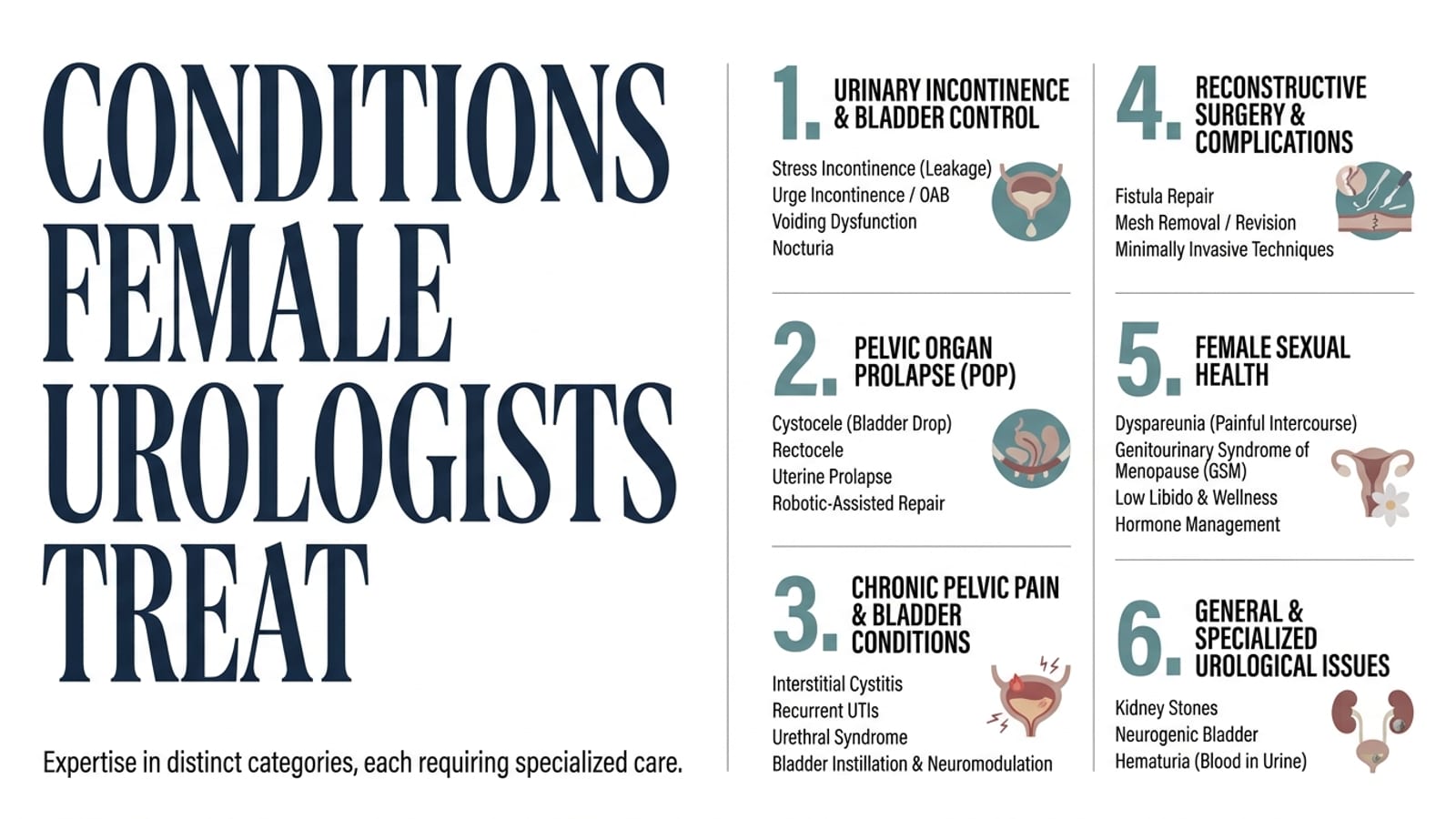
Female urology encompasses several distinct categories of conditions, each potentially requiring a different type of specialist. Matching your condition to the right doctor is the single most important step before booking.
1. Urinary Incontinence and Bladder Control
Stress Incontinence: Leakage when coughing, sneezing, or laughing. This is the core territory of FPMRS subspecialists. Treatment options range from pelvic floor physical therapy and pessary fitting to minimally invasive surgery such as a mid-urethral sling. One patient at Tower Urology came to us after two other urologists had both recommended surgery without first discussing pelvic floor physical therapy. After a thorough evaluation, we started her on a structured physical therapy program. Within 12 weeks, her leakage episodes had decreased by more than 70 percent, and she avoided surgery entirely.
Urge Incontinence and Overactive Bladder (OAB): Sudden, intense urges to urinate, often with leakage before reaching the bathroom. Overactive bladder treatment options include behavioral therapy, medication, Botox for bladder (onabotulinumtoxinA injections into the bladder wall), and sacral neuromodulation, a procedure that uses mild electrical impulses to regulate the nerves controlling bladder function.
Voiding Dysfunction: Difficulty emptying the bladder or urinary retention. A board-certified female urologist can evaluate and manage voiding dysfunction through urodynamic testing and targeted treatment.
Nocturia: Waking repeatedly at night to urinate, which can significantly disrupt sleep and quality of life.
2. Pelvic Organ Prolapse (POP)
Pelvic organ prolapse occurs when pelvic organs, including the bladder, uterus, or rectum, drop or shift out of place due to weakened supporting muscles and tissues. Conditions include cystocele (dropped bladder), rectocele, and uterine prolapse. This requires an FPMRS subspecialist or a urologist with significant reconstructive surgical experience.
Robotic-assisted sacrocolpopexy is the gold-standard surgical repair for apical prolapse. Tower Urology offers cystocele repair and other reconstructive procedures, and Dr. Kuhlmann and Dr. Rusnack perform robotic and laparoscopic prolapse repair as a core part of their practice. When consulting any surgeon, ask directly: how many robotic prolapse repairs do you perform per year? Volume is one of the strongest predictors of surgical outcomes.
3. Chronic Pelvic Pain and Bladder Conditions
Interstitial Cystitis (Painful Bladder Syndrome): Chronic bladder pain and pressure that significantly affects daily life and intimacy. Treatment is multimodal and may include dietary modification, pelvic floor physical therapy, bladder instillation (directly delivering medication into the bladder via catheter to reduce inflammation), oral medications, and neuromodulation. For patients who have not responded to first-line therapies, sacral neuromodulation or Botox for bladder can provide meaningful relief.
At Tower Urology, we build a personalized treatment pathway rather than defaulting to a single protocol. That pathway typically moves through three stages: conservative management first (diet, stress reduction, pelvic floor PT), then office-based interventions such as bladder instillations with a cocktail of lidocaine, heparin, and sodium bicarbonate, and finally advanced options like sacral neuromodulation or, in carefully selected cases, hydrodistension under anesthesia. Because interstitial cystitis is a diagnosis of exclusion, our female urologists also rule out endometriosis, pelvic floor dysfunction, and bladder cancer before settling on a treatment plan – a level of diagnostic rigor that makes a meaningful difference in long-term outcomes.
Recurrent Urinary Tract Infections (UTIs): Specialized care for women experiencing multiple infections per year. Dr. Rusnack and Dr. Kuhlmann see a high volume of women with recurrent UTI patterns and can order cystoscopy, urine cultures, and imaging to identify structural or behavioral contributors that primary care physicians often miss. Emerging evidence also supports low-dose prophylactic strategies and vaginal estrogen for post-menopausal women as part of a comprehensive recurrent UTI management plan.
Beyond antibiotics, our team evaluates the full picture: bladder emptying efficiency, urethral anatomy, hormonal status, and even hygiene and sexual activity patterns that can drive recurrence. For post-menopausal women in particular, topical vaginal estrogen is one of the most underused yet evidence-backed tools available – it restores the protective Lactobacillus environment in the vagina and meaningfully reduces infection frequency. Women who have cycled through repeated antibiotic courses without lasting relief are often the patients who benefit most from this kind of comprehensive, root-cause approach rather than another short-term prescription.
Urethral Syndrome and Diverticulum: Structural or functional issues affecting the urethra that cause pain, pressure, or recurrent infections. Urodynamic testing is often a key diagnostic step in distinguishing urethral causes of pelvic pain from bladder or pelvic floor sources. A urethral diverticulum – a pocket that forms in the urethral wall and traps urine – is frequently misdiagnosed as a recurrent UTI or interstitial cystitis for years before a specialist identifies it. At Tower Urology, our female urologists use MRI and cystoscopy to confirm the diagnosis and, when surgery is indicated, perform minimally invasive urethral diverticulectomy with precision techniques designed to protect continence and minimize recovery time. Getting the diagnosis right the first time is what personalized, specialist-level care looks like in practice.
4. Reconstructive Surgery and Complications
Reconstructive surgery encompasses surgical repair to restore pelvic anatomy, correction of fistulas (abnormal connections between the bladder or rectum and vagina), removal or repair of vaginal mesh from previous surgeries, and minimally invasive approaches using robotic-assisted or laparoscopic techniques. These procedures require an FPMRS subspecialist with significant reconstructive surgical volume.
Within Tower Urology, Dr. Kuhlmann’s urogynecology training and Dr. Rusnack’s laparoscopic and robotic surgical background mean that women dealing with mesh complications, fistula repair, or revision surgery are evaluated by surgeons whose practices focus on this area. Minimally invasive surgery reduces recovery time, lowers complication rates, and is the standard of care for most pelvic reconstructive procedures at our practice.
5. Female Sexual Health
Sexual health concerns are a frequently overlooked reason women seek urological care, and they deserve the same clinical attention as any other condition. A female urologist is well-positioned to evaluate and treat conditions at the intersection of pelvic health and intimacy, including:
Dyspareunia (painful intercourse): Often linked to pelvic floor dysfunction, hormonal changes, or prior pelvic surgery. Pelvic floor physical therapy, topical treatments, and in some cases minor surgical procedures can provide significant relief. Many women are surprised to learn that a urologist – not just a gynecologist – is trained to diagnose and treat the underlying bladder or pelvic floor contributors to painful sex.
Genitourinary syndrome of menopause (GSM): A cluster of symptoms caused by declining estrogen levels, including vaginal dryness, vaginal atrophy, burning, and urinary urgency or frequency. GSM is underdiagnosed and undertreated, yet highly responsive to local estrogen therapy, ospemifene, or laser-based treatments. Many women normalize these symptoms for years without knowing effective options exist. At Tower Urology, Dr. Kuhlmann takes a comprehensive approach to GSM, addressing both the urinary and sexual dimensions of the condition rather than treating them in isolation, as most practices do.
Pelvic floor dysfunction affecting sexual function: Hypertonic (overly tight) pelvic floor muscles can cause pain during sex, difficulty with penetration, and urinary symptoms. Pelvic floor physical therapy is a first-line treatment. When conservative measures aren’t enough, in-office procedures and minimally invasive interventions can restore comfort and function.
Urinary leakage during sex: A common but rarely discussed symptom that can be addressed with targeted incontinence treatment. Coital incontinence affects a significant number of women and is almost universally underreported – patients often assume nothing can be done. In reality, it responds well to both non-surgical and surgical options depending on the underlying cause.
Hormonal changes and urinary symptoms: The urinary tract is estrogen-sensitive. As estrogen declines during perimenopause and menopause, women may experience increased urgency, recurrent UTIs, and bladder pain, all of which fall within the scope of female urology. Hormone management – including local and systemic options – is part of the personalized care plan Dr. Kuhlmann builds for each patient navigating this transition.
Low libido and women’s sexual wellness: Reduced sexual desire is not simply a psychological issue – it frequently has hormonal, anatomical, or medication-related roots that a urologist trained in sexual medicine can identify and treat. Tower Urology offers innovative treatments including the P-Shot and hormone management tailored specifically to women’s sexual health needs.
In Los Angeles, only a handful of female urologists treat sexual medicine and menopause-related urinary symptoms as a dedicated clinical focus rather than an add-on. Dr. Kuhlmann at Tower Urology is one of them, with a clinical interest in female sexual wellness, menopause management, and the urinary changes that accompany hormonal shifts. Her dual training in urology and female pelvic medicine means patients receive world-class, state-of-the-art care that addresses the full picture – not just one piece of it. A safe space to address your sexual health is not a luxury; it is a clinical necessity.
6. General and Specialized Urological Issues
Kidney Stones: Diagnosis, treatment, and prevention. A general female urologist is the right starting point. Imaging, ureteroscopy, and stone management do not require FPMRS training.
Neurogenic Bladder: Bladder dysfunction caused by neurological conditions such as multiple sclerosis or spinal cord injuries. Sacral neuromodulation is one treatment option for appropriate candidates.
Hematuria: Blood in the urine, which requires prompt evaluation to rule out serious underlying causes including bladder cancer.
Consider Chelsea, a woman in her late 40s in West Hollywood who had been managing what she thought were frequent UTIs for two years, treated repeatedly by her primary care doctor with antibiotics. When she finally saw Dr. Rusnack at Tower Urology, Dr. Rusnack performed a cystoscopy to determine the true source of the problem. After two long years, Chelsea was finally told the real issue was overactive bladder with urge incontinence, not an infection at all. The right specialist, with the right diagnostic tools, changed her entire treatment path within a single appointment.
What Our Patients Say: Real Outcomes from Real Women
Patient trust is built one appointment at a time. Here is what women who have been in your position have shared about their care at Tower Urology.
“After seeing two other urologists who both recommended surgery for my stress incontinence without ever mentioning physical therapy, Dr. Rusnack took the time to do a thorough evaluation. She started me on a structured pelvic floor physical therapy programme. Within 12 weeks, my leakage episodes had decreased by more than 70 percent. I avoided surgery entirely. I wish I had come here first.”
“For two years I was treated for what my primary care doctor called frequent UTIs. Antibiotics, over and over. When I finally saw Dr. Rusnack, she performed a cystoscopy and found the real problem: overactive bladder with urge incontinence, not an infection at all. One appointment changed my entire treatment path. I finally have my life back.”
– Chelsea, West Hollywood
“Dr. Kuhlmann answered every single one of my questions with patience and without making me feel rushed. For the first time, I felt like a doctor was actually listening to me. The care here is unlike anything I have experienced.”
Women consistently tell us they were surprised by how much time our doctors spent listening before ordering any tests. That is intentional. A thorough symptom history often points directly to the diagnosis before a single test is run, and it is the foundation of the compassionate, precise care we provide.
What to Expect at Your First Visit
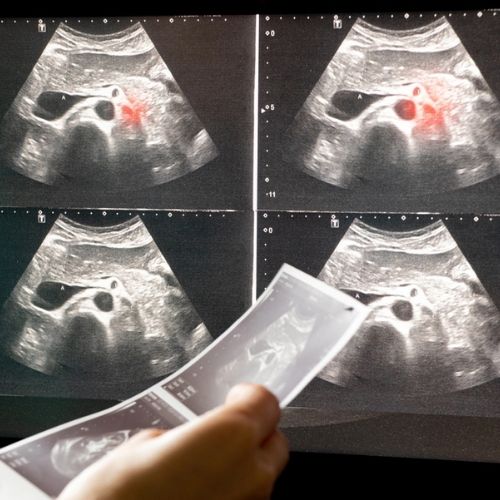
Advanced diagnostic imaging at Tower Urology, including bladder and kidney ultrasound, helps our female urologists identify the precise source of your symptoms.
Knowing what to expect reduces anxiety about that first visit. Here is a step-by-step overview of how a first appointment with a female urologist at Tower Urology typically unfolds.
Detailed medical history review. Your doctor will ask about your symptoms in specific terms, including frequency, urgency, leakage episodes, pain, and any prior treatments. She will also review your gynecological history, medications, and relevant lifestyle factors. This conversation is the most important part of the visit.
Physical examination. A focused pelvic examination helps assess pelvic floor muscle tone, identify signs of prolapse, and evaluate urethral and vaginal tissue health, including signs of genitourinary syndrome of menopause.
Urinalysis. We collect a urine sample and analyze it. If we suspect an infection, we will send a urine culture to the laboratory.
Bladder diary review. You may be asked to keep a bladder diary for a week before or after the visit, recording fluid intake, voiding frequency, urgency episodes, and leakage. This simple tool provides objective data that significantly improves diagnostic accuracy.
Diagnostic testing, as indicated. Depending on your symptoms, your doctor may order or perform urodynamic testing (to assess how well the bladder stores and releases urine), a bladder ultrasound, cystoscopy (a camera examination of the bladder interior), or additional imaging. Not every patient needs every test at the first visit.
Working diagnosis and next steps. Most patients leave the first appointment with a clear working diagnosis and a personalized treatment plan. That plan may include pelvic floor physical therapy, medication, a minimally invasive procedure, or a referral for further evaluation, depending on your specific situation.
Many women delay seeing a urologist for months or even years because they assume their symptoms are simply part of aging or feel embarrassed raising them. In reality, conditions like urinary incontinence, recurrent UTIs, pelvic floor dysfunction, and pelvic pain are extremely common and often highly treatable once properly evaluated. You do not have to accept these symptoms as normal.
To make the most of your appointment, arrive prepared. Jot down your symptoms, how long you have had them, and any treatments you have already tried – even over-the-counter remedies. If you track your fluid intake or bathroom trips in a notes app beforehand, even a few days of data gives your doctor a meaningful head start. Our team will walk you through every step with compassionate care, so no question is too small or too personal to raise.
Insurance, Locations, and Booking Your Appointment
Tower Urology accepts most major insurance plans. Our team will verify your coverage before your visit to avoid surprises. We welcome self-pay patients and can discuss options when you book.
Location: Conveniently located in Los Angeles, serving patients from Beverly Hills, West Hollywood, and surrounding communities
Cedars-Sinai Medical Center affiliate, with surgical privileges at one of the most respected hospitals in Southern California
Same-day appointments available for urgent concerns. For non-urgent matters, we work hard to accommodate new patients promptly. Request an appointment online or by phone, and our team will match you with the right specialist based on your specific needs.
Telehealth consultations available for follow-up visits and second opinions
Referrals accepted from primary care physicians, OB-GYNs, and other specialists
Why Choose Tower Urology for Female Urology Care in Los Angeles?
The most frequently cited reason women seek a female urologist is comfort during examinations and discussions of sensitive symptoms. Research consistently shows that patient comfort correlates with more complete symptom disclosure, which directly affects diagnostic accuracy. Women who feel embarrassed or rushed are less likely to mention sexual health concerns, bowel symptoms, or the full extent of their leakage, all of which are clinically relevant.
Beyond comfort, our female urologists have built their practices specifically around women’s health. Their diagnostic protocols, treatment options, and referral networks are calibrated for female anatomy and female-specific conditions. That focus translates into faster diagnosis and more targeted treatment, whether that means recommending pelvic floor physical therapy before surgery, offering Botox for bladder as an alternative to daily medication, or identifying genitourinary syndrome of menopause where another doctor might have missed it.
There is also a practical communication benefit. Female urologists who have treated thousands of women with incontinence or pelvic floor dysfunction have heard every variation of “I thought this was just normal aging.” They are positioned to challenge that assumption and offer treatment options that genuinely improve quality of life. Our female urologists create a safe space where you can speak openly without embarrassment. Compassionate care is at the heart of everything we do at Tower Urology.
We deliver unparalleled expertise and compassionate care, ensuring the best possible outcomes for every woman who walks through our doors. At Tower Urology, two fellowship-trained female urologists, Dr. Susan Rusnack and Dr. Paige Kuhlmann, provide the full spectrum of women’s urological care from our Los Angeles practice, affiliated with Cedars-Sinai Medical Center. Whether you are dealing with bladder leaks, pelvic pain, recurrent UTIs, or concerns about your sexual health, you deserve a specialist who listens, explains, and acts. Book a same-day or telehealth appointment today.
Frequently Asked Questions About Female Urology in Los Angeles

Contact Tower Urology directly, and our team will verify your insurance coverage before your appointment. We accept most major insurance plans and can discuss self-pay options if needed. You can also request a referral from your primary care physician or OB-GYN, which some insurance plans require before seeing a specialist.
A female urologist is a board-certified urologist who treats urological conditions in women. A urogynecologist is an OB-GYN who completed additional fellowship training in Female Pelvic Medicine and Reconstructive Surgery (FPMRS). Both can be excellent choices for pelvic floor conditions. Dr. Paige Kuhlmann at Tower Urology is dual-trained in both urology and urogynecology, making her one of the most comprehensively qualified female pelvic specialists in Los Angeles.
Yes. Genitourinary syndrome of menopause (GSM), which includes vaginal dryness, vaginal atrophy, and menopause-related urinary symptoms such as urgency and recurrent UTIs, falls squarely within the scope of female urology. Dr. Kuhlmann at Tower Urology has a dedicated clinical interest in menopause management and the urinary changes that accompany hormonal shifts.
Overactive bladder treatment at Tower Urology includes behavioral therapy, pelvic floor physical therapy, oral medications, Botox for bladder (bladder injections), and sacral neuromodulation. Our female urologists will recommend the most appropriate option based on your symptoms, medical history, and personal preferences.
Not always. Many patients self-refer directly to Tower Urology. However, some insurance plans require a referral from a primary care physician or OB-GYN before covering specialist visits. We recommend checking with your insurer in advance. Same-day appointments and telehealth consultations are available for patients who need to be seen quickly.
Sacral neuromodulation is a minimally invasive procedure that uses mild electrical impulses to regulate the sacral nerves controlling bladder and bowel function. It is used for overactive bladder, urge incontinence, and non-obstructive urinary retention when behavioral therapies and medications have not provided sufficient relief. It is one of several advanced treatment options available at Tower Urology.
A female urologist can treat a wide range of conditions including urinary incontinence, overactive bladder, recurrent UTIs, kidney stones, chronic hematuria, chronic pelvic pain, and women’s sexual health concerns such as vaginal dryness and painful intercourse. Learn more about pelvic floor therapy and how it complements urological care on our blog.
If you are dealing with pelvic organ prolapse, stress incontinence requiring surgery, complex pelvic floor dysfunction, or reconstructive surgery, an FPMRS fellowship-trained sub-specialist is the more appropriate choice. At Tower Urology, both levels of expertise are available within the same practice, so you will never need to start over with a new provider if your needs change.
Patient Stories: Real Women, Real Results at Tower Urology
Sometimes the most powerful thing you can read before booking an appointment isn’t a list of credentials – it’s hearing from a woman who was exactly where you are right now. At Tower Urology, real patients share real outcomes, and their stories speak to the compassionate care and unparalleled expertise our female urologists bring to every appointment.
Take Annie, who had suffered in silence with urinary incontinence for years before traveling all the way from Paris to see Dr. Paige Kuhlmann. After a thorough evaluation and a personalized treatment plan, Annie finally found the relief she had stopped believing was possible. “Every bathroom visit was a problem,” another patient, Barbara, explained – until Dr. Kuhlmann’s minimally invasive approach gave her quality of life back in a way she hadn’t experienced in years.
Then there’s the story of a patient whose peri-menopause symptoms had been dismissed by multiple providers before she found a female urologist in Los Angeles who truly understood her condition. Dr. Kuhlmann’s dual training in urology and women’s pelvic health meant she could see the full picture – and treat it. For women dealing with pelvic floor dysfunction, that kind of comprehensive, team-based approach makes all the difference.
These aren’t outliers – they reflect the standard of personalized care our patients experience every day. If you’re searching for a trusted female urologist in Los Angeles, you deserve outcomes like these too.
Emy, a healthcare professional herself, had avoided surgery for years out of fear. What changed her mind? Dr. Kuhlmann answered every question with patience and clarity, turning anxiety into confidence. That’s the safe space Tower Urology works hard to create for every woman who walks through the door.