Understanding the 5 things doctors wish men knew about sexual health is only the first step — acting on that knowledge with the support of a world-class, nationally recognized medical team is what truly transforms outcomes. At our center, we offer unparalleled expertise and compassionate care through a team-based approach that treats every patient as a whole person, not just a set of symptoms.
From state-of-the-art diagnostics to cutting-edge, minimally invasive treatments, our specialists are committed to delivering personalized care that protects both your sexual health and your overall quality of life. You deserve a safe space where these conversations are welcomed, not avoided — and vastly improved outcomes begin the moment you decide to have them.
Erectile dysfunction isn’t just a bedroom problem. Urologists say it can be one of the earliest warning signs your heart is in trouble. Most men hear that and assume it applies to someone else, someone older, someone less healthy. That assumption is exactly what specialists at practices like Tower Urology see costing men their health every single day.
Most men avoid talking to their doctor about sexual health until something goes seriously wrong. The silence is understandable, but it costs more than just the bedroom. In this article, we’ll change that by walking you through five clinical insights urologists wish every man would hear before a crisis forces the conversation.
You’ll learn why erectile dysfunction can predict a cardiovascular event years before it happens, why your pelvic floor is one of the most overlooked muscles in your body, and when your age starts quietly affecting your fertility in ways no one warned you about.
These aren’t scare tactics. They’re the things doctors say out loud in the exam room but rarely get the chance to say before a man walks through the door.

1. Erectile Dysfunction Is Often Your Heart Sending You a Warning
Erectile dysfunction affects an estimated 30 million men in the United States, according to data cited by the American Medical Association. Fewer than 25% of those men seek medical advice. That gap is a serious problem, because ED is frequently not a standalone condition; it’s a symptom of something systemic happening in your vascular system.
The mechanism is direct. Penile arteries are significantly smaller in diameter than coronary arteries. When atherosclerosis or endothelial dysfunction begins narrowing blood vessels throughout the body, the smaller arteries show the effects first. That means ED can appear as a clinical signal of cardiovascular disease, often two to three years, sometimes longer, before a cardiac event occurs. Dr. Matthias Ziegelmann, a urologist at the Mayo Clinic, has noted publicly that men presenting with ED should be evaluated for cardiovascular risk factors as a matter of routine, not as an afterthought.
Metabolic syndrome (the cluster of conditions including high blood pressure, elevated blood sugar, excess abdominal fat, and abnormal cholesterol) is one of the most common underlying drivers of ED that men don’t connect to their sexual health. If you’ve been told you’re pre-diabetic or that your blood pressure is creeping up, those conversations belong in the same clinical picture as any sexual health concerns you’re experiencing.
What are the early warning signs of erectile dysfunction that men should not ignore?
Difficulty achieving or maintaining an erection that occurs consistently, not just occasionally, is the primary signal. But men should also pay attention to reduced morning erections, decreased libido alongside ED, and any new onset of ED following a period of cardiovascular symptoms like chest tightness or shortness of breath during exertion. These combinations warrant prompt medical attention. If you experience chest tightness or shortness of breath with exertion, see a physician right away, and mention your ED symptoms too.
How does cardiovascular health affect male sexual function?
Healthy erections depend heavily on adequate blood flow. The endothelium, the inner lining of blood vessels, must dilate properly in response to arousal signals. When cardiovascular disease compromises endothelial function, that dilation is impaired. Conditions like hypertension, high LDL cholesterol, and type 2 diabetes all damage the endothelium over time, reducing the quality and reliability of erections well before a man experiences any chest pain or other classic cardiac symptoms.
2. Your Pelvic Floor Matters More Than You Think — And Most Men Never Train It
When most men hear “pelvic floor exercises,” they assume it’s a women’s health topic. It isn’t. The pelvic floor muscles in men support the bladder and bowel, play a direct role in erectile function, and are central to ejaculatory control. Weakness or dysfunction in these muscles contributes to erectile dysfunction, premature ejaculation, and urinary incontinence, three conditions that men frequently treat as separate problems when they share a common root.
Kegel exercises for men involve contracting the same muscles used to stop urination midstream, holding for three to five seconds, and releasing. Research published through institutions including Mass General Brigham supports pelvic floor rehabilitation as a clinically effective intervention for both ED and premature ejaculation, particularly in men who have undergone prostate surgery or who have chronic pelvic tension from sedentary work.
The challenge is that most men have never been told their pelvic floor exists, let alone how to train it. In our experience at Tower Urology, men who are referred to pelvic floor physical therapy alongside other treatments for ED or urinary symptoms consistently report improvements that medication alone didn’t achieve. The pelvic floor is not a passive structure; it responds to training the same way any other muscle group does.
What is the male pelvic floor, and why does it matter for sexual health?
The male pelvic floor is a group of muscles and connective tissues forming a hammock-like base at the bottom of the pelvis. These muscles control the release of urine and stool, support the prostate, and contract rhythmically during orgasm. When they are weak, overly tight, or poorly coordinated, the result can be reduced erectile rigidity, difficulty controlling ejaculation, post-void dribbling, and pelvic pain. Addressing pelvic floor health is not optional for men who want to maintain sexual function as they age – it’s foundational.
3. Male Fertility Doesn’t Stay Constant: What Age Does to Sperm Quality
There is a persistent cultural assumption that male fertility is essentially ageless. It isn’t. While men can father children later in life than women can conceive, sperm quality (including motility, morphology, and DNA integrity) begins a measurable decline from around age 40 onward. By age 50, the rate of sperm DNA fragmentation has increased significantly, which affects not just the likelihood of conception but also the health outcomes of pregnancies.
Researchers at Weill Cornell Medicine and other leading institutions have documented that advanced paternal age is associated with increased risk of certain genetic conditions in offspring, including autism spectrum disorder and schizophrenia, though the absolute risk remains low. The point is not to alarm men, but to ensure they understand that the “I can wait” assumption about fertility has a biological ceiling that arrives earlier than most expect.
Male infertility contributes to roughly half of all infertility cases in couples, yet it is consistently under-diagnosed because the default assumption is that fertility problems originate with the female partner. A semen analysis is a simple, non-invasive test that provides information about sperm count, motility, and morphology. If you and your partner have been trying to conceive for 12 months without success (or six months if your partner is over 35), a urologist should evaluate both partners simultaneously, not sequentially.
At what age does sperm quality start to decline in men?
Studies show measurable changes in sperm parameters begin around age 40, though lifestyle factors can significantly accelerate this timeline. Heat exposure to the testes (from laptops, hot tubs, or tight clothing), smoking, heavy alcohol use, and obesity all impair sperm production and quality at any age. Men in their 30s with these risk factors may have sperm quality comparable to men a decade older. Conversely, men who address these factors often see meaningful improvements in semen analysis results within three months, about the length of one sperm production cycle.
4. Mental Health and Sexual Function Are More Tightly Linked Than Doctors Used to Admit
The clinical community has historically separated psychological and physical causes of sexual dysfunction into two distinct categories. That separation is increasingly seen as artificial. Anxiety, depression, and chronic stress affect sexual function through multiple overlapping pathways: elevated cortisol suppresses testosterone production, performance anxiety triggers the sympathetic nervous system in ways that directly inhibit erection, and depression reduces libido at a neurochemical level that no amount of willpower can overcome.
Treatment for these conditions can also play a role. Some antidepressants, particularly selective serotonin reuptake inhibitors (SSRIs), commonly cause reduced libido, delayed ejaculation, or difficulty with erections. Certain blood pressure medications and other prescriptions can affect sexual function as well. If you notice changes after starting a new medication, don’t stop taking it on your own. Talk to your prescribing doctor or urologist, since adjusting the dose or switching medications often helps
Performance anxiety deserves particular attention because it creates a self-reinforcing cycle. A man experiences one episode of ED (perhaps due to alcohol, fatigue, or stress) and then approaches subsequent sexual encounters with heightened anxiety about whether it will happen again. That anxiety itself becomes the cause of the next episode.
The original physical trigger may have resolved entirely, but the psychological pattern persists. This is one of the most common presentations we see, and it responds well to a combination of brief psychological intervention and, where appropriate, short-term pharmacological support to break the cycle.
Can stress and anxiety cause erectile dysfunction?
Yes, and the mechanism is well-established. The sympathetic nervous system, activated during stress and anxiety, causes vasoconstriction (the narrowing of blood vessels). Erections require the opposite: vasodilation and increased blood flow. When a man is anxious, his body is physiologically working against the conditions needed for an erection. Chronic stress also elevates cortisol, which suppresses the hypothalamic-pituitary-gonadal axis and reduces testosterone levels over time. Addressing the psychological component of ED is not a soft option; it’s a clinical necessity.
One pattern we encounter regularly involves men who have been prescribed phosphodiesterase-5 inhibitors (the class of medication that includes sildenafil) but report inconsistent results. In many of these cases, the inconsistency is driven by anxiety rather than vascular insufficiency. When you address the psychological component alongside the pharmacological one, outcomes improve substantially. Premature ejaculation follows a similar pattern: it is frequently rooted in anxiety and responds to behavioral and psychological approaches, not just topical treatments.
5. Lifestyle Choices You Make Every Day Are Quietly Shaping Your Sexual Health
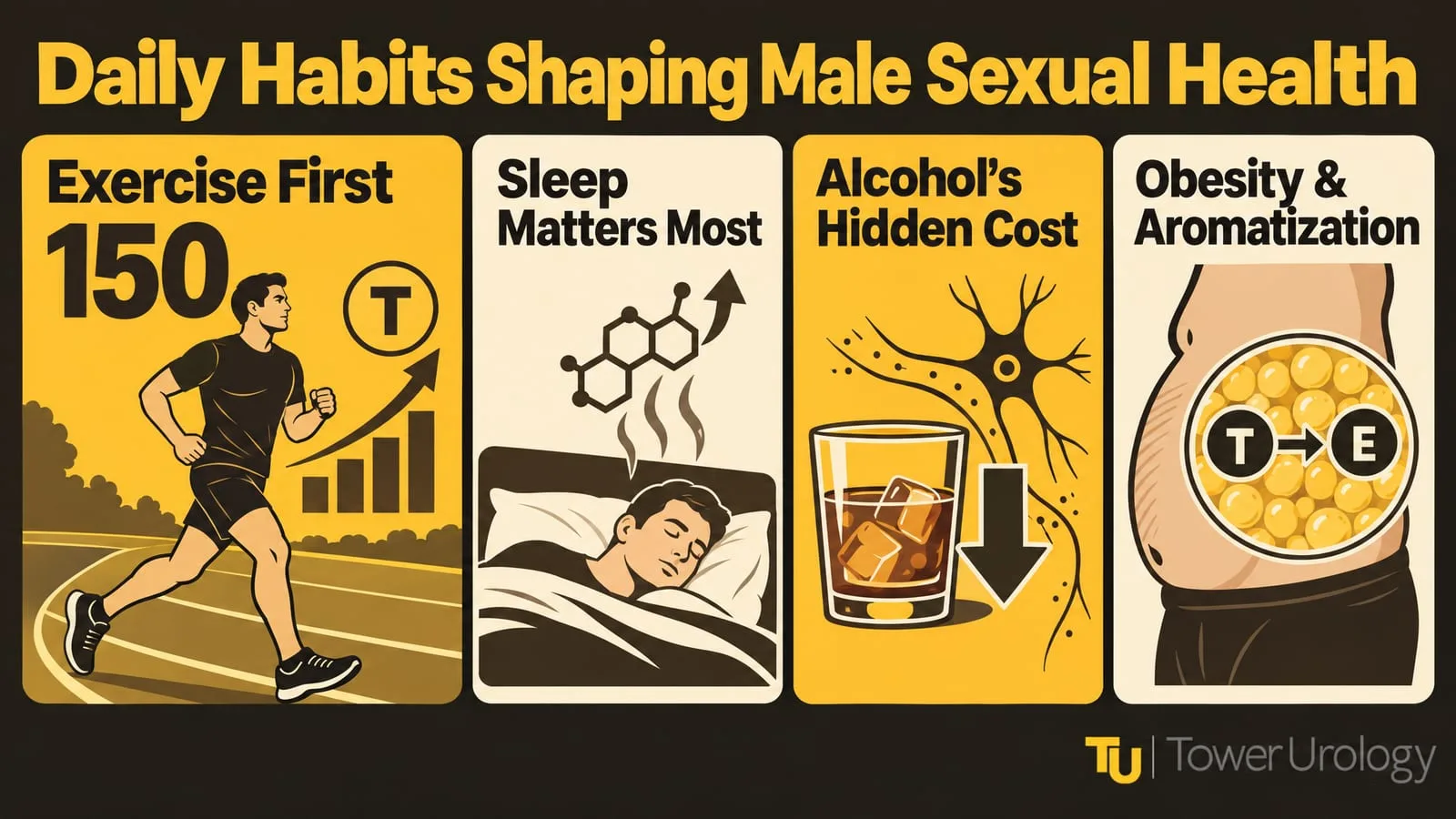
No medication corrects a lifestyle that is actively working against sexual health. This isn’t a moral statement; it’s a pharmacological one. The same daily choices that affect your cardiovascular system, your weight, your sleep quality, and your mental health are simultaneously shaping your testosterone levels, your erectile function, and your fertility.
Exercise is the single most evidence-supported lifestyle intervention for male sexual health. Aerobic exercise improves endothelial function, reduces the cardiovascular risk factors that drive ED, and has been shown to raise testosterone levels in men with obesity-related hypogonadism. Resistance training adds to this by stimulating testosterone production directly. The target isn’t elite athleticism: 150 minutes of moderate aerobic activity per week, as recommended by major health bodies, can produce measurable improvements in erectile function within weeks.
Sleep is the factor men most consistently underestimate. Testosterone levels rise during sleep. Men who sleep fewer than six hours per night have significantly lower testosterone levels than those who sleep seven to nine hours. Heavy alcohol use suppresses testosterone and impairs the nerve signaling involved in arousal and ejaculation. Obesity, particularly visceral abdominal fat, converts testosterone to estrogen through a process called aromatization, creating a hormonal environment that undermines sexual function from multiple directions.
What lifestyle changes can improve men’s sexual health?
The most impactful changes, in order of evidence strength, are: achieving and maintaining a healthy body weight, engaging in regular aerobic and resistance exercise, sleeping seven to nine hours per night, reducing or eliminating alcohol, quitting smoking (which directly damages penile vascular tissue), and managing chronic stress through structured approaches such as cognitive behavioral therapy or mindfulness-based stress reduction.
Diet quality matters too! A Mediterranean-style diet rich in vegetables, whole grains, lean protein, and healthy fats is associated with lower rates of ED compared to diets high in processed foods and refined carbohydrates.
Why Men Avoid Talking to Doctors About Sexual Health And Why That Needs to Change
Studies consistently show that men are less likely than women to seek medical care across virtually every category of health concern. Sexual health sits at the extreme end of that avoidance. The reasons are layered: embarrassment, fear of judgment, a cultural narrative that equates sexual performance with masculinity, and a genuine uncertainty about whether sexual health problems are “medical enough” to bring to a doctor.
The cost of that avoidance is measurable. As noted by researchers at Weill Cornell Medicine, men who delay seeking care for sexual dysfunction frequently present later with more advanced cardiovascular disease, more entrenched psychological patterns, and fertility challenges that have narrowed their options. The window for early intervention closes while men wait for the problem to resolve on its own.
In reality, early evaluation matters. A urologist can assess whether the condition is still active, recommend options like traction therapy during that phase, and plan treatments such as collagenase injections or surgical correction once the curvature has stabilized.
How to Start the Conversation With Your Doctor About Sexual Health
The most common reason men don’t raise sexual health concerns with their doctor is that they don’t know how to start. The conversation doesn’t need to be elaborate. A direct statement, “I’ve been having some issues with erections, and I’d like to talk about it,” is enough. Doctors are not surprised by this conversation. They are, in fact, waiting for it.
If you’re not sure whether your concern warrants a visit, apply this rule: if a sexual health issue has persisted for more than four weeks, is causing you distress, or is affecting your relationship, it warrants a medical conversation. You don’t need to wait for a crisis. You don’t need to have a dramatic symptom. A persistent change from your baseline is enough reason to seek evaluation.
At Tower Urology, we see men at every stage of this conversation, some who come in early with a specific concern, and some who have been managing symptoms silently for years. The men who come in early consistently have more options, better outcomes, and shorter treatment timelines. If you’re looking for expert urological care that addresses sexual health with clinical depth and without judgment, our team is here to help.
When should a man see a doctor about sexual health problems?
A man should see a urologist or sexual health specialist when any of the following apply: erectile dysfunction that occurs in more than 50% of attempts over a four-week period; new onset of ED following a cardiovascular diagnosis or medication change; premature ejaculation that is causing significant distress or relationship strain; any penile pain, curvature, or structural change; infertility concerns after 12 months of unprotected intercourse; or a significant unexplained drop in libido. These are common presentations that respond well to treatment when addressed promptly.
Frequently Asked Questions about Men's Sexual Health

Yes, premature ejaculation is a recognized medical condition, not a character flaw or a sign of inexperience. It is defined clinically as ejaculation that occurs within approximately one minute of penetration and causes distress to the individual or their partner. Treatment options include behavioral techniques such as the stop-start and squeeze methods, pelvic floor rehabilitation, psychological therapy targeting performance anxiety, and pharmacological options including selective serotonin reuptake inhibitors (SSRIs) used off-label for their ejaculation-delaying effects. Most men improve significantly with a structured treatment approach, and they should not manage the condition in silence.
Beyond the obvious difficulty achieving or maintaining an erection, men should pay attention to a gradual reduction in the firmness of erections over time, a decrease in the frequency of spontaneous or morning erections, and any new onset of ED that coincides with changes in cardiovascular health, new medications, or significant weight gain. These patterns suggest a systemic cause rather than a situational one, and they warrant evaluation for underlying conditions including cardiovascular disease, diabetes, and hormonal imbalance. Catching these signals early is the difference between straightforward intervention and managing a more complex, established condition.
Cardiovascular health determines blood flow throughout the body, including to the penis. Conditions that damage blood vessels — hypertension, high cholesterol, diabetes, and smoking — impair the endothelial function required for erections. Because penile arteries are smaller than coronary arteries, they show the effects of vascular disease earlier, making ED a potential early warning system for heart disease. Men with ED and any cardiovascular risk factors should be evaluated for both conditions simultaneously, as treating the underlying vascular problem often improves erectile function, alongside reducing cardiac risk.
Sperm quality begins to decline measurably around age 40, with increasing rates of DNA fragmentation, reduced motility, and changes in morphology. However, lifestyle factors can accelerate this timeline significantly — men in their 30s who smoke, drink heavily, are obese, or are regularly exposed to testicular heat may have sperm parameters comparable to men a decade older. The good news is that sperm production cycles approximately every 74 days, meaning that lifestyle improvements can produce measurable changes in semen analysis results within three months. Men concerned about fertility should not assume age is the only variable in play.
Stress and anxiety are among the most common causes of erectile dysfunction in men under 40, and they contribute significantly to ED at any age. The physiological mechanism involves activation of the sympathetic nervous system, which causes vasoconstriction and directly opposes the vasodilation required for erection. Chronic stress also elevates cortisol, which suppresses testosterone production over time. Performance anxiety creates a particularly persistent pattern because the fear of ED becomes self-fulfilling, establishing a psychological cycle that persists even after the original physical trigger has resolved. Effective treatment addresses both the psychological and physical dimensions at the same time.
The lifestyle changes with the strongest evidence base for improving male sexual health are regular aerobic and resistance exercise, achieving a healthy body weight, sleeping seven to nine hours per night, reducing alcohol consumption, quitting smoking, and following a diet rich in vegetables, whole grains, and healthy fats. These changes improve endothelial function, support healthy testosterone levels, reduce the cardiovascular risk factors that drive ED, and improve the psychological well-being that underpins sexual confidence. None of these changes require a prescription, and most produce noticeable improvements in sexual health within weeks to months of consistent application.
-
Definition & Facts for Erectile Dysfunction, National Institute of Diabetes and Digestive and Kidney Diseases (NIDDK)
https://www.niddk.nih.gov/health-information/urologic-diseases/erectile-dysfunction/definition-facts
-
Severity of Erectile Dysfunction Is Highly Correlated with the Syntax Score in Patients Undergoing Coronariography, International Brazilian Journal of Urology (2016)
-
Diagnosis and Treatment of Infertility in Men: AUA/ASRM Guideline Part I, Fertility and Sterility (2020)
-
Peyronie’s Disease: AUA Guideline, American Urological Association
https://www.auanet.org/guidelines-and-quality/guidelines/peyronies-disease-guideline