What is low testosterone?
Low testosterone (low T), also known as male hypogonadism, is a medical condition that occurs when your body isn’t producing enough testosterone. Testosterone is the primary sex hormone in men, playing a vital role in many bodily functions, including the development and maintenance of sex drive, muscle mass, bone density, red blood cell production, and energy levels.

It’s a natural part of aging for testosterone production to start to decline. Most men experience a gradual decrease in their testosterone levels beginning around age 30, with a drop of about 1-2% each year. When this decline becomes clinically significant, it is sometimes called late-onset hypogonadism, a term that reflects the age-related nature of the condition rather than a structural problem with the testes or brain.
To help define this condition, the American Urological Association (AUA) generally considers testosterone levels below 300 nanograms per deciliter (ng/dL) in a blood test as low for adult men. The Endocrine Society uses a similar threshold, reinforcing this as the accepted clinical benchmark across specialties.
What causes low testosterone levels?
Several factors cause low testosterone, and it is essential to identify the specific causes to help determine the best course of treatment. Understanding whether the problem originates in the testes, the brain, or elsewhere guides the entire diagnostic and treatment pathway.
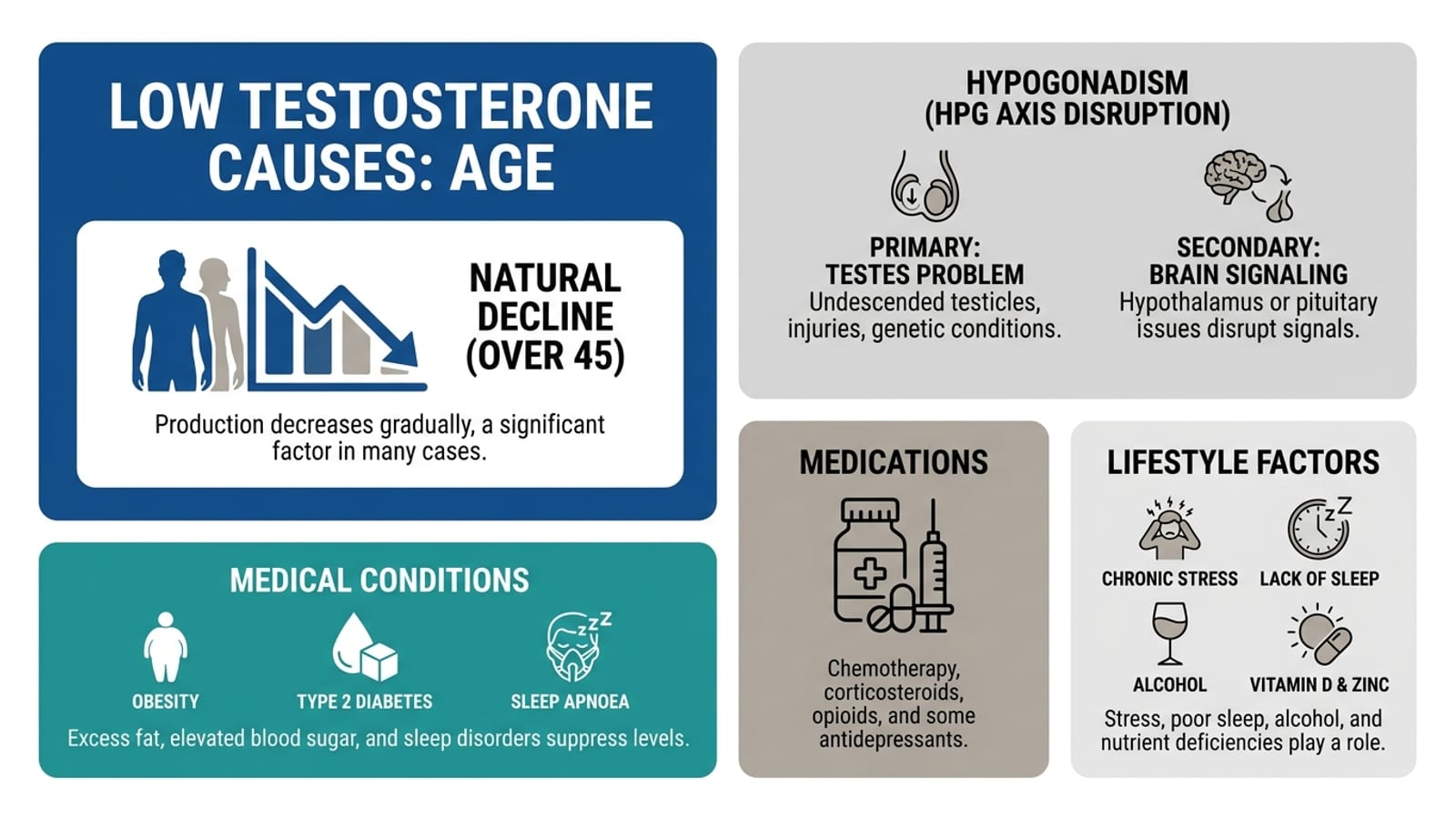
Some of the primary causes are:
Age: The most common cause of declining testosterone. Production naturally decreases with age, and while the process is gradual, it can be a significant factor in many cases of low testosterone, particularly in men over 45.
Hypogonadism: Male hypogonadism can be caused by two distinct conditions, each involving a different part of the hypothalamic-pituitary-gonadal (HPG) axis, the hormonal signaling chain that regulates testosterone production:
Primary hypogonadism: This occurs when the testicles themselves aren’t producing enough testosterone. It may be due to undescended testicles, genetic conditions such as Klinefelter syndrome, or testicular injuries.
Secondary hypogonadism: This is when the problem lies in the brain’s hypothalamus or pituitary gland, the areas that send hormonal signals to the testes. Conditions affecting these areas disrupt the signals that tell the testicles to produce testosterone.
Medical conditions: Several chronic conditions can contribute to low testosterone, including:
Obesity: Excess body fat, particularly around the abdomen, is associated with lower testosterone levels.
Type 2 diabetes: Elevated blood sugar can disrupt testosterone production.
Sleep apnoea: This sleep disorder causes pauses in breathing during sleep and can significantly suppress testosterone levels.
Chronic illnesses: Kidney disease, liver disease, heart disease, high cholesterol, endocrine disorders, and HIV/AIDS can all impact testosterone levels.
Medications: Some medications carry side effects that include lowering testosterone. These include chemotherapy agents, corticosteroids, opioids, and certain antidepressants.
Lifestyle factors: While not direct causes, certain lifestyle factors can play a meaningful role in testosterone production:
Chronic stress: Elevated cortisol levels interfere with hormone production.
Lack of sleep: Poor sleep quality or insufficient sleep duration can cause testosterone deficiency.
Excessive alcohol consumption: Heavy alcohol use can damage the testicles and impair hormone production over time.
Vitamin D deficiency and low zinc intake: Both nutrients are directly tied to healthy testosterone synthesis, and deficiencies are surprisingly common.
How common is low testosterone?
Low testosterone levels are more common than many people realize. Studies have shown that nearly 40% of men over 45 experience some degree of low T. That number increases with age, reaching approximately 50% in men over 80.
Despite this prevalence, low testosterone frequently goes undiagnosed for years. Many men attribute their symptoms to stress or normal aging, when in fact a clinically recognized and treatable hormonal condition may be at the root of how they feel.
What are normal testosterone levels by age?
Testosterone levels vary widely from person to person, but well-established reference ranges give both patients and clinicians a useful benchmark. The AUA defines low testosterone as a total serum testosterone level below 300 ng/dL. Most healthy adult men fall somewhere between 300 and 1,000 ng/dL, though where you land within that range naturally shifts as you age.
It is also important to understand the difference between total testosterone and free testosterone. Total testosterone measures all testosterone in the blood, including the portion bound to proteins such as sex hormone-binding globulin (SHBG). Free testosterone measures only the unbound portion that is immediately available for the body to use. Some men experience clear symptoms of low testosterone even when their total level appears borderline normal, because elevated SHBG leaves very little free testosterone available to tissues. This is why a comprehensive evaluation looks at both values.
Age Range | Typical Total Testosterone (ng/dL) |
|---|---|
20-29 | 400-1,000 |
30-39 | 350-950 |
40-49 | 300-850 |
50-59 | 250-800 |
60+ | 200-700 |
Keep in mind that a number alone doesn’t tell the whole story. Your symptoms, overall health, and day-to-day well-being matter just as much as the lab result. That’s why a comprehensive evaluation, not just a single blood draw, is the right starting point. If you’re curious about ways to support healthy testosterone levels, there are both lifestyle and medical options worth exploring with a specialist.
What are the signs and symptoms of low testosterone?
It’s easy to dismiss specific changes in your body as simply a part of getting older. Many men assume persistent fatigue, decreased sexual function, or noticeable muscle weakness is just an inevitable consequence of aging. However, these could be signs and symptoms of low testosterone, a clinically recognized condition that affects an estimated 40% of men over 45 and up to 50% of men over 80.
It helps to understand the difference between symptoms and signs when it comes to low testosterone. Symptoms are the subjective changes you feel, such as fatigue, low mood, or reduced drive. Signs are the more objective, measurable changes a clinician can identify, such as reduced muscle mass, hair loss, or lab-confirmed hormonal shifts. The AUA defines low testosterone as a total testosterone level below 300 ng/dL, though symptoms can appear at varying thresholds depending on the individual.
Symptoms also don’t always appear all at once. Some men experience a gradual, secondary onset, where one or two changes such as fatigue or low libido appear first, and additional signs accumulate over months or years as testosterone levels continue to decline. This slow progression is one reason low testosterone often goes undiagnosed for so long.
Physical signs of low testosterone
Low testosterone produces a range of physical changes that go well beyond the bedroom. The most closely associated signs include:
Loss of muscle mass and strength
Increased body fat, particularly around the abdomen
Decreased bone density: over time, chronically low testosterone accelerates bone loss, raising the risk of osteoporosis and stress fractures. This is one of the more serious long-term consequences of untreated hypogonadism and is often overlooked because it develops silently.
Anemia: testosterone plays a direct role in stimulating red blood cell production. Deficiency has been linked to unexplained mild anemia in some men, which can compound feelings of fatigue and weakness.
Hair loss, including thinning of body and facial hair
Reduced testicular size
Reduced sperm production, which can affect fertility
Sleep disturbances, including sleep apnoea
Sexual health signs of low testosterone
Changes in sexual function are among the most recognized indicators of low testosterone and are often what prompts men to seek evaluation:
Low sex drive (reduced libido)
Delayed or reduced ejaculation
Difficulty achieving orgasm
Psychological and cognitive symptoms of low testosterone
Low testosterone doesn’t only affect the body. It also measurably affects mental and cognitive health. These symptoms are often the first to appear and are frequently misattributed to stress or a primary mood disorder:
Persistent fatigue and decreased energy levels
Depression and low mood: testosterone plays a meaningful role in mood regulation, and chronically low levels are closely linked to clinical depression, irritability, and a general sense of emotional flatness.
Cognitive changes, including difficulty concentrating, mental fog, and reduced memory recall, sometimes described as “brain fog”
Hot flushes
Reduced motivation and a general sense of diminished well-being
The symptoms and signs described above can vary from person to person, and some men may only experience a few of these changes. If you’re experiencing any of them, checking your testosterone levels with a specialist is a straightforward and important first step.
How is low testosterone diagnosed?
If you’re concerned about low testosterone, understanding the diagnostic process can help you feel prepared and confident walking into your first appointment. At Tower Urology, we take a thorough, evidence-based approach to ensure an accurate diagnosis and a treatment plan built on a complete clinical picture.
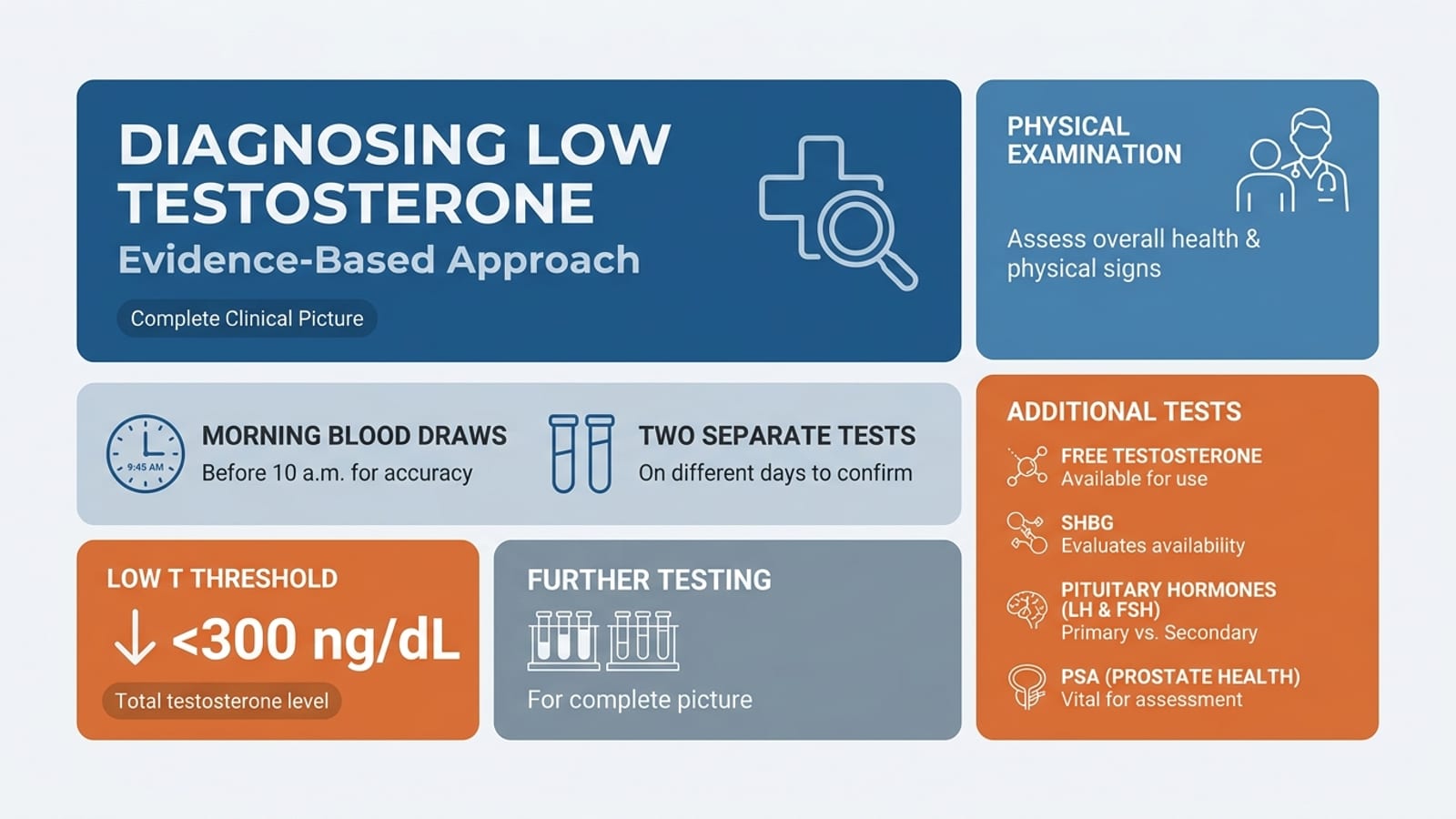
The process typically begins with a physical examination, allowing our healthcare provider to assess your overall health and look for any physical signs that might be related to low testosterone.
The next step, and the most critical one, is a blood test. Because testosterone levels follow a natural daily rhythm, peaking in the early morning hours, the AUA recommends that blood draws be taken before 10 a.m. for the most accurate reading. A single result isn’t sufficient to confirm a diagnosis. Per AUA guidelines, two separate morning tests on different days are typically required before low testosterone is officially diagnosed. This two-test requirement exists because testosterone levels can fluctuate, and a single low reading may not reflect your true baseline.
The AUA defines low testosterone as a total testosterone level below 300 ng/dL, but total testosterone alone doesn’t always tell the full story. In addition to total testosterone, our doctors may order further tests to build a more complete picture. These may include:
Free testosterone: This measures the amount of testosterone that is unbound and immediately available for your body to use. Free testosterone is particularly important when total testosterone sits in a borderline range, since some men experience clear symptoms even with a “normal” total level, often because more of their testosterone is bound to proteins and unavailable to tissues.
Sex hormone-binding globulin (SHBG): This protein binds to testosterone in the blood. Measuring SHBG helps evaluate how much testosterone is actually available to the tissues. Elevated SHBG can lower free testosterone even when total levels appear adequate.
Red blood cell count: This test helps determine whether low testosterone is affecting your red blood cell production, which can contribute to anemia.
Pituitary gland hormones (LH and FSH): These hormones control testosterone production via the HPG axis. Checking their levels helps determine whether low testosterone is primary (originating in the testes) or secondary (originating in the brain), which directly informs treatment decisions.
Prostate-specific antigen (PSA): This test is vital for assessing prostate health, especially before considering testosterone replacement therapy (TRT).
This comprehensive, multi-test approach reflects our team-based commitment to precision, ensuring that your diagnosis is accurate and that any treatment plan is tailored to your individual health profile rather than a single data point.
Can low testosterone be treated naturally?
Before jumping straight to medical treatment, many men want to know whether lifestyle changes can meaningfully move the needle on low testosterone. The honest answer is: sometimes, yes. And even when they can’t fully resolve the problem on their own, they almost always make other treatments work better.
Here are the lifestyle factors with the strongest evidence behind them:
Sleep: Testosterone is primarily produced during deep sleep. Research consistently shows that men who sleep fewer than five hours a night have significantly lower testosterone levels than those who get seven to nine hours. Prioritizing sleep quality and addressing conditions such as sleep apnoea is genuinely one of the most powerful natural levers available to you.
Resistance training and exercise: Lifting weights and high-intensity interval training (HIIT) are the forms of exercise most reliably linked to higher testosterone. Even moderate, consistent strength training a few times a week can improve noticeably over time. Resistance training also helps reduce body fat, which compounds the hormonal benefit.
Weight management: Fat tissue, particularly around the abdomen, converts testosterone into estrogen through a process called aromatization. Carrying excess body weight actively suppresses your levels. Losing even 10-15% of body weight can produce a meaningful hormonal shift for many men.
Nutrition: Adequate zinc (found in oysters, red meat, and pumpkin seeds) and vitamin D are both directly tied to healthy testosterone production. Chronic deficiencies in either nutrient are surprisingly common and worth addressing. A diet rich in healthy fats, with minimal processed foods, excess alcohol, and added sugars, also supports hormonal health.
That said, lifestyle changes have real limits. If your levels are clinically low, below the AUA’s 300 ng/dL threshold, natural approaches alone may not be sufficient. You can learn more about raising testosterone without testosterone therapy on our blog, and our team can help you determine the right combination of lifestyle support and personalized clinical care for your situation.
What are the treatment options for low testosterone?
After blood tests and a thorough clinical evaluation, the most effective treatment approach depends on several factors, including your testosterone levels, symptoms, overall health, and personal goals. At Tower Urology, we consider the full picture to determine the best course of action for your needs.
Testosterone Replacement Therapy (TRT)

For many men, the primary treatment for low T involves replacing the deficient hormone through testosterone replacement therapy. Several delivery methods are available, and our specialists will help identify the most appropriate option for you:
Testosterone injections (TRT injections): Administered either intramuscularly or subcutaneously, typically on a weekly or bi-weekly basis. Common formulations include testosterone cypionate and testosterone enanthate. Injections allow for customized dosing but require either self-injection or regular clinic visits.
Testosterone gel (topical therapy): Applied directly to the skin daily, testosterone gel is generally easy to use and well tolerated. Take precautions to prevent the gel from transferring to others through skin contact.
Buccal testosterone: This method involves placing a small tablet against the gum, where it is absorbed through the mucous membrane. It is less commonly used, mainly because absorption varies.
Testosterone pellets: Small pellets are implanted under the skin, typically in the buttock area, and release testosterone steadily over three to six months. This method offers the convenience of infrequent dosing and consistent hormone delivery without the daily routine of gels or the regular schedule of injections.
An important note on fertility and TRT
One critical consideration that every man should understand before starting TRT is its effect on fertility. Exogenous testosterone signals the brain to reduce its own hormonal output through the HPG axis, which suppresses sperm production, sometimes significantly. If you are hoping to father children in the future, it is essential to discuss this with your urologist before beginning any form of testosterone replacement. Our specialists can help you weigh your options and develop a plan that protects your long-term reproductive goals.
For men concerned about fertility, hCG therapy is one approach that can maintain the body’s own testosterone and sperm production, whether used on its own or added to TRT.
Non-TRT pharmacological options
TRT is not the right fit for every patient, particularly men who wish to preserve their fertility. In these cases, our team may discuss alternative pharmacological approaches:
Clomiphene citrate (Clomid): An oral medication that stimulates the body’s own testosterone production by blocking estrogen receptors in the brain, prompting the pituitary gland to release more LH and FSH. Because it works with the body’s natural hormonal axis rather than replacing testosterone externally, it does not carry the fertility-suppressing effects of exogenous TRT.
Human chorionic gonadotropin (hCG): An injectable medication that mimics LH, directly stimulating the testes to produce testosterone and maintain testicular function and sperm production. You can use it alongside or instead of TRT, depending on your goals.
The best path forward is always personalized to your health profile, goals, and lab results. We believe in open communication and will thoroughly discuss all potential options with you to help you make an informed decision.
Lifestyle interventions that support testosterone levels
Before or alongside medical treatment, the lifestyle changes outlined in the section above, including resistance training, weight management, sleep optimization, and nutritional support, can meaningfully complement clinical care. These are not a replacement for treatment when levels are clinically low, but they are a powerful addition to any personalized plan.
At Tower Urology, we prioritize your safety and well-being throughout treatment. Our specialists monitor your PSA levels, red blood cell count (including the risk of polycythemia, an abnormal increase in red blood cells that can occur with TRT), and overall health to minimize risks. The FDA has strict guidelines in place regarding testosterone therapy administration, ensuring safety through rigorous clinical trials and ongoing research.
What are the risks and side effects of testosterone therapy?
It’s natural to have questions and concerns about the potential risks and side effects of any treatment, including testosterone therapy. TRT is generally considered safe when healthcare providers monitor it appropriately. However, like any medical treatment, there are potential side effects to be aware of:
Polycythemia (increased red blood cell count): Testosterone therapy can stimulate excess red blood cell production, thicken the blood, and raise the risk of clotting. Regular monitoring of hematocrit levels is an important part of safe TRT management.
Blood clots: Related to the above, some patients may have an increased risk of developing blood clots.
Gynaecomastia: Some men may experience breast enlargement or tenderness due to hormonal changes.
Worsening of sleep apnoea: Testosterone therapy may worsen symptoms in men who already have sleep apnoea.
Fluid retention: Some men experience swelling in the ankles or legs.
Cardiovascular risk: The relationship between TRT and cardiovascular health is an active area of research. We will consider your overall cardiovascular risk profile as part of your evaluation.
Potential effects on the prostate: Historically, there have been concerns about a possible increased risk of prostate cancer. However, the current guidelines from the AUA advise that there is an absence of evidence linking testosterone therapy to the development of prostate cancer. For patients with a history of prostate cancer, initial studies have not demonstrated any increased risk, though no randomized placebo-controlled trials have yet been completed in this population.
Suppression of sperm production: As noted above, TRT suppresses the HPG axis and can significantly reduce sperm production, which is a critical consideration for men who wish to father children.
Why trust Tower Urology for your low testosterone care?
At Tower Urology, we take a personalized, evidence-based approach to men’s health. Our team of nationally recognized urologists takes the time to truly understand your symptoms, lifestyle, and goals, then builds a treatment plan tailored specifically to you. That matters especially with low testosterone, where the right approach is never one-size-fits-all. Whether you’re a candidate for testosterone replacement therapy, concerned about fertility, or navigating the hormonal consequences of prior steroid use, we’ll work with you to find the safest, most effective path forward.
Tower Urology is a proud affiliate of Cedars-Sinai Medical Center, ranked #1 in California and #2 nationwide by U.S. News & World Report. This partnership reflects our dedication to delivering the highest standard of urologic care alongside the best urologists in Los Angeles.
One area where our personalized care approach makes a real difference is male fertility. Testosterone therapy, while effective for many men, can suppress sperm production, and that’s a conversation we always have upfront. We’ve helped patients like Louis, who came to us after years of steroid use had left him with steroid-induced infertility and virtually no sperm count. Through our comprehensive male infertility evaluation and a carefully managed treatment plan, Louis was able to restore his fertility. His story reminds us that low testosterone care isn’t just about how you feel today. It’s about protecting your long-term health and the future you want.
“We deliver unparalleled expertise and compassionate care, ensuring the best possible outcomes.” That commitment guides every consultation, every diagnosis, and every treatment plan we build with our patients.
We invite you to establish a care plan with Tower Urology. If you’re ready to take the next step, explore our full range of men’s sexual health services and request an appointment with one of our specialists today.
Tower Urology is conveniently located for patients throughout Southern California and the Los Angeles area, including Beverly Hills, Santa Monica, West Los Angeles, West Hollywood, Culver City, Hollywood, Venice, Marina del Rey, Burbank, Glendale, and Downtown Los Angeles.
Our services include treatment for chronic testicular pain, Peyronie’s disease, male infertility, and low sperm count (oligospermia).
Low testosterone FAQs

Testosterone replacement therapy (TRT) can be life-changing, but it’s not for everyone. Some men manage mild testosterone deficiency without treatment, while others benefit significantly from testosterone supplementation. Our healthcare provider can help determine if testosterone therapy is right for you.
It’s not just about a number. While the AUA generally defines low testosterone as below 300 ng/dL in a blood test, treatment isn’t based solely on that. Testosterone treatment, like TRT, is typically recommended for men with confirmed low testosterone and symptoms affecting their quality of life.
Some men with levels below 300 ng/dL may not need treatment, while others with slightly higher levels might. Ultimately, the decision is personal, made with your healthcare provider, considering both lab results and your symptoms.
Coverage varies depending on your insurance plan and medical conditions. Some plans cover testosterone treatment if lab results confirm low levels and symptoms justify therapy.
Most men notice increased energy, improved muscle strength, and better sexual function within a few weeks of starting TRT. Long-term benefits include:
- Enhanced bone density
- Reduced body fat
- Improved mood and cognitive function
At Tower Urology, we conduct follow-up appointments every three to six months to adjust your treatment plan and monitor for side effects.
Lifestyle changes can help support testosterone production, even if complete reversal isn’t possible. Strategies include:
- Regular exercise (especially strength training)
- Maintaining a healthy weight
- Eating a balanced diet rich in protein, healthy fats, and vitamins
- Managing stress and getting enough sleep
For some men, these changes may increase testosterone levels naturally, delaying or reducing the need for testosterone supplementation.
Yes. Testosterone plays a meaningful role in mood regulation, and chronically low levels are closely linked to depression, irritability, and a general sense of emotional flatness. Many men report that their mental health improves noticeably once testosterone levels are restored to a healthy range. If you have been treated for depression without satisfactory results, it may be worth having your testosterone levels checked.
It depends on the symptom. Energy and mood often improve within a few weeks of starting treatment, while changes in muscle mass, body composition, and libido may take three to six months to become fully apparent. Your Tower Urology specialist will monitor your progress and adjust your personalized care plan accordingly.
Yes, and this distinction matters. Low testosterone itself can reduce sperm production. However, testosterone replacement therapy can further suppress sperm production, so men who want to father children in the future should discuss fertility-preserving alternatives, such as clomiphene citrate or hCG, with their urologist before starting treatment. Our team offers comprehensive male infertility evaluation and treatment to help you make the right choice for your goals.
Yes, these terms are used interchangeably. Hypogonadism is the clinical term for when the body fails to produce sufficient testosterone, typically defined by the AUA as a level below 300 ng/dL alongside symptoms.
Absolutely. While prevalence rises with age, low testosterone can affect men in their 20s and 30s, often due to underlying health conditions, obesity, or lifestyle factors. If something feels off, it’s worth getting tested. There are options beyond TRT worth exploring too.
Total testosterone measures all testosterone in the blood, including the portion bound to proteins such as SHBG. Free testosterone measures only the unbound, biologically active portion. Some men have normal total testosterone but low free testosterone, meaning their body has less hormone available to use. Both values are important for an accurate diagnosis.
Yes. Testosterone stimulates red blood cell production, and deficiency can lead to mild anemia in some men. This can contribute to fatigue and reduced stamina, symptoms that are sometimes attributed to other causes.
Sources
What is Low Testosterone?
https://www.urologyhealth.org/urology-a-z/l/low-testosterone
Low complication rates of testosterone and estradiol implants for androgen and estrogen replacement therapy in over 1 million procedures
https://pmc.ncbi.nlm.nih.gov/articles/PMC8165877/
Testosterone Therapy in Men With Prostate Cancer
https://pubmed.ncbi.nlm.nih.gov/26719015/