The year 2020 will likely be remembered as one of the most confusing in our lives. Right before the start of the decade, in December 2019, a new type of pneumonia appeared in China. By February 2020, public health experts around the world were already taking notice, and in March, the World Health Organization declared the world’s first pandemic of the 21st century.
Five years later, the pandemic’s urgency faded into the background. Physicians have learned what to expect from it and how to deal with its complications. However, the long-term impact of Covid-19 is not yet fully determined. Different studies have suggested links between the virus and a higher risk of heart conditions, sleep disorders, and digestive issues.
Male fertility is now part of this enigma. So far, there is no conclusive published data that directly associates Covid-19 infection with decreased fertility in men. However, a handful of small studies do show that the disease could affect sperm quality and hormonal levels.
Does this mean it’s time to panic? Far from it. While long-term data may take a few more years to appear, we can already examine what these studies actually say — and what they don’t.
There have been suggestions in newspapers and on social media that Covid-19 might be linked to impairment of male fertility. However, to date, there is no published data directly associating the Covid-19 infection with decreased male fertility.

How could Covid-19 affect the male reproductive system?
Covid-19 is an infection caused by the severe acute respiratory syndrome coronavirus 2 (SARS-CoV-2), a virus that mainly attacks the respiratory system. In its mildest forms, it feels like a bad cold, but when it’s serious, it often causes pneumonia. But how can infectious diseases in the lung then affect sperm, which is produced all the way down in the testes?
Andrology and male fertility are complex and can be impaired by a number of factors: physical, hormonal, mental, and nutritional. Likewise, there are several ways in which Covid-19 can link itself to male infertility.
The most obvious connection is the infection process itself. Just like with most respiratory infections, Covid-19 frequently causes high fever. Increased body temperature will, in turn, also raise testicular temperature, which will temporarily decrease testicular function. In theory, this can affect semen quality — in a similar way as placing your laptop on your lap for many hours every day might affect sperm samples.
Furthermore, we should not underestimate the effects of long-term stress. The pandemic isolated people the world over and caused an unprecedented level of anxiety and uncertainty — all feelings that raise cortisol levels and therefore lead to decreased pituitary function. The pituitary gland, among other things, stimulates the testicles to produce testosterone and induce sperm production. Hence, when pituitary function is decreased due to long-term stress, this can negatively impact male reproductive health.
Can Covid-19 enter the male reproductive organs?

The short answer is yes: we have evidence dating back to 2020 (that is, early on in pandemic days) that shows the virus can make its way into parts of the testes.
One of the main ways in which the SARS-CoV-2 virus enters the cell is via the ACE2 receptor, or angiotensin-converting enzyme 2. Usually, the body uses ACE2 to help regulate the body’s blood pressure. However, the virus’s spike protein roughly matches ACE2’s unique shape — so wherever the body expects to find ACE2, the Covid-19 virus will find a way to enter.
Some key parts of the gonads, such as germ cells, Sertoli cells, and Leydig cells, have many ACE2 receptors. They also play a role in spermatogenesis, or sperm production. As a result, it is not surprising to find traces of the COVID-19 virus in the testes of male patients who had COVID-19 relatively recently (up to 80 days ago).
Meanwhile, another study in China, which looked at a small sample of people who had the infection but didn’t develop severe Covid-19 pneumonia, found little to no trace of the virus in the testes or human semen.
Therefore, these results also require nuance: most people with Covid-19 do not have a severe infection. In addition, the handful of studies conducted so far tell us little about the virus’s long-term effects.
For those who had a mild case of Covid-19 three or five years ago, a larger cohort study is needed, looking at the outcomes for a large number of people over a period of 10 years or more — clearly, it’s too soon for that.
Studies on Covid-19 and hormone levels
Some small-scale studies have already tried to assess the connection between male reproductive hormones and Covid-19 disease.
For example, a study conducted in Wuhan compared the levels of reproduction-related hormones in 81 men who had Covid-19 and 100 men who did not have the infection. The study found that the men with Covid-19 did show decreased levels of reproductive-related hormones, but no decline in testosterone levels.
This study, however, did not look directly at sperm counts or quality. While it is reasonable to assume that a dip in hormone levels would affect semen samples, we cannot say for certain.
Can Covid-19 affect semen parameters?
Other study designs around the world have looked at sperm parameters and their relationship to a SARS-CoV-2 infection. Most of them had small sample sizes (i.e., they only examined a small number of patients), and they looked overwhelmingly at people who had an active infection or who had been sick very recently.
A large meta-analysis collected the findings from 12 of these small experiments and found that a recent infection could have a mild impact on the following signs of sperm dysfunction:
- Sperm concentration: The number of sperm found within a milliliter of semen.
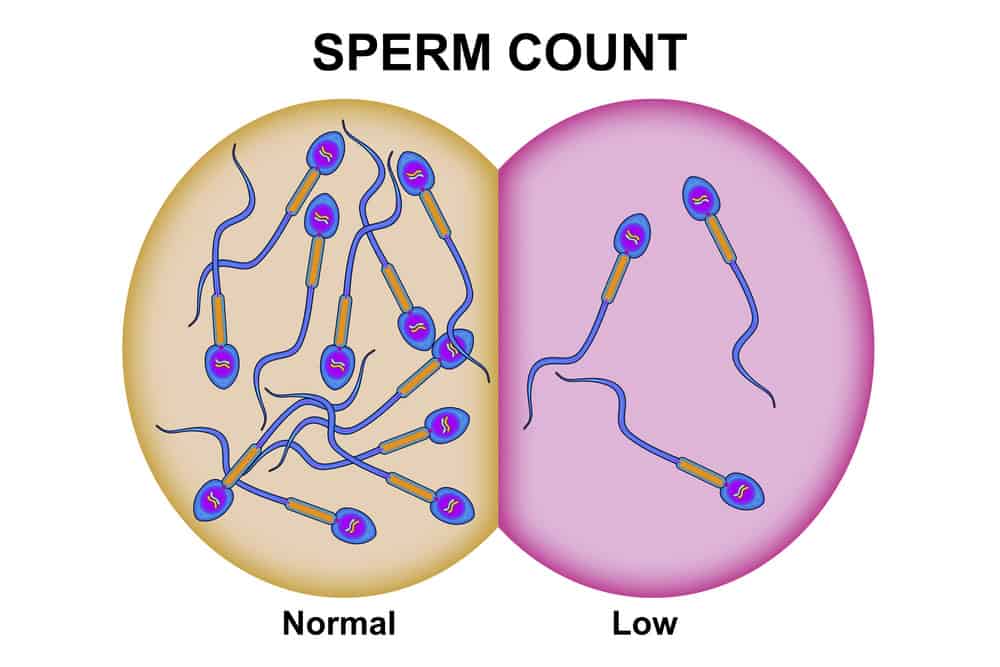
- Total sperm count: The number of sperm found in a man’s full ejaculate.
- Progressive motility: The ability of sperm to swim straight ahead.
Meanwhile, another study performed a full semen analysis on men who had either never had Covid-19, had been infected less than 90 days ago, or had been infected more than 150 days ago. They found no significant difference in semen volume, sperm concentration, sperm motility (the ability of sperm to move), and sperm morphology (the size and shape of individual sperm) between men who’d had Covid-19 over 150 days ago and those who had never had it.
Are there any long-lasting effects of Covid-19 on male fertility?
There are some viruses, most notably mumps, which can cause something called viral orchitis. This is a severe inflammation and infection of the testicles. When it occurs in adolescents and young boys, mumps orchitis can cause permanent damage to the testicles and lead to infertility.
Studies on severe acute respiratory syndrome (SARS), which is from the same coronavirus class as Covid-19, revealed that some patients developed viral orchitis as a part of the disease. And as we’ve mentioned before, SARS-COV-2 viruses can enter the testes via the ACE2 receptors.
Therefore, it is theoretically possible that Covid-19 may have a similar effect on the testicles. However, it is important to note that this is still purely speculative and follow-up research is required. In addition, while changes in sperm quality can make conception temporarily harder, they do not make it impossible — many other aspects of overall health can affect reproductive function.
Can Covid-19 be sexually transmitted?
This is still an area of ongoing research, and the data is mixed. Two of the studies we’ve mentioned earlier looked at the semen of Covid-19 patients one month after diagnosis and found no signs of the virus in semen.
However, a more recent study compared men who have achieved clinical recovery from Covid-19 and those with active Covid-19 infection. They found that 6 patients (15.8%) had SARS-CoV-2 in their semen, including 4 of 15 patients (26.7%) who were at the acute stage of infection and 2 of 23 patients (8.7%) who were clinically recovering.
Once again, this means it is theoretically possible for Covid-19 to be sexually transmitted, but it does not prove it. Ultimately, the overwhelming majority of Covid infections occur via respiratory droplets — and in the large scheme of things, the exchange of saliva usually happens long before sexual intercourse.
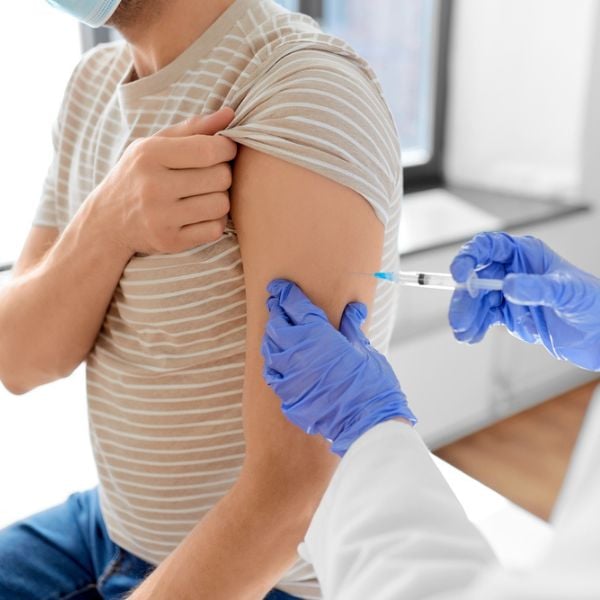
And what about Covid-19 vaccines?
Currently, vaccines are facing an unprecedented level of bad rap in the market — and this is perhaps especially notorious in the case of Covid-19 vaccines. The speculation regarding possible adverse effects has touched almost every specialty, urology included.
And yet, this is one aspect where the evidence seems conclusive. After screening over 1,400 studies and examining 29 high-quality ones, a group of Italian researchers found no evidence that Covid vaccines impacted hormone levels or fertility markers for either men or women.
Final thoughts
There are still many unknowns regarding the Covid-19 pandemic and male fertility, and more research is emerging. Here’s what we know:
- Fevers associated with acute viral infections of many types are likely to raise testicular temperature and can temporarily impair sperm production.
- Covid-19 may theoretically cause viral orchitis, but no evidence for this has yet been found in patients.
- SARS-CoV-2 virus may be found in the semen, but the evidence is mixed, and the long-term implications of this are unclear.
- Covid-19 infection may temporarily affect sperm quality, but a systematic review suggests levels return to normal within a few months.
Although we are still learning about how Covid-19 is transmitted, we recommend continued handwashing practices, social distancing measures, covering of the mouth and nose when in public, and regular disinfection of frequently touched surfaces.
Have questions about male fertility? Turn to Tower Urology
Board-certified, fellowship-trained urologists at Tower Urology can help address your concerns about male fertility and environmental factors that may be affecting your reproductive health. Our experienced physicians can provide comprehensive evaluations, fertility assessments, and personalized treatment plans to support your reproductive goals.
Please make an appointment online or call us at (310) 854-9898.
Tower Urology is a proud affiliate of Cedars-Sinai Medical Center, ranked #1 in California and #2 nationwide by U.S. News & World Report. This partnership reflects our dedication to delivering the highest standard of urologic care alongside the best urologists in Los Angeles. Our years of experience and access to Cedars-Sinai’s world-class facilities ensure that our exceptional and innovative urological care positions Tower Urology as a leader in Southern California.
Tower Urology is conveniently located for patients throughout Southern California and Los Angeles, including Beverly Hills, Santa Monica, West Los Angeles, West Hollywood, Culver City, Hollywood, Venice, Marina del Rey, Burbank, Glendale, and Downtown Los Angeles.
Our services include treatment for low testosterone, chronic pelvic pain, chronic testicular pain, and Peyronie’s disease.
Sources
The Fundamental Reasons Why Laptop Computers should not be Used on Your Lap
https://pmc.ncbi.nlm.nih.gov/articles/PMC5219578
What is the ACE2 receptor?
https://www.asbmb.org/asbmb-today/science/051620/what-is-the-ace2-receptor
Impact of COVID-19 on testicular function: a systematic review and meta-analysis
https://pmc.ncbi.nlm.nih.gov/articles/PMC11246276
Detection of 2019 novel coronavirus in semen and testicular biopsy specimen of COVID-19 patients
https://www.medrxiv.org/content/10.1101/2020.03.31.20042333v2
Effect of SARS-CoV-2 infection upon male gonadal function: A single center-based study
https://www.researchgate.net/publication/340157019_Effect_of_SARS-CoV-2_infection_upon_male_gonadal_function_A_single_center-based_study
SARS-CoV-2 effects on sperm parameters: a meta-analysis study
Evaluation of mid- and long-term impact of COVID-19 on male fertility through evaluating semen parameters
https://pmc.ncbi.nlm.nih.gov/articles/PMC8899150
Mumps Orchitis: Clinical Aspects and Mechanisms
https://pmc.ncbi.nlm.nih.gov/articles/PMC8013702
Clinical Characteristics and Results of Semen Tests Among Men With Coronavirus Disease 2019
https://jamanetwork.com/journals/jamanetworkopen/fullarticle/2765654
The impact of COVID-19 vaccines on fertility-A systematic review and meta-analysis
https://pmc.ncbi.nlm.nih.gov/articles/PMC9464596