 Mark, a 64-year-old writer and producer, had seen the same general practitioner for nearly forty years. So when that doctor saw concerning blood test results coupled with imaging that showed spots on Mark’s prostate, he immediately suggested a prostate biopsy. Fortunately, it came back cancer-free, so Mark moved on with his life and thought little of it.
That was until one night when he woke up, unable to urinate at all. What followed was an overwhelming medical experience that left him traumatized and terrified.
Mark found Dr. Premal J. Desai with the help of a friend and was totally shocked by how different it was from his previous urology experience. Tower Urology was a team that treated his anxiety with compassion, accurately diagnosed the issue, expertly performed surgery to remedy the concern, and helped him heal mentally and physically. “It was the most harrowing thing I’ve faced in my lifetime,” Mark says, “and Dr. Desai and the team at Tower Urology helped make it better.”
How did Mark’s prostate problems first get discovered?
Mark’s longtime doctor noticed concerning changes during routine monitoring. “The first sign was that my prostate-specific antigen (PSA) levels started increasing, so my general practitioner said it’s likely that I had an enlarged prostate,” Mark recalls. “He saw a few other red flags, too, so we went straight to an MRI.” Rising PSA levels can indicate a few things, from inflammation of the prostate to benign prostatic hyperplasia (BPH), or even prostate cancer.
The MRI revealed spots on his prostate gland that required even further investigation. His physician referred him to two urologists, including Dr. Desai.
As luck would have it, Mark saw the other urologist first. “Randomly, I just called the first doctor, and he had an appointment right away, so I went. That doctor did a biopsy, and it showed I was cancer-free,” Mark explains. “I went on with my life. Everything was good.”
But his enlarged prostate remained, silently creating a blockage that would soon become dangerous.
How did Mark’s urinary symptoms take a turn for the worse?
Without warning, in early July, Mark’s uncomfortable urinary symptoms progressed from just bothersome to downright concerning. “I woke up in the middle of the night to urinate, which is normal for me, but I couldn’t urinate at all,” Mark recalls. “I went back to sleep, woke up, and the same thing, but this time my bladder was completely full.”
Typically, other urinary symptoms such as a weak stream, urgency, and nocturia appear before BPH. But Mark was experiencing a more severe symptom — acute urinary retention, which often creates excruciating pain as the bladder overfills.
“I went to urgent care and was in tremendous pain and discomfort,” Mark says. “Finally, after 3 hours, they sent me to the ER.”
At the ER, immediate catheterization provided relief. “They put a catheter in, and I was sent home a few hours later,” he continues. “I was 64 and in good shape. The experience was scary, awful, and humiliating.”
How did routine care turn into a life-threatening infection?
What should have been straightforward management became a cycle of failed treatments. “I went back that next Monday to the first urologist, and over the next few days, I received what I would call not great care,” Mark says. “The catheter went in and out several times. The doctor said I would be able to urinate. I could not. I went back to the ER, catheterized again. The cycle went on.”
A cystoscopy to examine the urethra and prostate didn’t go well. “The next thing I know, I started feeling sick, like I had the flu,” Mark recalls. By the end of that week, his symptoms had escalated. “I went back to my doctor. They tested my blood and urine, and it showed I had a urinary tract infection (UTI).”
Doctors often use urine cultures and additional urine samples to check for abnormalities, such as inflammation in the urethral area, especially in patients with other UTI symptoms, such as pain radiating to the lower back. Urine cultures can also help determine if symptoms are from a UTI or a sexually transmitted infection (STI).
Mark was prescribed antibiotics, which are common for a UTI, along with ibuprofen for the pain. Shortly after arriving home from the doctor, things drastically worsened: “I started shaking. My mind was getting fuzzy. I tried to call 911 and kept dialing the wrong number until finally an ambulance was sent, and I was taken to the hospital.”
What happened next was terrifying. At the hospital, Mark learned that the bacterial infection in his urinary tract had spread to his bloodstream and had progressed to sepsis. “They said my score was in the twenties, where zero is the normal score for a healthy individual. I was hospitalized for five days.”
Read more about the life-threatening condition called “sepsis”.
How did Mark get to Dr. Desai after his near-death experience?
After five days in the hospital fighting sepsis, Mark knew he needed different care and turned to those he trusted most. “I talked to my general doctor, and I said I’m not going back to that urologist,” he explains. Around the same time, “One of my closest friends said, ‘I’m a patient of Dr. Desai. I’ll call him and get you in right away.’ The day after I was released, I saw Dr. Desai.”
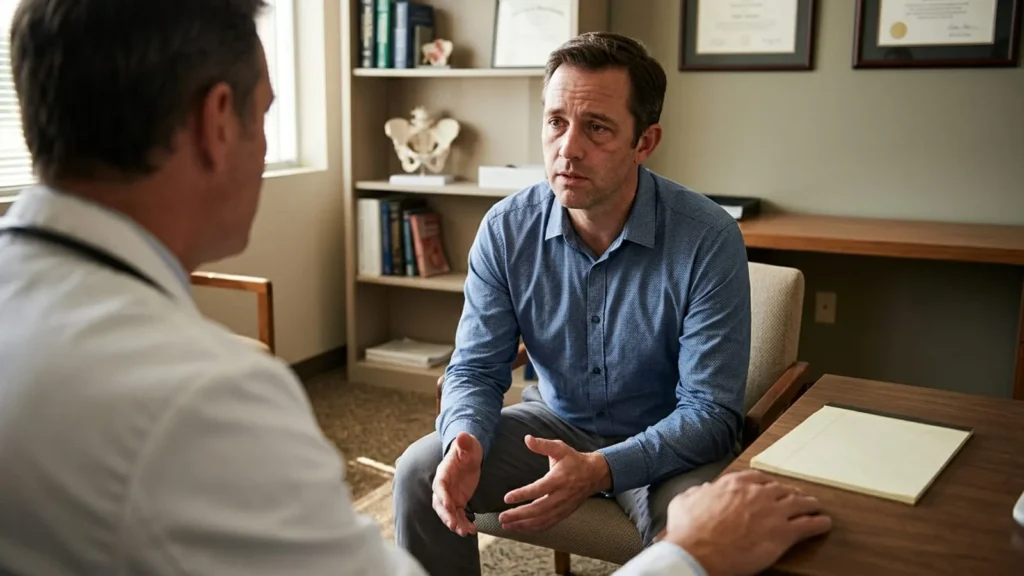
The contrast was immediate and profound. “I was immediately put at ease,” Mark says. “Dr. Desai could tell I had anxiety and was feeling traumatized from my near-death experience, and he was just amazing. So was his nurse, Mark. The amount of care and compassion was the opposite of what I had experienced previously.”
The entire Tower Urology team recognized his emotional state. “The staff was just phenomenal. I was having anxiety in the waiting room, and one of the assistants was right there, offering me water and a hug. The care and attention were just unsurpassed,” Mark recalls.
This trauma-informed approach mattered enormously for someone who’d nearly died from urinary sepsis. Learn more about this type of approach, so you can choose healthcare providers who have it.
How did Dr. Desai discover an ongoing issue with Mark’s prostate?
Dr. Desai reviewed Mark’s history, then conducted his own physical exam, testing, and comprehensive imaging to assess the full extent of the problem. “That week I went into Dr. Desai quite a few times, and he was able to do a scope with a camera,” Mark explains. “It showed that my prostate had a blockage due to a severely enlarged prostate and that I would need surgery.”
Prostate congestion or blockage is often linked to inflammation (prostatitis), infection of the prostate, or benign enlargement. It can cause a range of urinary, sexual, and pain-related symptoms, such as hesitancy, urgency, pelvic or genital pain conditions, painful ejaculation, and sexual dysfunction. Diagnosis may involve urinalysis and testing of the prostate fluid to help identify underlying causes and guide treatment.
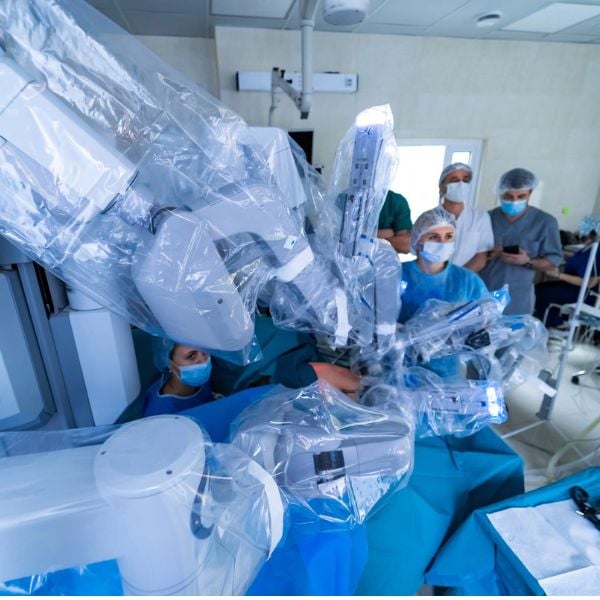
Dr. Desai explained Mark’s treatment options, and they decided on robotic surgery using the Da Vinci single-port system.
Mark’s trauma from the sepsis experience created ongoing anxiety. “Before surgery, because I was so anxious and, admittedly, a bit neurotic, as I still had this bag and catheter, I was always nervous when blood would appear,” he says. “But it was clear that in Dr. Desai’s office, he treats every patient to the degree they need to get through whatever they’re facing. Everyone in the office knew who I was and what I needed in those moments.”
What did Dr. Desai discover during the robotic prostatectomy?
Surgery with Dr. Desai revealed that pockets of the infection remained within Mark’s prostate tissue. It was likely responsible for all of Mark’s symptoms. There are different types of prostatitis, such as asymptomatic inflammatory prostatitis, which causes no symptoms; nonbacterial prostatitis (chronic pelvic pain syndrome (CPPS)), in which the prostate becomes inflamed or irritated without a detectable bacterial infection; and bacterial prostatitis, which can be acute or chronic.
“After surgery, Dr. Desai came to check on me. He told me it was an extensive surgery, more complicated than he initially thought, because there were pockets of infection still in my prostate,” Mark recalls.
The single-port robotic approach through the bladder allowed Dr. Desai to remove both the massively enlarged prostate and the pockets of infection that had caused sepsis. This definitive treatment addressed both the blockage and the chronic bacterial prostatitis simultaneously. Repeated or prolonged catheterization is a well-recognized risk factor for developing bacterial prostatitis as it can introduce bacteria into the urethra, which may then migrate to the prostate.
How is Mark doing now after his harrowing experience?
Mark has recovered completely without side effects or continuing symptoms of prostatitis. “Now I’m healthy, mentally and physically, and Dr. Desai and the Tower Urology Team had such a big part in that,” he says. “I have so much love for them.”
“Tower really is like the unofficial men’s club for those who are in their 50s through 70s. We all hang out in the office there,” Mark laughs. “Because Dr. Desai’s just that great, so many of my friends go see him. I’ve referred others too. I say, ‘You’ve got to see Dr. Desai. There’s no other option. Join the club.'”
Why choose Tower Urology for complex prostate conditions?
At Tower Urology, specialists like Dr. Desai provide compassionate expert care for complicated cases, including prostate infections, severe BPH, and urinary retention.
We invite you to establish care with Tower Urology. Please make an appointment online or call us at (310) 854-9898.
Tower Urology is a proud affiliate of Cedars-Sinai Medical Center, ranked #1 in California and #2 nationwide by U.S. News & World Report. Our years of experience and access to world-class facilities ensure exceptional urological care.
Tower Urology is conveniently located for patients throughout Southern California, including Los Angeles, Beverly Hills, Santa Monica, West Los Angeles, West Hollywood, Culver City, Hollywood, Venice, Marina del Rey, Burbank, Glendale, and Downtown Los Angeles.
Frequently Asked Questions About Prostate Infections and Sepsis

Acute bacterial prostatitis occurs when a bacterial infection in the prostate gland spreads to the bloodstream, leading to sepsis. This life-threatening complication can develop from urinary tract infections, especially when combined with blockage from an enlarged prostate or repeated catheterization that introduces bacteria.
Yes. Benign prostatic hyperplasia can cause a blockage of the urethra even when a prostate biopsy shows no cancer. The enlarged prostate tissue compresses the urethra, preventing normal urination and causing acute urinary retention, potentially leading to bladder damage, kidney problems, and an increased risk of urinary tract infections that may progress to serious complications.
Patients who experience life-threatening complications like sepsis often develop anxiety and trauma around medical procedures. Trauma-informed care recognizes this emotional impact, providing compassionate support, accessibility during crisis, and an understanding of individual needs. This approach supports patients’ mental health while addressing physical health conditions.
Single-port robotic prostatectomy allows surgeons to remove both the enlarged prostate causing obstruction and pockets of infection within prostate tissue through a minimally invasive approach directly through the bladder. This definitive treatment addresses chronic bacterial prostatitis, sometimes related to obstruction from severe benign prostatic hyperplasia, while simultaneously reducing recovery time compared to traditional open surgery.
Sources:
Prostatitis: Inflammation of the Prostate
https://www.niddk.nih.gov/health-information/urologic-diseases/prostate-problems/prostatitis-inflammation-prostate
Bacterial Sepsis
https://www.ncbi.nlm.nih.gov/books/NBK537054/
Risks Urinary Catheter
https://www.nhs.uk/tests-and-treatments/urinary-catheters/risks/