 At 69 years old, Isaak was already dealing with the consequences of a markedly enlarged prostate, including a complete inability to urinate and kidney failure.
The first doctor he consulted laid out a plan that Isaak found terrifying. It included invasive surgery, the insertion of a catheter through his stomach for an unknown duration, and major concerns about whether his bladder would ever work again.
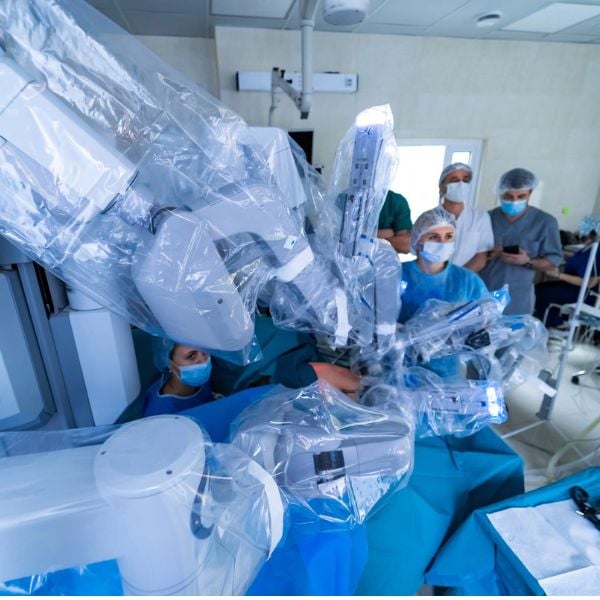
Friends urged him to get a second opinion, and meeting Dr. Desai changed everything. Instead of a stomach catheter and open surgery, Dr. Desai explained how a single-port robotic simple/ subtotal prostatectomy could address his enlarged prostate symptoms in the least invasive way possible.
How did Isaak know something was wrong with his prostate?
Isaak began experiencing some of the most common symptoms of an enlarged prostate, including the inability to urinate.
An enlarged prostate can disrupt the flow of urine, leading to uncomfortable and dangerous side effects such as urinary tract infections (UTIs), kidney stones, or bladder stones. Many men with benign prostatic hyperplasia (BPH) experience urinary concerns ranging from the urgent need to urinate to dribbling and a weak urine stream. This is because prostate growth can gradually compress the urethra and bladder neck, restricting the flow of urine.
In Isaak’s case, his prostate tissue had grown far beyond the normal size of a walnut. This prostate growth had led to progressive lower urinary tract symptoms that eventually became dangerous. He developed complete acute urinary retention: an inability to urinate that caused his bladder to overfill and urine to back up into his kidneys, eventually causing kidney damage.
What the first doctor told Isaak was alarming
Isaak’s first doctor’s assessment and recommendation that he undergo major surgery that could permanently impair his bladder function was alarming.

“He told me that my prostate looked like a huge problem and was recommending a catheter through my stomach, and that it would have to remain in place,” Isaak recalls. “He didn’t know for how long, because he was worrying about my bladder not working. And then he recommended another fairly major surgery, not robotic or minimally invasive.”
The size of the prostate often determines the treatment required for urinary problems, such as those Isaak was experiencing. Depending on the size of your prostate, options can include conservative treatments, including:
- Lifestyle changes (such as bladder training, avoiding caffeine and alcohol, making changes to your diet, increasing physical activity)
- Medications (often alpha-blockers or 5-alpha reductase inhibitors)
- Minimally invasive procedures (such as laser or steam therapy); and
- Surgery (such as a transurethral resection of the prostate (TURP) or total prostatectomy)
For someone facing kidney failure due to acute urinary retention caused by severe prostate enlargement, surgery seemed necessary and unavoidable. But Isaak found this prospect overwhelming; facing aspects like a suprapubic catheter through the abdomen, an uncertain timeline for removal, doubts about bladder function recovery, and major surgery concerned him. “I was really scared,” he admits. There was so much to take in.”
How did Isaak connect with Dr. Desai?
Friends intervened when they saw how frightened he was and recommended that he speak with other doctors for reassurance. “Friends of mine encouraged me to get a second opinion,” Isaak explains. “And so, I met Dr. Desai, and it was such a completely different experience than with the first doctor.”
The contrast was immediately apparent. “Dr. Desai was so professional, and he explained everything in such detail: what was happening to my body and why, and what he could do about it,” Isaak continues.
How was Dr. Desai’s assessment different from the first doctor’s?
Dr. Desai undertook a thorough evaluation before making recommendations. “After the initial consultation, I decided to delay my surgery with the other doctor to have another appointment with Dr. Desai so he could review my medical history and carry out a full examination,” Isaak explains. “He also performed an ultrasound and ran blood tests.”
The critical difference was Dr. Desai’s confidence about bladder recovery. “He assured me that my bladder should work and if complications arose, he would be able to do something to help get it functioning again,” Isaak says.
This reassurance about bladder function mattered enormously. The first doctor’s uncertainty about whether the bladder muscles would recover had been the source of most of Isaak’s fear.
Why did Dr. Desai recommend robotic simple/ subtotal prostatectomy instead?

Dr. Desai explained how robotic simple/subtotal prostatectomy using the Da Vinci single-port system could address even a massively enlarged prostate through minimally invasive techniques. “He just made me so sure that a robotic prostatectomy would be the best option,” Isaak says. “Major surgery could be avoided, and I wouldn’t need the kind of catheter the other doctor suggested. I found that I had totally different options than those offered by the first doctor.”
The single-port approach, accessing the prostate gland to enucleate it directly through the bladder, allowed definitive treatment of the enlarged prostate gland without large incisions or extended catheter placement through the lower abdomen.
There is still a potential for side effects with a robotic simple prostatectomy, such as retrograde ejaculation, where orgasm occurs normally but without ejaculation. However, the risks of any urinary or sexual side effects with the procedure are extremely minimal when performed by a skilled surgeon.
In Isaak’s case, a robotic simple/subtotal prostatectomy sounded like the better option compared to a catheter in his abdomen followed by major surgery.
How did surgery and recovery compare to what the first doctor recommended?
Both the surgery itself and recovery were completely different from what the first doctor described. “Surgery went so well, and I went home the next day,” Isaak reports. Contrary to the initial advice he received, there was no extended hospital stay, no stomach catheter, and no catastrophic bladder dysfunction.
“And within a few days of surgery, I healed and was feeling better,” he recalls. A temporary urinary catheter was inserted through the urethra, which is standard after prostate surgery, and it was removed on schedule without complications. “When the catheter was removed, I can’t begin to explain how happy I was,” he continues.
Most importantly, his kidneys and bladder recovered completely. The kidney damage from severe blockage and acute urinary retention reversed once his normal urine flow resumed.
What does Isaak want others to know about Dr. Desai?
Isaak’s gratitude is profound, and he wants everyone to know that finding a doctor you can trust is essential. “Everything he told me happened exactly as he said,” he reports. “I would recommend Dr. Desai to everybody, to anyone who has a urology problem. He’s very good, and I’m very happy. I feel in great shape now, and I can’t thank him enough.”
What stood out wasn’t only his surgical skill but also his bedside manner. Describing Dr. Desai’s general demeanor, Isaak says, “He just makes you feel certain that you have found the right doctor, that you’re in the right place, and that you’re in a safe pair of hands.”
That confidence, that certainty about being cared for by a capable and trusted surgeon, transforms the experience of facing major surgery for severe prostate problems.
Why choose Tower Urology for enlarged prostate and complex urological conditions?
At Tower Urology, specialists such as Dr. Desai offer second opinions that can significantly alter treatment plans. Whether you’re facing recommendations that seem overwhelming, dealing with severe symptoms of BPH, or experiencing complications like kidney damage from urinary retention, expert evaluation and advanced surgical options are available.
We invite you to establish a care plan with Tower Urology. Please make an appointment online or call us at (310) 854-9898.
Tower Urology is a proud affiliate of Cedars-Sinai Medical Center, ranked #1 in California and #2 nationwide by U.S. News & World Report. Our years of experience and access to world-class facilities ensure exceptional urological care.
Tower Urology is conveniently located for patients throughout Southern California, including Los Angeles, Beverly Hills, Santa Monica, West Los Angeles, West Hollywood, Culver City, Hollywood, Venice, Marina del Rey, Burbank, Glendale, and Downtown Los Angeles.
Frequently Asked Questions About Severely Enlarged Prostate

Severe blockage from benign prostatic hyperplasia (BPH) can cause acute urinary retention, preventing the bladder from emptying. When urine backs up into the kidneys, it creates pressure that damages kidney function. Relieving the obstruction through prostate surgery typically allows kidney function to recover.
Advanced single-port robotic techniques can address large prostates due to benign prostate enlargement that other surgeons might consider requiring open surgery. The Da Vinci single-port system provides access through the bladder for definitive treatment for an enlarged prostate while maintaining minimally invasive benefits, such as faster recovery and shorter hospital stays. The single-port system is even less invasive compared to the traditional multi-port robotic surgery, as only one small incision is made in the bladder instead of multiple entry points in the abdominal cavity.
Different healthcare providers may recommend vastly different approaches for the same condition. Some surgeons with advanced robotic expertise can offer less invasive solutions than traditional approaches. A second opinion often offers alternative perspectives on treatment options, surgical procedures, and expected outcomes, helping patients make informed decisions.
A suprapubic catheter is placed through the lower abdomen into the bladder and may remain in place for extended periods when bladder function is uncertain. A standard urinary catheter goes through the urethra and is typically removed within days after prostate surgery, once initial healing occurs.
Sources:
Suprapubic Bladder Catheterization
https://www.ncbi.nlm.nih.gov/sites/books/NBK482179/
Acute urinary retention in benign prostatic hyperplasia: Risk factors and current management
https://pmc.ncbi.nlm.nih.gov/articles/PMC2721562/
Renal Failure Due to Benign Prostatic Hyperplasia
https://psnet.ahrq.gov/web-mm/renal-failure-due-benign-prostatic-hyperplasia