A life-saving introduction to Dr. Desai
Nancy’s relationship with Dr. Desai began during a medical emergency involving her husband that changed their lives.
“Twelve years ago, we had to go to the emergency room at Cedars-Sinai for my husband,” she explains, “and I distinctly remember this young doctor came up and said, ‘I need to perform a procedure on your husband. Both kidneys are failing, I need to act immediately.’”
Nick had a critical autoimmune disease that was blocking kidney function. “Dr. Desai put in two stents and saved my husband’s life,” Nancy states simply. That emergency intervention established a bond of trust that would span more than a decade.
For Nancy and her husband Nick, Dr. Desai isn’t just their urologist; he’s the physician who saved Nick’s life twelve years ago and has been their trusted healthcare partner ever since. So, when Nancy developed her own serious kidney problem, there was no question about where she would turn.
Ongoing care through complex urologic challenges
Nick’s autoimmune condition required continued vigilance and expertise. “Right around COVID time, he had another flare-up, and Dr. Desai treated my husband again with stents, collaborating with a team of doctors,” Nancy recalls. Eventually, Nick’s condition deteriorated to the point where he needed a nephrectomy (surgical removal of one kidney) due to recurring infections despite antibiotic therapy.
“My husband had to have a kidney removed, but Dr. Desai was there the entire time. He explained everything and carried out the procedure himself. It was very tricky, but he’s a genius; his hands are like magic,” Nancy says with evident admiration. “Dr. Desai still treats him, but my husband is doing well.”
Nancy’s own mysterious urinary symptoms
Supporting her husband through his kidney disease journey, Nancy began experiencing her own troubling symptoms. “The last year and a half, I was going to my regular checkups, and my urinalysis was always off. I was constantly running to the restroom,” she explains. “No pain or burning, I just couldn’t hold my bladder.”
The frequent urination and overactive bladder symptoms significantly impacted her routine and quality of life. “It was nonstop bathroom visits. I had to plan my trips out of the house. It was uncomfortable to say the least,” Nancy describes.
It was initially suspected that Nancy was suffering from urinary tract infections (UTIs), but initial testing by her primary physician suggested otherwise. “I didn’t have an infection or UTI. My general doctor thought it was vaginal flora or something similar.”
The complex journey of diagnosing urinary concerns
Nancy’s journey to diagnosis involved multiple steps and providers. “At some point, I went to Tower Urology and saw another physician who discovered I did have a UTI. I was treated, but the issue came back,” she recalls.
Further investigation included imaging tests. “They did a bladder ultrasound, and that checked out too.”
But Nancy’s instincts led her to ask her physician to look elsewhere in her urinary system. “I asked my primary care physician, ‘Can we please do a kidney ultrasound?’ and he agreed.”
Nancy’s persistence paid off, leading to a shocking discovery: a sizeable, greater than 2-centimeter kidney stone, about the size of a golf ball. The diagnosis was completely unexpected, as she had none of the classic symptoms of kidney stones, such as lower back pain or nausea and vomiting.
“My doctor immediately told me I needed surgery, that I couldn’t pass this on my own,” Nancy recalls. Larger stones, usually 6 millimeters or greater, cannot pass through the ureter naturally and require surgical intervention. “It was then I decided to go to Dr. Desai,” Nancy says.
Dr. Desai’s diagnostic brilliance
Nancy’s decision to see Dr. Desai revealed the difference that expertise makes. “He’s efficient, detailed, and explains things so well,” Nancy notes. “The minute he looked at my labs, he said, ‘Oh, you have this bacteria, and this is indicative of a possible infectious kidney stone. It’s all right there.’ He was very reassuring,” she insists.
This was a crucial insight. Struvite stones, also called infection stones, form when certain bacteria in the urinary tract produce ammonia, creating an environment where minerals rapidly build up. These stones can grow quickly and cause recurring UTIs, creating a vicious cycle. “My other doctor didn’t see that, but Dr. Desai instantly did,” Nancy emphasizes.
“He ordered a CT scan, and he was right on the dot. They proved he had been very accurate with his diagnosis,” Nancy continues. Understanding the type of kidney stone is essential because different types require different treatment approaches and follow-up care to prevent stone formation in the future.
A calm, confident treatment plan for kidney stones
Dr. Desai’s explanation gave Nancy complete confidence. “He said, ‘We’ll go in, remove the stone. You will have a week or so of discomfort afterward, but you’ll be good to go,'” Nancy recalls.
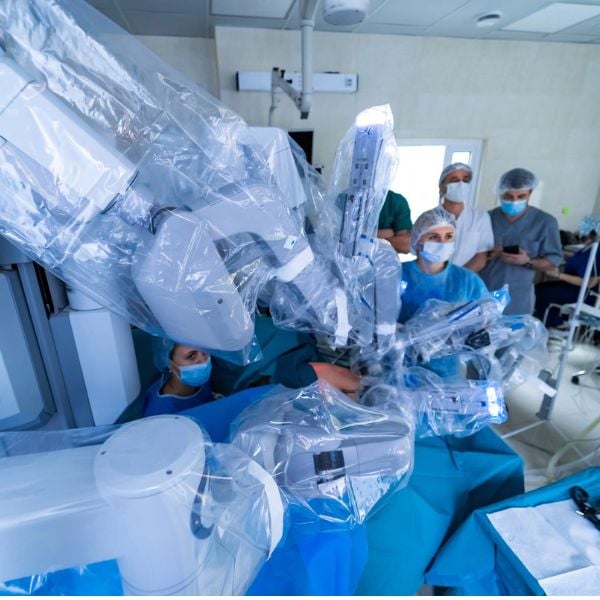
Given the stone’s size and location involving a large portion of the kidney, Dr. Desai performed a percutaneous nephrolithotomy (PCNL), which is a minimally invasive procedure that accesses the kidney via a small tube inserted directly through a small incision in the back to remove large kidney stones.
“I had zero anxiety, just complete trust,” Nancy states. “The way Dr. Desai explains everything to you, how he reads the lab results and knows — he’s just an expert.”
Exceptional surgical experience and recovery
Nancy’s surgical experience reflected Dr. Desai’s skill and compassionate bedside manner. “We went in, and he immediately calmed me down. His bedside manner is amazing; there’s always a smile on his face, and he puts you at ease,” she describes. “I was in and out, and when I opened my eyes, he was there. All things considered, it was not an unpleasant experience.”
Dr. Desai’s care extended well beyond the operating room. “He came to my room the next day,” Nancy continues. “I was anxious about the post-op and recovery, but he kept me distracted and calm by joking around, and just being kind,” Nancy recalls warmly.
The results were exactly as promised. Nancy was cleared of her large kidney stone and, importantly, the recurring UTIs that had plagued her for more than a year resolved completely once the infectious stone was removed.
A lasting relationship built on trust and results
Nancy’s trust in Dr. Desai is absolute. “I trust him immensely. I love his bedside manner, the way he puts you at ease, and his knowledge. You just know you’re in good hands,” she declares.
The ongoing relationship benefits both Nancy and Nick. “I’ll still see him every so often for checkups, and I’ll continue to see him because there is absolutely no reason for me to go anywhere else,” Nancy states. “My husband’s been his patient for 12 years now, and he still sees him as well.”
For Nancy and Nick, Dr. Desai represents everything patients hope for in a physician: life-saving intervention when needed, accurate diagnosis of complex conditions, surgical excellence, genuine compassion, and a commitment to long-term care that extends across years and multiple family members.
Why choose Tower Urology for kidney stones and complex urological conditions?
At Tower Urology, our specialists combine advanced diagnostic capabilities with surgical expertise to treat all types of kidney stones, from small stones that may pass naturally with supportive care to large kidney stones requiring procedures like percutaneous nephrolithotomy, ureteroscopy with laser lithotripsy, or shock wave lithotripsy.
Dr. Desai and our team understand that kidney stones of all types can significantly impact kidney function and quality of life. We provide comprehensive care, including accurate diagnosis, effective treatment, and follow-up to prevent stone formation.
We invite you to establish a care plan with Tower Urology. Please make an appointment online or call us at (310) 854-9898.
Tower Urology is a proud affiliate of Cedars-Sinai Medical Center, ranked #1 in California and #2 nationwide by U.S. News & World Report. This partnership reflects our dedication to delivering the highest standard of urologic care alongside the best urologists in Los Angeles. Our years of experience and access to Cedars-Sinai’s world-class facilities ensure that our exceptional and innovative urological care positions Tower Urology as a leader in Southern California.
Tower Urology is conveniently located for patients throughout Southern California and Los Angeles, including Beverly Hills, Santa Monica, West Los Angeles, West Hollywood, Culver City, Hollywood, Venice, Marina del Rey, Burbank, Glendale, and Downtown Los Angeles.
Our services include comprehensive kidney stone treatment, management of recurring urinary tract infections, care for complex kidney conditions, and long-term urological health monitoring.
If you’re experiencing kidney stones, recurring UTIs, or have any other urological concerns, Tower Urology offers expert diagnosis and treatment. Contact us to schedule a consultation.
Frequently asked questions about large kidney stones and struvite stones

Struvite stones (infection stones) typically occur alongside recurring urinary tract infections (UTIs) and are caused by specific bacteria that raise urine pH. Blood tests and urine tests can identify the bacteria, and imaging tests such as X-rays or CT scans show the stone’s size and location. Your urologist can determine if you have uric acid stones, calcium phosphate stones, cystine stones, or another type and develop an appropriate treatment plan.
Kidney stones can be as small as a grain of sand, and over-the-counter pain relief may be the only treatment needed. But they can also be quite large in size and may cause severe pain.
Stones larger than about 5-7 mm have difficulty passing through the ureter naturally. Very large kidney stones (2 cm or bigger) or stones that cause a blockage restricting or obstructing the flow of urine require procedures such as percutaneous nephrolithotomy (PCNL), where the surgeon accesses the kidney directly to remove the stone, or ureteroscopy with laser to break larger stones into smaller pieces.
If your UTIs are caused by a struvite stone (infectious stone), removing the stone typically resolves the recurring infections. These stones harbor bacteria, creating an environment where infection persists despite antibiotics. Complete removal of the stone eliminates the source of infection and allows normal kidney function to resume.
Prevention depends on your stone type and risk factors. Your risk may rise with obesity or by taking supplements such as vitamin C and calcium, but conversely, a calcium-rich diet from foods may help reduce it.
Other prevention strategies may include:
- Drinking enough fluids (at least 2-3 liters daily).
- Modifying your diet to reduce animal protein or oxalate-rich foods (for example, spinach, rhubarb, almonds).
- Taking medications to prevent stone formation (such as thiazide diuretics or potassium citrate).
- Treating underlying medical conditions (such as gout or hyperparathyroidism).
- Undergoing regular follow-up with blood tests and urine tests to monitor for stone formation risk factors.
Yes. Genetics can influence how easily kidney stones form. A family history of stones increases the risk of developing them because inherited traits can affect how the kidneys handle minerals. Certain genetic conditions, such as cystinuria, can cause stones to form more readily by increasing cystine excretion in the urine. Genetics can also affect levels of calcium in the urine, which matters because calcium oxalate stones are the most common type of kidney stones. When calcium levels run high or urine chemistry shifts, stones form more easily.
Sources:
Renal Calculi, Nephrolithiasis
https://www.ncbi.nlm.nih.gov/books/NBK442014/
Percutaneous Nephrolithotomy (PCNL)
https://www.hopkinsmedicine.org/health/treatment-tests-and-therapies/percutaneous-nephrolithonomy-pcnl