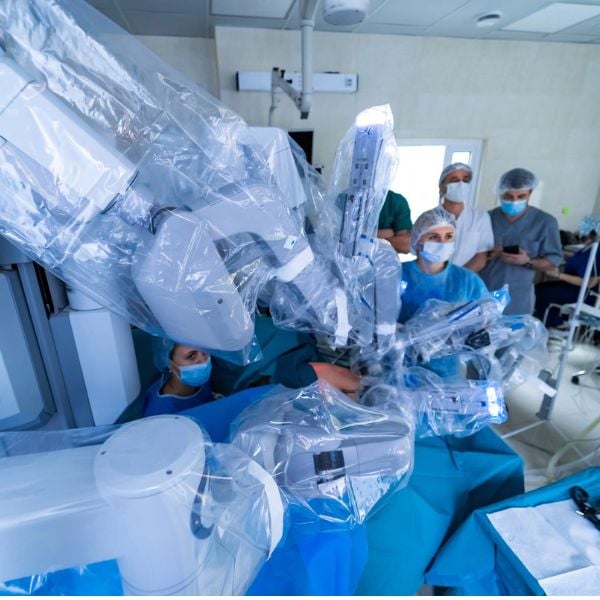
 For Scott, a 71-year-old Santa Barbara resident, urgency issues had become a constant shadow over his daily life. To put it plainly, Scott often felt a sudden, uncontrollable urge to pee. This meant he was always tracking where restrooms were and planning routes around bathroom access.
Then came more bad news. Scott had rising PSA levels and a biopsy that showed cancer. PSA stands for “prostate-specific antigen.” This is a protein made by the prostate gland. The higher the PSA level, the greater the chance of having prostate cancer.
Scott’s general doctor recommended a procedure Scott had never heard of. Scott’s wife wanted a second opinion so she consulted her urologist, Dr. Gary Leach. He immediately said, “Talk to Dr. Desai.”
How does it feel when urgency issues force you to constantly track bathroom locations?
As you can probably imagine, the short answer is “not so great!” Urgency issues are bad enough. Even worse is when they lead to urinary incontinence. In other words, wetting due to uncontrollable pee leakage.
“At the age of 71, I was experiencing urgency issues and was always needing to be aware of where a restroom was,” Scott explains.
That awareness, that constant mental mapping of facilities, can become exhausting. Everything from social events to travel and even simple outings can cause anxiety and stress. Perhaps you can relate? More than 25 million people in the U.S. have urinary incontinence and roughly 44% of them are too embarrassed to talk about it with their healthcare provider.
“In addition, my normal blood labs showed that my PSA was rising,” Scott notes. Prostate-specific antigen, or PSA, is a protein used in a blood test to screen for prostate issues like cancer, inflammation, or benign prostatic hyperplasia (BPH).
“So, my doctor suggested we do a biopsy, and it showed cancer in 1 out of 18 of my samples,” he continues. One positive sample out of 18 might sound minimal, but any prostate cancer requires careful evaluation and treatment decisions.
How did Dr. Gary Leach’s recommendation lead to discovering Dr. Premal J. Desai’s expertise?
“An excellent local doctor had recommended a procedure that I had never heard of, and my wife wanted to run it by her urologist, Dr. Gary Leach, at Tower Urology,” Scott recalls. His wife’s existing relationship with Tower Urology created an opportunity for a second opinion.
“We live in Santa Barbara, so I went with her for one of her appointments, and I just asked Dr. Leach, ‘ Can I run something by you? I told him that the local doctor had recommended a prostate procedure, and he said, ‘I recommend you talk with Dr. Desai here at Tower,'” Scott explains. That simple referral changed everything.
Why is it important to understand all prostate cancer treatment options before surgery?

The range of treatment options for prostate cancer can feel overwhelming. Chemotherapy, radiation therapy, active surveillance, focal treatments, and various surgical approaches each have different implications for cancer control and quality of life. In addition, your treatment plan should also take into consideration factors such as your age, general health, and the stage of your cancer. To make the best decision, you need to understand all the treatment options and how they will affect you.
Fortunately for Scott, Dr. Desai knows this. “I met with Dr. Desai and quickly discovered there are a lot of different approaches to treating prostate cancer,” Scott says. “I was surprised at how many. For example, chemo, radiation, etc. But what was important to me is that Dr. Desai helped me decide,” Scott emphasizes. “We talked it over and decided the best option for me was total prostate removal.”
The clarity of that decision-making process mattered. Dr. Desai didn’t just list options. He helped Scott understand which approach made sense for his specific situation. As we mentioned above, when reviewing the pros and cons of each treatment, Dr. Desai considered Scott’s age, the characteristics of his cancer, his urgency symptoms, and his personal priorities.
“But I was a little nervous, even though I have had other surgeries,” Scott admits. Past surgical experience doesn’t eliminate anxiety about a new procedure, especially robotic prostatectomy involving delicate structures and potential side effects. Still, Scott decided to proceed with the surgery as he wanted his cancer gone.
Why did the recovery from a single-port robotic surgery with Dr. Desai shock Scott?

After the stress of the operating table has passed, most people’s thoughts turn to pain and recovery time. They hope the post-surgery pain will be minimal and the recovery time as short as possible. In Scott’s case, he was pleased with both.
“After doing the surgery, I was pain-free. I think I took Tylenol and that was it,” Scott reports. When he compared it to other post-surgical pain management methods that required stronger medications, the difference became remarkable.
“Some of my other surgeries were brutal for a month or so after, but with Dr. Desai’s robotic surgery talents, it was almost like I didn’t have surgery,” Scott emphasizes.
Hip replacement, a surgery Scott has undergone, typically requires weeks of difficult recovery. But single-port robotic radical prostatectomy using the extraperitoneal approach and the Da Vinci system offered something completely different.
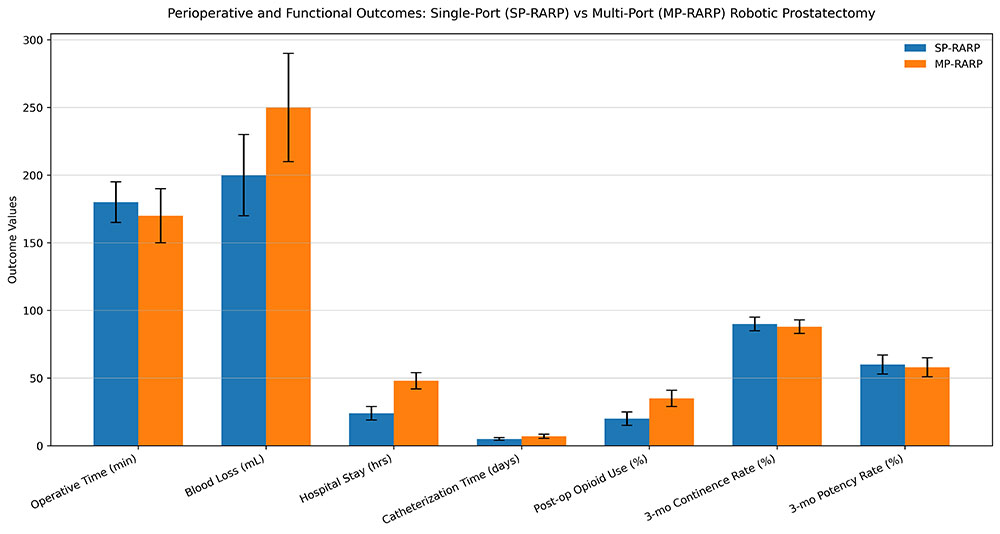
The extraperitoneal technique allows the surgeon to get to the prostate gland without entering the abdominal cavity. This reduces both trauma to your body tissue and postoperative discomfort. Single-port technology uses smaller incisions than traditional multiport approaches. Combined, these two aspects represent minimally invasive surgery at its most advanced. As a result, there is less blood loss, less pain, a shorter hospital stay, and a faster recovery compared to open surgery or even standard laparoscopic surgery.
This advanced laparoscopic prostatectomy method explains why Scott’s recovery was dramatically easier than his previous hip replacement surgery. “As I mentioned, I’ve had surgeries, like a hip replacement, and recovery can be pretty tough, but this was a piece of cake. I was shocked at how quick it was,” Scott reiterates.
What makes complete prostate removal worth it for some patients?
One of the most stressful aspects of prostate cancer is the chance that it will come back. Removing the prostate gland gets rid of this worry once and for all.
For men who choose active surveillance, regular monitoring continues indefinitely. For Scott, surgical removal meant definitive resolution. “Now I don’t have to think about annual biopsies, and the cancer is gone. I don’t have to worry about it anymore,” Scott explains.
“Plus, my urgency problem is gone,” he adds. The BPH symptoms that had dominated his daily life disappeared with the enlarged prostate gland that caused them. One procedure solved two problems: cancer and urinary issues.
What does zero PSA and preserved function mean after prostate cancer surgery?
Zero PSA means that you are free from the worry of prostate cancer.
Preserved function means that you have avoided incontinence and erectile dysfunction, the two most feared side effects of prostate surgery.
So, zero PSA and preserved function represent excellent surgical outcomes. Dr. Desai’s expertise with robotic techniques and the extraperitoneal approach delivered the results every patient hopes for.
“I still see Dr. Desai regularly for follow-up, but the cancer is gone, and my PSA tests since then are zero, so there is no sign of any cancer,” Scott reports. Zero PSA after radical prostatectomy indicates complete cancer control, which is exactly what you want to see.
“My need to keep track of where a bathroom is gone too,” he continues. For Scott, the urgency that shadowed every outing, every social event, every trip has disappeared. Normal urinary continence was restored.
“Urinary function and all those things are preserved,” Scott says, referring to both continence and sexual function.
As we mentioned above, incontinence (which might mean the need for a permanent urinary catheter), and impotence are both major concerns for people facing prostate surgery. Scott’s “walking away with everything preserved” is due to the nerve-sparing techniques possible with robotic surgery. The enhanced visualization and precision of robotic arms and surgical instruments protect the delicate nerves responsible for erectile function while ensuring complete cancer removal.
Why does Scott recommend Dr. Desai to others facing similar prostate cancer decisions?
“He’s just really good at what he does, very thoughtful, and a pleasure to talk to,” Scott says simply.
“I told one of my friends who lives in Montana and is facing something similar, to go down and see Dr. Desai. He’s really got this robotic surgery down,” Scott adds.
That recommendation, encouraging someone to travel from Montana to Los Angeles for surgery, speaks volumes.
For Scott, the combination of Dr. Desai’s surgical skill, his thoughtful approach to treatment decisions, and the advanced single-port robotic technology delivered life-changing results. From constant bathroom awareness to freedom. From rising PSA and cancer worry to zero PSA and peace of mind.
Now cancer-free with preserved urinary and sexual function, Scott represents what excellent prostate cancer treatment achieves when cutting-edge surgical techniques meet genuine expertise.
Why choose Tower Urology for advanced robotic prostate cancer surgery?
At Tower Urology, specialists like Dr. Desai offer the most advanced minimally invasive surgery techniques, including single-port extraperitoneal robotic prostatectomy. Whether you’re dealing with elevated PSA, facing a prostate cancer diagnosis, or seeking treatment options that preserve quality of life, expert care is available.
We invite you to establish a care plan with Tower Urology. Please make an appointment online or call us at (310) 854-9898.
Tower Urology is a proud affiliate of Cedars-Sinai Medical Center, ranked #1 in California and #2 nationwide by U.S. News & World Report. Our years of experience and access to world-class facilities ensure exceptional urological care.
Tower Urology is conveniently located for patients throughout Southern California and Los Angeles, including Beverly Hills, Santa Monica, West Los Angeles, West Hollywood, Culver City, Hollywood, Venice, Marina del Rey, Burbank, Glendale, and Downtown Los Angeles.
Frequently asked questions about extraperitoneal robotic prostatectomy

Extraperitoneal refers to how the prostate is accessed, through a small incision below the belly button into the outside of the abdominal lining (peritoneum), instead of the abdominal cavity. Laparoscopic describes the technique (using small incisions instead of a large incision). Extraperitoneal prostatectomy can be performed laparoscopically or with a robotic system. The extraperitoneal approach combined with a robotic surgical system offers a shorter recovery time and reduced surgical trauma.
Sources:
Transperitoneal Versus Extraperitoneal Approach for Laparoscopic and Robot-Assisted Radical Prostatectomy: A Systematic Review and Meta-Analysis
https://pmc.ncbi.nlm.nih.gov/articles/PMC10646806/
Prostate Biopsy
https://www.pcf.org/patient-support/diagnosis/prostate-biopsy/