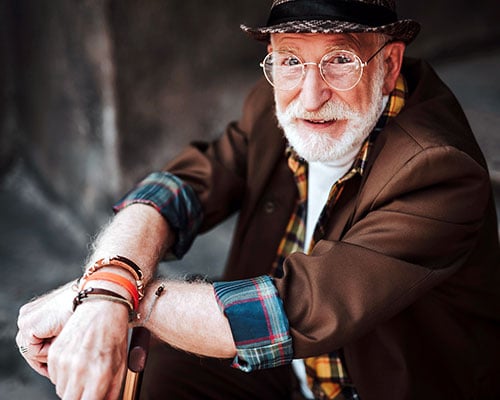
 For Garrick, an 79-year-old facing a life-altering cancer diagnosis, finding the right doctor was about more than prostate cancer treatment. It was about trust during a challenging time. And it was about finding someone who could guide him through one of the most frightening moments of his life without ego or detachment.
When his longtime urologist retired, amidst his prostate cancer journey, Garrick suddenly found himself starting over.
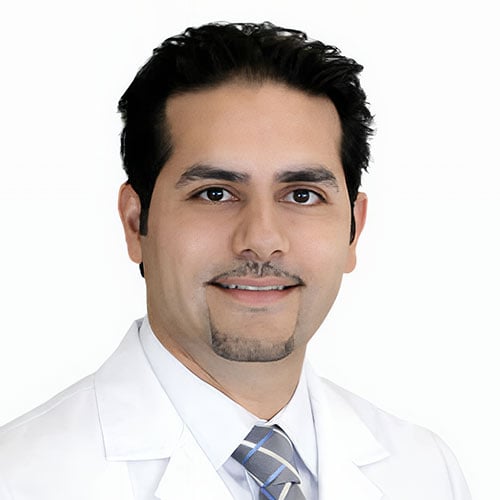
He had already been diagnosed with prostate cancer and had been on active surveillance before seeing Dr. Desai. A referral led him to Dr. Desai at Tower Urology. Four years after radical prostatectomy, Garrick is cancer-free, experiencing no side effects, and living fully. Today, he calls Dr. Desai “a really rare bird,” someone who changed everything when it mattered most.
Why would a surgeon redo tests after a cancer diagnosis?
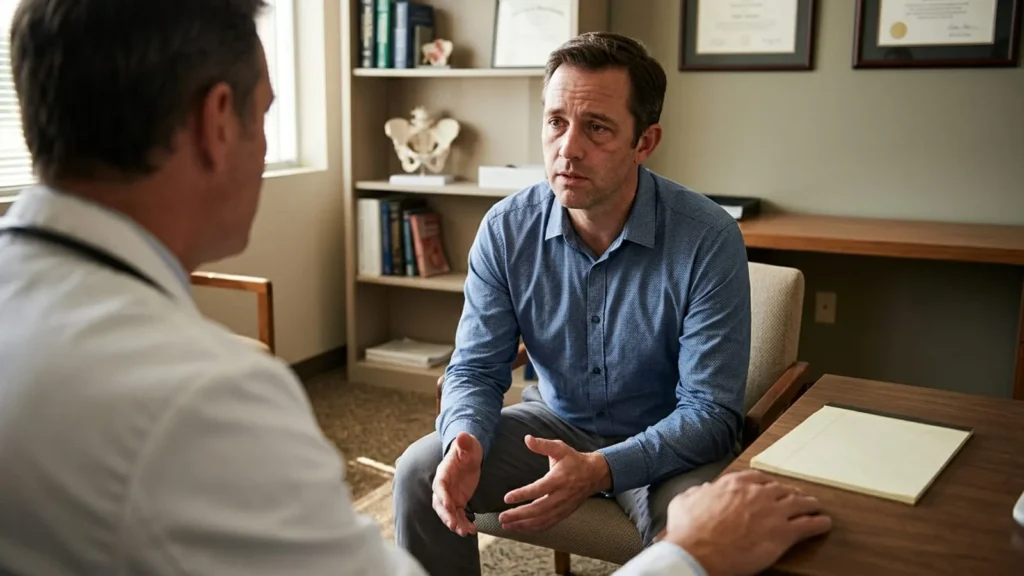
Rather than relying solely on old records, Dr. Desai wanted to start fresh. “He wanted to run his own tests,” Garrick says. “He didn’t just want to look at my previous history.”
That meant updated PSA levels, reviewing prostate biopsies, understanding the Gleason score (a number that describes how aggressive prostate cancer cells look under a microscope), and building a complete, current picture before recommending a treatment plan. This led to repeated blood work and biopsies, which revealed that his prostate cancer had indeed progressed to a more aggressive level (high-risk prostate cancer).
For Garrick, that thoroughness mattered. It showed him that his cancer care was not being rushed. His prostate gland, his immune system, and his future deserved careful attention. In cases of high-risk prostate cancer, decisions about prostate cancer surgery, radiation treatment, androgen deprivation therapy, or even clinical trials can change outcomes.
Starting from scratch wasn’t a delay. It was respect.
Garrick brought his wife to the consultation, knowing the decision would affect them both. “I had probably two or three conversations with him because he wanted to run a lot of tests and bring my condition up to date instead of just looking at my previous history.
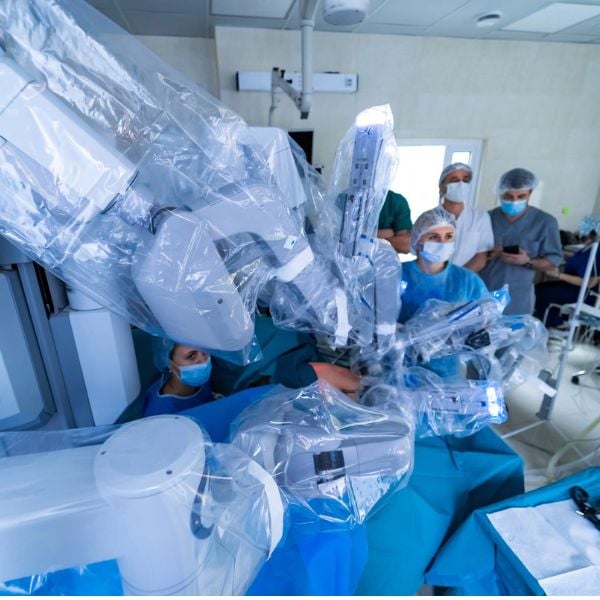
Then he explained every treatment option, including radiation therapy, hormonal therapy, and surgery,” Garrick says. “I asked him about robotic surgery,” Garrick recalls. “I wanted to know how experienced he was.”
Dr. Desai’s answer was simple. Calm. Confident. “He said, ‘It’s kind of my specialty.’” Garrick recalls with a laugh, noting it wasn’t his ego; it was simply honesty.
Why bedside manner matters in advanced prostate cancer
“He had a great bedside manner, and I really believe he was just very in tune with what I was going through, personally. Because it’s scary,” Garrick says. “Men die from prostate cancer every year. But I’m really fortunate.” That fear is real.
According to the National Cancer Institute, prostate cancer remains a leading cause of cancer-related death in men, especially when it becomes metastatic prostate cancer. Garrick wasn’t just choosing a type of treatment. He was choosing the person who would guide him through it.
When robotic prostate surgery and recovery go exactly as promised
“Dr. Desai told me exactly what he was going to do during the procedure,” Garrick says. “And exactly what recovery would be like.” Robotic prostate cancer surgery uses small incisions, advanced imaging, and precise movements to remove cancer while preserving surrounding structures.
Technology alone doesn’t determine prostate surgery outcomes. Experience does.
“And wouldn’t you know it,” Garrick says, smiling, “everything happened exactly as he said it would. No surprises.” The surgery wasn’t painful, he explains, just frightening. “I’ve got a little white coat syndrome,” he admits. “But I was comfortable with Dr. Desai.”
From prostate cancer patient to cancer-free at 83
“I followed the post-op instructions to the letter,” Garrick says. “And I don’t have any after effects.” For many cancer patients, fear of side effects, especially changes in urinary or sexual function, looms large.
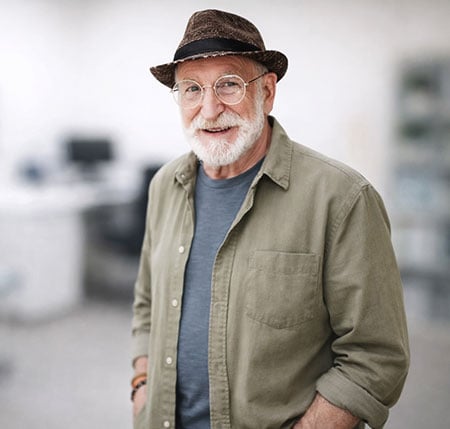
Garrick experienced neither. “I live a full life,” he says. “And I’m 83.” Four years later, his PSA test results remain undetectable. His prostate-specific antigen levels are closely monitored during follow-up visits every six months. “Dr. Desai still checks on me regularly,” Garrick says. “That matters.”
“He calls me personally with my bloodwork results,” Garrick explains. In an era of portals and automated notifications, that human connection stands out. “I’ll admit that initially I had an issue, because sometimes it means you have to wait a few days instead of getting immediate results in the portal, but it’s okay, because he will give you really straightforward but sensitive answers, and he doesn’t mind you asking questions.”
Those calls are not just about numbers. They are about reassurance. About hearing from someone who understands what PSA levels mean emotionally, not just clinically.
“A lot of surgeons don’t want to take the time to hear your questions and answer them, a little of ‘how dare you ask, how dare you question my credentials?’ but Dr. Desai has never blinked an eye at any of my questions. He answers honestly, matter-of-factly, but with a lot of kindness too.”
Garrick’s story is not just about prostate cancer surgery. It’s about cancer care done right. From careful evaluation and clear communication to compassionate follow-up, his experience reflects what happens when a care team puts the patient first.
Why choose Tower Urology for prostate cancer treatment?
Tower Urology offers comprehensive prostate cancer care, from early diagnosis and active surveillance to advanced prostate cancer treatment.
Our team works closely with radiation oncologists, medical oncologists, and other specialists to create personalized treatment plans that reflect each patient’s risk factors, family history, and goals.
Whether treatment includes surgery, radiation therapy, systemic therapies, immunotherapy, targeted therapy, or emerging new treatments, patients receive care grounded in experience and compassion.
To schedule an appointment, please book online or call (310) 854-9898.
Tower Urology is a proud affiliate of Cedars-Sinai Medical Center, ranked #1 in California and #2 nationwide by U.S. News & World Report.
Frequently asked questions about prostate cancer surgery

Ask for referrals immediately and seek a second opinion if needed. Look for a urology specialist who takes the time to thoroughly review your cancer diagnosis and is willing to repeat key tests, such as PSA testing or imaging, before finalizing a treatment plan.
Treatment depends on cancer stage, PSA levels, Gleason score, overall health, and patient preference. Surgery and radiation treatment can both be standard treatment options, and discussing risks, side effects, and quality-of-life considerations with your care team is essential.
Follow-up usually includes regular PSA tests to monitor prostate cancer cells. Long-term follow-up is critical for detecting recurrence early and adjusting treatment if needed. These visits usually occur every 3-6 months for the first 2-5 years, then once a year after 5 years.
Outcomes vary, but experienced surgeons using robotic techniques often achieve excellent results, including preserved urinary control and quality of life, especially when patients follow post-operative instructions closely.
Sources:
Prostate Cancer—Patient Version
https://www.cancer.gov/types/prostate
After Treatment: Living as a Prostate Cancer Survivor
https://www.cancer.org/cancer/types/prostate-cancer/after-treatment.html