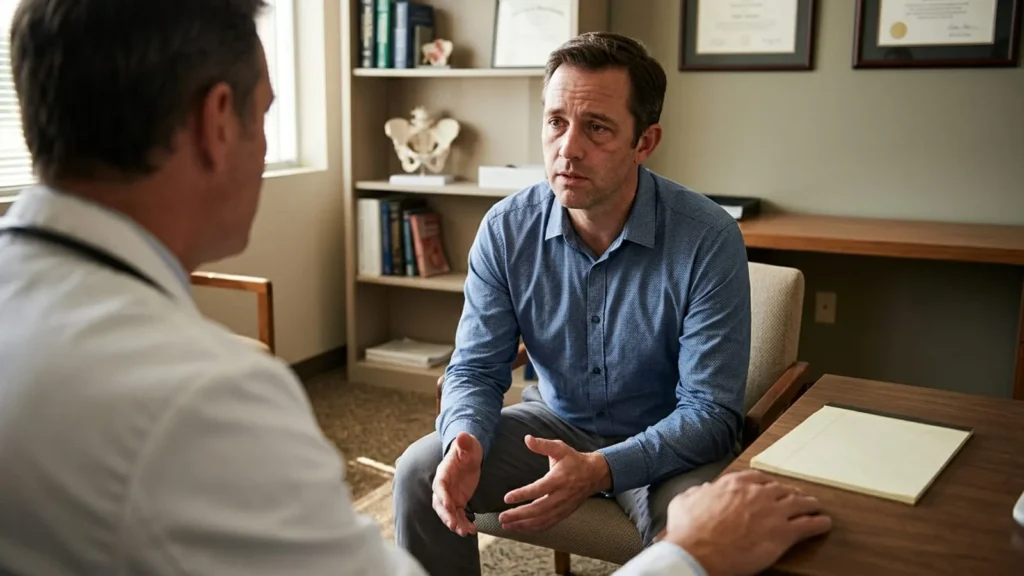
Your primary care doctor just handed you a referral slip for a urologist. Suddenly, you’re staring at dozens of names across Los Angeles with no clear way to tell them apart. That’s a genuinely difficult position to be in, and the stakes are too high to choose based on a star rating alone.
This step-by-step guide gives you a concrete checklist for evaluating any urologist in LA, covering the clinical factors that actually predict outcomes: credentials, subspecialty training, hospital affiliation, diagnostic capability, insurance coverage, and the questions you should ask before you ever book an appointment. We’ve also included a plain-language section on when you actually need a urologist, because sometimes the most important first step is knowing whether a specialist is the right call.
When Do You Actually Need to See a Urologist?
Many patients wait too long before seeking specialist care, either because they’re unsure whether their symptoms warrant a referral or because they assume a primary care doctor can manage everything. Here are the symptoms and conditions that should prompt a urology consultation, often sooner rather than later.
Symptoms That Warrant a Urology Referral
Blood in the urine (hematuria): Even a single episode of visible blood in the urine should be evaluated promptly. Hematuria can signal bladder cancer, kidney stones, or kidney disease and should never be dismissed as a minor issue.
Recurrent urinary tract infections (UTIs): Two or more UTIs within six months, or three or more in a year, suggest an underlying structural or functional problem a urologist should assess.
Urinary incontinence or overactive bladder: Leaking urine, sudden urgent urges to urinate, or waking multiple times at night to urinate are treatable conditions, not inevitable parts of aging.
Difficulty urinating or weak urine stream: These symptoms are common signs of benign prostatic hyperplasia (BPH, or enlarged prostate) or, less commonly, a urethral stricture or bladder dysfunction.
Elevated PSA or abnormal prostate cancer screening result: If your primary care doctor has flagged an elevated PSA test result, a urologist should evaluate you for prostate cancer before any decisions are made.
Kidney stones: A confirmed or suspected kidney stone, especially one causing pain or recurrent episodes, requires urologic management to prevent long-term kidney damage.
Erectile dysfunction or male infertility: Both can have treatable underlying causes, including hormonal imbalances, vascular issues, or anatomical factors, that a urologist or andrologist is best positioned to identify.
Pelvic organ prolapse: Women experiencing pressure, bulging, or discomfort in the pelvic region should see a urologist trained in female pelvic medicine.
Testicular pain, lumps, or swelling: Any new testicular mass should be evaluated urgently to rule out testicular cancer, which is highly treatable when caught early.
Bladder cancer surveillance: Patients with a history of bladder cancer require regular cystoscopy and monitoring by a urologic oncologist.
You don’t always need a formal referral to see a urologist in California, though your insurance plan may require one for coverage purposes. If you’re unsure, call your insurer before booking. When in doubt, a conversation with a urologist is always appropriate. Catching a problem early almost always leads to better outcomes and simpler treatment.
Step-by-Step: How to Choose a Urologist in Los Angeles
Los Angeles isn’t a single medical system. It’s a network of hospital affiliations, insurance tiers, and subspecialty practices spread across almost 500 square miles. A urologist listed online may be out-of-network at the hospital where they actually operate, specialize in a completely different condition than yours, or follow a high-volume model that prioritizes speed over thorough evaluation.
Star ratings won’t tell you how many procedures a surgeon performs each year, whether they have fellowship training, or whether they offer more than one treatment path. Once you know what to look for, the noise becomes much easier to filter through.
Step 1: Match Your Condition to the Right Subspecialty
Before comparing doctors or clinics, start by understanding what type of urologist your condition requires. Urology is a subspecialized field, and choosing the right provider starts by matching your diagnosis to the appropriate expertise.
What Are the Main Urology Subspecialties?
Urologic oncology: Cancers such as prostate cancer, testicular cancer, bladder cancer, kidney cancer
Andrology: Male infertility, erectile dysfunction, testosterone issues
Female pelvic medicine (FPMRS): Urinary incontinence, prolapse, overactive bladder
Endourology: Kidney stones and minimally invasive procedures
Neurourology: Bladder and urinary conditions caused by nerve dysfunction, such as neurogenic bladder, incontinence, and urinary retention
Pediatric urology: Urological conditions in children
All urologists are broadly trained, but fellowship-trained specialists have one to two additional years of focused expertise. For complex or high-stakes conditions, that extra depth of experience can directly impact patient outcomes.
Here is one scenario we regularly see: a patient spends months seeing a general urologist for recurrent kidney stones before learning that an endourologist, like Dr. Josephson, Dr. Bui, or Dr. Houman, could have resolved the case in a single procedure. Seeing the wrong type of specialist is one of the most common reasons for delayed diagnosis and proper treatment.
At Tower Urology, patients benefit from our multispecialty team, ensuring they are matched with the right expertise from the start.

Six signs you should see a urologist
Before you can choose the best urologist in Los Angeles, you first need to recognize when it’s time to make that call. Primary care doctors handle a lot, but certain symptoms genuinely warrant a specialist’s attention. Here are six signs it’s time to stop waiting and book an appointment.
1. Blood in your urine. Even a single episode of pink, red, or cola-colored urine should be evaluated promptly. It can signal anything from a kidney stone to a bladder or kidney tumor – and catching it early makes a real difference in outcomes.
2. Recurring urinary tract infections. One UTI is common, especially in women. But if you’re getting them repeatedly, a urologist can dig deeper to find out why and offer lasting solutions rather than another round of antibiotics.
3. Difficulty urinating or a weak stream. Straining, stopping and starting, or feeling like your bladder never fully empties are classic signs of an enlarged prostate or another obstruction that deserves a proper workup. You can learn more about what you should know about your prostate to understand the warning signs.
4. Pelvic pain that won’t quit. Chronic pelvic pain – whether you’re a man or a woman – is one of the most undertreated conditions in urology. A specialist can identify the root cause and build a personalized care plan.
5. Erectile dysfunction or sexual health changes. ED, low libido, or changes in ejaculation are often early indicators of cardiovascular or hormonal issues. A urologist can address both the symptom and the underlying cause.
6. Fertility concerns. If you and your partner have been trying to conceive without success, male factor infertility accounts for roughly half of all cases. A urologist specializing in male infertility can identify and often correct the problem.
Recognizing these signs early puts you in a much stronger position – and knowing what kind of specialist you need makes choosing the right one that much easier.
Green Flags and Red Flags When Selecting a Urology Specialist
Here’s a practical framework for evaluating any urologist or urology clinic. Use the green flags as your checklist and treat the red flags as reasons to ask more questions before committing.
Board Certification and Fellowship Training
GREEN FLAG: Board-certified with relevant fellowship training
Board certification from the American Board of Urology (ABU) confirms a physician has completed accredited training and passed rigorous written and oral examinations. Board certification is the baseline, not the differentiator.
For many conditions, especially cancer, infertility, or complex reconstruction, fellowship training matters a great deal. A fellowship-trained urologist has spent one to two additional years specializing in a specific area. California also requires all physicians to hold an active license through the California Medical Board, where you can check for any disciplinary history.
At Tower Urology, all of our physicians are board-certified, and most hold subspecialty fellowship training across key areas of urologic care.
RED FLAG: No clear credentials or subspecialty alignment
If you can’t easily verify board certification, fellowship training, or what the physician actually specializes in, that’s a problem. A mismatch between your condition and your doctor’s expertise can delay diagnosis, lead to unnecessary procedures, or limit your treatment options.
Hospital Affiliation and Surgical Volume
GREEN FLAG: Strong hospital affiliation and high procedure volume
Hospital affiliation determines where your procedures are performed and what resources are available. In Los Angeles, Cedars-Sinai Medical Center is one of the country’s most highly ranked hospitals for urology and surgical care, appearing on the U.S. News Honor Roll for 10 consecutive years.
For patients, affiliation with Cedars-Sinai translates to access to advanced robotic surgical suites, integrated imaging and pathology, and multidisciplinary collaboration for complex cases. Tower Urology physicians hold admitting privileges at Cedars-Sinai, giving our patients access to those resources without the long wait times typically associated with large academic centers.
Surgical volume is equally important. Research consistently shows that surgeons who perform higher volumes of a specific procedure achieve better outcomes. When evaluating a urologist for a surgical condition, ask directly how many of that specific procedure they perform each year.
RED FLAG: Limited access to advanced facilities or low procedure volume
If a urologist can’t clearly explain where your procedure will be performed, what technology is available, or what happens if complications arise, you’re missing critical information before committing to care.
Patient Reviews and Outcomes Data
GREEN FLAG: Verified patient reviews and published outcomes data
Patient reviews on platforms like Google, Healthgrades, and Zocdoc offer useful signals about communication style, wait times, and office experience. Look for patterns across many reviews rather than fixating on individual outliers. More meaningfully, ask whether the practice can share outcomes data for your specific condition or procedure. A practice confident in its results will share them.
Tower Urology reports that over 96% of patients regain urinary control and 85% restore potency following robotic prostatectomy. These concrete, condition-specific numbers let you make a genuinely informed comparison.
RED FLAG: No outcomes data and a pattern of negative reviews about communication
A practice that can’t or won’t share outcomes data, or one where multiple reviews describe rushed appointments and poor follow-through, is telling you something important about what ongoing care will look like.
Multi-Physician Group Practice
GREEN FLAG: Multi-physician group with subspecialty coverage
One of the most overlooked factors when choosing a urology clinic is whether you’re seeing a solo physician or a multi-doctor group. A group practice offers multiple subspecialists under one roof, built-in second opinions without leaving the practice, and continuity of care if your condition evolves or your primary physician is unavailable. At Tower Urology, cases can be reviewed collaboratively across specialties, ensuring you’re never limited to a single perspective.
RED FLAG: Solo model with limited scope
A solo provider may be excellent, but they’re still one person. If your condition changes or requires a different subspecialty, you may need to start over elsewhere, transfer records, and lose time in the process.
Diagnostic Capabilities and Telehealth Access
GREEN FLAG: Comprehensive in-office diagnostics and telehealth options
A high-quality urology practice should offer advanced in-office diagnostic capabilities. Look for practices that offer cystoscopy, urodynamic testing, ultrasound imaging, and on-site lab coordination. Tower Urology has all of these, allowing many conditions to be evaluated and diagnosed without unnecessary delays. This also allows bladder cancer surveillance, for example, at the same appointment as your follow-up.
Telehealth availability is increasingly important, particularly for follow-up consultations, medication management, and second-opinion visits. Ask whether the practice offers virtual appointments and whether those visits are covered under your insurance plan.
RED FLAG: Limited testing or immediate treatment recommendations without thorough evaluation
Be cautious of practices that recommend treatment before thorough testing, refer out for basic diagnostics, or provide a diagnosis without clearly explaining how they confirmed it.
Communication and Patient-Centered Care
GREEN FLAG: Physician who explains options and encourages questions
A strong urologist should explain your diagnosis in plain language, walk through all available treatment options, not just the one they recommend, and give you real time to ask questions before making any decisions. A patient portal that lets you message your care team, review test results, and manage appointments between visits is another strong signal of a practice that takes communication seriously.
We hear consistently from patients who come to Tower Urology after seeing another provider that they felt rushed, received a diagnosis and treatment recommendation in the same appointment, and left more confused than when they arrived. That’s a pattern worth taking seriously. At Tower Urology, we encourage every new patient to bring a written list of questions to their first visit.
RED FLAG: Rushed consultations or one-option recommendations
If you feel pressured, if only one treatment path is presented, or if the physician seems impatient with your questions, that’s telling you something important about what ongoing care with that provider will look like.
Academic Medical Center or Private Urology Practice: Which Is Right for You?
Los Angeles and Southern California have well-known academic urology programs, including UCLA Health Urology, Keck Medicine of USC, and City of Hope. Many patients default to academic centers, assuming they’re the only option for complex or serious conditions. That assumption is worth questioning.
Academic centers do offer access to certain clinical trials, tumor board infrastructure, and nephrology collaboration for patients with overlapping kidney disease. For some patients, those resources are the deciding factor, and we respect that. New-patient wait times at major academic programs in Los Angeles typically run four to eight weeks for non-urgent consultations, and care is often distributed across residents, fellows, and attending physicians rather than concentrated with a single specialist.
Tower Urology routinely treats patients with advanced, complex diagnoses, including cancers, reconstructive cases, and conditions that weren’t resolved elsewhere. Fellowship-trained urologic oncologists, robotic surgeons with thousands of procedures behind them, and Cedars-Sinai affiliation mean Tower operates at the same clinical level as any academic program. And yet, one key difference remains: you’re seen by the same physician at every stage of your care, not passed between residents and departments. New patients at Tower Urology are typically seen within one to two weeks.
For most urological conditions, including complex ones, the more important question isn’t the institutional label. It’s whether the specific practice has the credentials, surgical volume, subspecialty depth, and facility access your condition requires. On each of those measures, Tower Urology stands alongside the best programs in Los Angeles.

Advanced Technology and Innovation at Tower Urology
The technology a urology practice uses isn’t just a selling point. It directly affects how quickly you’re diagnosed, how precisely you’re treated, and how quickly you recover. Tower Urology has been integrating advanced technology into its practice for over five decades and continues to adopt innovations as they become clinically validated.
Robotic Surgery and the da Vinci Single-Port System
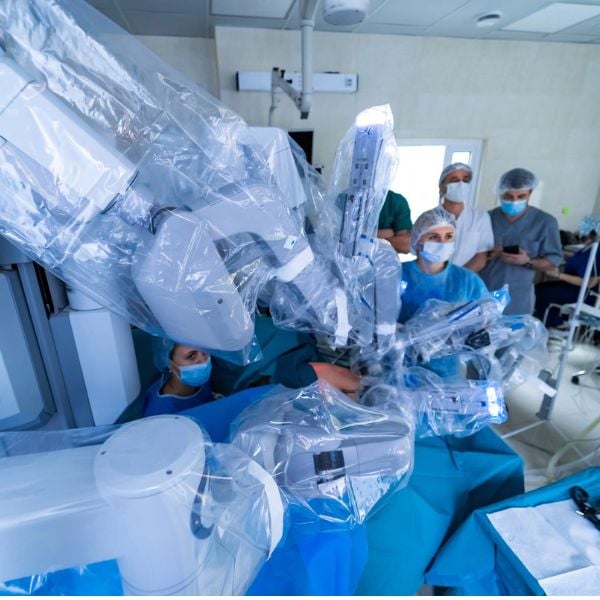
Tower Urology’s surgeons perform robotic-assisted urologic surgery using the da Vinci Single-Port (SP) system, one of the most advanced robotic platforms available. Unlike traditional robotic approaches that require multiple incisions, the da Vinci SP system operates through a single small incision using an extraperitoneal approach that avoids entering the main abdominal cavity entirely. The result is less disruption to surrounding tissue, less post-operative pain, and faster recovery, with most patients returning to normal activity significantly sooner than with open or conventional laparoscopic surgery.
Tower Urology’s Dr. David Josephson is a nationally recognized leader in robotic surgery who has performed over 3,000 robotic procedures. Dr. Christopher Ng is Director of Laparoscopic Urologic Oncology and Robotic Surgery at Cedars-Sinai Medical Center and specializes in minimally invasive surgical techniques for prostate, kidney, and bladder cancers. Dr. Premal Desai is the Clinical Chief of the Division of Urology at Cedars-Sinai Medical Center. Dr. Justin Houman is a board-certified and fellowship-trained specialist in male reproductive medicine and surgery.
Nerve-Sparing Surgical Techniques and Outcomes
For patients undergoing robotic prostatectomy, the nerve-sparing technique is one of the most consequential decisions a surgeon makes. Tower Urology’s team focuses on potency and continence preservation because we understand that quality of life after surgery matters as much as the surgery itself.
Our surgeons use precise nerve-sparing approaches to minimize the risk of erectile dysfunction and urinary incontinence after surgery. The practice reports that over 96% of patients regain urinary control and 85% restore potency following robotic prostatectomy. These outcomes reflect both our surgeons’ technical precision and the careful patient selection and counseling that precede every procedure.
MRI Fusion-Guided Prostate Biopsy
For patients with elevated PSA levels or abnormal prostate cancer screening results, Tower Urology offers MRI-guided targeted biopsy using the UroNav fusion biopsy system combined with DynaCAD for Prostate software. This approach fuses MRI imaging with real-time ultrasound to precisely target suspicious areas of the prostate, significantly improving biopsy accuracy compared to traditional random sampling. The result is fewer unnecessary biopsies, fewer missed cancers, and a clearer picture for treatment planning. For patients with a previous negative biopsy whose PSA continues to rise, MRI fusion biopsy is often the diagnostic step that finally provides clarity.
Additional Advanced Technologies at Tower Urology
Tower Urology’s commitment to minimally invasive surgery and innovation spans all major conditions it treats. Understanding the specific technologies available – and what they mean for your recovery – is one of the most practical ways to evaluate any urology practice in Los Angeles.
Extracorporeal shock wave lithotripsy (ESWL): A non-invasive treatment for kidney and ureteral stones that uses focused sound waves to break stones into passable fragments, eliminating the need for surgery in many cases. Most patients return to normal activity within one to two days. ESWL is particularly well-suited for stones smaller than 2 cm and carries no incisions, no general anesthesia requirement in most cases, and a complication rate that is significantly lower than open surgical alternatives – making it a first-line option for appropriate candidates.
Advanced laser therapies: Including holmium laser enucleation of the prostate (HoLEP) for BPH and laser lithotripsy for kidney stone disease. Laser-based approaches offer precise tissue removal with minimal bleeding and shorter hospital stays compared to traditional surgical techniques. HoLEP, in particular, has become the gold standard for larger prostates, with studies consistently showing durable symptom relief, catheter removal within 24 to 48 hours in most patients, and a significantly lower retreatment rate than older resection methods. For kidney stones, laser lithotripsy achieves stone-free rates exceeding 90% in many clinical series, with same-day discharge now routine at high-volume centers like Tower Urology.
Microwave therapy for BPH (transurethral microwave thermotherapy, TUMT): A minimally invasive, office-based treatment for benign prostatic hyperplasia that uses controlled microwave energy to reduce excess prostate tissue. It is an effective option for patients who want to avoid surgery or who are not good surgical candidates. TUMT typically takes under an hour, requires no general anesthesia, and allows most men to return home the same day. Clinical data show meaningful improvements in urinary flow rates and symptom scores within four to six weeks, with results that can last several years – a compelling alternative for men managing BPH alongside other health conditions.
Laparoscopic and robotic procedures: For cancer and reconstructive needs across the full spectrum of urologic conditions. Tower Urology was among the first practices in California to adopt the latest generation of robotic surgical platforms, giving patients access to state-of-the-art precision, reduced blood loss, and faster recovery times compared to conventional open surgery.
Biofeedback therapy: For urinary incontinence and pelvic floor dysfunction, offering a non-surgical path to symptom control. This approach is especially valuable for patients who prefer to exhaust conservative options before considering procedural intervention, and Tower Urology’s team-based approach ensures that biofeedback is coordinated alongside any medical management for the best possible outcomes.
With a legacy spanning more than five decades, Tower Urology’s combination of experienced physicians, Cedars-Sinai affiliation, and continuous investment in technology has made it a model for urological practices across the country. When you’re evaluating how to choose the best urologist in Los Angeles, the depth and breadth of a practice’s technology portfolio matters – not as a marketing point, but because access to the right tool for your specific condition directly shapes your recovery experience and long-term quality of life.
Questions to Ask Before You Book: A Portable Checklist
Before committing to a urologist or urology practice in Los Angeles, use this checklist. You can ask these questions by phone, through the practice’s patient portal, or at your first consultation. A practice that welcomes these questions is one that’s confident in its answers.
About Credentials and Experience
Are you board-certified by the American Board of Urology?
Do you have fellowship training in the subspecialty relevant to my condition?
How many procedures like mine do you perform each year?
Can you share outcomes data for my specific condition or procedure?
Have you managed cases like mine that were previously treated elsewhere without resolution?
About the Practice and Logistics
Are you in-network with my insurance plan? Is the hospital or surgery center where you operate also in-network?
Do I need a referral from my primary care doctor for my visit to be covered?
Do you offer same-day or next-day appointments for urgent concerns?
Do you offer telehealth or virtual visits for follow-up appointments?
Is there after-hours contact available if I have urgent questions between visits?
Do you have a patient portal where I can review results and message my care team?
About Diagnosis and Treatment
What diagnostic tests will you use to confirm my diagnosis, and are they available in-office?
What are all of my treatment options, including watchful waiting if appropriate?
What are the expected outcomes and recovery timelines for each option?
Would you support a second opinion before I decide?
Are there any clinical trials I might be eligible for?
Who will be performing my procedure, and will I see the same physician throughout my care?
A urologist who answers these questions thoroughly, without impatience, demonstrates the kind of patient-centered care that leads to better outcomes. If a practice can’t or won’t engage with these questions, that’s important information too.
What patients say about Tower Urology
When you’re trying to figure out how to choose the best urologist in Los Angeles, credentials and technology matter – but so does hearing from real people who’ve already been through the process. Tower Urology patients consistently highlight the same themes: feeling genuinely heard, receiving clear explanations, and walking away with vastly improved outcomes they didn’t think were possible.
One patient who came in for prostate cancer care shared, “I was terrified when I got my diagnosis. The team walked me through every option, never rushed me, and the robotic surgery went better than I ever expected. I felt like I was in the safest hands in Los Angeles.” Stories like his are common – and they reflect exactly the kind of compassionate, personalized care Tower Urology is built around. You can even watch one patient share his cancer-free journey on Good Day LA.
Women treated for urinary incontinence and pelvic health concerns frequently describe Tower Urology as a safe space – somewhere they finally felt comfortable discussing issues they’d been quietly managing for years. One patient noted, “I wish I hadn’t waited so long. The care here is world-class, and the staff made me feel completely at ease from the very first appointment.”
Men seeking help for sexual health concerns echo similar sentiments, appreciating the team’s straightforward, judgment-free approach to sensitive topics.
Across hundreds of reviews, the throughline is consistent: Tower Urology combines unparalleled expertise with genuine warmth, delivering the kind of team-based, patient-first experience that turns anxious first-time patients into loyal, long-term advocates. That kind of trust isn’t built overnight – it’s earned, one appointment at a time.
Ready to Choose the Right Urology Team in Los Angeles?
Once you’ve done your research, book consultations with one or two practices. Ask your questions, compare how thoroughly each evaluates your condition, and notice how the physician communicates. The right urologist will make you feel heard, informed, and confident in your care plan.
Tower Urology of Los Angeles combines board-certified expertise, Cedars-Sinai affiliation, multi-specialty coverage, advanced in-office diagnostics, telehealth options, and a convenient patient portal, all under one roof.
Meet the Tower Urology Subspecialty Team
Tower Urology’s physicians bring fellowship-trained expertise across every major urologic subspecialty, ensuring that whatever brings you in, you are seen by the right specialist from day one.
Urologic Oncology: For patients facing prostate, bladder, kidney, or testicular cancer, our oncology team includes Dr. Danoff, Dr. Sacks, Dr. Josephson, Dr. Bui, Dr. Cinman, Dr. Desai, and Dr. Ng.
Andrology: For male infertility, erectile dysfunction, and testosterone-related concerns, Dr. Sacks and Dr. Houman lead Tower Urology’s andrology practice.
Female Pelvic Medicine, Reconstructive Surgery and Neurourology: For incontinence, pelvic organ prolapse, overactive bladder, and pelvic floor dysfunction, Dr. Rusnack, Dr. Leach, and Dr. Kuhlmann bring specialized expertise across all three of these interconnected areas. Tower Urology includes female urologists on its team, providing a comfortable, experienced option for women who prefer to see a female specialist.
Endourology: For kidney stones and minimally invasive urologic procedures, our endourology team includes Dr. Josephson, Dr. Bui, Dr. Desai, Dr. Houman, and Dr. Ng.
Tower Urology is conveniently located for patients throughout Southern California and the Los Angeles area, including Beverly Hills, Santa Monica, West Los Angeles, West Hollywood, Culver City, Hollywood, Venice, Marina del Rey, Burbank, Glendale, and Downtown Los Angeles.
Request an appointment at Tower Urology and take the first step toward a clear diagnosis and a treatment plan built around your needs.
Frequently Asked Questions about choosing a urologist

Before you book, confirm the basics by phone: Is the urologist board-certified? Do they have fellowship training relevant to your condition? What hospital are they affiliated with, and will your insurance cover procedures there? Is this a solo practice or a multi-physician group?
At your first appointment, these questions will tell you more than any online review:
- Are you fellowship-trained in the subspecialty relevant to my condition?
- How many patients like me do you treat each year?
- What are all of my treatment options — not just the one you recommend?
- Where would any procedure be performed, and what technology is available?
- Who covers your patients when you’re unavailable?
- What does follow-up care look like for my specific condition?
A urologist who answers these questions clearly and without impatience is demonstrating exactly the kind of practice culture you want.
Start with board certification from the American Board of Urology, verifiable through their online directory. Beyond that baseline, look for fellowship training in the subspecialty relevant to your condition, a hospital affiliation that gives access to the facilities you may need, a multi-physician group structure, and a physician who communicates clearly and presents multiple treatment options.
A urologist treats conditions of the urinary tract, including urinary tract infections (UTI), in both men and women, as well as the male reproductive system. A urogynecologist is a gynecologist with additional fellowship training in pelvic floor disorders — urinary incontinence, pelvic organ prolapses, and related conditions. For women with pelvic floor dysfunction, either a urogynecologist or a urologist with FPMRS fellowship training is appropriate.
You can verify board certification directly through the American Board of Urology’s publicly searchable online directory. You can also check a physician’s California license and any disciplinary history through the California Medical Board’s license lookup tool. Both take about two minutes and are free.
It depends on your insurance plan. HMO plans typically require a referral from your primary care physician. PPO plans generally allow you to book directly with a urologist, though out-of-network providers may cost more. If you’re unsure, call your insurer’s member services line before booking.