How did Howard discover he had bladder cancer in 2009?
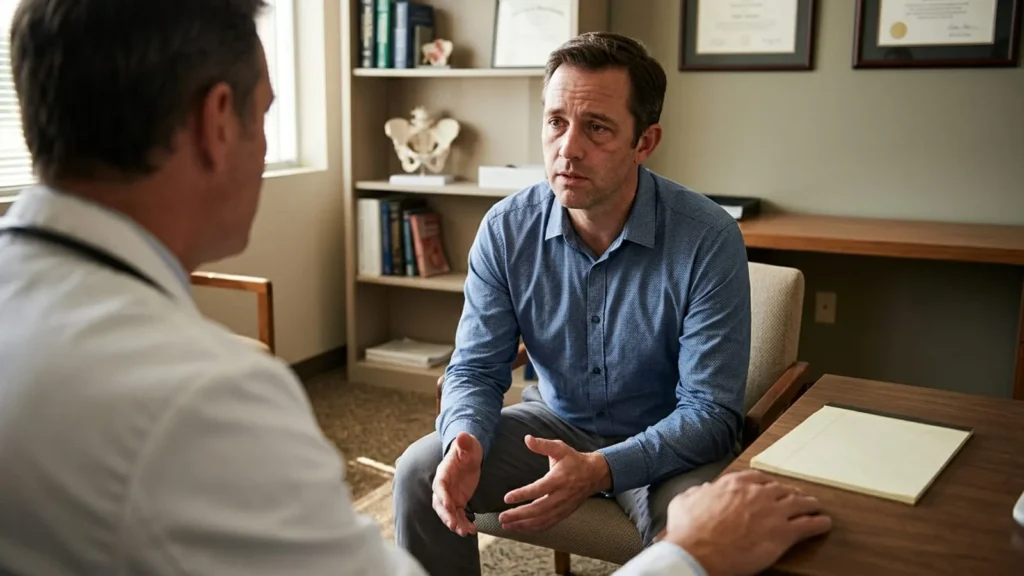
In 2009, Howard’s symptoms seemed like simple exhaustion until testing performed by his doctor revealed something more. “I wasn’t feeling that well and thought I was just overworked and tired, so I went to my general practitioner,” Howard recalls. “He ran a few tests and saw abnormal cells in my urine.”
Early detection is crucial for bladder cancer. A blood test and urinalysis can reveal warning signs, such as hematuria or abnormal cells, that point to the need for further investigation. Howard’s doctor recognized concerning indicators and made a critical referral.
“He recommended Dr. Desai at Cedars Sinai,” Howard continues. That referral began a 16-year relationship that would span two different types of cancer.
In 2009, Howard thought he was just overworked and tired. However, a routine checkup revealed something else entirely — bladder cancer. His general practitioner recommended Dr. Premal J. Desai. Within a few weeks, Dr. Desai had surgically treated Howard’s cancer.
Fifteen years later, Howard would learn he had prostate cancer. This time, there was no question in his mind of who would perform the surgery. “Dr. Desai has been tops with me from the very beginning,” Howard emphasizes. Through bladder cancer treatment, years of cancer-free monitoring, and a single-port robotic prostatectomy for prostate cancer, Howard feels that Dr. Desai’s bedside manner and skill have remained exceptional.
What impressed Howard about Dr. Desai from the very first appointment?
Dr. Desai’s caring but straightforward approach stood out immediately. “Right away, Dr. Desai’s bedside manner and professionalism were above and beyond,” Howard says. “He looked at my tests, then ran his own tests, like blood tests and an ultrasound, and quickly saw the issues.” Read more about how a good bedside manner can make a tangible difference in healthcare.
Rather than simply accepting the referring doctor’s findings, Dr. Desai conducted his own thorough evaluation. The presence of bladder cancer is often found through urine tests, visual exams like cystoscopy, and advanced imaging, such as a CT scan, which can show abnormalities like cancer cells.
After all the results were in, “Dr. Desai said this is what we should do, and how we’re going to do it, and within two weeks, I was having the procedure,” Howard recalls. “I was really impressed. It was just so straightforward, and there were no issues.”
The combination of thorough evaluation and swift action upon confirmation of cancer demonstrates excellent cancer care—no unnecessary delays, but also no rushing to treatment without proper confirmation.
What made Dr. Desai’s communication style different from that of other doctors?
Howard was impressed by Dr. Desai’s “attention to detail and straightforwardness,” as well as his approach to patient education. “He explained everything and asked me a lot of questions, and allowed me to ask questions,” Howard says.
For patients facing a cancer diagnosis, clear communication matters enormously. Understanding your type of cancer, treatment options, and expected outcomes helps manage anxiety. And Dr. Desai’s style provided that clarity.
“You could tell he was really up on current medical information and constantly educating himself, and I was in good hands,” Howard continues. Staying current with the latest research, clinical trials, and treatment advances distinguishes excellent oncology care.
How did Howard’s prostate cancer get discovered 15 years later?
“I had been doing really well with no signs of the cancer returning, but then I had a rise in my prostate-specific antigen (PSA) levels about mid 2024,” Howard explains. After successful bladder cancer treatment, he had remained cancer-free for years. Still, regular monitoring, such as PSA tests to screen for prostate cancer, was essential, given his family history and risk factors.
Rising prostate-specific antigen levels often call for investigation, as early-stage prostate cancer has little to no symptoms. As prostate cancer progresses, symptoms such as urinary and sexual dysfunction, lower back pain, weight loss, and weakness can appear.
An MRI revealed multiple areas that were suspicious for cancer within Howard’s prostate gland. A prostate biopsy confirmed that he had an intermediate to high risk of advanced prostate cancer with a concerning Gleason score. This wasn’t low-grade, localized prostate cancer that might require active surveillance. It required definitive treatment.
Why did Howard choose Dr. Desai for prostate cancer treatment?
The decision to stay with him was obvious: Howard had received 15 years of excellent care. “For 15 or 16 years, Dr. Desai has only gotten better. His bedside manner hasn’t changed throughout the years; he’s still just as amazing,” Howard says. “He listens and understands and just gives me everything I could want to know right up front, so it’s clear and cut and dried, and I feel confident.
What made robotic prostatectomy the right choice for Howard’s prostate cancer?
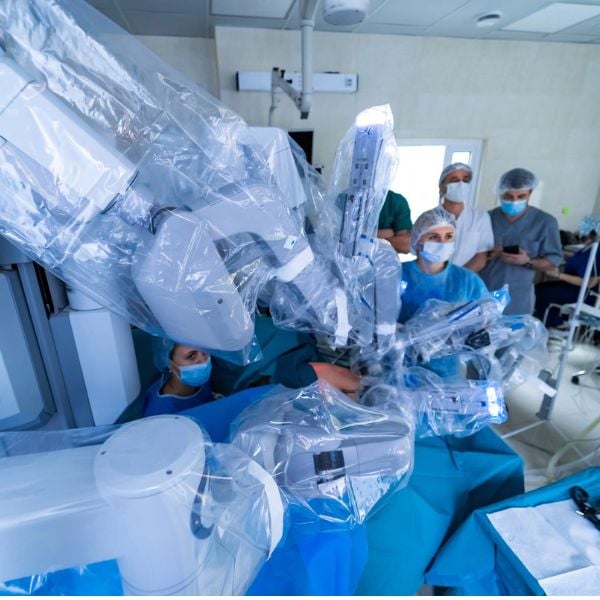
Dr. Desai performed a robotic radical prostatectomy using the single-port Da Vinci system with an extraperitoneal approach because it was the least invasive method available for removing all of Howard’s cancer. “The second procedure he performed on me was robotic, and that’s just his specialty. He’s really very skilled,” Howard says.
The extraperitoneal approach accesses the prostate gland without entering the abdominal cavity. This reduces surgical trauma. For high intermediate risk prostate cancer, complete removal of the prostate provides excellent cancer control while minimizing side effects like urinary incontinence and erectile dysfunction.
Alternative treatments like radiation therapy or androgen deprivation therapy were options. Yet, for Howard’s cancer characteristics and overall health, surgical removal offered the best long-term outcomes.
How has Howard’s recovery been after prostate cancer surgery?
Howard has been doing well since surgery, with no recurrence or side effects to his urinary control or sexual function. His PSA remains undetectable, indicating successful cancer removal. The advanced robotic techniques Dr. Desai used helped preserve function while achieving complete cancer control.
Regular follow-up appointments monitor for any signs of metastatic prostate cancer spreading to lymph nodes or other parts of the body. The data shows that “the value and importance of patient follow-ups cannot be understated.” Early detection through consistent surveillance provides the best survival rates.
What does Howard want others to know about finding the right urologist?
Howard’s experience over 16 years and two cancers has created a profound appreciation for a surgeon who’s not only skilled but also compassionate, transparent, and responsive. “Dr. Desai has been tops with me from the very beginning, and so has the entire care team at Tower Urology,” he emphasizes.
The consistency matters. Whether treating bladder cancer in 2009 or prostate cancer in 2024, Dr. Desai’s approach remained exceptional. His commitment to staying current with medical advances, his straightforward communication, and his genuine care for patient well-being created trust that lasted across decades.
For men facing elevated PSA levels, an enlarged prostate, a prostate cancer diagnosis, or other urological conditions, finding a surgeon who combines technical excellence with exceptional bedside manner makes all the difference in treatment outcomes and quality of life.
Why choose Tower Urology for bladder cancer and prostate cancer treatment?
At Tower Urology, specialists like Dr. Desai provide comprehensive cancer care from early detection through treatment and long-term monitoring. Whether you’re dealing with urological concerns or other issues concerning the male reproductive system, exceptional urological care is available at Tower.
We invite you to establish care with Tower Urology. Please make an appointment online or call us at (310) 854-9898.
Tower Urology is a proud affiliate of Cedars-Sinai Medical Center, ranked #1 in California and #2 nationwide by U.S. News & World Report. Our years of experience and access to world-class facilities ensure exceptional urological care.
Tower Urology is conveniently located for patients throughout Southern California, including Los Angeles, Beverly Hills, Santa Monica, West Los Angeles, West Hollywood, Culver City, Hollywood, Venice, Marina del Rey, Burbank, Glendale, and Downtown Los Angeles.
Frequently asked questions (FAQs) about long-term urological cancer care

Yes. Having one type of cancer doesn’t prevent you from developing another. Some risk factors, like age and family history, increase the likelihood of multiple cancers. Regular PSA screening after bladder cancer treatment enables early detection of prostate cancer when it’s most treatable, improving survival rates significantly.
Rising prostate-specific antigen levels during routine blood tests prompt additional investigation through imaging, such as MRI and prostate biopsy. The Gleason score from a prostate biopsy determines cancer aggressiveness and whether it’s early-stage localized prostate cancer or higher-risk advanced cancer requiring immediate treatment like a radical prostatectomy.
Long-term healthcare relationships enable your urologist to understand your complete medical history, risk factors, and treatment responses. A surgeon who knows your case intimately can detect changes early, recommend appropriate treatment options, and provide continuity of care across years or even decades, improving both cancer outcomes and quality of life.
Yes, a digital rectal exam (DRE) can help detect prostate cancer. Your doctor will gently slide their finger into your rectum to feel for abnormalities. However, it’s often used with a PSA blood test for better screening, as DREs can miss some cancers while PSA tests can miss others. Combining an annual DRE with PSA monitoring is often the standard for prostate care. This link gives more details about a DRE exam.
Sources:
Double primary cancers of the prostate and bladder: a literature review
https://pubmed.ncbi.nlm.nih.gov/15479490/
Treating Bladder Cancer
https://www.cancer.org/cancer/types/bladder-cancer/treating.html
Diagnosis and Staging of Prostate Cancer
https://www.ncbi.nlm.nih.gov/books/NBK13326/