A growing body of research reveals an alarming connection between pesticide exposure and declining male fertility worldwide. Recent studies, including a comprehensive meta-analysis published in Environmental Health Perspectives, show that common pesticides found in our food supply are significantly contributing to reduced sperm counts and poor semen quality in men across the globe. For men who are trying to conceive, or who simply want to understand what environmental factors may be quietly affecting their health, the evidence is now too consistent to ignore.

Is sperm count decreasing?
Over the past 50 years, sperm concentration has declined by approximately 50% worldwide. Pesticide exposure is now recognized as a significant contributing factor to this trend. This decline in male reproductive health represents a considerable public health challenge, affecting millions of men and couples trying to conceive.
A landmark study from George Mason University analyzed 25 research studies spanning nearly five decades and found consistent evidence linking insecticide exposure to lower sperm concentrations. Published in 2025, this research provides the strongest evidence to date that environmental exposure to common pesticides is directly impacting male infertility rates worldwide. Crucially, the study’s findings were not limited to men with heavy occupational exposure. Everyday environmental contact, through diet, residential pesticide use, and contaminated water, was also associated with measurable harm to sperm quality.
What does the research say about pesticides and male fertility?

The evidence base linking common pesticides and male fertility has grown substantially in recent years. Two landmark studies are particularly important for men trying to understand their risk.
The meta-analysis led by researcher Melissa Perry, published in Environmental Health Perspectives, represents the most comprehensive examination of pesticide exposure and male fertility to date. Its key findings include:
Men exposed to organophosphates had a 9.2% lower sperm concentration than unexposed men.
Carbamate exposure was associated with an 8.1% reduction in sperm concentration.
The effects were consistent across different populations and geographic regions.
The relationship remained significant even after adjusting for other factors such as obesity and age.
These are not abstract statistics. A 9.2% reduction in sperm concentration can be the difference between a borderline result and a clinically significant one, particularly for men whose baseline counts are already on the lower end of normal.
A second major study adds important weight to these findings. A 2022 systematic review by Giulioni et al., published in Frontiers in Endocrinology (PMC9541307) and cited by more than 74 scientific papers, examined both occupational and environmental pesticide exposure and its effects on semen quality.
The review found that men with higher pesticide exposure, whether through farm work, industrial settings, or everyday environmental contact, consistently showed poorer results across multiple semen parameters, including sperm count, motility (how well sperm swim), and morphology (the shape of sperm). In plain terms, pesticides do not just reduce sperm count. They can also impair the sperm that remain, making conception harder even when counts appear borderline normal.
What makes the Giulioni et al. findings particularly relevant for everyday men is that harmful effects were not limited to those with heavy occupational exposure. Environmental exposure, the kind that comes from eating conventionally grown produce, living near agricultural areas, or using common household pesticides, was also associated with measurable declines in semen quality. Together, these two landmark studies paint a consistent picture: pesticide exposure is a real, quantifiable threat to male reproductive health, and it affects far more men than previously understood.
What pesticides can impact male fertility?
Organophosphates
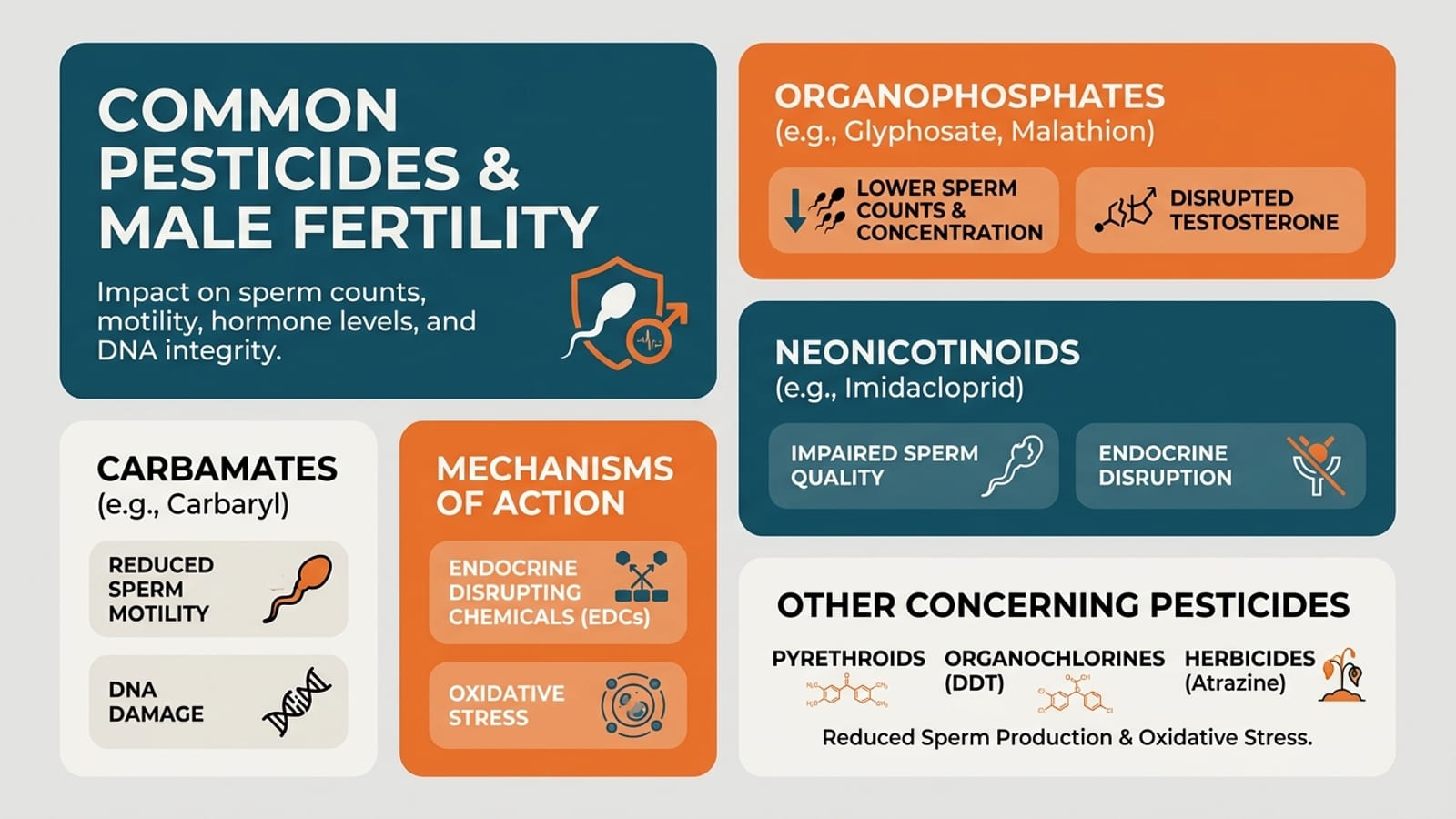
Organophosphates, including widely used compounds such as glyphosate and malathion, are found in herbicides and pesticides and are among the most harmful chemicals affecting male reproductive health. They were originally designed to disrupt pests’ nervous systems, but they also interfere with human reproductive functions, including the hormonal signals that govern sperm production.
Research shows that men exposed to organophosphates can experience:
Significantly lower sperm counts and sperm concentration
Reduced sperm motility (how well sperm move)
Poor semen quality overall
DNA damage to sperm cells
Disrupted testosterone levels
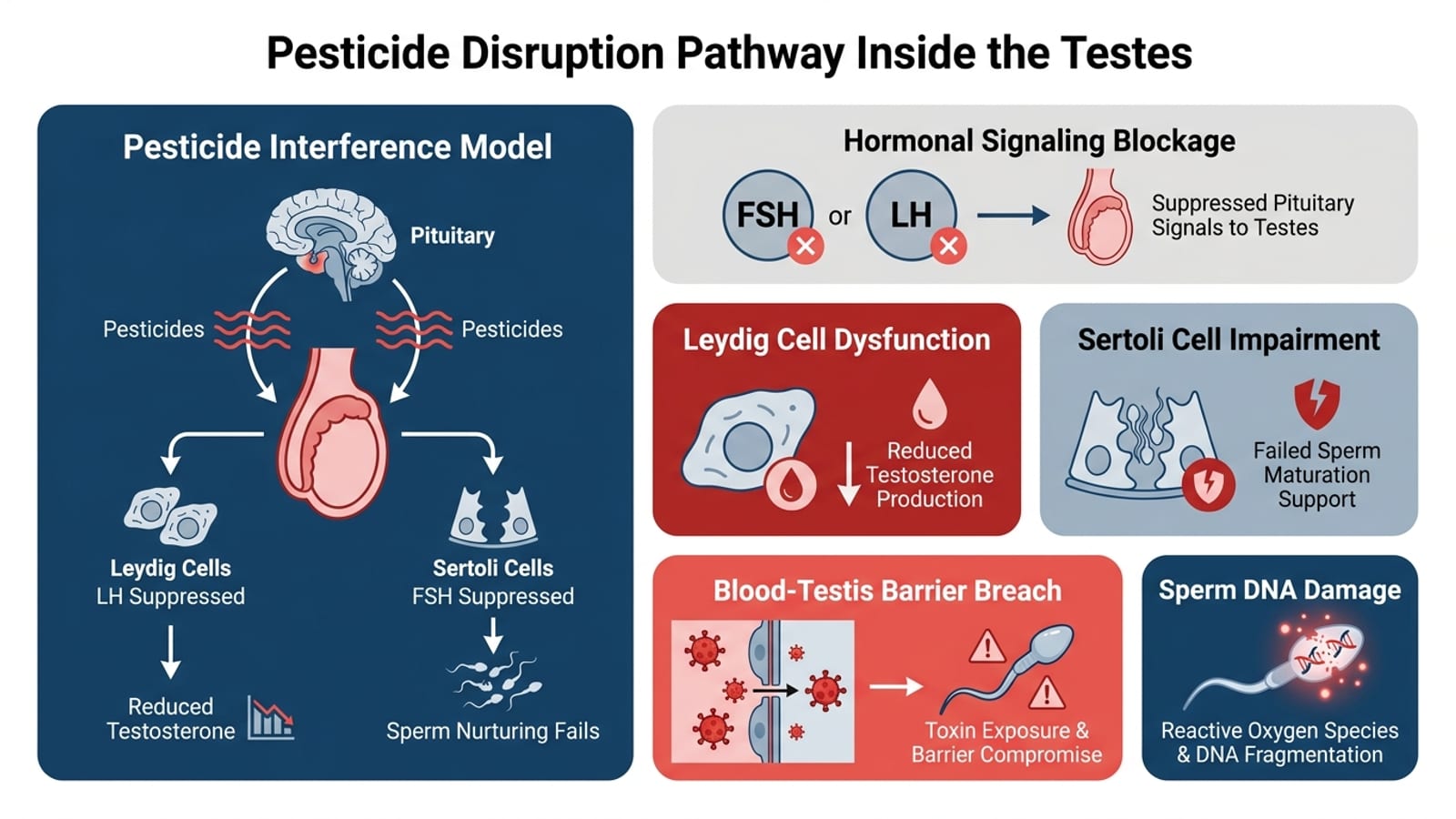
Organophosphates are classified as endocrine-disrupting chemicals, meaning they interfere with the body’s hormonal signaling at multiple levels. They can suppress the release of follicle-stimulating hormone (FSH) and luteinizing hormone (LH), the two pituitary hormones that instruct the testes to produce sperm and testosterone respectively. When these signals are disrupted, the entire process of spermatogenesis, the production of healthy sperm, can be compromised.
Carbamates
Carbamates are another class of insecticides with well-documented links to male reproductive harm. These chemicals, commonly found as pesticide residues on fruits and vegetables, can disrupt endocrine function and negatively affect sperm production in the testes.
Common carbamate compounds include carbaryl (Sevin), carbofuran, and methomyl, all widely used in commercial agriculture and home gardening products. Like organophosphates, carbamates inhibit acetylcholinesterase, an enzyme your nervous system depends on to function properly. When this enzyme is disrupted, the hormonal signals that tell your testes to produce testosterone and healthy sperm can become unbalanced.
Research has shown that carbaryl exposure in particular is associated with reduced sperm motility and increased rates of sperm DNA fragmentation, meaning the genetic material inside sperm becomes damaged. This can make fertilization significantly harder even when sperm counts appear normal. Studies in occupationally exposed men found measurable reductions in sperm quality at exposure levels common in agricultural settings.
At the cellular level, carbamates appear to interfere with Leydig cells, the testicular cells responsible for producing testosterone, and Sertoli cells, which act as “nurse cells” that guide sperm through the maturation process. When either cell type is compromised, the downstream effects on fertility can be significant, even if a man feels otherwise healthy. This is why pesticide-related fertility concerns are not always obvious without targeted testing, such as a semen analysis or testosterone evaluation.
If you work in agriculture, landscaping, or regularly handle pesticide products, it is worth discussing your exposure history with a urologist who specializes in male fertility, because what you cannot feel can still affect your ability to conceive.
Neonicotinoids
Neonicotinoids are the world’s most widely used class of insecticides, applied extensively to crops, soil, and even some household pest products. Compounds in this group include imidacloprid, clothianidin, and thiamethoxam. While they are best known for their harmful effects on bee populations, emerging research suggests they may also pose a significant risk to human male fertility.
The 2025 George Mason University study, which drew on nearly five decades of research, specifically highlighted neonicotinoid exposure as a growing concern. Rodent studies have demonstrated that neonicotinoid exposure leads to measurable reductions in sperm quality, including lower sperm concentration, impaired motility, and abnormal sperm morphology. Researchers believe these effects occur through multiple pathways: neonicotinoids can act as endocrine-disrupting chemicals, interfering with the hormonal signals that regulate testosterone production and spermatogenesis, and they can also trigger oxidative stress within testicular tissue.
Because neonicotinoids are so widely used, residues are routinely detected in food, water, and indoor environments. Men do not need to work on a farm to be exposed. Dietary intake of conventionally grown produce, particularly items on the Environmental Working Group’s “Dirty Dozen” list, represents a meaningful exposure route for the general population. Because these fat-soluble compounds bioaccumulate in body tissue over time, repeated low-level exposure can add up to a significant total body burden.
While human studies on neonicotinoids and male fertility are still emerging, mechanistic evidence and consistent findings in animal models make this a category of pesticide that urologists and fertility specialists are watching closely. If you have regular dietary or occupational exposure to neonicotinoids and are concerned about your fertility, a semen analysis and hormone panel are sensible first steps.
Other concerning pesticides
The impact of pesticides on male fertility goes beyond organophosphates, carbamates, and neonicotinoids. Other pesticides can also affect sperm parameters and reproductive health, including:
Pyrethroids: These synthetic insecticides can induce oxidative stress in reproductive tissues, resulting in decreased sperm quality and concentration.
Organochlorines: Found in banned substances such as DDT, these chemicals continue to affect human health through environmental contamination. Although their use was highly restricted in 1972, they are known as persistent organic pollutants, resistant to environmental breakdown and capable of bioaccumulating in human tissue for decades. Their endocrine-disrupting properties mean they remain a concern long after direct exposure has ceased.
Herbicides: Compounds such as atrazine and glyphosate have been linked to endocrine disruption and reduced sperm production. Atrazine in particular has been shown to interfere with steroidogenesis, the biochemical process by which the testes produce testosterone.
DBCP: This soil fumigant has been linked to severe male infertility and testicular damage, including azoospermia, a condition in which no sperm are present in the ejaculate at all.
How do pesticides affect testicular cells?
Understanding how pesticides affect male reproductive health requires looking at what happens inside the testicles themselves. These chemicals do not simply reduce sperm count in a vague, general way. They target specific cells and biological processes with measurable consequences. Here is what the science shows, explained in terms that matter for your health and your ability to conceive.
Leydig cells and testosterone production
Leydig cells are specialized cells in the testes that produce testosterone. They respond to signals from the pituitary gland, specifically luteinizing hormone (LH), to carry out steroidogenesis, the process of converting cholesterol into testosterone. When pesticides, particularly organophosphates, carbamates, and neonicotinoids, enter the body, they can interfere with this signaling pathway at multiple points.
Some pesticides mimic estrogen, suppressing LH release and therefore reducing the stimulus for testosterone production. Others act directly on Leydig cells, impairing the enzymes involved in steroidogenesis. The result is lower testosterone output, which affects far more than fertility. Testosterone governs energy levels, mood, muscle mass, bone density, and sex drive. If you have noticed unexplained fatigue, reduced libido, or changes in body composition alongside fertility concerns, disrupted Leydig cell function may be a contributing factor worth investigating.
Sertoli cells and sperm maturation
Sertoli cells are sometimes called “nurse cells” because they nurture developing sperm through every stage of maturation inside the seminiferous tubules. They also maintain the blood-testis barrier, a protective wall that shields developing sperm from immune attack and environmental toxins. Pesticide exposure can damage Sertoli cell function in several ways: disrupting the structural integrity of the blood-testis barrier, impairing the nutritional support Sertoli cells provide to maturing sperm, and interfering with follicle-stimulating hormone (FSH) signaling, which Sertoli cells depend on to regulate sperm production.
When Sertoli cells don’t function properly, sperm quality and count can both decline, even if everything else appears normal on the surface. A man may have no obvious symptoms, yet a semen analysis will reveal the damage. This is one reason routine testing is so valuable for men with known pesticide exposure.
Endocrine disruption and hormonal imbalance
Beyond their direct effects on individual cell types, many pesticides act as endocrine-disrupting chemicals, interfering with the broader hormonal system that governs male reproductive health. They can mimic or block natural hormones, particularly testosterone and estrogen, disrupting the delicate feedback loop between the brain, pituitary gland, and testes. This endocrine disruption can lead to:
Altered FSH and LH levels, reducing the hormonal drive for sperm production
Impaired sperm development across all stages of spermatogenesis
Reduced ejaculate volume
Compromised semen parameters across multiple measures
Oxidative stress and sperm DNA fragmentation
Many pesticides increase oxidative stress in reproductive tissues, and this is one of the most damaging mechanisms for male fertility. Here is what that actually means: pesticide exposure triggers an overproduction of unstable molecules called reactive oxygen species (ROS). Think of ROS as cellular “sparks”. In small amounts, they are normal and even necessary, but when they accumulate, they overwhelm the body’s natural defenses and begin damaging surrounding tissue.
Your body normally neutralizes excess ROS using antioxidants such as glutathione and superoxide dismutase. Pesticide exposure depletes these protective antioxidants, leaving sperm cells exposed and vulnerable. The result is sperm DNA fragmentation, where the genetic material packed inside each sperm cell becomes broken or scrambled. Sperm with fragmented DNA may still be able to fertilize an egg, but the pregnancy is far more likely to fail early or result in developmental problems for the child.
This oxidative damage can result in:
Reduced sperm concentration
Impaired sperm motility
Abnormal sperm morphology (size and shape)
Elevated sperm DNA fragmentation index (DFI), a marker your urologist can measure directly through specialized semen analysis
If you have been regularly exposed to pesticides, whether through work, diet, or your home environment, and you are struggling to conceive, oxidative damage to sperm DNA is one of the first things our team will evaluate. A comprehensive semen analysis, including DNA fragmentation testing, gives us a clear picture of what is happening at the cellular level so we can build a personalized care plan around your specific situation.
How are men exposed to pesticides?
Despite Environmental Protection Agency (EPA) regulations, pesticide use remains widespread in agricultural and residential settings. Many of these chemicals are fat-soluble, meaning they bioaccumulate in body tissue over time. Repeated low-level exposure across multiple routes can add up to a meaningful total body burden, even for men who would never consider themselves “exposed” to pesticides in any significant way. Here is a closer look at how each exposure route plays out in everyday life.
Diet is the most common exposure pathway for most people. Fruits and vegetables with thin or edible skins, such as strawberries, spinach, and apples, tend to carry the highest pesticide residues. The Environmental Working Group’s “Dirty Dozen” list is a useful reference for identifying the highest-risk produce. Washing produce reduces surface residues but does not remove chemicals absorbed into the flesh of the fruit or vegetable. Persistent organic pollutants and fat-soluble compounds such as organochlorines can also accumulate in animal products, including meat and dairy.
Occupational exposure is a serious concern for farmworkers, landscapers, pest control technicians, and anyone who mixes, loads, or applies pesticides professionally. These men face far higher and more sustained contact with organophosphates, carbamates, and neonicotinoids than the average person, often through skin absorption and inhalation during application. Studies consistently show that occupationally exposed men have significantly worse semen parameters than unexposed controls, with some research documenting rates of azoospermia and severe oligospermia that are rarely seen in the general population.
Residential use is easy to overlook. Lawn treatments, indoor bug sprays, flea and tick products for pets, and even some household cleaning products can introduce pesticide residues into the home environment. Adults and children can absorb these chemicals through skin contact with treated surfaces or by inhaling residues that linger indoors long after application. Transdermal absorption is a particularly efficient route for fat-soluble compounds.
Water contamination is a growing concern in agricultural regions, where pesticide runoff can reach groundwater and municipal water supplies. Some organochlorine compounds, though many are now banned, can persist in water sources for decades. Atrazine, one of the most widely used herbicides in the United States, is routinely detected in drinking water in agricultural states.
Air exposure in agricultural areas can also contribute to total body burden, particularly during and after pesticide application seasons. Drift from nearby fields can carry significant concentrations of organophosphates and neonicotinoids into residential areas.
Can pesticides impact overall health?
The impact of pesticides on male reproductive health means more than just fertility concerns. Reduced sperm counts and poor semen quality are increasingly recognized as biomarkers of systemic male health, not just reproductive function. When sperm counts are low, or sperm are poorly formed, it often reflects something deeper going on in the body.
Studies have found that men with poor semen parameters are at a statistically higher risk of developing metabolic syndrome, a cluster of conditions including high blood pressure, elevated blood sugar, and excess abdominal fat that dramatically raises the risk of type 2 diabetes and heart disease. The same hormonal disruptions that impair sperm production, including suppressed testosterone and altered FSH and LH levels, also affect cardiovascular health, bone density, and metabolic regulation.
There is also a growing body of evidence linking poor sperm quality to an elevated risk of certain cancers, particularly testicular cancer. Researchers believe this connection exists because the same endocrine-disrupting effects of pesticide exposure that impair spermatogenesis can also create conditions in which abnormal cell growth is more likely. In other words, a low sperm count may be your body’s early warning system, signaling that something systemic deserves attention.
From a public health perspective, widespread pesticide contamination means this issue affects entire populations. Pesticide residues are routinely detected in food, drinking water, and household environments, meaning that even men with no occupational exposure are not entirely shielded. This is why urologists increasingly view male fertility not as an isolated concern, but as a window into a man’s long-term health. A comprehensive evaluation that includes semen analysis and hormone testing can be genuinely lifesaving, not just relevant to family planning.
Testing for pesticide exposure and its impact on fertility
If you are concerned that pesticide exposure may be affecting your ability to conceive, the good news is that there are clear, practical steps you can take to find out. You do not need to guess. A few targeted tests can give you and your doctor a much clearer picture of what is going on, and early answers lead to better outcomes.
The most important starting point is a semen analysis. This test measures sperm count, motility (how well sperm swim), and morphology (sperm shape). Because pesticides like organophosphates and neonicotinoids have been linked to reductions in sperm concentration of as much as 9.2%, a semen analysis can reveal whether your sperm quality has been quietly affected, even if you feel completely healthy. Specialized semen analysis can also include a DNA fragmentation index (DFI) test, which directly measures the degree of sperm DNA damage caused by oxidative stress. This is particularly valuable for men who have normal sperm counts but are still struggling to conceive.
Alongside semen analysis, testosterone testing is equally valuable. Many pesticides act as endocrine disruptors, interfering with the Leydig cells in your testes that produce testosterone. Low testosterone affects more than fertility. It can impact your energy, mood, and overall quality of life. If your levels are off, that is an important signal worth investigating further. You can learn more about how hormone imbalances are evaluated in our overview of testosterone replacement therapy.
Your doctor may also recommend blood or urine tests to detect specific pesticide metabolites, which can confirm recent or ongoing chemical exposure. Metabolomics, the analysis of small molecules in biological samples, is an emerging tool that can identify patterns of pesticide-related cellular disruption even before clinical symptoms appear. This is especially useful if you work in agriculture, landscaping, or another field with regular pesticide contact.
FSH and LH blood tests can also reveal whether the pituitary-testicular hormonal axis has been disrupted, providing additional context for interpreting semen analysis results. Together, these tests build a comprehensive picture of your reproductive health at the hormonal, cellular, and genetic levels.
Finally, a referral to a male fertility specialist can tie everything together. At Tower Urology, our nationally recognized team takes a comprehensive, personalized approach, reviewing your test results, lifestyle factors, and exposure history to build a clear picture of your reproductive health. If you have been struggling to conceive or simply want to understand your fertility baseline, do not wait. Our guide on reversing low sperm count is a great place to start.
How to protect male fertility
Pesticides are widely used and can remain in the environment long-term, making it difficult to eliminate exposure entirely. However, you can take practical steps to reduce exposure and protect your reproductive health.
Dietary modifications
Choose organic produce when possible, especially fruits and vegetables on the Environmental Working Group’s “Dirty Dozen” list, which consistently carry the highest pesticide residues
Wash all fruits and vegetables thoroughly before eating them, though note this reduces but does not eliminate residues
Consider reducing how much conventionally grown produce you eat, as it usually carries the highest pesticide levels
Support local, organic farming practices where possible
Be aware that animal products such as meat and dairy can also carry pesticide residues through bioaccumulation in the food chain
Lifestyle changes
- Minimize
the use of household pesticides and insecticides, and opt for non-chemical pest control methods where possible
Maintain a healthy body weight, as excess body fat can compound the effects of environmental toxins and worsen hormonal imbalances
Exercise regularly to support overall health and hormone balance
Increase dietary antioxidants, including vitamins C and E, selenium, and zinc, to help counteract oxidative stress caused by pesticide exposure
Avoid occupational exposure when possible, and use proper protective equipment, including gloves, respirators, and protective clothing, when handling pesticides professionally
Medical monitoring
Men concerned about pesticide exposure and fertility should consider:
Regular semen analysis to monitor sperm parameters, including count, motility, morphology, and DNA fragmentation index
Hormone level testing, including testosterone, FSH, and LH levels
Comprehensive health evaluations to assess overall reproductive and systemic health
Consultation with a male fertility specialist when planning to conceive, or if you have known pesticide exposure
For men concerned about their fertility or those planning to start a family, taking proactive steps to minimize pesticide exposure while maintaining overall health can meaningfully protect reproductive function. Working with doctors who understand the complex relationship between environmental toxins and male fertility is essential for comprehensive reproductive health care.
Have questions about male fertility? Turn to Tower Urology
Board-certified, fellowship-trained urologists at Tower Urology can help address your concerns about male fertility and environmental factors that may be affecting your reproductive health. We deliver unparalleled expertise and compassionate care to help achieve the best possible outcomes for every patient. Our experienced physicians provide comprehensive evaluations, fertility assessments, and personalized treatment plans to support your reproductive goals.
Please make an appointment online or call us at (310) 854-9898.
Tower Urology is a proud affiliate of Cedars-Sinai Medical Center, ranked #1 in California and #2 nationwide by U.S. News & World Report. This partnership reflects our dedication to delivering the highest standard of urologic care alongside the best urologists in Los Angeles. Our years of experience and access to Cedars-Sinai’s world-class facilities ensure our exceptional, innovative urological care positions Tower Urology as a leader in Southern California.
Tower Urology is conveniently located for patients throughout Southern California, including Los Angeles, Beverly Hills, Santa Monica, West Los Angeles, West Hollywood, Culver City, Hollywood, Venice, Marina del Rey, Burbank, Glendale, and Downtown Los Angeles.
Our services include treatment for low testosterone, chronic pelvic pain, chronic testicular pain, and Peyronie’s disease.
FAQs about How Pesticides Affect Sperm Count and Male Reproductive Health

Pesticides can disrupt hormone levels, damage sperm DNA, lower sperm count and concentration, and impair sperm motility. Exposure to chemicals such as organophosphates and carbamates has been consistently linked to reduced semen quality and male infertility.
Pesticides commonly associated with low sperm count include organophosphates (such as glyphosate and malathion), carbamates, pyrethroids, and older compounds like DDT. These chemicals may interfere with hormone function or cause oxidative stress in reproductive tissues.
The primary symptom of low sperm count is difficulty conceiving. Many men may not experience noticeable symptoms, but some may have sexual dysfunction (such as low libido or erectile dysfunction), testicular pain or swelling, and reduced facial or body hair.
Yes, long-term or high-level exposure to certain pesticides has been linked to male infertility. Research shows these chemicals can disrupt testosterone production, damage sperm cells, and reduce overall semen quality.
Men can reduce risk by choosing organic produce, washing fruits and vegetables thoroughly, limiting household pesticide use, and wearing protective gear when working in environments where pesticides are present. Regular semen testing and consultations with a fertility specialist can also help monitor reproductive health.
Yes. Research shows that men with higher pesticide exposure can experience sperm concentration reductions of around 9.2% for organophosphates and 8.1% for carbamates. These are not trivial numbers. They can make a real difference when you are trying to conceive, particularly if your baseline count is already on the lower end of normal.
Organophosphates, carbamates, and neonicotinoids, the world’s most widely used insecticides, are among the biggest concerns. Studies in rodents have linked neonicotinoids to measurable drops in sperm quality, and researchers believe similar risks apply to men with regular exposure. Organochlorines, atrazine, and DBCP are also associated with significant reproductive harm.
A semen analysis is the most direct way to find out. It measures sperm count, motility, and morphology. A testosterone test, alongside FSH and LH blood tests, can also reveal whether pesticide-related endocrine disruption has affected your hormone levels. If you are concerned, a low sperm count does not have to be permanent. Early evaluation matters.
Often, yes. Reducing exposure, making lifestyle changes, increasing antioxidant intake, and working with a male fertility specialist can meaningfully improve sperm parameters. The team at Tower Urology provides personalized care and comprehensive diagnostics to help you understand exactly where you stand and what your options are.
Leydig cells produce testosterone in the testes, while Sertoli cells nurture developing sperm as they mature. Pesticide exposure can damage both cell types, reducing testosterone output and impairing sperm quality. These cellular effects are one reason why pesticide-related fertility problems are not always obvious without targeted testing.
A urologist who specializes in male infertility is your best first call. They can order the right tests, including semen analysis, hormone panels, and DNA fragmentation testing, interpret results in clinical context, and recommend targeted treatments, all in one place.
-
Adult Organophosphate and Carbamate Insecticide Exposure and Sperm Concentration: A Systematic Review and Meta-Analysis of the Epidemiological Evidence
https://ehp.niehs.nih.gov/doi/10.1289/EHP12678 -
Evidence for decreasing quality of semen during the past 50 years
https://www.bmj.com/content/305/6854/609 -
The environmental and occupational influence of pesticides on male fertility: A systematic review of human studies
https://pmc.ncbi.nlm.nih.gov/articles/PMC9541307/ -
Organophosphates
https://www.ncbi.nlm.nih.gov/books/NBK499860/