When routine symptoms became something more serious
Like many people, Nancy stayed on top of her health care via regular annual checkups with her primary care doctor. But when she began experiencing bleeding during urination, she knew something wasn’t right. During a visit back east to see her parents, her symptoms prompted a trip to the emergency room.
“I went to the ER, and they said I had a UTI,” Nancy recalls. It seemed like a simple explanation for a common problem. She figured that when she got back to Los Angeles, she’d have it checked out by her primary doctor just to be sure.
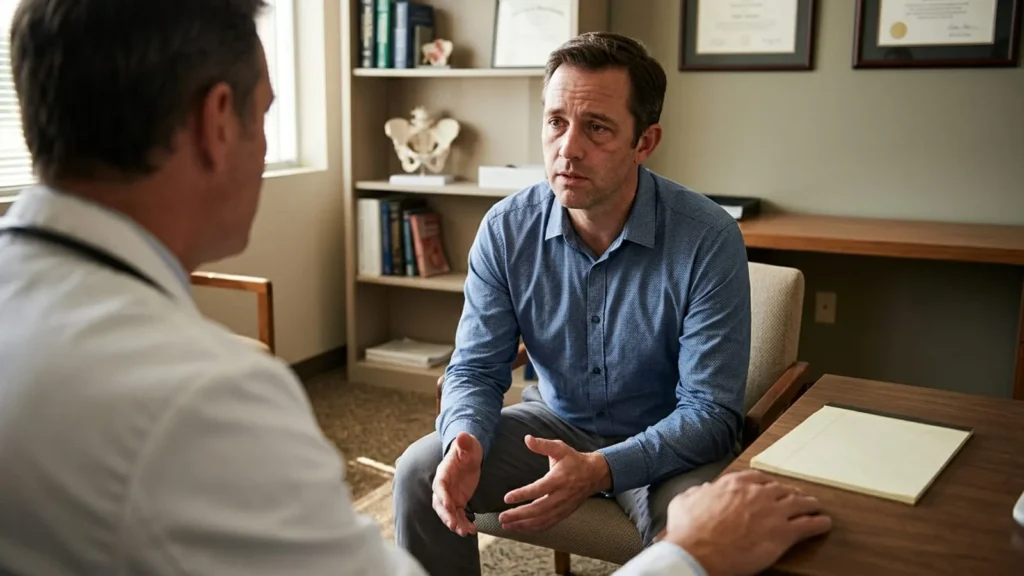
Back in LA, her doctor ran initial tests that appeared fine but decided to conduct a more thorough examination. The call that followed would change everything. “The doctor called and said I had bladder cancer.”
For Nancy, what started as routine annual checkups would lead to an unexpected journey that tested her resolve and ultimately highlighted the importance of having a thorough and determined specialist on her team. Her story is one of persistence, expert detective work, and the life-changing difference that the right doctor can make.
Confronting her unexpected and frightening diagnosis
The news blindsided Nancy. “I thought the only people who got this were men who smoked. It felt like a death sentence,” she remembers. Another urologist was quick to reassure her, explaining that the bladder is a self-contained organ. While bladder cancer becomes problematic if it grows beyond the bladder walls, hers had been caught at an early stage.
In early 2016, Nancy underwent her first surgery. The treatment plan seemed straightforward: remove the cancer inside the bladder and follow up with BCG treatments – a specialized immunotherapy. This type of bladder cancer treatment uses a weakened form of the tuberculosis bacteria (Bacillus Calmette-Guérin) to stimulate the immune system to fight bladder cancer. The treatment would involve inserting the liquid medication directly into Nancy’s bladder through a catheter, where it would be held for about two hours to help her immune cells attack any remaining cancer cells.
The expected treatment didn’t work
But Nancy’s case proved to be anything but straightforward. After her surgery and follow-up treatments, her urologist was puzzled—there was still blood in her urine. Another surgery followed. Then, months went by with persistently poor test results showing red blood cells in her urine. Her urologist was concerned by the continuing symptoms.
“The doctor didn’t understand why there was still blood in my urine after surgery,” Nancy explains. “We had another surgery, but the poor test results continued.” By the end of 2017, it was clear that something else was going on. It was time to consider other treatment options.
Enter Dr. Josephson: the medical detective
It was then that Dr. Josephson became involved in Nancy’s case after her urologist brought him on board. A CT scan revealed cancer in her ureter—the tube that carries urine from the kidney to the bladder—not just in her bladder.
“He was a great sleuth who wanted to find the root cause,” Nancy says admiringly. Dr. Josephson had discovered what he called “the culprit”.
In medical terms, Dr. Josephson’s diagnosis was “invasive urothelial carcinoma that had developed in her left distal ureter, the lower part of the tube on her left side. This aggressive, high-grade cancer had invaded the lamina propria, the supporting tissue layer beneath the ureter’s lining, making it more serious than initially thought.”
In layperson’s terms, it means the following: Nancy’s cancer had begun in a part of the lining of her urinary tract (in a tissue layer of the bladder). At some point, the cancer had grown deeper. It was now in the tissue layer below the lining of the bladder. Its current location was at the lower end of her left ureter (one of two thin tubes that carry urine from the kidneys to the bladder). This particular cancer was relatively fast-growing and thus more dangerous.
Nancy’s “groovy” urologist with exceptional skills
Nancy’s first impression of Dr. Josephson was memorable. “He’s kind of groovy,” she says with a laugh. “I don’t know if he would appreciate that, but he is.” The nurses called him “Dr. J,” and his confidence immediately put Nancy at ease. “I felt relaxed but like I was in good hands.”
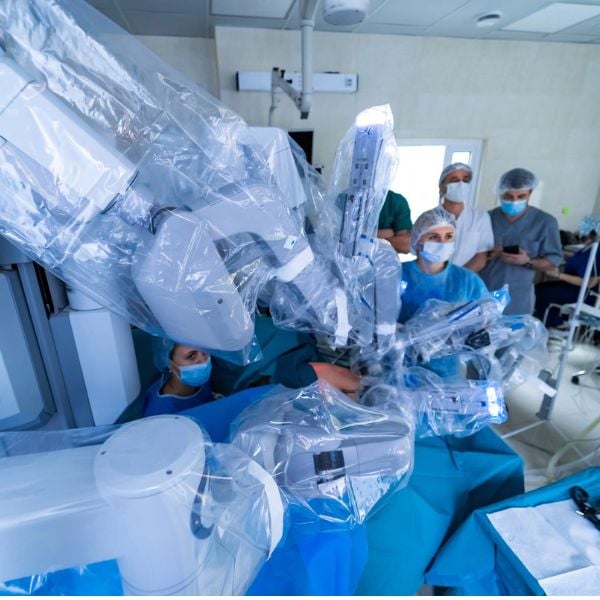
Dr. Josephson planned a two-part surgical approach to address the cancer comprehensively. In March 2018, he performed a robotic partial cystectomy and ureteral reimplantation. Basically, this means removing the affected portion of the bladder and reconnecting the ureter in a new location.
“During the first surgery, he put a stent in in preparation for the next surgery,” Nancy explains. “During the second surgery, there were four incisions in my stomach, but now you can’t even tell. It’s amazing. He moved the ureter with tools and cameras, and now only one small, almost unnoticeable dent remains on my abdomen.”
Her amazing results that speak for themselves
The results of Dr. Josephson’s surgical expertise have been nothing short of amazing. “He did a remarkable job,” Nancy emphasizes. “He was right—it was the culprit. He got all of the cancer, and now I don’t have any issues. The cancer has been gone for years.”
The follow-up care has been equally impressive. Nancy sees Dr. Josephson once a year for monitoring, and there has been no evidence of recurrence to date. Nancy has jokingly asked how much longer she needs to see Dr. Josephson. “Dr. Josephson always says, ‘You’re going to see me for the rest of your life,’” she laughs. “I can tell he enjoys his job.”
Dr. Josephson’s art of confident, caring medicine
What strikes Nancy most about Dr. Josephson is his unique combination of expertise and demeanor. “I asked his nurse how many patients he sees in a given day. The nurse responded with an off-the-chart number. He isn’t wasting any time, but he’s always in a good mood.”
His approach to patient care is both efficient and reassuring. “He’s relaxed, and he doesn’t make it seem like whatever is going on is a big deal. He’s confident, and he’s good. My two surgeries proved it.” While he’s direct in his communication, Nancy appreciates his straightforward style. “He tells it like it is, which made me feel good. He didn’t sugarcoat anything, and I deely appreciated that.”
A recommendation from the heart
For anyone considering care at Tower Urology or with Dr. Josephson specifically, Nancy’s endorsement is wholehearted. “I would say to anyone thinking about seeing Dr. Josephson that he’s an excellent doctor. You could say that he saved my life.”
She’s particularly impressed by his individualized approach to patient care. “His style is that he has the belief that every patient is different. It feels like he really tailors his care to each patient. Honestly, he’s so good at what he does. He’s very thorough.”
“I’m glad I have him,” Nancy concludes. “He really deserves all the compliments. He really did a great job.”
Nancy’s story is a powerful reminder that sometimes the most complex medical cases require a detective’s instincts combined with surgical excellence. Thanks to Dr. Josephson’s thorough investigation and skilled intervention, what began as a puzzling case of persistent symptoms became a complete success story—one that continues to be cancer-free years later.
Why do patients nationwide trust Tower Urology for complex urological cancers?
At Tower Urology, our specialists understand that complex cases like Nancy’s require both advanced diagnostic skills and surgical expertise. Our team combines state-of-the-art robotic surgical techniques with a thorough investigative approach to ensure that no stone is left unturned in your urological care.
Tower Urology is a proud affiliate of Cedars-Sinai Medical Center, ranked #1 in California and #2 nationwide by U.S. News & World Report. This partnership reflects our dedication to delivering the highest standard of urologic care alongside the best urologists in Los Angeles. Our years of experience and access to Cedars-Sinai’s world-class facilities ensure that our exceptional and innovative urological care positions Tower Urology as a leader in Southern California.
Tower Urology is conveniently located for patients throughout Southern California and Los Angeles, including Beverly Hills, Santa Monica, West Los Angeles, West Hollywood, Culver City, Hollywood, Venice, Marina del Rey, Burbank, Glendale, and Downtown Los Angeles.
Our services include treatment for urinary tract infections, urethral stricture disease, urinary fistulas, interstitial cystitis, and other female health concerns.
Frequently asked questions about urothelial carcinoma and ureter cancer

Urothelial carcinoma (urothelial cancer) is a type of cancer that develops in the urothelium—these are the urothelial cells that line the urinary tract. The urinary tract includes the bladder, ureters (tubes connecting the kidneys to the bladder), and other related areas. While many people think of “bladder cancer” (carcinoma of the bladder) as one disease, urothelial carcinoma can actually occur anywhere along this lining. When it develops in the ureter, as in Nancy’s case, it can be particularly challenging to diagnose because symptoms may be similar to bladder cancer or urinary tract infections.
Ureter cancer is relatively rare compared to bladder cancer, and symptoms like blood in urine can initially appear to be caused by more common conditions like urinary tract infections or bladder issues. Additionally, standard imaging may not always clearly show cancer in the narrow ureter tubes. This is why persistent symptoms after treatment may require more specialized imaging, like CT scans, and the expertise of urological specialists who can recognize when additional investigation is needed.
“High-grade” means the cancer cells look very abnormal under a microscope and tend to grow and spread more quickly to other parts of the body than low-grade cancers. “Invasive” means the cancer has moved beyond the surface lining into deeper tissue layers, such as the lamina propria. While this sounds concerning, when caught and appropriately treated by experienced surgeons, many patients with invasive urothelial carcinoma can achieve excellent outcomes, as demonstrated in Nancy’s case.
This is an advanced surgical procedure performed using robotic technology, which enables extremely precise movements. A partial cystectomy removes only the affected portion of the bladder rather than the entire organ (radical cystectomy). Ureteral reimplantation involves reconnecting the ureter to the bladder in a new location, bypassing the area affected by cancer. The robotic approach typically results in smaller incisions, less pain, faster recovery, and excellent cosmetic results, as evidenced by Nancy’s experience.
Long-term follow-up is crucial for urothelial carcinoma patients because there’s always a possibility of recurrence, either in the same location or elsewhere in the urinary tract. Regular monitoring allows doctors to detect any new developments early when they’re most treatable. As Dr. Josephson told Nancy, this becomes a lifelong relationship focused on maintaining her cancer-free status and overall urological health.