Jacob’s story: prostate cancer caught early, treated right, and healed fully
Jacob’s vigilance about prostate cancer came from painful personal experience. “My father had prostate cancer when he was 70, but the treatments weren’t as good back then,” Jacob recalls with emotion. “The outcome probably wasn’t very good either, although he never confessed as much; we tended to talk around it.”
That unspoken history shaped how Jacob managed his own health. “As I approached the age my father was when he was diagnosed, I decided to take proactive steps to monitor my own PSA levels,” he explains. “I underwent regular testing to keep an eye on whether those levels became elevated or increased over time.”
Prostate-specific antigen, or PSA, is a protein made by the prostate, and rising levels in the blood can signal changes in prostate health, including inflammation, enlargement, or potential signs of prostate cancer.
Jacob established a baseline early, 0.7, and educated himself about what changes would matter. “I knew if the value went up by 0.5 or more in a year, then that meant something was up with my prostate.”
Staying informed gave him confidence, and by maintaining active surveillance of his PSA levels (also known as watchful waiting), it meant he could recognize even the smallest shift before symptoms developed.
For Jacob, a 74-year-old man with a family history of prostate cancer, active monitoring of his prostate health saved his life. Now, five years after his diagnosis and surgery with Dr. Matthew Bui at Tower Urology, Jacob has achieved what’s known in urology as the “trifecta” — he’s cancer-free, has perfect urinary control, and maintains his sexual function. His story shows how paying attention to subtle changes and choosing the right surgeon at the right time can change everything.
How a small PSA rise revealed cancer before symptoms ever appeared
Then came the test result that changed everything. “I got a test result of 1.2,” Jacob remembers. He notes that this is below 2.5, the upper limit of what can be considered normal when it comes to PSA levels in men younger than 60. And he admits that his 1.2 score was well below a 4.0, which can necessitate further testing in older men. However, Jacob remained cautious.
“Although the numbers weren’t necessary alarming, my number was going up,” he recalls, “so I remained vigilant and retested six months later. The figures jumped again — a clear indication something was going on, and I wanted it investigated further.”
His physician then called Dr. Bui. “I knew it was standard to prescribe antibiotics in the first instance,” Jacob says, “but I was keen to undergo an MRI as soon as possible — I wanted to find out what was going on.”
Dr. Bui respected that preference and ordered imaging of his prostate gland straight away. “When he received the results, he found four small lesions,” Jacob says.
Despite that discovery, life didn’t pause for fear of a diagnosis. “My wife and I were going on a trip, so we waited to do a prostate biopsy,” Jacob explains. “Upon our return, the biopsy was done, and it turns out there were cancer cells.” Even with the shock of hearing the word cancer, Jacob felt reassured knowing he had a surgeon who moved quickly, worked with him, and communicated clearly.
Why early prostate cancer detection dramatically improves surgical outcomes
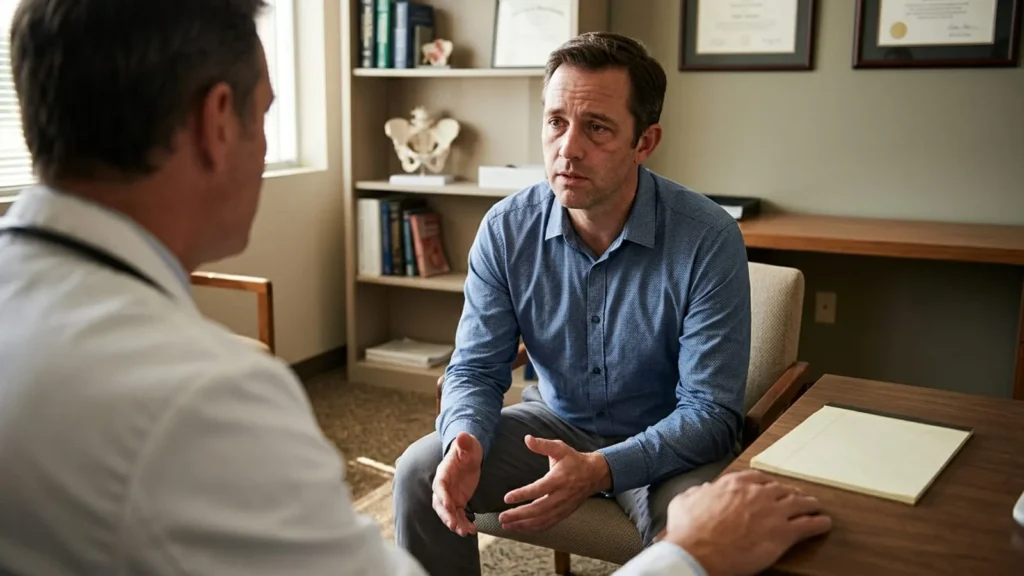
Dr. Bui sat down with Jacob to explain every prostate cancer treatment option. “Dr. Bui provided all the alternatives, and we talked them through, but I was already leaning toward complete removal of the prostate instead of radiation therapy or other treatment options,” Jacob says. He had seen friends struggle with long-term side effects from radiation or other therapies and wanted a decisive cure.
Then Dr. Bui explained something Jacob would never forget: “He told me that when the tumor progresses from localized prostate cancer to advanced prostate cancer, and it reaches the prostate perimeter, the outside gets “sticky,” and the nerves get stuck to the prostate, making it much trickier to get optimal outcomes, even for him — and he’s an excellent surgeon. Plus, the surgery will take much longer.”
Jacob understood, and the difference for him was night and day. “If you perform a radical prostatectomy and remove it when the tumors are small and inside the organ, the prostate is relatively easy to remove without damaging all the surrounding nerves,” Jacob says. “And nerves play a huge role in sexual function and urinary continence.” That clarity made his decision even easier. He appreciated that Dr. Bui wasn’t pushing him but providing him with the facts that would help guide him in making an informed decision.
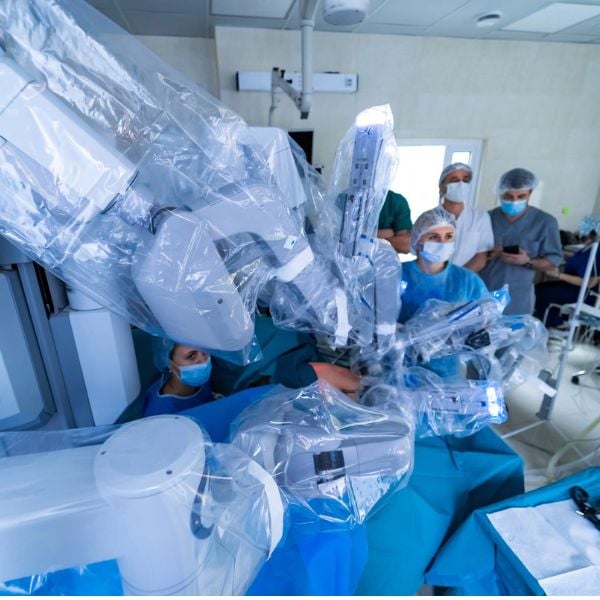
Jacob decided to forgo radiation treatment and opted for robotic surgery to remove his prostate in early January, after the holidays.
The moment Jacob knew he had the right prostate cancer surgeon in Dr. Bui
Right before surgery, Jacob received unexpected reassurance. “I was being given anesthesia, and my anesthesiologist said, ‘You’re with the right guy. Dr. Bui is who a lot of us doctors use,’” Jacob recalls. “And then I remembered that my primary physician has seen him too,” he adds.
For Jacob, the endorsement of Dr. Bui by other health professionals mattered deeply. When medical professionals trust the same surgeon with their own bodies, it speaks volumes and can reinforce patient confidence.
A nerve-sparing prostatectomy that restored continence and sexual function
“My surgery went very smoothly,” Jacob says. The first milestone came fast. “I had continence back after the catheter was removed.” He was impressed and relieved by this — he had no need for pads, no leakage, and no fear of accidents; a result many men hope for but don’t always achieve.
Sexual function took longer, but it returned in full. “Everything was pretty much back to normal about six months post-op — erections and that. And a year later, everything was actually better than normal, better than it had been for a long time,” Jacob shares.
Dr. Bui confirmed it. Jacob had achieved the trifecta: cancer cure, continence, and full erectile function without nerve damage.
Five years cancer-free: Jacob’s life after robotic prostate surgery
Jacob’s gratitude is unmistakable. “I’m a big fan of Dr. Bui and his decision — our decision — to just go ahead and remove the prostate,” he says. “I felt that with Dr. Bui, I had the best surgeon with the best advice, and I couldn’t go wrong.”
Postoperative and follow-up care has been steady and reassuring. “To begin with, I was having follow-ups every three months with him. Now it’s every six, and he’s very good at keeping careful tabs on me.” The consistency, the monitoring, and the personal attention all played a role in what Jacob considers to be one of the best decisions he has ever made for his health.
What Jacob wants every man to know about PSA testing and prostate cancer
Jacob is straightforward when offering advice to other men: “Do your research and keep an eye on your PSA,” he urges. “But I was also very lucky that when I got my results, my physician recommended Dr. Bui.”
He praises Dr. Bui’s skill and personality equally. “He is wonderful, personable, and easy to work with. He did a great job of telling me what my options were and explaining the problems that can arise with each.”
Looking back five years later, Jacob’s careful PSA monitoring and Dr. Bui’s expertise gave him something priceless: a cancer-free life with full function and no compromises.
Why choose Tower Urology for prostate cancer care?
At Tower Urology, our specialists combine thorough evaluation, including physical exams and diagnostic tools like cystoscopy, with state-of-the-art robotic surgery techniques. Our experienced surgeons perform advanced procedures using tools like Da Vinci technology, offering patients the benefits of small incisions, reduced recovery time, and excellent functional outcomes.
We invite you to establish a care plan with Tower Urology. Please make an appointment online or call us at (310) 854-9898.
Tower Urology is a proud affiliate of Cedars-Sinai Medical Center, ranked #1 in California and #2 nationwide by U.S. News & World Report. This partnership reflects our dedication to delivering the highest standard of urologic care alongside the best urologists in Los Angeles. Our years of experience and access to Cedars-Sinai’s world-class facilities ensure that our exceptional and innovative urological care positions Tower Urology as a leader in Southern California.
Tower Urology is conveniently located for patients throughout Southern California and Los Angeles, including Beverly Hills, Santa Monica, West Los Angeles, West Hollywood, Culver City, Hollywood, Venice, Marina del Rey, Burbank, Glendale, and Downtown Los Angeles.
Our services include comprehensive prostate care, management of lower urinary tract symptoms caused by BPH, advanced prostate cancer treatment, including various types of prostatectomy procedures, and proactive screening for at-risk patients.
Prostate cancer FAQs

Both treatments can be effective, but radical prostatectomy often provides the most definitive cure when cancer is caught at an early stage and still contained within the prostate. Surgery allows the complete removal of the gland, which gives patients and surgeons absolute clarity about whether the cancer is gone.
Many men prefer prostatectomy because it removes the cancer immediately and avoids the long-term erectile dysfunction, bowel, or urinary problems that can develop after radiation. Some patients, like Jacob, also want the chance to preserve urinary control and sexual function through nerve-sparing techniques, which are easier to achieve before cancer reaches the edge of the prostate.
Finding prostate cancer early usually means the tumor is small and has not reached the outer surface of the gland. This allows surgeons to perform laparoscopic surgery and work around delicate nerves that support continence and erections. Early detection significantly increases the chance of full recovery with minimal side effects.
Radiation therapy can be an effective follow-up option if cancer returns after surgery. However, patients who begin with radiation may have fewer surgical options later because radiation can cause tissue changes that make future procedures more difficult.
Sources:
https://www.cancer.org/cancer/types/prostate-cancer/treating/surgery.html
Radiation Therapy for Prostate Cancer
https://www.cancer.org/cancer/types/prostate-cancer/treating/radiation-therapy.html
Radical prostatectomy or radiotherapy in high-risk prostate cancer: a systematic review and metaanalysis
https://pubmed.ncbi.nlm.nih.gov/24589471