What happens when your doctor notices questionable PSA levels?
“I had some troubling Gleason scores when I underwent testing,” Gary explains. “Dr. Suh, my general doctor, noticed the PSA levels were starting to increase, and advised me to see Dr. Bui.”
An increasing PSA level simply means that more of the protein produced by the prostate is being released into the bloodstream. In some cases, this can indicate prostate cancer, but it could also point to non-cancerous issues like benign prostatic hyperplasia (BPH) or inflammation (prostatitis). Prompt referral to a urologist is vital not only to determine the meaning of the elevated levels but also to ensure the patient’s peace of mind.
The referral to Dr. Bui carried weight and helped reassure Gary, especially as it came from his longtime physician. “I have a lot of confidence in Dr. Suh and who he recommends, so I met with Dr. Bui,” Gary continues.
For Gary, a 67-year-old whose routine prostate-specific antigen (PSA) testing revealed troubling results, hearing the words “cancerous cells” changed everything.
What did Dr. Bui’s approach to the first consultation reveal about his character?
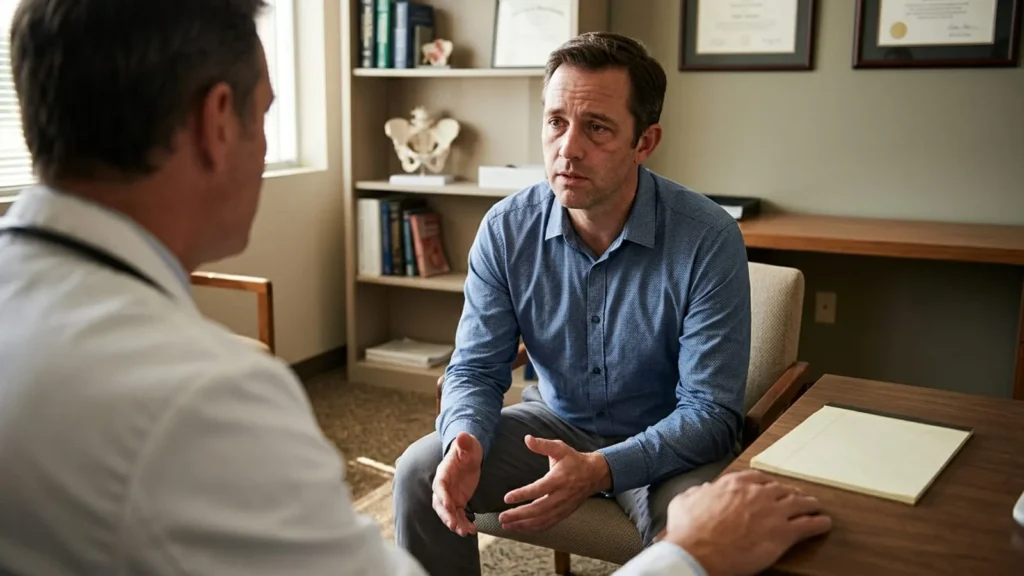
“Dr. Bui has a great way about him. He has a calm demeanor, is genuinely interested, and goes out of his way to put you at your ease — and he spends time with you,” Gary recalls. Finding a surgeon who sits down with you, listens to your concerns, and doesn’t make you feel like an interruption in their busy day stands out dramatically — particularly in a healthcare system where rushed appointments have become normalized.
“We decided to do further tests,” Gary says. “When those results came through, Dr. Bui decided he wanted to do some prostate biopsies, which we did. Most of the biopsy samples were fine, but there was one area that revealed some cancerous cells.”
Hearing the phrase “cancerous cells” can change everything for a patient. Suddenly, you’re not worried about potential problems but about actual prostate cancer, and decisions about prostate cancer treatment can become immediate and urgent — almost overwhelming.
How Dr. Bui presented three options without pushing his own agenda

What followed was a masterclass in patient-centered decision-making: three clearly explained options; honest discussion of risks, and a calm presence during one of the most stressful periods of Gary’s life. It revealed a lot about Dr. Bui’s values and approach.
“The first was wait and see, which my father-in-law did, and he turned out fine,” Gary recalls. Some men with slow-growing prostate cancer, particularly older patients, choose active surveillance. Dr. Bui acknowledged this as a legitimate approach, not dismissing it despite being a surgeon who performs hundreds of prostate-related procedures.
“Another option was radiation treatment, and he went on to explain the pros and cons of going down that road,” Gary continues. Dr. Bui explained to him that radiation therapy offers cancer control without surgery, but it comes with its own side effects and considerations for quality of life.
“The final option was that I could have surgery to have my prostate removed, which meant there was less of a risk of the cancer spreading,” Gary explains. “But the procedure carried potential negative side effects like urination problems.”
Why did Dr. Bui’s transparency about nerve damage risks build trust instead of fear?
“Risks like severing a nerve could create problems down the road,” Gary says, acknowledging what every man worries about with prostate surgery: erectile dysfunction and urinary incontinence caused by nerve damage during removal of the prostate gland.
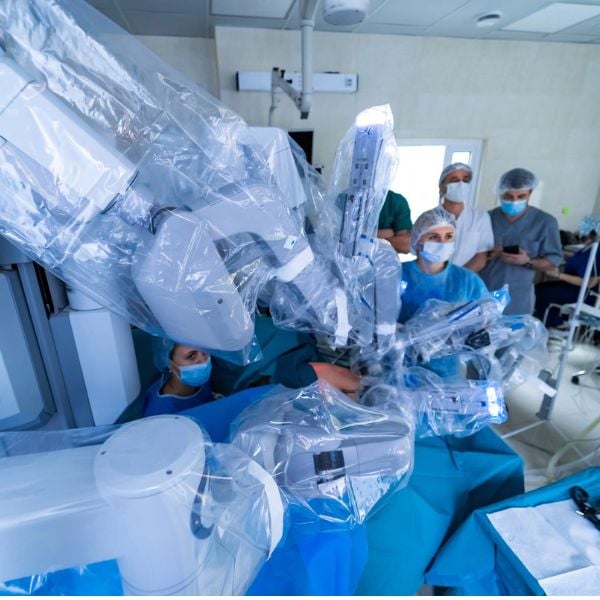
“But Dr. Bui said these were rare,” Gary continues. “And he performs the procedure using a state-of-the-art robotic surgical approach, which is less risky.”
The Da Vinci robotic system enables nerve-sparing techniques with enhanced precision compared to open surgery or traditional laparoscopic surgery. The robotic arms and advanced visualization allow surgeons to preserve delicate nerves while ensuring cancer control.
“I talked the matter over with Dr. Bui and Dr. Suh, but my instinct was to go ahead with surgery,” Gary explains. After weighing the options, surgical removal felt right. Not because Dr. Bui pushed it, but because Gary felt empowered to make an informed decision.
“I had a lot of confidence in Dr. Bui, and I really appreciate the time he spent explaining my options and the pros and cons,” Gary emphasizes. “It was a concerning situation, and I wanted a doctor that you have trust in and confidence in, and that was Dr. Bui.”
Gary’s repeated emphasis on trust reveals what matters most when facing a cancer diagnosis. While technical skill is essential, it is also important to find a urologist who makes you feel secure, informed, and empowered during one of the most vulnerable times of your life.
What Dr. Bui and robotic prostatectomy delivered: perfect surgery and zero complications

“So I underwent surgery, and we’ve been testing my blood and prostate for signs of cancer, and there have been no issues,” Gary reports simply. Those words, “no issues,” represent the best possible outcome for robotic prostatectomy.
“The surgery was flawless, and I haven’t experienced any of the potential negative consequences,” Gary continues. He has experienced no erectile dysfunction and no urinary incontinence — the nerve-sparing techniques that Dr. Bui promised worked exactly as intended.
The advantages of robotic-assisted laparoscopic radical prostatectomy over traditional approaches include making small incisions instead of large incisions, less blood loss, less pain, shorter hospital stay, and faster recovery time. But for Gary, the most important advantage was the outcome: the cancer was removed, his urinary and sexual function was preserved, and his life continues normally.
The Da Vinci surgical system contributed to these outcomes, thanks to its enhanced range of motion and 3D visualization, which enables Dr. Bui to perform extraordinarily precise surgery around delicate structures such as the urethra, lymph nodes, and nerves responsible for continence and sexual function. “But it was Dr. Bui’s expertise with robotic technology that translated into excellent results for my prostate cancer surgery,” states Gary.
Why is Gary sticking with Dr. Bui for all future urology concerns?
“I plan to continue care with him forever,” Gary explains. “Right now, I see him every six months, and then five years post-op, I can move to annually. But if I have any future urology concerns, I’m definitely going to Dr. Bui. I’m just a huge fan of him and would recommend him to anyone,” Gary adds with evident enthusiasm. emphasizes.
Dr. Bui’s calm demeanor, thorough explanations, honest discussion of risks, surgical excellence with the Da Vinci robot, and genuine interest in Gary’s well-being have earned loyalty that transcends a single procedure.
Two and a half years cancer-free, with perfect outcomes from robotic prostate surgery, Gary is an excellent representation of what exceptional prostate cancer treatment from a skilled physician like Dr. Bui looks like.
Why choose Tower Urology for robotic prostate cancer surgery?
At Tower Urology, specialists like Dr. Bui combine advanced robotic surgery techniques with patient-centered care that empowers informed decision-making. Whether you’re facing elevated PSA levels, dealing with a new prostate cancer diagnosis, or seeking a surgeon who will honestly discuss all treatment options, including their risks, expert care is available.
We invite you to establish a care plan with Tower Urology. Please make an appointment online or call us at (310) 854-9898.
Tower Urology is a proud affiliate of Cedars-Sinai Medical Center, ranked #1 in California and #2 nationwide by U.S. News & World Report. Our years of experience and access to world-class facilities ensure exceptional urological care.
Tower Urology is conveniently located for patients throughout Southern California and Los Angeles, including Beverly Hills, Santa Monica, West Los Angeles, West Hollywood, Culver City, Hollywood, Venice, Marina del Rey, Burbank, Glendale, and Downtown Los Angeles.
Frequently Asked Questions About Robotic Prostatectomy at Tower Urology

A Davinci robotic prostatectomy uses enhanced 3D visualization and robotic arms, allowing a greater range of motion than human hands and enabling precise nerve-sparing techniques. This robotic-assisted laparoscopic radical prostatectomy approach preserves nerves responsible for sexual function and continence while ensuring complete cancer control.
Experienced surgeons understand that the best treatment depends on each patient’s unique situation, cancer characteristics, and personal values. An open and honest discussion about the options of active surveillance, radiation, and surgical removal allows for informed decision-making by the patient. They can ensure their decisions are based on their individual risk factors rather than surgeon preference.
This approach contributes enormously to patients’ confidence that they are in control during a challenging time — being fully informed and genuinely supported by their surgeon empowers them to make the decision that feels right for them.
Follow-up appointments occur every six months initially to monitor PSA levels and ensure cancer hasn’t returned. After five years cancer-free, monitoring can move to annual visits. This schedule provides ongoing reassurance while allowing patients to return immediately for any urology concerns.
Sources:
Prostate Surgery
https://www.intuitive.com/en-us/patients/procedures/urology/prostatectomy
Side effects of prostate cancer therapies and potential management
https://pmc.ncbi.nlm.nih.gov/articles/PMC11557297/