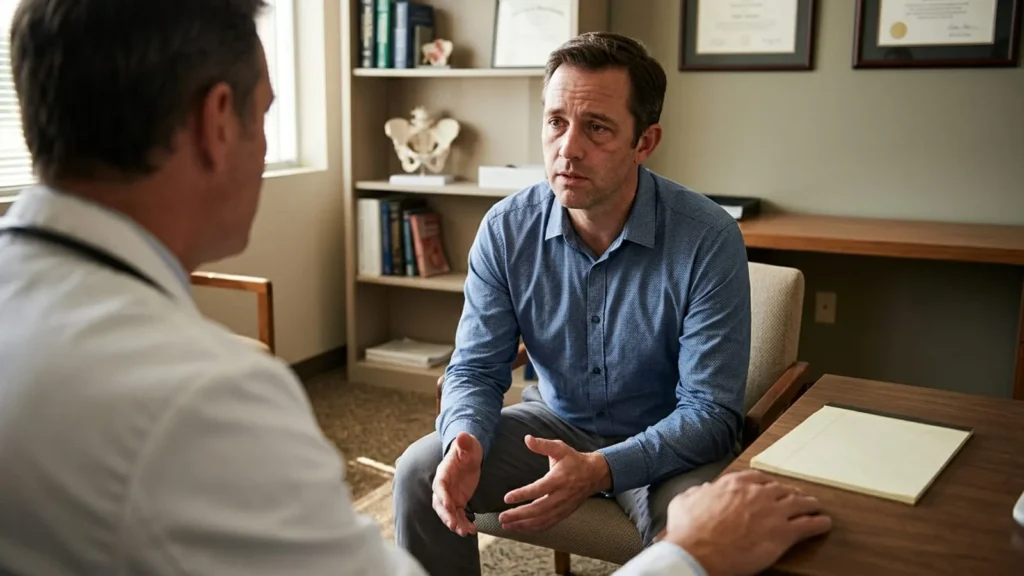
 For Benson, a 69-year-old Las Vegas resident managing rheumatoid arthritis and dealing with the occasional urinary health challenge, finding the right doctor wasn’t just about convenience; it was about trust.
For 15 years, he’s been flying from Nevada to Los Angeles to see Dr. Desai at Tower Urology, who has cared for him through urinary tract infections, testosterone loss, prostate problems, and a terrifying cancer scare that turned out to be a false alarm.
Benson’s outlook is simple: when you find a doctor who knows your body “inside and out” and responds by the end of the day every time you reach out, distance becomes irrelevant.
When your concierge doctor leaves, but you keep the specialist he recommended
“I was introduced to Dr. Desai around 15 years ago by a concierge medicine doctor I had, who is long gone, but I’ve kept Dr. Desai on because I value his service and his expertise,” Benson explains. “And he knows me inside and out, no pun intended,” he adds with a laugh.
That initial referral led to one of the best medical decisions he’s ever made. “Dr. Desai is the easiest guy to get on with,” Benson says simply. “I actually live in Las Vegas, but I fly into Los Angeles to see him.”
For some, making such a journey for medical care might seem excessive, but when Benson found a urologist who truly understood his body and lifestyle and consistently provided excellent care, the distance was a minor inconvenience.
“I continue to see Dr. Desai now for general health checkups,” Benson explains. “But I’ve had a few issues with my prostate and challenges with urination over the years — such as a weak stream, waking up in the middle of the night, and an overactive bladder — and he’s been there for me every time.”
“He’s also helped me with a few urinary tract infections (UTIs). He’s always supportive, very helpful, and he’s great at providing the right guidance,” Benson continues. “So whenever there’s been an issue, he’s been there for me. And if he didn’t have an answer right away, he would find it.”
The cancer scare that revealed what kind of urologist Dr.Desai really is

Eight months ago, everything suddenly changed. “I thought I had a UTI that was just getting worse,” Benson recalls. “I was traveling at the time and tried to see other doctors for urgent care, but the problem continued. Finally, I got back home and made an appointment to see Dr. Desai.”
A bladder infection or kidney stones were suspected, but the problem turned out to be far more complex. “Dr. Desai checked a few things, put me through a battery of tests,” explains Benson. “But when he got the results, he came into the consultation room, looked me in the eye, and said, ‘Benson, I need to share this with you. It looks like you could have progressive prostate cancer, but let’s go through it all in detail, one step at a time. You don’t seem to have the other symptoms, but the early tests warrant further investigation.'”
Those words would terrify anyone, and although Benson felt healthy otherwise, he was naturally concerned. Prostate cancer is the second most common cancer in men, and hearing that diagnosis, even tentatively, changes everything instantly.
“I returned to undergo an MRI, and the imaging seemed to suggest that something was going on,” Benson continues. “Dr. Desai saw the results, and I could see that he was visibly concerned, but his attitude was very much ‘we’re going to get through this.'”
That phrase mattered to Benson. It wasn’t “you’re going to get through this” but “we’re going to get through this.” It demonstrated Dr. Desai’s dedication to the doctor/patient partnership and his commitment to Benson that they would see it through together.
When comprehensive testing reveals a false positive and immense relief
“Dr. Desai recommended I proceed to the next step, which was to undergo a prostate biopsy,” Benson recalls. “So we did that. I underwent scoping and a biopsy, and it turned out to be a false positive,” Benson says, the relief audible in his voice.
Prostate biopsies, while uncomfortable, provide definitive answers when elevated PSA levels or imaging raise concerns. In Benson’s case, what appeared concerning through both initial testing and the MRI imaging results turned out not to be cancer after all.
“I continued with some medications and antibiotics, and the symptoms went away and haven’t come back,” he reveals.
But the care didn’t stop there. “I was keen to know what was causing the problems, so Dr. Desai recommended another doctor’s insight — I think an infectious disease specialist,” Benson says. “Rather than dismissing my ongoing concerns once cancer was ruled out, he supported further investigations to help me understand what was going on.”
“We still track my PSA levels and symptoms, but I think my body runs hot and cold — it’s just how it is, and Dr. Desai knows it. He’s gotten to know my unique characteristics,” Benson explains. “So we just stay on top of it together, and he’s remained very supportive throughout.”
Why customized testosterone therapy made all the difference for staying active
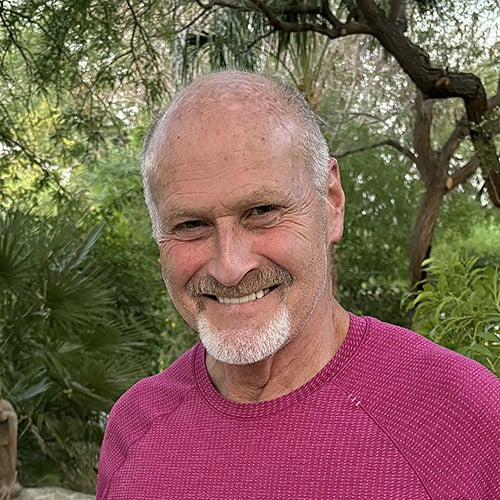
As Benson entered his late 60s, another challenge emerged. “I’m 69 now and getting older, so Dr. Desai performed some tests and found I have a natural testosterone loss,” he explains. “Now he’s helping me with hormone replacement therapy.”
Testosterone loss affects many men as they age, contributing to decreased strength, reduced stamina, mood changes, and other quality-of-life issues. But treatment isn’t one-size-fits-all, and Dr. Desai’s approach reflects that understanding.
“It’s customized for me,” Benson explains. I take pellets twice a year instead of shots or other ways the treatment can be administered. The pellet method provides steady hormone levels without the peaks and valleys that can come with other delivery methods.
“Twice a year, we monitor my blood levels, and he’ll take a look and make any recommended adjustments, if appropriate, and then I’m off and running for the next six months,” Benson says. “Hormone therapy has really helped me retain my strength and stamina, because I try to lead a healthy life.”
For someone dealing with rheumatoid arthritis, maintaining physical activity requires careful balance. Hormone therapy, combined with Dr. Desai’s overall management of his urinary health and prostate gland health, helps Benson maintain the active lifestyle that’s so important to him.
How predictable treatment outcomes build patient confidence over 15 years
What sets Dr. Desai apart, in Benson’s more than a decade of experience with him, is his reliability. “Everything is laid out exactly as he always says, whether it be testing, diagnoses, or treatment,” Benson emphasizes.
This consistency matters enormously in men’s health, especially when dealing with prostate problems and urinary symptoms that many men find embarrassing or uncomfortable to discuss.
“I see him about twice a year now, but it used to be twice a quarter,” Benson notes. The frequency has decreased over time as his conditions have stabilized, a testament to effective long-term management.
“Whenever I reach out to him, he’ll get back to me by the end of the day, which has been comforting and helpful,” Benson says.
When your doctor’s office is 270 miles away, you can’t just drop by when something concerns you — you need your doctor to communicate promptly and reliably. For someone managing rheumatoid arthritis, dealing with prostate problems, and navigating the normal health challenges that come with aging, that responsiveness is invaluable.
“I find him to be very personable and caring, and he has a great bedside manner,” Benson reflects. “We have an ongoing, mutual understanding doctor-patient relationship that strikes the perfect balance. It’s comforting — just right.”
That “just right” quality is rare. Not too clinical, not overly familiar, but genuinely caring and consistently available. It’s the kind of relationship that develops over 15 years of navigating health challenges together.
What 15 years of comprehensive urological care really means
“Over the course of the years, Dr. Desai has been diligent; he’s guided me through some uncomfortable situations, supported me through a couple of serious scares, and maintained my general health,” Benson summarizes.
From managing nocturia (frequent nighttime urination) to addressing weak urine flow, from treating urinary tract infections to monitoring elevated PSA levels, from implementing customized hormone therapy to navigating a cancer scare, Dr. Desai has been there for Benson through it all.
Why choose Tower Urology for comprehensive men’s health and urological care?
At Tower Urology, specialists such as Dr. Desai provide the kind of long-term, personalized care that builds genuine trust. Whether you’re dealing with urinary symptoms, prostate problems, hormone issues, or complex health conditions requiring ongoing management, comprehensive urological care is available.
We invite you to establish a care plan with Tower Urology. Please make an appointment online or call us at (310) 854-9898.
Tower Urology is a proud affiliate of Cedars-Sinai Medical Center, ranked #1 in California and #2 nationwide by U.S. News & World Report. Our years of experience and access to world-class facilities ensure exceptional urological care.
Tower Urology is conveniently located for patients throughout Southern California and Los Angeles, including Beverly Hills, Santa Monica, West Los Angeles, West Hollywood, Culver City, Hollywood, Venice, Marina del Rey, Burbank, Glendale, and Downtown Los Angeles.
Frequently asked questions about excellent urological care in Los Angeles, California

Many men begin experiencing lower urinary tract symptoms as they age, such as frequent urination, weak stream, urinary retention, or painful urination. These issues can stem from changes in the urethra, enlarged prostate, or benign prostatic hyperplasia (BPH). Other common symptoms include nighttime urination, back pain, urinary incontinence, or recurring infections such as cystitis. Tracking these changes and discussing them with a urologist helps ensure timely evaluation and the right treatment options.
Diagnosis often starts with a detailed medical history and review of risk factors such as age, obesity, heart disease, or previous infections. Depending on the concern, a provider may use imaging, bloodwork, or office-based testing. Procedures such as cystoscopy allow the doctor to examine the urethral passage, prostate area, and bladder for inflammation, blockage, or signs of bladder cancer. Some patients also benefit from urodynamic testing to evaluate how well the bladder, urethra, and ureters are functioning together as part of the urinary system.
Managing benign prostatic hyperplasia (BPH) typically begins with lifestyle changes and over-the-counter or prescription medications to improve urine flow and reduce discomfort. When symptoms progress, minimally invasive procedures or surgical treatments may be recommended to relieve urethral pressure or reduce prostate size. In some cases, short-term use of a catheter may be needed to address severe urinary retention. Your urologist will outline personalized strategies based on your goals, overall health, and how symptoms affect your daily life.
Conditions such as BPH, chronic inflammation, or persistent urinary infections can contribute to erectile dysfunction, fatigue, and reduced quality of life. Pelvic floor dysfunction may also play a role in urinary control and sexual function. Comprehensive care helps address all interconnected factors, ensuring that treatment supports long-term health both physically and emotionally.
Sources:
Variables Associated with False-Positive PSA Results: A Cohort Study with Real-World Data
https://pmc.ncbi.nlm.nih.gov/articles/PMC9818944/
Androgen Replacement
https://www.ncbi.nlm.nih.gov/books/NBK534853/