The prostate gland makes a protein named “prostate-specific antigen” or PSA for short. The higher the PSA level, the greater the chance of having prostate cancer. Routine PSA testing means that you can catch prostate cancer at an early stage. This increases your chances of a successful outcome.
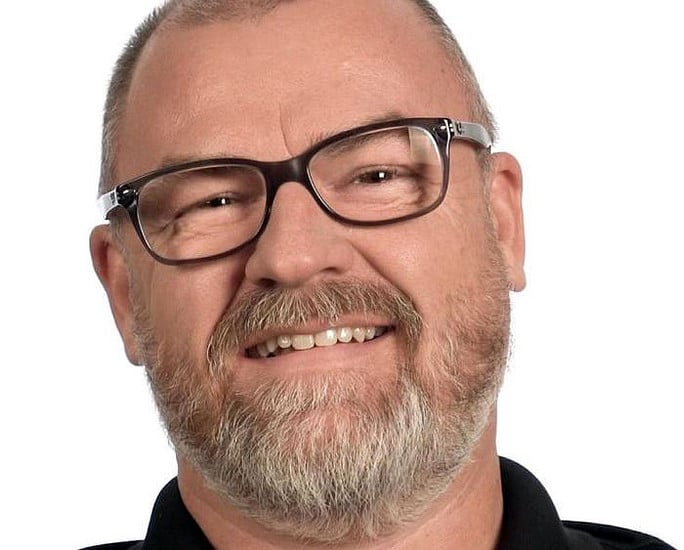
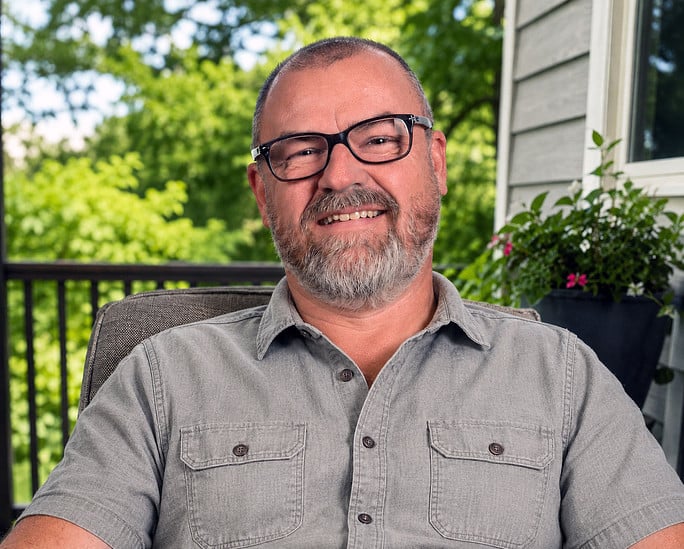
In December 2022, Andrew had a routine yearly checkup. One of the tests revealed his prostate-specific antigen (PSA) levels were unusually high for a 51-year-old. Retesting showed even higher numbers. His primary care physician suggested seeing a urologist.
Andrew’s online search for “best urologist in Los Angeles” led him to Tower Urology and Dr. Desai.
How did an online search lead to finding Tower Urology and the “best urologist in LA”?
Yelp is a popular rating app. In addition, much of Yelp’s content is reliable. Thus, a Yelp search for “best urologist in LA” would yield usable results.
Yet Andrew did not immediately start with Yelp. “We had a different insurance at the time, and we hadn’t had good luck with finding doctors we liked through them, so I went on Yelp and searched, ‘best urologist in Los Angeles,’ and Tower Urology was the top,” Andrew says. “So, I went on their website and looked around, looked at their top doctors, and scheduled my own appointment.”
Andrew’s research led him to the right care team. My first appointment was with Dr. Justin Houman, who suggested an MRI. The imaging revealed concerning areas requiring tissue sampling. He then wanted to do a biopsy after reviewing those results, Andrew continues. “So I had the biopsy.
Prostate biopsies aren’t pleasant, but they provide essential information about cancer cells and staging. Andrew confirms, “It wasn’t really comfortable, I’ll be honest, but Dr. Houman was great.” And his story confirms the importance of having a prostate biopsy despite the discomfort.
Why does no man want to hear the words: “stage 3 prostate cancer”?
There are four stages of prostate cancer. Each stage has several levels. The important difference between stages 2 and 3 is that in stage 3, the tumor “has broken through the layer of the prostate gland” and is now growing both inside and outside the prostate. As a result, treatment is more complex.
“Dr. Houman called me a few days later, and said, ‘I’m not going to beat around the bush. You have stage 3 prostate cancer. But you have options available to you, because you’re young and healthy,’” Andrew recalls.
“I pulled the car over and said, ‘Doctor, if you were in my position right now at my age, what would you do?’ Because there is really no standard treatment, I knew there were options,’” Andrew continues. That question, asking what the doctor would personally choose, cuts through uncertainty.
“And he suggested removal of my prostate gland,” Andrew says. “He said, ‘Let’s just get this thing out, and you can be done with it. It’s a big surgery, but then you’re done with it, you don’t have to worry about it.'”
While Andrew was told he had stage 3, Dr. Houman felt that he could even be right on the cusp of stage 4. The type of treatment depends on the stage, a patient’s risk, overall health, and their preference. For Andrew, Dr. Houman outlined treatment options like active surveillance, radiation therapy, hormone therapy, or radical prostatectomy.
Dr. Houman referred Andrew to Dr. Desai for surgery
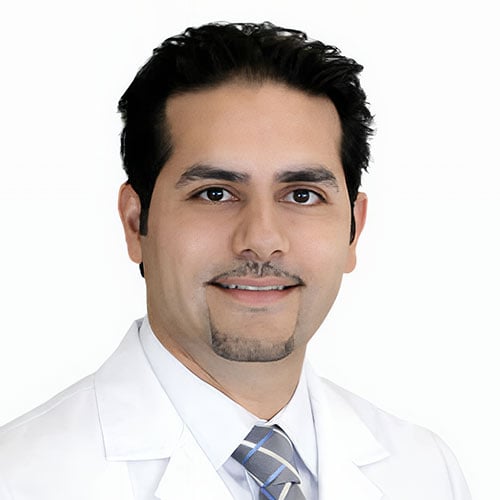
Top professionals, like Dr. Houman, are not afraid to collaborate with their equally top colleagues. Thus, he advised Andrew to meet with expert surgeon Dr. Premal J. Desai.
“He said, ‘What I’m actually going to do is have you talk to Dr. Desai, my colleague. He’s really good; he has done thousands of these surgeries and is one of the best in the industry,’” Andrew explains. “I followed his guidance to talk through my options with Dr. Desai, and then make a decision, and so I made an appointment,” Andrew continues.
This collaborative approach within Tower Urology ensured Andrew received expert surgical care while maintaining continuity with the urologist who diagnosed him.
What did Andrew discover in his first consultation with Dr. Desai?
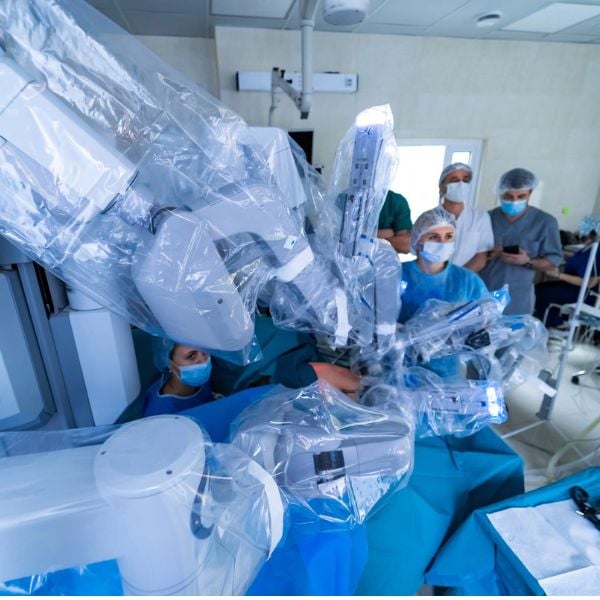
During Dr. Desai’s thorough review, Andrew discovered the available treatment plan options. Dr. Desai discussed watchful waiting, types of radiation therapy such as radiation treatment with external beam radiation or brachytherapy using radioactive seeds, hormone therapy, targeted therapy, or surgical removal of the entire prostate through robotic prostatectomy, which is one of the new treatments available.
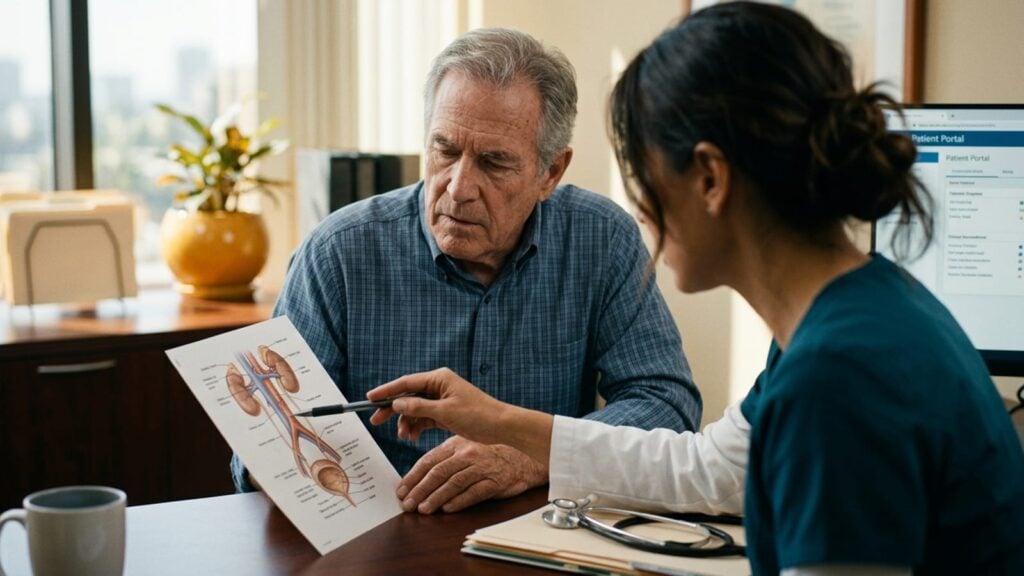
“When I met with Dr. Desai, there was an immediate connection,” Andrew says. “He sat down, and we went through all the details of the pros and cons of each treatment. And I asked him the same question: what would he do in my position?” Andrew recalls. “And he said he would have it removed. It would be the easiest and best way to eradicate it. My wife wholeheartedly agreed.”
How did Dr. Desai increase the chances of the best outcomes?
First, Dr. Desai advised Andrew not to wait too long. While Andrew wasn’t necessarily high-risk, there is always the chance that the cancer could metastasize. Metastatic prostate cancer means the cancer has spread to other parts of the body.
“I had some things coming up, and asked how urgent it was, and Dr. Desai said he wouldn’t wait,” Andrew explains.
Since it seemed that Andrew would be better served by delaying, Dr. Desai made a further suggestion.
“He said at most I could wait a month or so, and in the meantime, I should drop some weight and come in as healthy as possible,” Andrew explained.
That guidance, to optimize health before prostate cancer surgery, gave Andrew a productive focus during a terrifying time. “So, I worked out furiously in the months between that appointment and the surgery. I dropped the weight and got in better health,” he says.
“And I’m glad I did, because the surgery ended up being 8 hours instead of the normal 2 or 3,” Andrew adds.
How did Dr. Desai show compassionate reassurance after Andrew’s complicated surgery?
Due to the complexity of Andrew’s case, his surgery lasted 8 hours, more than double the usual time. Advanced prostate cancer, such as Andrew’s, requires extensive lymph node removal and careful attention to surrounding healthy tissue, which demands meticulous work. Understanding her natural concern, Dr. Desai reassured Andrew’s wife that all was well.
“My wife recalls Dr. Desai coming out and telling her that they got it, nothing had spread, but there were some complications that revolved around them having to dig and scrape some things out,” Andrew recalls. “But Dr. Desai continued, saying, ‘I’m glad we took the time to double and triple check, and it hasn’t spread. We’ve removed all the cancer.’”
The next morning, Dr. Desai made sure to check in with Andrew and share the good news.
“I stayed in the hospital two nights, just so they could monitor me,” Andrew continues. “And Dr. Desai came in the following morning and was like, ‘We did it! It’s out, we’re going to send it to the labs to be sure, but I’m really confident you’re going to live a long and prosperous life!'” Andrew recalls. “And I hugged him and thanked him and told him he just saved my life.”
Did the surgery successfully preserve the outcomes that matter most: continence and sexual function?
Yes, it did.
“I’ve maintained urinary and sexual function, and I can say I’m one of the few people who have not had any continence issues since surgery, and I still don’t have an issue with it,” Andrew reports. “And sexual function has come back. That took a little longer, but everything is good now.”
These results, avoiding potential surgery side effects like erectile dysfunction and urinary issues that many men fear with prostate cancer treatment, represent excellent surgical outcomes. Despite the complexity of Andrew’s 8-hour surgery, Dr. Desai’s nerve-sparing techniques preserved function while achieving complete cancer control.
Andrew calls the past two years “walking hand in hand” with Dr. Desai
Andrew has nothing but praise for Dr. Desai and the Tower Urology team. “My wife and I would adopt him as a family member if we could. He’s the only doctor I want to see,” Andrew says warmly. “He’s just really great, really kind. He has a way about him that keeps things light, even though it’s a serious subject like the treatment of prostate cancer.”
“I followed all his post-op directions to the letter, and he’s walked with me these past two years essentially hand in hand,” Andrew continues.
That partnership through recovery and ongoing monitoring creates a genuine relationship.
“I see him now every six months, and he tests everything, but he’s really happy with how things have progressed,” Andrew explains.
Regular PSA tests and follow-up ensure early detection if prostate cancer cells return.
How does Dr. Desai continue to manage Andrew’s overall health with testosterone therapy?
“He monitors my testosterone, and it’s a little low so that I might start testosterone therapy, with male hormones,” Andrew explains. “But again, he’s giving me all the options, my pros and cons. And if I’m doing my checkups with him, and he’s monitoring it, I’m not concerned because I know he has my best interests at heart.”
“He’s very detail-oriented, and he gives you a blunt answer if you ask him a blunt question,” Andrew says. “We’ve looked at things together, like supplements, and he will tell you like it is. I appreciate his honesty and how quickly he follows up.”
“My wife, family, and I feel very happy and lucky that Tower Urology and specifically Dr. Desai walked into our lives,” Andrew reflects. “I don’t know that I maybe wouldn’t have been as lucky otherwise. For that, I’ll always be grateful.”
From a Yelp search to a stage 3 cancer diagnosis to an 8-hour surgery and a continued successful medical partnership, Andrew’s journey demonstrates what excellent cancer care achieves when surgical expertise and genuine human connection come together in a team of great doctors.
Now, Andrew is cancer-free with a maintained good quality of life. He says simply: “My wife and I would adopt Dr. Desai as a family member if we could.”
Why choose Tower Urology for prostate cancer treatment?
At Tower Urology, specialists provide comprehensive prostate cancer care from diagnosis through treatment and long-term monitoring. Whether you’re facing elevated PSA levels, dealing with a new cancer diagnosis, or seeking a second opinion on treatment decisions, expert care is available.
We invite you to establish care with Tower Urology. Please make an appointment online or call us at (310) 854-9898.
Tower Urology is a proud affiliate of Cedars-Sinai Medical Center, ranked #1 in California and #2 nationwide by U.S. News & World Report. Our years of experience and access to world-class facilities ensure exceptional urological care.
Tower Urology is conveniently located for patients throughout Southern California and Los Angeles, including Beverly Hills, Santa Monica, West Los Angeles, West Hollywood, Culver City, Hollywood, Venice, Marina del Rey, Burbank, Glendale, and Downtown Los Angeles.
Frequently Asked Questions About Advanced Prostate Cancer Treatment

Treatment options include active surveillance (for select cases), radiation therapy (external beam or brachytherapy with radioactive seeds), hormone therapy, or radical prostatectomy. For younger, healthy patients like Andrew at 51, surgical removal often provides the best long-term cancer control and quality of life, eliminating the need for ongoing radiation treatment or androgen deprivation therapy while preserving function. Your health care team can help you decide the best treatment for you based on your goals, current health status, and whether you’re at risk of the cancer spreading.
Complex cases involving advanced cancer requiring extensive lymph node removal, careful dissection around healthy tissue, or anatomical complications may require significantly longer surgery time. Experienced surgeons prioritize thoroughness over speed, ensuring complete cancer removal while protecting nerves responsible for continence and sexual function, even when this demands extended operating time.