
Testosterone replacement therapy (TRT) works. Men feel better on it. But TRT comes with some trade-offs that not every man is told about up front.
So, can you raise your testosterone level without testosterone?
The answer is yes, and it involves two of the most useful medications in men’s health. These medications are often misunderstood, and these misunderstandings cost men something real.
These two medications can raise your testosterone without giving you any testosterone at all, and without costing you your fertility, which is a very real downside of Testosterone Replacement Therapy (TRT).
This article will give a basic review of how your body manages your testosterone. Then, it will dive into what the research actually says about these useful medications, in plain language.
How exactly does your body manage your testosterone level?
Your brain, specifically the hypothalamus, and your testicles talk to each other constantly. Their ‘chat method’ is via the hypothalamic-pituitary-gonadal (HPG) axis. Their ‘language’ is gonadotropin-releasing hormone (GnRH).
GnRH triggers two messenger hormones, known as gonadotropins: luteinizing hormone (LH) and follicle-stimulating hormone (FSH). These messengers tell the testicles to stimulate Leydig cells to make testosterone and to make sperm through a process called spermatogenesis.
What is the issue with testosterone replacement therapy (TRT)?
Testosterone replacement therapy (TRT) works by giving your body more testosterone via a shot, pill, gel, etc. However, when you put exogenous (external) testosterone into your body, your brain notices the high testosterone levels and stops sending the messengers (LH and FSH).
Your own testosterone production literally shuts down. Sperm production drops with it, sometimes to zero, leading to a clinically low sperm count. For a man who is done having children, that may be an acceptable trade-off when starting testosterone replacement therapy (TRT). For a man in his 30s who is not sure yet, it is a serious one.
What should I be asking my urologist?
The better question for a lot of men is not “How do I add testosterone?” It is “How do I get my own body to make more?”
Let’s look at two of the most common ‘answers’.
Clomiphene: the old answer, and the problem built into it
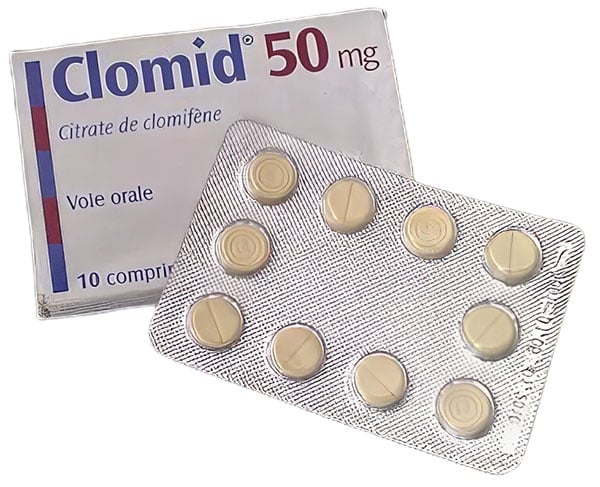
Clomiphene citrate, sold as Clomid, has been around for years. It belongs to a class of drugs called selective estrogen receptor modulators (SERM). This class of drugs works by blocking your brain from sensing estrogen. The brain and pituitary gland read that as “hormone levels are low,” so they send out more LH and FSH, and your testicles get to work. Your system stays up and running. Sperm production keeps going.
So, what’s the catch?
Here is the catch, and it is a strange one.
Clomiphene is not one molecule. It is a 50/50 blend of two versions of the same molecule, shaped like mirror images of each other, the way your left hand mirrors your right. These two mirror images are called enclomiphene and zuclomiphene citrate, and they do opposite things.
- Enclomiphene is the active isomer, the half that helps. It blocks estrogen signals in the brain, which is exactly the effect you want.
- Zuclomiphene is the half that works against you. It acts like estrogen rather than blocking it, and your body clears it slowly because of its long half-life. Take it daily, and it builds up over weeks. It is responsible for most of clomiphene’s side effects: mood swings, hot flashes, vision disturbances, lower sex drive, and estrogen-related symptoms.
In other words, when a man takes clomiphene, roughly half of every dose is working against the reason he took it.
Enclomiphene: the same drug with the unhelpful half removed
Enclomiphene, also a SERM, is simply clomiphene with the problematic half removed. The updated mechanism of action removes the need for an aromatase inhibitor (that zuclomiphene mirror image). So, you get none of the estrogen-like baggage or unwanted estrogenic side effects. That is the entire idea, and the data behind it is reasonably strong.
- Total testosterone rose by a median of 166 ng/dL on enclomiphene and 98 ng/dL on clomiphene. That gap was not statistically meaningful, meaning the two work about equally well for raising testosterone.
- Estrogen went in opposite directions. Estradiol, the main form of estrogen, dropped slightly on enclomiphene and climbed noticeably on clomiphene. That difference was significant.
- Side effects were the real separation. Nearly half of the men reported side effects on clomiphene. Fewer than one in seven did on enclomiphene. Decreased libido, fatigue, low energy, headaches, and mood changes such as agitation were all more common on clomiphene.
Another enclomiphene factor: FDA approval
The U.S. Food and Drug Administration (FDA) has not approved enclomiphene. It came close. A company called Repros Therapeutics filed for approval in 2015 under the name Androxal, and the FDA rejected the application that December, saying the trial design did not adequately prove clinical benefit and asking for more studies. It has never been approved since.
That means your pharmacist doesn’t stock enclomiphene. In practice, men get it through compounding pharmacies, which mix medications individually. That is legal, and physicians do prescribe it. It also means the product isn’t held to the same manufacturing consistency as an FDA-approved drug, so the pharmacy it comes from genuinely matters.
Clomiphene itself is FDA-approved, but only for women to induce ovulation and treat female infertility. Prescribing it to men is off-label use, which is common and legal, and something our urologists at Tower Urology do thoughtfully as part of a testosterone therapy, testosterone deficiency, and hormone optimization plan with monitoring.
Important safety note
Please do not buy either of these online without a doctor. Products sold as “research chemicals” or supplements are not regulated. These drugs need blood work before you start and while you stay on them.
My professional recommendation

If you have low testosterone due to secondary hypogonadism (a form of hypogonadism in men often linked to factors like obesity and metabolic syndrome, rather than primary hypogonadism), enclomiphene deserves a real conversation with your urologist. This helps you keep your fertility. In other words, not shut down your own sperm production.
Enclomiphene gives the same testosterone benefit, fewer side effects like gynecomastia, less estrogen stimulation, and better sperm numbers than gel, Human Chorionic Gonadotropin (hCG), or injections.
If you have been trying to conceive without success, start with a male fertility evaluation and a semen analysis before taking any hormone. The testing is essential because it tells the Tower Urology team (and you) which problem we are solving.
Talk with Tower Urology’s Los Angeles urologists about your testosterone
Our Tower Urology professionals treat low testosterone, often referred to as low T, erectile dysfunction, low libido, and male fertility concerns as connected problems, because they usually are. Browse our full range of men’s sexual health services or meet our urologists.
Call us or request your appointment online: (855) 246-2700 or request your appointment online.

Your luteinizing hormone (LH) and testosterone start climbing within the first week or two, and blood work usually shows the change by the time you come in for your first recheck. How you feel takes longer. Most men notice energy and libido shifting somewhere between four and 12 weeks. If fertility is the goal, give it about three months, because sperm take roughly that long to mature.
Nothing dramatic, and that is one of its advantages. Because enclomiphene never suppressed your own system, there is no crash to recover from. Your LH and testosterone simply drift back toward where they started over a few weeks, and your symptoms tend to return with them. There is no taper and no restart protocol, unlike coming off testosterone.
Not necessarily, and this is worth discussing at your first visit. Some men use it long term. Others use it for a defined stretch, often while addressing the things driving the problem in the first place, such as weight, sleep apnea, or blood sugar. When those improve, some men hold a decent testosterone level without medication. Our urologists will build the plan around your goals.
Usually not. It has no FDA approval for men, so it is prescribed off label and dispensed by compounding pharmacies, which puts it outside most formularies. Expect to pay cash, and expect the price to vary quite a bit between pharmacies. Clomiphene is generally the cheaper of the two and is more often covered. Ask our office for a current price before you commit.
This is one of the clearest advantages of the pills. Testosterone therapy can push your red blood cell count high enough to require blood donation or a dose reduction. A review of clomiphene therapy in men found polycythemia in 1.7% of men on clomiphene compared with 11.2% on testosterone replacement. Our urologists still check your blood count, but the risk is far lower.
Studies of clomiphene in men have not shown meaningful PSA increases, and there is no evidence it causes prostate cancer. That said, any treatment that raises your testosterone deserves prostate monitoring, so our urologists will check your PSA before you start and periodically afterward, particularly if you are over 50 or have a family history.
Often, yes, though it is a transition rather than a swap. Coming off testosterone means your brain has to start signaling again, which can take weeks to months, and you may feel rough in the meantime. Enclomiphene or hCG is frequently used to speed that handoff. How long you were on testosterone and how old you are both affect how quickly things come back.
Longer than most men expect. Published recovery data show most men return to a usable sperm count within six to 12 months of stopping, with medication often shortening that window. Older men and men who were on testosterone for years tend to sit at the longer end. A semen analysis is the only way to know where you actually stand.
It is generally not useful. Testosterone shuts down the exact brain signal that enclomiphene is trying to increase, so the two work against each other. Men who want to protect fertility while on testosterone are usually better served by adding hCG, which acts directly on the testicle instead of through the brain.
No. It contains no testosterone and no anabolic steroid of any kind. It is a selective estrogen receptor modulator (SERM), which means it changes how your brain reads your own estrogen levels. Everything it accomplishes, your body does itself. That distinction matters both medically and legally.
Indirectly at best. Restoring a healthy testosterone level can make it easier to add lean mass and shed fat, and many men do notice a difference in body composition. But it is not a weight loss drug and it is not a substitute for training and diet. If your testosterone is low because of excess weight, the weight is still the thing to address.
Age is not a hard cutoff, but it does shift the odds. What matters is whether your testicles can still respond to the signal. Older men more often have some degree of primary testicular decline, which limits how much any of these medications can do. A simple blood panel measuring your LH and follicle-stimulating hormone (FSH) tells our urologists whether you are a good candidate.
Yes, if you are tested by an anti-doping body. Clomiphene and enclomiphene sit in the hormone and metabolic modulators category of the WADA Prohibited List, which is banned in and out of competition. A valid prescription does not automatically clear you. Standard workplace drug screens do not look for it.
At minimum, our urologists check your total testosterone, estradiol, LH, and FSH, plus a complete blood count to monitor your hematocrit and a PSA where age-appropriate. If fertility is part of the picture, add a semen analysis. Expect a recheck roughly six to eight weeks after you start, then every six to 12 months once your numbers are steady.
No, and it is worth understanding why the question comes up. Testosterone therapy causes testicular shrinkage because the brain stops sending the signal that keeps the testicles busy. Enclomiphene does the opposite. It increases that signal, so testicular volume is preserved and some men notice a modest increase.
-
Safety and efficacy of enclomiphene and clomiphene for hypogonadal men. Translational Andrology and Urology, 2024. Saffati G, et al. https://tau.amegroups.org/article/view/129106/html
-
Clomiphene or enclomiphene citrate for the treatment of male hypogonadism: a systematic review and meta-analysis of randomized controlled trials. Archives of Endocrinology and Metabolism, 2025
https://www.aem-sbem.com/article/clomiphene-or-enclomiphene-citrate-for-the-treatment-of-male-hypogonadism-a-systematic-review-and-meta-analysis-of-randomized-controlled-trials/ -
Androxal (enclomiphene) FDA approval history
https://www.drugs.com/history/androxal.html -
Phosphodiesterase-5 inhibitors use and the risk of Alzheimer’s disease: a systematic review and meta-analysis. Neurological Sciences, 2024. https://link.springer.com/article/10.1007/s10072-024-07583-9
-
Phosphodiesterase-5 inhibitors and Alzheimer’s disease: a meta-analysis on clinical studies. npj Dementia, 2025. https://www.nature.com/articles/s44400-025-00005-3