What is chronic pelvic pain?
Chronic pelvic pain is one of the most prevalent yet underrecognized conditions in medicine, affecting people of all sexes and backgrounds. This page focuses specifically on chronic pelvic pain in men, where it presents a distinct and often overlooked clinical challenge.
Chronic pelvic pain syndrome (CPPS) is defined as any pain or discomfort in the pelvic area that persists for at least three months. The pelvic region spans from the navel down to the middle of the thigh, and pain in this area can involve the bladder, bowel, reproductive organs, muscles, and nerves, sometimes all at once. Under the NIH classification system, chronic prostatitis/chronic pelvic pain syndrome (CP/CPPS) is designated as Category III prostatitis, distinguishing it from bacterial forms of the condition and reflecting the diagnosis’s complex, multifactorial nature.

Understanding how chronic pain differs from acute pain is essential. Acute pain is the body’s short-term alarm signal: it flares after an injury or infection and fades as healing occurs. Chronic pelvic pain is fundamentally different. When pelvic pain persists beyond three to six months, the nervous system can become sensitized, meaning pain signals continue firing even after the original trigger has resolved. At that point, pain is no longer merely a symptom. It becomes its own condition, requiring comprehensive, targeted treatment rather than a simple course of antibiotics or rest.
CPPS is far more common than most men realize. Research estimates that chronic pelvic pain affects approximately 2-16% of men at some point in their lives, placing it on a par with conditions such as diabetes or coronary artery disease in terms of prevalence in the male population. Despite this, many men wait years before receiving an accurate diagnosis, cycling through multiple specialists without answers.
Beyond the physical discomfort, the psychological burden is significant. Anxiety, depression, and chronic stress are closely intertwined with CPPS, and research consistently shows that emotional well-being and pelvic pain influence each other in a bidirectional relationship. Addressing both dimensions is essential to achieving lasting relief.
At Tower Urology, our nationally recognized team takes a personalized, evidence-based approach to chronic pelvic pain, one that treats the whole person, not just the symptoms. If you have been living with unexplained pelvic discomfort, compassionate, world-class care is available.
How common is chronic pelvic pain in men?
You might be surprised to learn just how many men are living with chronic pelvic pain. Research suggests that CP/CPPS affects somewhere between 2% and 16% of men at any given time, depending on the population studied and how the condition is defined. Some estimates place the prevalence of CPPS in men on a par with diabetes or coronary artery disease, yet it receives far less clinical attention and remains dramatically under-diagnosed.
Chronic pelvic pain in men is most commonly diagnosed between the ages of 35 and 50, though it can affect men of any age. Younger men are often caught off guard by the diagnosis, assuming pelvic pain is something that only affects older individuals or women. In reality, CPPS is one of the most common urological diagnoses in men under 50, accounting for roughly 2 million physician visits in the United States each year.
This condition significantly burdens quality of life. Men with CPPS frequently report disrupted sleep, difficulty concentrating at work, strained relationships, and reduced sexual satisfaction. Studies have also linked chronic pelvic pain to higher rates of anxiety and depression, creating a cycle that can make symptoms feel even more overwhelming over time. Economically, the condition costs billions of dollars annually in healthcare utilization and lost productivity.
The good news is that chronic pelvic pain is treatable. Many men suffer in silence for years simply because they do not know where to turn, but with the right personalized care plan, meaningful relief is absolutely within reach.
Why does pelvic pain become chronic? Understanding the pathophysiology
One of the most important questions men ask is: why does pelvic pain persist long after any obvious injury or infection has cleared? The answer lies in a process called central sensitization, and understanding it helps explain why CPPS requires a fundamentally different treatment approach from acute pain conditions.
In a healthy pain response, nerve signals travel from the site of injury to the spinal cord and brain, which interpret them as pain and prompt protective behavior. Once the tissue heals, the signals stop. In CPPS, this system becomes dysregulated. Repeated or prolonged pain signals cause the central nervous system, the spinal cord and brain, to become hypersensitive. Nerve pathways that were once calibrated to respond only to genuine tissue damage begin firing in response to normal stimuli, or even in the absence of any stimulus at all.
The result is a self-perpetuating pain cycle. The brain and spinal cord no longer simply receive pain signals; they amplify and generate them. This is why men with CPPS often experience pain that seems disproportionate to any identifiable physical finding, and why the pain can spread beyond the prostate to involve the perineum, lower abdomen, inner thighs, and lower back.
Several peripheral mechanisms contribute to this central sensitization. Chronic inflammation in the prostate or bladder wall sensitizes local nerve endings, which in turn bombard the spinal cord with abnormal input. Pelvic floor muscle tension creates myofascial trigger points that sustain nociceptive signaling. Pudendal nerve compression adds another layer of peripheral input. Over time, all of these signals converge to recalibrate the nervous system in a way that keeps pain alive independently of the original cause.
This biopsychosocial model of chronic pain also explains why psychological factors, including anxiety, depression, and chronic stress, are not merely consequences of CPPS but active contributors to it. Stress hormones such as cortisol lower the pain threshold and promote inflammation, while negative emotional states reinforce the neural pathways that sustain pain perception. Effective treatment must therefore address the nervous system as a whole, not just the pelvis in isolation.
What are the symptoms of men’s chronic pelvic pain?
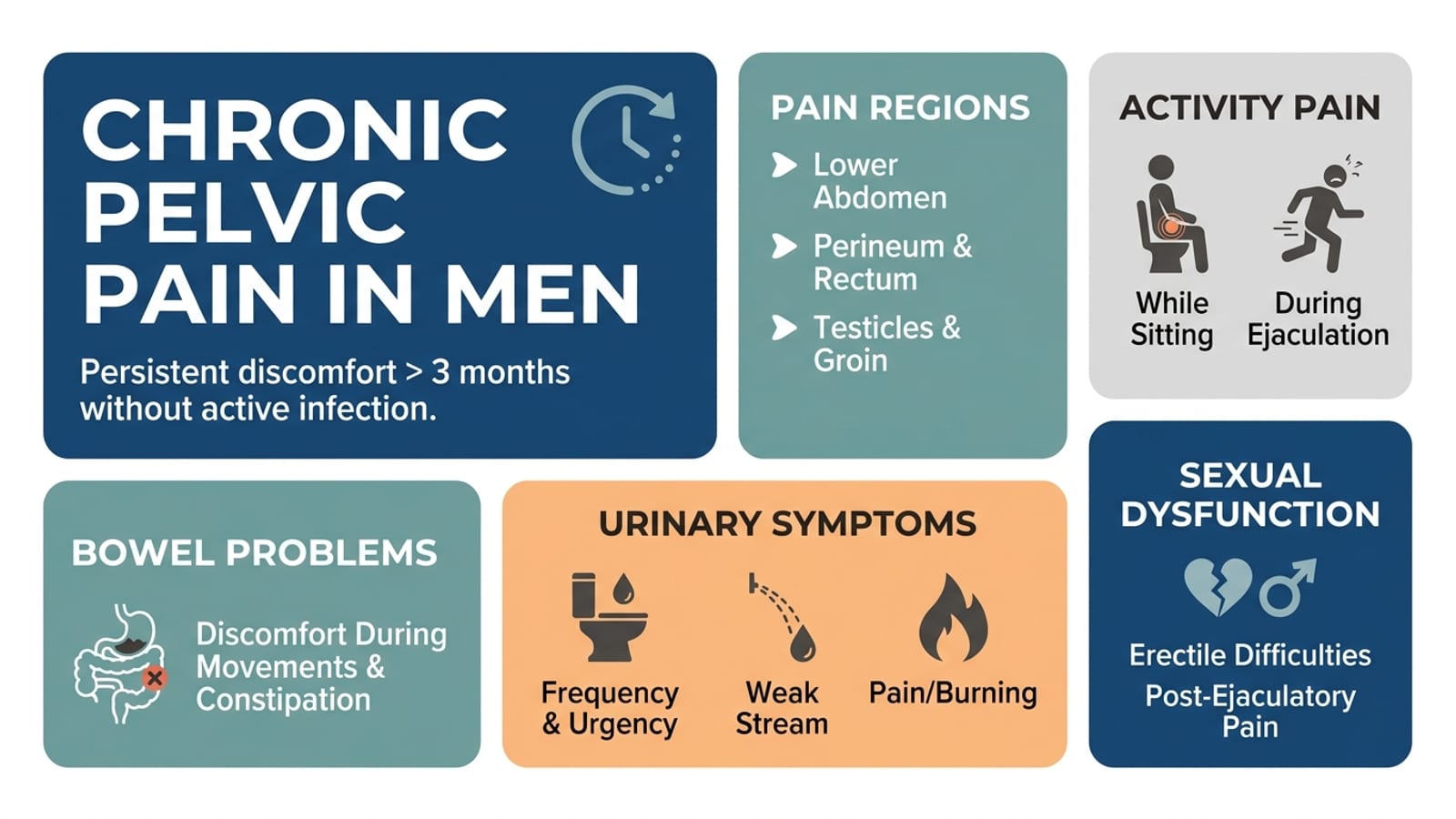
Male pelvic pain is defined by three simultaneous factors: continuous or recurring pain in the pelvic region; pain lasting at least three months; and no identifiable cause such as an active infection or clearly apparent underlying condition. This condition is complex and can significantly impact quality of life.
Common symptoms include:
Discomfort or lower abdominal pain
Discomfort or pain in the perineum (the area between the scrotum and anus), rectum, or lower back
Pain at the tip of the penis, in the testicles, or the groin
Pain while sitting or during certain activities
Abnormal urinary symptoms, including frequent urination, urgency, hesitancy, weak stream, the feeling of incomplete bladder emptying, or pain or burning during urination
Sexual dysfunction, including erectile difficulties
Pain during or after ejaculation (post-ejaculatory pain)
Discomfort or burning during ejaculation
Bowel problems, such as discomfort during bowel movements or constipation
Regarding symptoms, please note that:
Symptoms can be constant or change over time, sometimes coming and going
Pain is not limited to the prostate and may involve the pelvic floor, abdominal, or back muscles
Many men experience a combination of urogenital pain, urinary symptoms, sexual dysfunction, and emotional disturbance
What are the common causes of pelvic pain in men?
Pelvic pain in men may begin suddenly, as with a kidney stone or a pulled muscle. On the other hand, it can come on gradually, as with prostatitis, a urinary tract infection (UTI), a bladder infection, or even digestive problems. Sexually transmitted infections (STIs) are also among the causes of male pelvic pain.
Yet the cause of male pelvic pain is often not the result of a single, easy-to-identify issue. Instead, multiple factors often act at the same time. A thorough differential diagnosis is therefore essential before recommending any treatment plan. Contributing causes include:
Prostatitis
Prostatitis is an inflammation of the prostate gland. A bacterial infection can cause sudden or acute cases. Chronic prostatitis, on the other hand, is usually caused by inflammation, often without an infection. In addition to pelvic pain, prostatitis may cause urinary problems or problems with ejaculation.
When a bacterial infection does not cause prostatitis, the condition can be referred to by several names, including chronic prostatitis, chronic pelvic pain syndrome, prostatodynia (painful prostate), non-bacterial prostatitis, or abacterial prostatitis. Under the NIH classification, this non-bacterial form is Category III CP/CPPS, and it is by far the most common type encountered in clinical practice.
Benign prostatic hyperplasia (BPH)
Benign prostatic hyperplasia (BPH) is a non-cancerous condition that occurs when the prostate gland is enlarged, which can lead to chronic pelvic pain in men. As the prostate grows, it presses against the urethra and bladder, creating a partial obstruction that forces the bladder to work harder to push urine through. Over time, this increased muscular effort can trigger persistent pelvic pressure, a dull aching sensation in the lower abdomen or perineum, and a frustrating cycle of urinary symptoms, including weak stream, frequent urination, and the feeling that the bladder never fully empties.
It is worth distinguishing BPH from prostatitis, since the two conditions are often confused. Prostatitis involves inflammation or infection of the prostate and tends to produce more acute, localized pain, sometimes accompanied by fever, burning urination, or flu-like symptoms. BPH, by contrast, is a structural change driven by glandular growth rather than inflammation, and its associated pelvic discomfort is typically more gradual in onset and closely tied to urinary obstruction. That said, the two conditions can coexist, which is why a thorough evaluation is so important for an accurate diagnosis and the right treatment plan.
At Tower Urology, our team takes a comprehensive, personalized approach to BPH management. Depending on the severity of your symptoms, treatment options range from lifestyle modifications and medication to minimally invasive procedures such as Prostate Artery Embolization (PAE), an innovative, state-of-the-art option that reduces prostate size without surgery, relieving both urinary obstruction and the chronic pelvic pain that so often accompanies it.
Hernia
A hernia occurs when a body part protrudes through the muscle or tissue that usually holds it in its proper place. Sudden lower abdominal pain may signal a hernia. There are several different types of hernias, but the two that are often a reason for men’s pelvic pain are:
Inguinal hernia (a bulge into the inguinal canal, the tunnel through which the testes descend)
Femoral hernia (when the bulge is through the groin)
Irritable bowel syndrome (IBS)
IBS commonly causes intestinal issues such as:
Cramps and bloating
Diarrhea or constipation
Mucus in the stool
These symptoms tend to ease temporarily after a bowel movement.
Testicular torsion
Testicular torsion is a medical emergency where a testicle twists around the spermatic cord, cutting off its blood supply. This causes sudden, severe pain and swelling in the scrotum and requires immediate treatment to save the testicle.
Pelvic floor dysfunction
The pelvic floor is a group of muscles that form a basket to support the pelvic organs, including the bladder, prostate, and bowels. Contracting and relaxing these muscles allows control of bowel movements and urination, and assists in sexual activity.
When the pelvic floor muscles stop working as they should, pelvic floor dysfunction can cause them to tighten or weaken. When the muscles tighten or spasm, they create myofascial trigger points, localized areas of intense muscle tension that refer pain to other parts of the pelvis and can be identified and treated during a pelvic floor assessment. Research shows that men with CPPS are more likely to have abnormal pelvic floor muscles, and pelvic floor physical therapy is now considered a first-line treatment for this component of the condition.
Stress and psychological contributors
Some men are more prone to stress and have a harder time relaxing than others. These men may unknowingly tense their pelvic muscles under stressful situations, leading to trigger points and sore, painful muscles. These clenched pelvic muscles further perpetuate stress, driving a self-reinforcing cycle of pain and anxiety.
The relationship between psychological health and CPPS runs deeper than muscle tension alone. Anxiety and depression are not simply consequences of living with chronic pain; they are active contributors to it. Research consistently demonstrates that men with CPPS have significantly higher rates of anxiety, depression, and post-traumatic stress than the general population, and that psychosocial distress amplifies pain perception through the central sensitization mechanisms described above. Elevated cortisol from chronic stress lowers the pain threshold, promotes pelvic floor hypertonicity, and sustains the inflammatory environment that keeps symptoms alive. Addressing these psychological comorbidities is not optional in a comprehensive CPPS treatment plan; it is essential.
Hormone imbalances
Male pelvic pain may sometimes be caused by hormonal imbalances, particularly an imbalance in the stress hormone cortisol and the hypothalamic-pituitary-adrenal axis that regulates its release. Disruption of this system can lower pain thresholds and sustain the inflammatory state associated with CPPS.
Trapped nerves and pudendal neuralgia
Pelvic pain can result from compression or entrapment of the pudendal nerve. In men, this nerve supplies the skin of the scrotum, the perineum, and the penis. When the pudendal nerve is compressed, typically at Alcock’s canal or between the sacrospinous and sacrotuberous ligaments, it produces a characteristic burning, stabbing, or electric pain that worsens with sitting and eases when standing or lying down. This condition, known as pudendal neuralgia, is a distinct diagnosis within the broader CPPS spectrum and requires targeted nerve-focused treatment.
Neural crosstalk
Research demonstrates a two-way crosstalk between the bladder and bowels. The two systems communicate via shared nerve pathways, meaning that irritation in the bowel can sensitize the nerves feeding the pelvic organs, and vice versa. This neural crosstalk helps explain why men with CPPS so frequently experience overlapping urinary, bowel, and genital symptoms, and why conditions such as IBS and interstitial cystitis so often coexist with CP/CPPS.
Painful bladder syndrome and interstitial cystitis
Sometimes the source of CPPS is painful bladder syndrome, also called interstitial cystitis. This condition affects the lining of the bladder, causing chronic pelvic and bladder pain. It also causes more frequent urination in smaller amounts than usual. Interstitial cystitis is an important differential diagnosis in men presenting with pelvic pressure and urinary urgency, and it is best identified through cystoscopy and urodynamic studies rather than standard urine cultures, which will typically return negative results.
Autoimmunity
At times, the immune system may begin attacking the prostate, leading to chronic pelvic pain. This phenomenon, known as autoimmune prostatitis, occurs when immune cells mistakenly identify prostate tissue as a foreign threat and mount an inflammatory response against it. The result is persistent inflammation unrelated to bacterial infection, which makes it frustrating to diagnose and treat.
Several systemic autoimmune and inflammatory conditions are associated with chronic pelvic pain in men. Ankylosing spondylitis, a form of inflammatory arthritis that primarily targets the spine and sacroiliac joints, can also drive inflammation in the pelvic region. Reactive arthritis, triggered by an infection elsewhere in the body, is another condition that can produce pelvic and urogenital symptoms long after the original infection has cleared. In both cases, the immune system remains in a heightened, dysregulated state that keeps pain signals firing.
What makes immune-mediated pelvic pain particularly challenging is that standard antibiotic treatments simply do not work, because there is no active infection to clear. Instead, management typically requires a more nuanced, personalized approach that may include anti-inflammatory medications, immune-modulating therapies, and lifestyle modifications. At Tower Urology, our team takes the time to identify the underlying driver of your pain so that your treatment plan targets the actual cause rather than simply masking symptoms.
How do we diagnose the cause(s) of pelvic pain?

A medical evaluation with your Tower urologist will include a thorough review of your medical history and a physical examination. Because chronic pelvic pain, especially in men, can stem from multiple overlapping causes, our team takes a comprehensive, systematic approach to differential diagnosis before recommending any treatment. Reaching the right answer takes more than a single test; it requires a structured, layered evaluation.
One of the first tools we use is the NIH Chronic Prostatitis Symptom Index (NIH-CPSI), a validated questionnaire that measures pain location and severity, urinary symptoms, and quality-of-life impact. It gives our urologists a standardized, objective baseline so we can track how well your treatment is working over time, rather than relying on subjective impressions alone. The NIH-CPSI is widely used in both clinical practice and research, and it remains the gold standard for quantifying symptom burden in CP/CPPS.
If there is a concern about bladder infection or inflammation, your Tower urologist will order a urinalysis to evaluate urine for evidence of infection, hematuria (blood in the urine), or other abnormalities. A blood test may be ordered to check for systemic infection, assess inflammatory markers, or detect prostate-specific antigen (PSA) as an indicator of prostate health.
Imaging tests, including X-ray, CT scan, ultrasound, or MRI, may be ordered to detect a range of possible issues, including:
Appendicitis
Pelvic infection
Gastrointestinal disease
Testicular torsion
Tumors
When bladder involvement is suspected, for example if you are experiencing urinary urgency, frequency, or pelvic pressure that does not resolve, we may recommend a cystoscopy. This minimally invasive procedure uses a thin, flexible camera to examine the inside of the bladder and urethra directly, allowing us to rule out conditions such as interstitial cystitis, bladder lesions, or urethral stricture that imaging alone can miss.
If your symptoms suggest a functional problem with how your bladder stores or releases urine, we may order urodynamic studies. These tests measure bladder pressure, flow rate, and muscle coordination in real time, helping us determine whether an overactive bladder, poor bladder compliance, or voiding dysfunction contributes to your pelvic pain.
A pelvic floor assessment is an important and often overlooked part of the diagnostic workup. Tension, spasm, or weakness in the pelvic floor muscles is a common driver of chronic pelvic pain, particularly in men with CP/CPPS. Our team evaluates muscle tone, tenderness, trigger point activity, and coordination so we can address any musculoskeletal component as part of your personalized care plan.
How is chronic pelvic pain in men treated?
We use a multidisciplinary approach to treat CPPS. Because chronic pelvic pain is rarely caused by a single factor, the most effective treatment plans combine multiple therapies tailored to each patient’s specific triggers, symptoms, and goals. Specialists call this a multimodal pain management strategy, and evidence consistently shows it produces better outcomes than any single intervention alone. Some commonly used treatment options and therapies for CP/CPPS include:
Pelvic floor physical therapy
Pelvic floor physical therapy is one of the most effective and evidence-supported treatments for CPPS. It focuses on releasing overly tense pelvic floor muscles, deactivating myofascial trigger points, and restoring normal muscle coordination. Treatment may combine manual therapy, biofeedback, and targeted exercises. Research shows that men who complete a structured course of pelvic floor physical therapy report significant reductions in pain and urinary symptoms, often with improvements that persist long after the course of treatment ends.
Medications
Depending on the cause of CPPS, various medications may be appropriate, including:
Antibiotics to treat any underlying bacterial infection
Anti-inflammatory drugs and pain medication to relieve discomfort
Muscle relaxants to reduce pelvic floor tension and improve urinary flow
Alpha-blockers to relax the prostate and bladder neck
Antidepressants, which at low doses have established efficacy in modulating chronic pain pathways independently of their mood effects
Hormone supplements where an imbalance is identified
Neuromodulation
For men whose pain has not responded adequately to medications or physical therapy, neuromodulation offers a cutting-edge alternative. Techniques such as sacral nerve stimulation and posterior tibial nerve stimulation modulate the nerve signals that drive chronic pain and urinary symptoms. By interrupting the cycle of abnormal nerve firing, neuromodulation can significantly reduce pain intensity and improve quality of life, often in patients who have struggled for years without relief. Sacral nerve stimulation in particular has a growing evidence base for refractory pelvic pain and bladder dysfunction, and it represents one of the most advanced options available at Tower Urology.
Cognitive behavioral therapy (CBT)
The connection between the brain and the pelvis is well established in CPPS. Cognitive behavioral therapy helps men identify and reframe the thought patterns and stress responses that amplify pain signals. CBT does not mean the pain is “in your head”; it means we are treating the whole person. Research consistently shows that CBT, particularly when combined with other physical treatments, leads to meaningful reductions in pain severity and improvements in daily functioning. For men with significant anxiety, depression, or psychosocial distress alongside their pelvic pain, CBT is not an optional add-on but a core component of effective care.
Acupuncture
Acupuncture is an evidence-supported complementary therapy that some men with CPPS find genuinely helpful. By stimulating specific points along the body’s nerve pathways, acupuncture may reduce pelvic muscle tension, calm overactive pain signals, and promote relaxation. Several randomized controlled trials have demonstrated improvements in NIH-CPSI scores following acupuncture in men with CP/CPPS. We incorporate it as part of a broader, personalized care plan when appropriate.
Sitz baths
Sitz baths may provide relief from acute episodes of pelvic pain and discomfort, particularly when perineal or rectal symptoms are prominent.
Dietary changes
While none of the following substances cause direct physical damage to the prostate, it is advisable to avoid excessive use of items that may irritate the gland or the bladder lining. These include:
Tobacco (cigarette smoking)
Alcohol
Tea
Soda
Caffeine (coffee)
Spicy foods
When should you see a doctor for pelvic pain?
Knowing when to seek medical attention for pelvic pain can genuinely make a difference in your outcome – and in some cases, it can be lifesaving. As a general rule, any pelvic pain that persists for more than three months warrants a conversation with a urologist. But certain symptoms should prompt you to seek care right away, without waiting to see if things improve on their own.
Seek emergency care immediately if you experience:
Sudden, severe scrotal or testicular pain – this could indicate testicular torsion, a urological emergency that requires treatment within hours to save the testicle
Fever accompanied by pelvic or perineal pain – this combination may signal acute bacterial prostatitis or a pelvic abscess, both of which need prompt treatment
Blood in your urine or semen – while not always serious, these symptoms should never be ignored
Inability to urinate – acute urinary retention is a medical emergency
Pelvic pain following trauma – an injury to the pelvis or perineum needs immediate evaluation
Even without these red flags, don’t dismiss pelvic pain that is interfering with your daily life, sleep, sexual function, or emotional well-being. Conditions like pudendal nerve irritation and chronic prostatitis can be subtle at first but become increasingly difficult to manage if left untreated. Early intervention typically leads to vastly improved outcomes and a faster path back to quality of life.
If you’re unsure whether your symptoms warrant a visit, err on the side of caution and schedule an evaluation. Our compassionate, nationally recognized team at Tower Urology is here to help you find answers and a personalized care plan that works for you.
What is the prognosis for men with chronic pelvic pain?
The honest answer is that chronic pelvic pain looks different for every man, and that is an important thing to understand from the outset. For some men, symptoms improve significantly within months of starting a personalized, multidisciplinary treatment plan. For others, managing CPPS is a longer-term journey focused on reducing pain, restoring function, and protecting quality of life over time.
Research consistently shows that outcomes are better when treatment addresses the full picture, not just the physical symptoms, but also the psychological, neurological, and lifestyle factors that keep pain cycles going. Men who engage with a team-based approach, combining targeted therapies such as pelvic floor therapy, medication, neuromodulation, and stress management, tend to report meaningful improvements in both pain levels and daily functioning. The biopsychosocial model of care, which treats the body, mind, and social context together, consistently outperforms single-modality approaches in clinical studies.
It is also important to recognize that CPPS is rarely a progressive or dangerous condition in the way that cancer or organ failure can be. Most men do not deteriorate over time; with appropriate support, the trajectory is gradual improvement. Setting realistic expectations, celebrating incremental gains, and maintaining engagement with your care team are all part of a successful long-term strategy.
Red flag symptoms that require urgent evaluation
While CPPS itself is not a medical emergency, certain symptoms that can accompany pelvic pain do require prompt or urgent assessment. Do not wait for a routine appointment if you experience any of the following:
Sudden, severe pelvic or testicular pain, which may indicate testicular torsion and requires emergency evaluation within hours
High fever alongside pelvic pain, which may signal acute bacterial prostatitis or a pelvic abscess requiring urgent treatment
Haematuria (blood in the urine) or blood in the semen, which warrants investigation to exclude bladder or prostate pathology
Complete inability to urinate (urinary retention), which is a urological emergency
Unexplained weight loss alongside pelvic pain, which may indicate an underlying malignancy requiring investigation
Neurological symptoms such as leg weakness or loss of bladder or bowel control, which may suggest spinal cord involvement
If you are experiencing any of these red flag symptoms, seek care immediately. And if your pelvic pain has been lingering for weeks without a clear explanation, that is equally a reason to reach out. With unparalleled expertise and compassionate care, the team at Tower Urology is here to help you find real answers and a clear path forward.
Tower Urology offers the most advanced treatment for pelvic pain in men in Los Angeles
We take a personalized, evidence-based approach to general urology care at Tower Urology. All our professionals are dedicated to providing expert care and thorough follow-up. We take the time to understand you and personalize your treatment plan to your needs, delivering unparalleled expertise and compassionate care to ensure the best possible outcomes.
We invite you to establish care with Tower Urology.
Tower Urology is a proud affiliate of Cedars-Sinai Medical Center, ranked #1 in California and #2 nationwide by U.S. News & World Report. This partnership reflects our dedication to delivering the highest standard of urologic care alongside the best urologists in Los Angeles. Our years of experience and access to Cedars-Sinai’s world-class facilities ensure our exceptional, innovative urologic care positions Tower Urology as a leader in Southern California.
Our services include treatment for low testosterone, chronic testicular pain, Peyronie’s disease, and male infertility.
Men’s Chronic Pelvic Pain FAQs

If you are a man experiencing pelvic pain, you must see your healthcare provider promptly, especially if you are experiencing:
- Hematuria (blood in urine).
- Hematospermia (blood in semen).
- New onset of urinary incontinence or fecal incontinence.
- Difficulty urinating, urinary retention, or inability to urinate.
- Painful urination, especially with fever or chills.
- Penile or testicular mass.
While the cause may not always be serious, there are other cases when it can be. Plus, the pain can rapidly worsen and even cause long-term complications such as infertility without appropriate treatment.
Prostatitis is a common condition in men, though estimates of how common vary depending on definitions and populations studied. In the United States, prevalence (commonness) rates have been reported as high as 16%. Studies from different regions, including North America, Europe, and Asia, generally estimate prevalence between 2% and 10%.
Chronic prostatitis/chronic pelvic pain syndrome (CP/CPPS) is the most common form, accounting for 90–95% of prostatitis cases. Acute and chronic bacterial prostatitis are much less common, representing 2–5% of cases.
Yes, stress can contribute to pelvic pain in men. Multiple studies and clinical observations have found a strong association between psychological stress and the development or worsening of pelvic pain, particularly in conditions like chronic prostatitis/chronic pelvic pain syndrome (CP/CPPS).
Choosing the right urologist involves evaluating credentials, subspecialty training, hospital affiliation, and diagnostic capabilities. Read our step-by-step guide to help you make the right decision.
Tower Urology is conveniently located for patients throughout Southern California and Los Angeles, including Beverly Hills, Santa Monica, West Los Angeles, West Hollywood, Culver City, Hollywood, Venice, Marina del Rey, Burbank, Glendale, and Downtown Los Angeles.
Sources
Definition & Facts for Irritable Bowel Syndrome
https://www.niddk.nih.gov/health-information/digestive-diseases/irritable-bowel-syndrome/definition-facts
Prostatitis: Inflammation of the Prostate
https://www.niddk.nih.gov/health-information/urologic-diseases/prostate-problems/prostatitis-inflammation-prostate