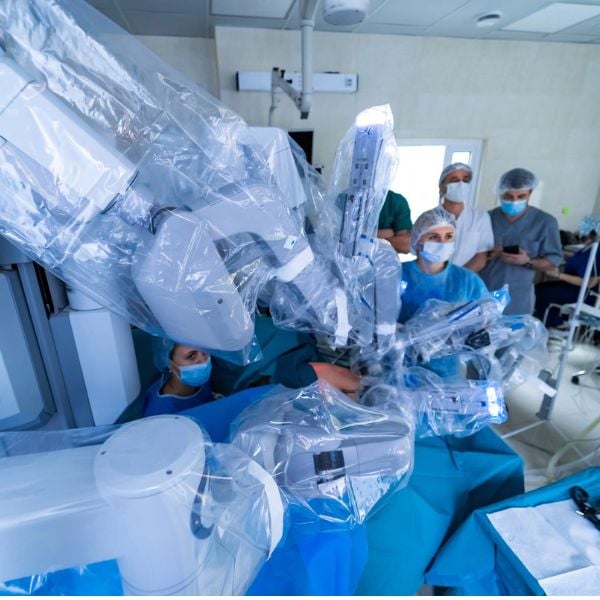
What is a vaginal mesh?
Vaginal mesh is a surgical implant, most commonly made from non-absorbable synthetic polypropylene, that is used to treat two distinct conditions: pelvic organ prolapse (POP) and stress urinary incontinence (SUI). Understanding which type of mesh you received matters, because the risk profile and complication patterns differ significantly between them.

Transvaginal mesh for prolapse repair: Inserted through the vagina to support prolapsed pelvic organs. These kits carried the highest complication rates and were the primary focus of FDA regulatory action.
Mid-urethral slings for SUI: A strip of mesh placed under the urethra to prevent leakage. Two main approaches exist: the retropubic sling (TVT, passing behind the pubic bone) and the transobturator tape (TOT, passing through the inner thigh). Both remain in use today, though they carry risks.
Absorbable vs. non-absorbable mesh: Absorbable mesh breaks down over time; non-absorbable synthetic mesh (the most widely implanted type) remains permanently in the body, so long-term complications can emerge years after surgery.
At Tower Urology, our board-certified urogynecology specialists have spent more than 20 years evaluating and treating women affected by mesh complications. As a proud affiliate of Cedars-Sinai Medical Center, ranked #1 in California and #2 nationwide by U.S. News & World Report, we bring world-class diagnostic expertise to every consultation. If you are unsure which implant you received, bring any surgical records you have to your appointment, and we will help you identify it.
Types of vaginal mesh and their uses
Now that you have a clearer picture of what vaginal mesh actually is, it helps to know that not all mesh implants are the same. Several distinct types exist, and the one you received matters a great deal when understanding your personal risk profile for vaginal mesh complications.
Broadly speaking, vaginal mesh falls into two main categories based on what it was designed to treat:
Mid-urethral slings for stress urinary incontinence (SUI). These are narrow strips of synthetic mesh placed under the urethra to provide support when you cough, sneeze, or exercise. There are two common approaches: retropubic slings (threaded behind the pubic bone) and transobturator slings (routed through the inner thigh). Slings generally have a lower complication rate, around 9.8%, than mesh used for prolapse repair.
Transvaginal mesh for pelvic organ prolapse repair. This involves larger mesh panels implanted through the vaginal wall to reinforce weakened pelvic floor tissue. Because more mesh material is used and the placement is more complex, complication rates are significantly higher – ranging from 15% to 25%. This category is most closely associated with the FDA’s regulatory actions and mesh recalls.
Mesh products are also classified by material. Non-absorbable synthetic mesh (typically polypropylene) is permanent and remains in the body indefinitely, while absorbable mesh breaks down over time. Most implants placed over the past two decades have been non-absorbable, which is why long-term complications remain a concern for so many women. If you’re unsure which type you received, a women’s urology specialist can review your surgical records and help you understand your specific situation.
FDA actions, recalls, and the regulatory history of vaginal mesh
Understanding how we got here helps put vaginal mesh complications in context – and explains why so many women are still living with implants that were later flagged as high-risk.
Transvaginal mesh was originally cleared through the FDA’s 510(k) pathway, a process that allowed manufacturers to bring devices to market without large-scale clinical trials, simply by demonstrating similarity to existing products. For years, mesh was treated as a routine surgical tool, and its use expanded rapidly throughout the 1990s and 2000s.
2008 The FDA issues its first public health notification warning that complications from surgical mesh used to repair pelvic organ prolapse and stress urinary incontinence are “not rare.”
2011 The FDA strengthens its language significantly, stating that serious complications are “not rare” and that transvaginal mesh for prolapse repair offers no clinical advantage over traditional repair methods, while carrying additional risk.
2016 The FDA reclassifies transvaginal mesh for pelvic organ prolapse repair as a Class III device – the highest-risk category – requiring manufacturers to submit pre-market approval applications with robust clinical evidence. Most manufacturers chose to pull their products rather than meet that bar.
2019, the FDA ordered all remaining manufacturers to stop selling transvaginal mesh kits for prolapse repair entirely. Mid-urethral slings for stress urinary incontinence were not subject to the same withdrawal order, although they remain under ongoing scrutiny. Importantly, this withdrawal applied to the sale of new implants – it does not mean women with existing mesh need immediate removal.
If you’re experiencing symptoms that could point to pelvic or sexual health concerns, speaking with a specialist is a smart next step. The mesh inside you may still be functioning well, or it may need evaluation.
What risks and complications are associated with vaginal mesh?
Vaginal mesh complications range from mild discomfort to severe, life-altering conditions requiring multiple surgeries. The two most clinically significant mechanisms are mesh erosion (also called mesh exposure), where the mesh wears through surrounding tissue into the vaginal wall, bladder, or rectum, and mesh contraction, where the mesh shrinks over time, pulling on surrounding structures and causing chronic pain and tightness.
More than 50% of women who experienced non-absorbable synthetic mesh erosion ultimately required surgical removal. The table below summarizes the key complication rates by procedure type.
Procedure type | Overall complication rate | Erosion/exposure rate | Highest-risk period |
|---|---|---|---|
Mid-urethral sling (SUI) | ~9.8% | Lower end of range | Within the first 2 years |
Transvaginal mesh (prolapse repair) | 15-25% | 7.3-21% | Up to 1 in 4 women affected |
These figures reflect why the FDA acted more decisively against transvaginal prolapse mesh than against mid-urethral slings, and why your specific implant type shapes your individual risk profile.
What causes vaginal mesh complications?
Several biological and surgical mechanisms can trigger complications after mesh implantation.
Mesh erosion into adjacent tissue: The polypropylene mesh can gradually wear through the vaginal wall or erode into the bladder or rectum, causing pain, bleeding, and organ injury.
Mesh contraction: Over time, the mesh may shrink, tightening around surrounding structures and causing chronic pelvic pain, dyspareunia, and restricted movement.
Bacterial colonization: The mesh surface can become colonized with bacteria, creating a biofilm that is resistant to standard antibiotic treatment. This leads to recurrent or persistent infections, discharge, and further erosion or scar formation.
Foreign body inflammatory response: The immune system may recognize the polypropylene as a foreign object, triggering chronic inflammation, scarring, and nerve damage, including pudendal neuralgia, a particularly debilitating form of pelvic nerve pain.
Surgical placement factors: Previous pelvic surgeries can create scar tissue that complicates mesh placement, increasing the likelihood of complications.
Who is at higher risk for vaginal mesh complications?
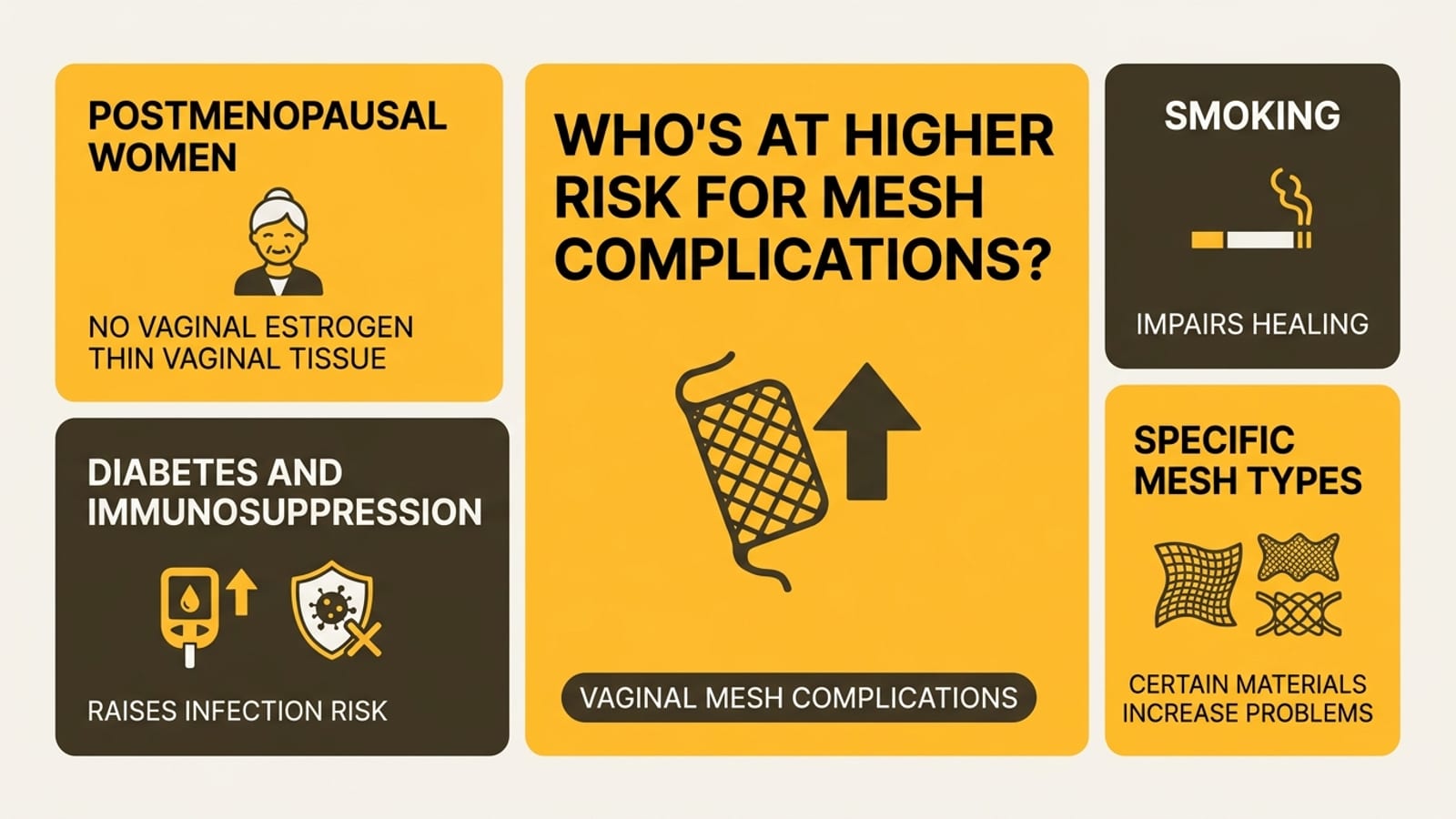
Certain patient characteristics significantly elevate the likelihood of developing complications.
Postmenopausal women not using vaginal estrogen: Reduced estrogen causes vaginal tissue to become thinner and less elastic, making it more vulnerable to mesh erosion. This is one of the most clinically significant and modifiable risk factors.
Smoking: Impairs tissue healing and microvascular blood supply, increasing erosion risk.
Diabetes and immunosuppressive conditions: Compromise the body’s ability to heal around the implant, raising the risk of infection and erosion.
Specific mesh types: Certain mesh designs and materials are inherently more likely to cause complications than others.
What are the symptoms of vaginal mesh complications?
Symptoms of vaginal mesh complications can appear within weeks of surgery or emerge gradually over months or even years. Some women experience a single symptom; others have several at once. The categories below cover the full clinical picture. If you recognize any of these symptoms, particularly those marked as requiring urgent evaluation, please contact a specialist promptly.
Pain-related symptoms
Chronic pelvic pain, which may be constant or intermittent
Pain during sexual intercourse (dyspareunia), which partners may also notice as a palpable mesh edge
Stabbing or pricking sensations in the vagina
Chronic pain radiating to the buttocks and legs, which may indicate nerve damage or pudendal neuralgia
Abdominal pain
Onset note: Pain symptoms can develop within the first few weeks after surgery or emerge gradually over years as the mesh contracts or erodes. Pudendal neuralgia, in particular, may not become apparent until well after the initial recovery period.
Urinary symptoms
Worsening or new-onset urinary incontinence
Difficulty urinating or incomplete bladder emptying
Recurring urinary tract infections (UTIs), which may signal mesh erosion into the bladder
Discomfort or burning during urination
Persistent stress incontinence despite mesh placement
Urgent evaluation required: Recurrent UTIs that do not resolve with standard antibiotic courses, or new difficulty urinating after mesh surgery, warrant prompt specialist assessment, including cystoscopy to rule out bladder erosion.
Vaginal symptoms
Abnormal vaginal discharge, particularly if malodorous, which may indicate bacterial colonization of the mesh
Persistent vaginal bleeding unrelated to menstruation
Mesh becoming visible through or felt against the vaginal wall (mesh exposure or erosion)
Vaginal scarring or tightening
Recurrence of vaginal prolapse
Urgent evaluation required: Visible or palpable mesh through the vaginal wall is a clear sign of mesh erosion and requires prompt clinical assessment.
Organ-related and systemic symptoms
Return of pelvic organ prolapse after repair
Bladder control problems, including urgency and frequency
Fistulas (abnormal connections between the bladder, vagina, or rectum), which may cause continuous leakage of urine or feces
Pelvic floor dysfunction, including difficulty with bowel movements or a sensation of pelvic heaviness
Urgent evaluation required: Any suspected fistula, or symptoms suggesting bowel involvement, requires immediate specialist review and may necessitate a multidisciplinary approach involving a colorectal surgeon.
How are vaginal mesh complications diagnosed?

At Tower Urology, our urogynecology specialists take a thorough, structured approach to diagnosis. We understand that many women have seen multiple providers before reaching us, and we are committed to providing a clear, expert assessment, including a second opinion if you need it.
The diagnostic process typically includes the following steps.
Detailed history: We discuss your symptoms, their onset and progression, your surgical history, and any relevant risk factors such as menopausal status, smoking, or diabetes. If you have records from your original mesh surgery, including the mesh brand and type, please bring them. This information helps us identify whether you received a transvaginal prolapse mesh, a retropubic sling (TVT), or a transobturator tape (TOT).
Pelvic examination: A careful pelvic exam allows us to check for mesh exposure, assess whether any portion of the mesh has eroded through the vaginal wall, and identify areas of localized tenderness consistent with mesh contraction or nerve involvement.
Cystoscopy: If we suspect the mesh has eroded into the bladder or urethra, we perform a cystoscopy, inserting a small, flexible camera into the urethra to examine the bladder directly. This is a key step in ruling out bladder erosion as a cause of recurrent UTIs or urinary symptoms.
Imaging (MRI): We may obtain an MRI to characterize the mesh implant’s location, assess the extent of any erosion or contraction, and guide surgical planning.
Colorectal referral: If bowel involvement is suspected, we coordinate a referral to a colorectal surgeon for additional evaluation.
Together, these diagnostic steps inform the most appropriate treatment pathway for your individual situation.
What is the treatment for vaginal mesh complications?
Treatment is tailored to your symptom severity, diagnostic findings, and overall health. Our goal is always to achieve the best possible outcome with the least invasive approach appropriate for your situation. At Tower Urology, our board-certified urogynecology specialists bring more than 20 years of experience in women’s urologic health – and our affiliation with Cedars-Sinai means you have access to world-class surgical resources and a genuinely team-based approach to your care.
Conservative (non-surgical) management
For mild or early-stage complications, we consider non-surgical options first.
Antibiotics: Used to treat confirmed mesh-related infections. Because bacterial biofilm on polypropylene mesh can resist standard courses, treatment may need to be prolonged or repeated.
Topical vaginal estrogen therapy: For postmenopausal women, applying vaginal estrogen directly to the vaginal tissue improves tissue thickness, elasticity, and blood supply. This can reduce the risk of further erosion and, in some cases, support healing around exposed mesh edges. Critically, topical estrogen is also used as a preparatory step before surgical intervention – thickening and strengthening the surrounding tissue so that surgeons have healthier margins to work with, which can meaningfully improve surgical outcomes and reduce the risk of post-operative wound breakdown. It is also used to prepare tissue before surgical intervention.
Pelvic floor physical therapy: A specialist physiotherapist can work with you on targeted exercises and manual techniques to address pelvic floor dysfunction, reduce muscle tension contributing to pain, and improve bladder and bowel control. A structured physical therapy protocol typically involves an initial assessment of pelvic floor muscle tone and coordination, followed by a personalized program that may include internal manual therapy to release trigger points, biofeedback-guided muscle retraining, and progressive relaxation exercises.
Sessions are usually scheduled weekly or biweekly, with a home exercise component between visits. This structured approach is particularly effective for women experiencing mesh-related pelvic pain or urgency symptoms, and it is routinely recommended both before and after surgical intervention as part of a comprehensive recovery plan. This is often used alongside other treatments rather than as a standalone measure for mesh-related complications.
Surgical treatment
When conservative measures are insufficient, or when mesh erosion, contraction, or organ involvement is confirmed, surgery is required. Our surgeons are experienced in mesh removal surgery and will discuss the most appropriate approach for your anatomy and the extent of your complications.
Partial mesh removal: The eroded or problematic portion of the mesh is removed while the remainder is left in place. This is appropriate when complications are localized and the remaining mesh is not causing symptoms. It carries a lower surgical risk than complete removal.
Complete mesh removal: Removal of the entire mesh implant. This is reserved for cases with severe, widespread symptoms or when partial removal has not helped. Complete removal is technically demanding, as polypropylene mesh integrates with surrounding tissue over time. It carries higher risks, including bleeding, infection, and injury to adjacent organs, and is best performed by a specialist with extensive experience in this procedure.
Vaginal approach: Mesh removal is most often performed through the vagina, avoiding abdominal incisions. This minimally invasive route is preferred because it typically results in reduced post-operative pain, a shorter hospital stay, and faster recovery times compared with open abdominal surgery. In complex cases, a combined vaginal and abdominal approach may be required.
Robotic-assisted removal: For cases where mesh has migrated toward the bladder, bowel, or deeper pelvic structures, a robotic-assisted laparoscopic approach offers significant advantages. Using state-of-the-art robotic surgical technology – an area in which Tower Urology has been a pioneer in California – our surgeons can navigate complex pelvic anatomy with enhanced precision, three-dimensional visualization, and greater instrument dexterity than conventional laparoscopy allows. This cutting-edge approach is associated with reduced blood loss, smaller incisions, and faster recovery times, while giving the surgeon the control needed to safely dissect mesh from delicate surrounding structures.
Reconstructive surgery: After mesh removal, the remaining tissue may require repair. Reconstruction can involve native tissue repair or, in selected cases, a biologic graft. This surgery can be complex, and our team will discuss all options and their implications with you in detail.
What to expect after mesh removal: recovery and outcomes

It is important to have realistic expectations about recovery and the likelihood of symptom resolution. We believe in honest, compassionate conversations about what treatment can and cannot achieve.
Pain resolution: Many women experience significant pain improvement after mesh removal, particularly when the mesh was the clear source of symptoms. However, some women continue to experience chronic pelvic pain or pudendal neuralgia even after successful removal, particularly if nerve damage occurred before surgery. This is not a treatment failure but a reflection of the complexity of nerve-related pain.
Urinary symptoms: Urinary symptoms such as recurrent UTIs and difficulty urinating often improve after mesh removal. However, incontinence, whether stress- or urgency-related, may persist or recur, particularly after complete mesh removal for SUI.
Prolapse recurrence: Women who have mesh removed for prolapse repair complications face a risk of prolapse returning. Our team will discuss options for managing this, including native tissue repair.
Recovery timeline: Recovery from vaginal mesh removal surgery varies depending on the extent of the procedure. Women undergoing a minimally invasive vaginal or robotic-assisted removal generally experience a shorter recovery than those requiring open surgery – many return to light daily activities within two to four weeks, while more extensive reconstructive procedures may require six to eight weeks of reduced activity. Most women can expect several weeks of recovery after partial removal, while more complex complete removal or reconstructive procedures require a longer recovery. Pelvic floor physical therapy is often recommended as part of the post-operative rehabilitation plan.
Success rates: Studies report that most women who undergo mesh removal experience meaningful improvement in their primary symptoms. However, outcomes depend heavily on the extent of mesh involvement, symptom duration before surgery, and individual patient factors.
If you are considering mesh removal, or if you have already had a partial removal and symptoms persist, we encourage you to seek a specialist evaluation. A second opinion from a board-certified urogynecologist with specific experience in mesh removal surgery can be invaluable in planning the right next step.
Recovery and long-term outlook after vaginal mesh treatment
Once you’ve gone through treatment for vaginal mesh complications, it’s natural to wonder what recovery actually looks like – and whether you’ll feel like yourself again. The honest answer is that outcomes vary depending on how severe your complications were, how long symptoms went untreated, and which treatment approach your specialist recommended.
For women who undergo conservative management – such as physical therapy, topical estrogen, or antibiotics – many notice meaningful symptom relief within a few weeks to a few months. These approaches tend to carry the shortest recovery windows and the least disruption to daily life.
Surgical options, including partial or complete mesh removal, involve a longer road. Most women can expect a recovery period of four to eight weeks before returning to normal activities, with pelvic rest recommended during that time. Studies suggest that complete mesh removal resolves pain in roughly 60-80% of cases, though some women experience residual discomfort, particularly if nerve damage occurred before treatment. This is one reason early intervention matters so much – the sooner complications are addressed, the better the chances of a full recovery.
Reconstructive surgery, when needed, adds another layer of healing time, but many women report vastly improved quality of life once recovery is complete. Ongoing pelvic floor physical therapy after surgery can make a real difference in long-term outcomes by rebuilding strength and reducing lingering symptoms.
It’s also worth knowing that sexual health concerns – including painful intercourse – often improve significantly after successful treatment, though open communication with your care team throughout recovery is key to getting there. Personalized care and close follow-up are what set a truly comprehensive recovery plan apart.
Why trust Tower Urology to correct vaginal mesh complications in Los Angeles?
If you have had vaginal mesh surgery and are experiencing any of these symptoms, please schedule an appointment at Tower Urology and let our female urogynecology specialists evaluate you. We provide a safe, supportive space to discuss your concerns, review your history, and develop a personalized care plan.
Tower Urology’s board-certified urologic team has led the treatment of women’s health concerns for over two decades, with specialists trained in all aspects of women’s urologic health, including the full spectrum of vaginal mesh complications. We deliver unparalleled expertise and compassionate care, ensuring the best possible outcomes for every patient.
Tower Urology’s advantage lies in our unwavering commitment to world-class urologic care through advanced technology, personalized treatment plans, and a patient-centered approach. With a reputation for excellence and innovation, we deliver superior outcomes that distinguish us as leaders in urologic health in Southern California.
Tower Urology is a proud affiliate of Cedars-Sinai Medical Center, ranked #1 in California and #2 nationwide by U.S. News & World Report. This partnership reflects our dedication to delivering the highest standard of urologic care alongside the best urologists in Los Angeles. Our years of experience and access to Cedars-Sinai’s world-class facilities ensure our exceptional, innovative urologic care positions Tower Urology as a regional leader.
We invite you to establish a care plan with Tower Urology.
Tower Urology’s healthcare professionals are conveniently located for patients throughout Southern California and the Los Angeles area, including Beverly Hills, Santa Monica, West Los Angeles, West Hollywood, Culver City, Hollywood, Venice, Marina del Rey, and Downtown Los Angeles.
Our services include treatment for pelvic organ prolapse, menopause/hormone management, chronic pelvic pain syndrome in women, shockwave therapy for pelvic pain, interstitial cystitis, lichen sclerosis and planus, urethral diverticulum, urethral stricture disease, urinary fistulas, and vaginal mesh complications.
Vaginal mesh complications FAQs

Mesh complications after prolapse surgery are relatively common, with rates varying depending on the type of procedure and mesh used. Overall, the complication rate within 5 years of mesh procedures is estimated to be 9.8%.
It’s important to note that complication rates can vary based on factors such as surgical technique, mesh type, and individual patient characteristics.
Prolapse surgery failure can be determined by the following:
-
- Recurrence of prolapse symptoms:
- Feeling of vaginal bulge or pressure
- Visible or palpable tissue protruding from vagina
- Anatomical changes:
- Prolapse beyond specific points (e.g., hymen)
- Detected during pelvic exam or imaging
- Need for additional treatment:
- Repeat surgery
- Use of pessary
- Persistent or worsening urinary or bowel symptoms
- Recurrence of prolapse symptoms:
If you experience these issues, consult your healthcare provider for evaluation. Remember, some women may have anatomical changes without symptoms, while others may have symptoms despite good anatomical results.
Yes, some vaginal mesh complications can be treated without surgery, depending on severity. Non-surgical options include:
- Pelvic floor physical therapy
- Vaginal estrogen cream for small exposures
- Observation for asymptomatic cases
- Medications for symptom management
- Lifestyle changes (e.g., weight loss, avoiding heavy lifting)
However, severe complications like significant mesh erosion or organ perforation usually require surgery. If non-surgical treatments are ineffective or symptoms worsen, consult a specialist to discuss surgical options.
-
FDA takes action to protect women’s health, orders manufacturers of surgical mesh intended for transvaginal repair of pelvic organ prolapse to stop selling all devices
https://www.fda.gov/news-events/press-announcements/fda-takes-action-protect-womens-health-orders-manufacturers-surgical-mesh-intended-transvaginal -
NHS England » Mesh Oversight Group Report
https://www.england.nhs.uk/ourwork/qual-clin-lead/mesh/ -
Characterization of the T-cell response to polypropylene mesh in women with complications
https://www.ncbi.nlm.nih.gov/pmc/articles/PMC6557122/