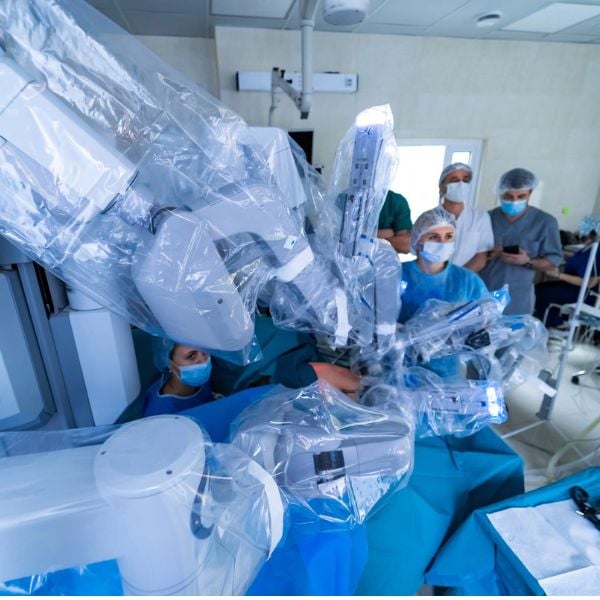
 Raj is an active 85-year-old who values his independence and quality of life. But as he entered his 80s, the constant urge to urinate had become more than just an inconvenience; it was depriving him of his comfort and peace of mind. As his condition worsened, he believed the only solution was to undergo major surgery.
His journey from considering a serious operation to finding a minimally invasive solution showcases not only the advancement of modern urology but also the profound impact that the right doctor can have to help a patient make a decision to move forward with treatment.
When discomfort becomes unbearable
“My prostate was causing me considerable discomfort, and I had a constant need to urinate,” says Raj, as he recalled the symptoms he experienced of benign prostatic hyperplasia (BPH) that had worsened as he entered his early 80s. “I felt really uncomfortable all the time — night and day — it was relentless.”
Like many men his age, Raj was experiencing typical symptoms of BPH. The condition is the most common prostate problem in men over 50, according to the National Institute of Diabetes and Digestive and Kidney Diseases.
BPH is commonly referred to as an enlarged prostate, and in Raj’s case, it was putting pressure on his urethra and creating severe lower urinary tract symptoms (LUTS).
The impact on his quality of life was significant. The urgent need to use the bathroom multiple times during the night was affecting his sleep and leaving him exhausted and frustrated.
In some men, classic symptoms of BPH that affect the flow of urine and overall bladder function, like urinary incontinence and dribbling, can add another layer of discomfort and embarrassment to their daily routine.
“I followed the guidance of the doctor I was seeing at the time, and I took every medication he prescribed, but nothing worked,” Raj explains. Like many men, Raj had likely tried the typical progression of treatment options for managing prostate problems. These can range from alpha blockers like tamsulosin (Flomax) or doxazosin (Cardura), and possibly 5-alpha reductase inhibitors like finasteride or dutasteride.
These medications can help with mild symptoms by relaxing the bladder neck and reducing prostate tissue growth. However, they can have unwanted side effects, including changes to blood pressure and ejaculation.
Despite this conservative approach, Raj’s symptoms persisted.
Facing a difficult recommendation
Eventually, Raj’s healthcare providers advised him to consider a complete prostatectomy, which is a full removal of the prostate gland. For many men facing this recommendation, the decision comes with significant anxiety about potential side effects, which can include any of the following:
- Erectile dysfunction
- Urinary incontinence
- Retrograde ejaculation
- Other complications that can affect quality of life
Understanding your risk factors and exploring all surgical treatment options with your healthcare provider is crucial at this stage.
“I didn’t feel comfortable about undergoing such major surgery and the potential side effects,” Raj admits. His hesitation was well-founded, especially given that his condition wasn’t life-threatening. “I knew that, fortunately, it wasn’t cancerous,” he continues, “just an enlargement of the prostate, which is normal after a certain age for most men.”
It’s important to note that while BPH and prostate cancer can occur in the same age group, having an enlarged prostate doesn’t increase your risk of getting prostate cancer, as they’re separate conditions.
Raj’s 185-gram prostate (significantly larger than the normal 20-30 grams) had gotten to the point where intervention was needed. However, keen to avoid the risks of traditional invasive procedures, Raj found himself at a crossroads. That’s when a colleague made a recommendation that would change everything.
A confident first impression
“One of my colleagues recommended Dr. Josephson, so I made an appointment to see him,” Raj says simply. That first visit would prove pivotal in his decision-making process.
“During that initial consultation, I was struck by his confidence,” Raj remembers. “He was very upfront. He told me that I definitely had a very large prostate but that he had a solution.”
Dr. Josephson told Raj that he could perform a robotic surgical procedure to reduce the size of his prostate and ease his discomfort in the long term. He advised that Raj could expect relief from his current symptoms for between 10-15 years, maybe longer. He added that the procedure would be minimally invasive, and he would likely recover more quickly and endure less pain and trauma, experience reduced blood loss, and have minimal scarring.
Dr. Josephson’s approach was both reassuring and thorough. When Raj asked what the procedure would entail, Dr. Josephson outlined exactly what he would do: a robotic simple prostatectomy that would reduce the size of the prostate by removing the excess prostate tissue without removing the entire gland — a procedure that provides relief while preserving function.
This approach to urology represents a significant advancement over traditional transurethral resection of the prostate (TURP) or open surgery for very large prostates.
“He explained how long it would take and that he would only reduce the size of my prostate, not fully remove it, but that I would hopefully be comfortable the rest of my life,” Raj recalls.
This alternative option addressed Raj’s concerns about the invasive nature of a complete prostatectomy while still providing a solution to his severe urinary problems.
Overcoming fear with trust
Still, the prospect of any surgery at 82 years old was daunting, not only for Raj but also for his family. “There are risks with any surgical procedure,” Raj acknowledges. “I asked Dr. Josephson, ‘Are you sure?’ because my wife and family were hesitant about me undergoing surgery.”
This is where Dr. Josephson’s communication skills truly shone. He took the time to explain the procedure not only to Raj but also to his wife, addressing their concerns about traditional open surgery and helping them understand the differences between the various surgical treatments.
“Dr. Josephson took the time to go through everything with my wife and me,” Raj continues. “He explained that he wouldn’t make a large incision, as is the case with traditional surgery. Instead, he would make a smaller incision that would result in minimal cutting and scarring, using robotic arms for greater precision.”
The single-port robotic approach meant that instead of large incisions and significant trauma to surrounding tissue, the procedure could be performed through one small access point with the precision of robotic instruments.
Dr. Josephson explained that by undergoing the procedure, Raj would also minimize complications like bladder stones, urinary tract infections (UTIs), and potential kidney damage that can occur with prolonged urinary retention.
“I really trusted Dr. Josephson from the outset,” Raj emphasizes. “He was very present and confident in what he could do.”
A decision made with confidence
The trust that Dr. Josephson had built in that initial consultation was so strong that Raj was ready to move forward immediately. “I said, ‘Okay, I’m ready,'” Raj recalls. “And Dr. Josephson asked, ‘Are you sure? You don’t want to think about it?’ and I replied, ‘I’m sure, let’s go.’ The procedure was carried out within a few days of my decision. I trusted this man right away.”
This moment perfectly illustrates the kind of doctor-patient relationship that leads to successful outcomes. Dr. Josephson’s confidence, clear explanation, and evident expertise gave Raj the assurance he needed to proceed with this treatment option.
Recovery and remarkable results
The recovery period, while not entirely without discomfort, was far better than Raj had feared. “Of course, I was a little uncomfortable after surgery, but after only two weeks I had returned to normal,” he says. “You have to give something to get something, but the trade-off was worth it to get my normal life back.”
In many cases, a catheter may be necessary for a short period following surgery to allow healing, but it is usually removed within 7-10 days.
Within a month, Raj had returned to his full routine. The transformation was dramatic: he no longer had a constant urge to urinate; there was no more getting up multiple times during the night; he had no more of the discomfort that had plagued him for so long. His urine flow returned to normal, and his bladder muscle functioned properly again.
“Every time I see Dr. Josephson, I tell him that choosing him for this job was one of my best decisions,” Raj says with clear gratitude. “He reduced the size of my prostate, and my discomfort is gone. I’m back to how I was — to what I consider normal.”
More than just a skilled surgeon
For Raj, the relationship with Dr. Josephson extends beyond the technical success of the surgery. “I really like him as a person,” Raj says enthusiastically. “He was a pleasure to deal with, despite the situation I found myself in.”
It was the combination of personal rapport and professional excellence that made the difference. “In the office, he explained things so well to me and so confidently,” Raj notes. He continues to see Dr. Josephson for follow-up care, maintaining the relationship that proved so crucial to his successful treatment.
And Raj’s treatment hasn’t only been beneficial for him, it has turned him into an advocate for men’s health, particularly among his peers who may be suffering in silence.
“I recommend this surgery and Dr. Josephson to other men in a similar position at every opportunity. Although BPH is really common and its symptoms can have such an adverse effect on your day-to-day life, many men are reluctant to discuss it. Men don’t want to talk about their prostate and related issues; they act all macho,” Raj explains.
“But I say, you know what, you don’t have to be uncomfortable or undergo a major operation to have your prostate fully removed — there is an option that can help you return to normal. You can still be macho, just more comfortable.”
His message to other men experiencing similar prostate problems is clear and practical: “This is the best option available — minimally invasive robotic surgery,” Raj insists.
Given that prostate enlargement affects practically every man to some degree as they age, Raj’s willingness to openly share his story helps break down the stigma that prevents many men from seeking the help they need. Lifestyle changes alone often aren’t enough for very large prostates, and being aware of all available treatment options is essential.
Is robotic surgery the right choice for you?
For men with an enlarged prostate who don’t respond to medications (such as finasteride, dutasteride, alpha blockers like tamsulosin or doxazosin), lifestyle changes, or less invasive procedures (TURP, prostatic urethral lift with implants, or prostate artery embolization), robotic simple prostatectomy is an effective surgical treatment option.
This procedure removes the inner prostate tissue, causing benign prostatic hyperplasia (BPH) while leaving the outer prostate gland intact. Unlike radical prostatectomy for prostate cancer, it treats urinary problems caused by obstruction.
Benefits of the robotic approach include smaller incisions, reduced blood loss, faster recovery, and precise protection of the bladder neck, bladder muscle, and urethra.
Men with large prostates and severe lower urinary tract symptoms like weak urine stream, dribbling, urgent need, urinary retention, or recurrent urinary tract infections often benefit most. It can also help prevent bladder stones, kidney damage, and long-term urinary incontinence — all potential risks of untreated BPH.
Evaluation for whether you are a candidate usually includes a medical history, physical exam, digital rectal exam, prostate-specific antigen (PSA) blood test, urine tests, and sometimes a cystoscopy.
Why choose Tower Urology for an enlarged prostate?
At Tower Urology, our team combines state-of-the-art robotic surgical techniques with a thorough investigative approach to ensure that no stone is left unturned in your urological care.
We invite you to establish a care plan with Tower Urology. Please make an appointment online or call us at (310) 854-9898.
Tower Urology is a proud affiliate of Cedars-Sinai Medical Center, ranked #1 in California and #2 nationwide by U.S. News & World Report. This partnership reflects our dedication to delivering the highest standard of urologic care alongside the best urologists in Los Angeles. Our years of experience and access to Cedars-Sinai’s world-class facilities ensure that our exceptional and innovative urological care positions Tower Urology as a leader in Southern California.
Tower Urology is conveniently located for patients throughout Southern California and Los Angeles, including Beverly Hills, Santa Monica, West Los Angeles, West Hollywood, Culver City, Hollywood, Venice, Marina del Rey, Burbank, Glendale, and Downtown Los Angeles.
Our services include management of lower urinary tract symptoms, such as those caused by BPH, urinary incontinence, and overactive bladder.
Frequently Asked Questions About Robotic Simple Prostatectomy

/This procedure is typically recommended for men with very large prostates (usually over 80 grams) who have severe symptoms of BPH that haven’t responded to medications like alpha blockers or less invasive procedures. Your urologist will evaluate the size of your prostate, your overall health, your symptoms, and your medical history to determine if this is the right approach.
A simple prostatectomy removes only the enlarged inner prostate tissue that is causing urinary obstruction, leaving the outer capsule intact. It’s often recommended for the treatment of benign prostatic hyperplasia. Radical prostatectomy removes the entire prostate gland and is most often performed only for prostate cancer treatment, not for BPH.
Most patients have a catheter in place temporarily after surgery and initially experience some discomfort, but many return to normal activities within 2-4 weeks. The robotic approach typically results in faster recovery compared to traditional open surgery because of smaller incisions and less tissue trauma.
Robotic simple prostatectomy is designed to preserve structures important for erectile function and urinary control, though potential risks include temporary urinary incontinence (which usually improves) and retrograde ejaculation. The robotic approach and an experienced surgeon help minimize these side effects compared to other surgical treatments.
For most men, robotic simple prostatectomy provides long-lasting relief from lower urinary tract symptoms, often for 10-15 years or more. Since the procedure removes the bulk of the tissue causing any obstruction, significant regrowth requiring additional treatment is uncommon.
Sources:
Enlarged Prostate (Benign Prostatic Hyperplasia)
https://www.niddk.nih.gov/health-information/urologic-diseases/prostate-problems/enlarged-prostate-benign-prostatic-hyperplasia
Robotic Simple Prostatectomy: Why and How?
https://pmc.ncbi.nlm.nih.gov/articles/PMC7136446/
Radical prostatectomy
https://medlineplus.gov/ency/article/007300.htm