Nearly every culture in recorded history has documented substances alleged to stimulate sexual desire and improve virility. Some of these claims have a kernel of biological plausibility; others are pure folklore. As a urologist with decades of clinical experience, I want to give you an honest, evidence-grounded evaluation of the most commonly cited aphrodisiacs – what the science actually says, what carries real risk, and what I have found, in practice, to matter most for a satisfying sex life.
According to science, most traditional aphrodisiacs like oysters or chocolate lack robust evidence to directly enhance sexual desire or performance. While some natural substances such as ginseng or yohimbe have been studied for potential effects, their efficacy is often limited or comes with significant health warnings. Tower Urology emphasizes that genuine improvements in sexual health typically stem from addressing underlying medical conditions, lifestyle factors, or psychological well-being through professional medical consultation. Therefore, a truly effective 'aphrodisiac' often involves a comprehensive approach rather than a single food or supplement.
What Are Aphrodisiacs and Why Does Libido Change?
What is an Aphrodisiac?
An aphrodisiac is any substance – food, herb, drug, or chemical – believed to increase sexual desire, improve sexual function, or enhance pleasure. The word comes from Aphrodite, the Greek goddess of love, and the concept is as old as civilization itself.
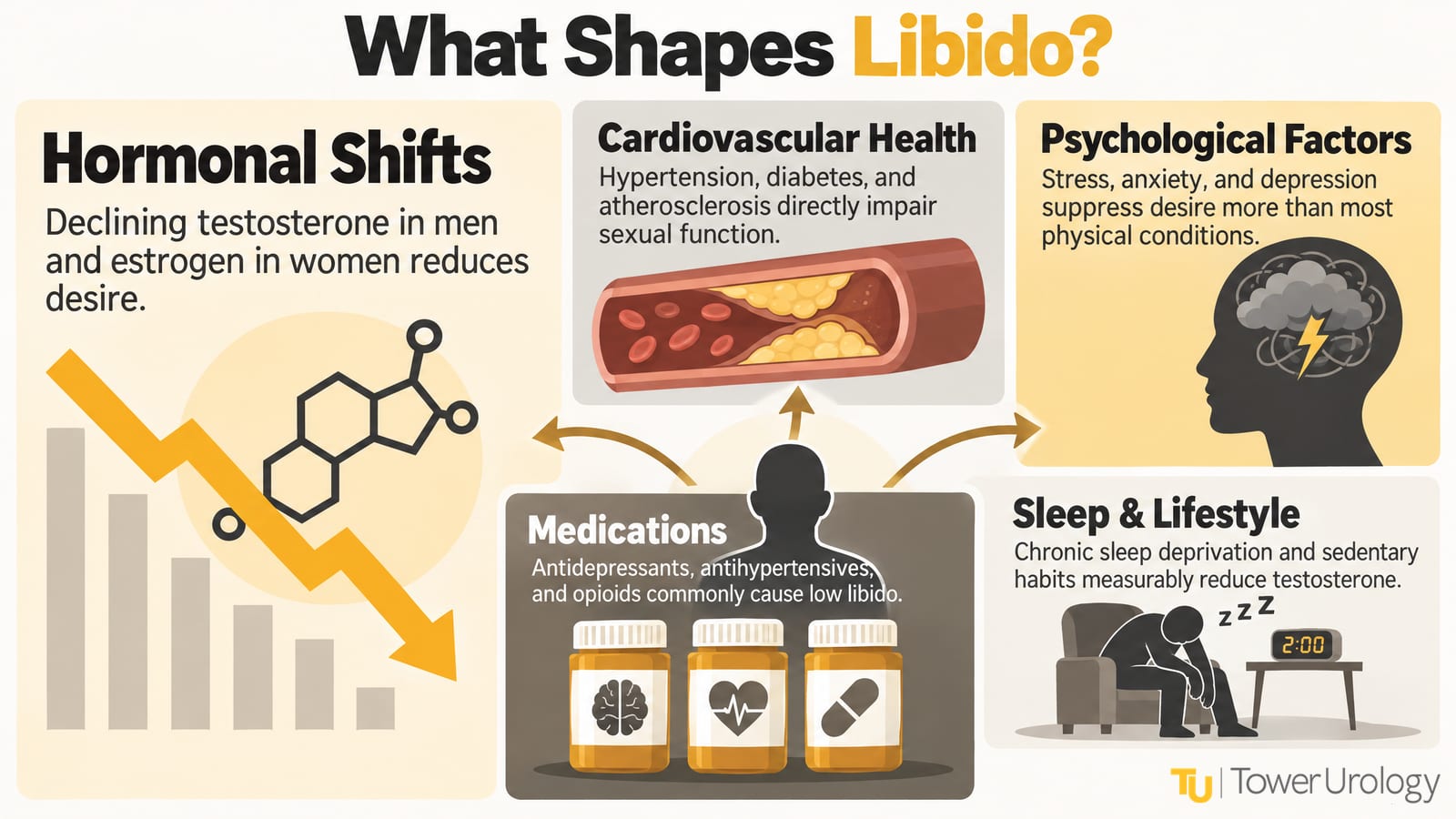
Low libido, however, is rarely a simple deficiency that a pill or food can correct. Sexual desire is shaped by a complex interplay of factors:
Hormonal shifts: Declining testosterone in men (and estrogen in women) is one of the most common biological drivers of reduced sexual desire.
Cardiovascular health: Adequate blood flow is essential for arousal and erectile function. Conditions like hypertension, diabetes, and atherosclerosis directly impair sexual function.
Psychological factors: Stress, anxiety, depression, and relationship conflict suppress desire more reliably than almost any physical condition.
Medications: Antidepressants, antihypertensives, and opioids are among the most common pharmaceutical causes of low libido.
Sleep and lifestyle: Chronic sleep deprivation and sedentary habits measurably reduce testosterone and sexual motivation.
Understanding the root cause of low libido is the first step toward addressing it effectively. With that context in place, let’s look at what the evidence actually says about specific aphrodisiacs.
Defining Sexual Desire and Libido
To understand why aphrodisiacs are so appealing, it helps to understand libido itself. Sexual desire isn’t a single switch you flip – it’s the result of a complex interplay between hormones, brain chemistry, emotional wellbeing, relationship dynamics, and physical health. Testosterone plays a central role for both men and women, but so do dopamine, serotonin, and estrogen. When any one of these gets out of balance, desire can quietly fade.
Low libido is far more common than most people realize. Stress, poor sleep, hormonal shifts, certain medications, and underlying conditions like female sexual dysfunction or erectile dysfunction can all dampen sexual interest. Age-related changes also play a role – something our team at Tower Urology addresses with personalized care every day.
The appeal of a quick fix for sexual problems is completely understandable. But before reaching for a supplement or exotic food, it’s worth knowing what the evidence actually shows – and when a conversation with a urologist might serve you far better than any herb or oyster ever could.
Evidence-Backed Foods That May Support Sexual Health
Now that we’ve established what libido actually is and what drives it, let’s look at one of the most searched questions on the topic: can what you eat really make a difference? The honest answer is – sometimes, a little. Certain foods contain compounds that support circulation, hormone balance, or neurotransmitter activity, all of which play a role in sexual function. None are magic bullets, but a few have real science behind them.
Oysters are probably the most famous food aphrodisiac, and they do have something going for them. They’re exceptionally high in zinc, a mineral essential for testosterone production. Low zinc levels are linked to reduced libido in both men and women, so keeping levels topped up matters.
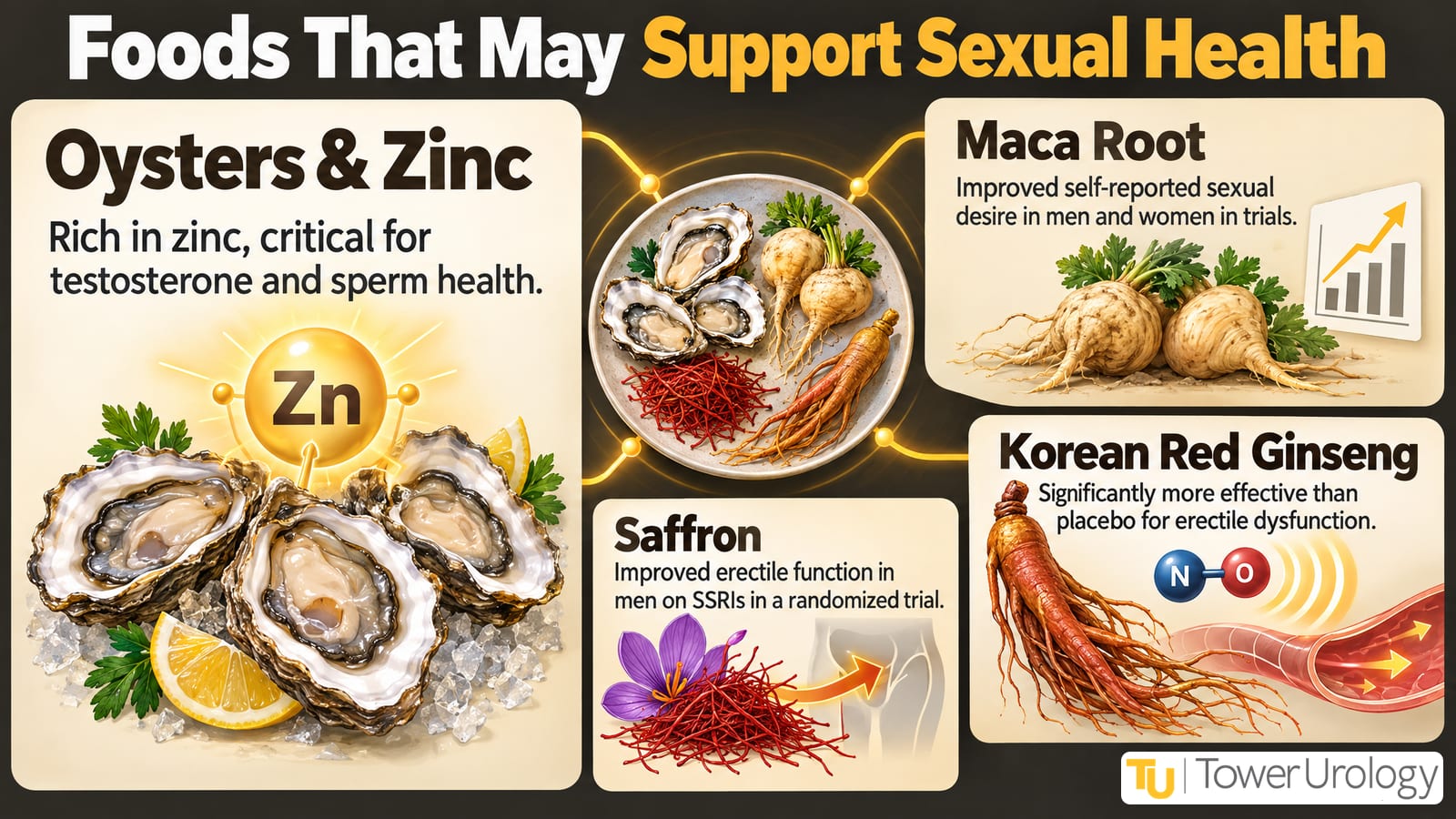
Maca root, a Peruvian plant, is one of the more promising natural options in the clinical literature. Several small randomized controlled trials have found that maca supplementation improved self-reported sexual desire in both men and women, independent of changes in testosterone levels. A 2002 study published in Andrologia found significant improvements in sexual desire after 8 to 12 weeks of maca use. The evidence is encouraging, though larger trials are still needed. One study found it helped counter the libido-dampening side effects of antidepressants.
Saffron is another standout. It’s not cheap, but the evidence is more solid than most herbal options. A randomized trial found that saffron supplementation improved erectile function and overall sexual satisfaction in men taking SSRIs. Its active compounds appear to influence serotonin pathways and improve blood flow to genital tissue. It is one of the more evidence-supported herbal options available.
Dark chocolate contains phenylethylamine, a compound associated with feelings of attraction and excitement, as well as flavonoids that support cardiovascular health and blood flow. Evidence for a direct aphrodisiac effect is thin, but dark chocolate’s positive impact on vascular health is well established, and vascular health is foundational to sexual function.
Pomegranate and Watermelon: Preliminary studies show pomegranate juice can improve erectile function, likely through its antioxidant content and positive effects on blood vessel health. Watermelon contains citrulline, an amino acid that the body converts to L-arginine and then to nitric oxide – a key vasodilator involved in erection. The concentrations required for a meaningful effect are high, but the underlying mechanism is biologically sound. contains citrulline, which the body converts to arginine, supporting nitric oxide production and healthy circulation.
Korean red ginseng (Panax ginseng) has been studied for erectile dysfunction with reasonably positive results. A systematic review published in the British Journal of Clinical Pharmacology concluded that red ginseng was significantly more effective than placebo for treating erectile dysfunction. Its proposed mechanism involves nitric oxide synthesis, which supports vasodilation and blood flow – the same pathway targeted by prescription ED medications.
For women dealing with more complex sexual health concerns, our guide on female sexual dysfunction goes deeper into what’s really going on and what personalized care can offer.
Herbal Supplements: What the Evidence Shows
Beyond foods, a wide range of herbal supplements are marketed as aphrodisiacs. Here is a category-by-category assessment.
Yohimbine
Of all the herbal substances believed to have aphrodisiac powers, yohimbine is the most clinically studied. Derived from the bark of the West African yohimbe tree, native cultures have used it for centuries. Initial studies substantiated some of its claims. Dr. Christiaan Barnard, the eminent heart surgeon who pioneered human heart transplantation, used yohimbine on patients who developed impotence after surgery and reported satisfactory results in 75 percent of his cases.
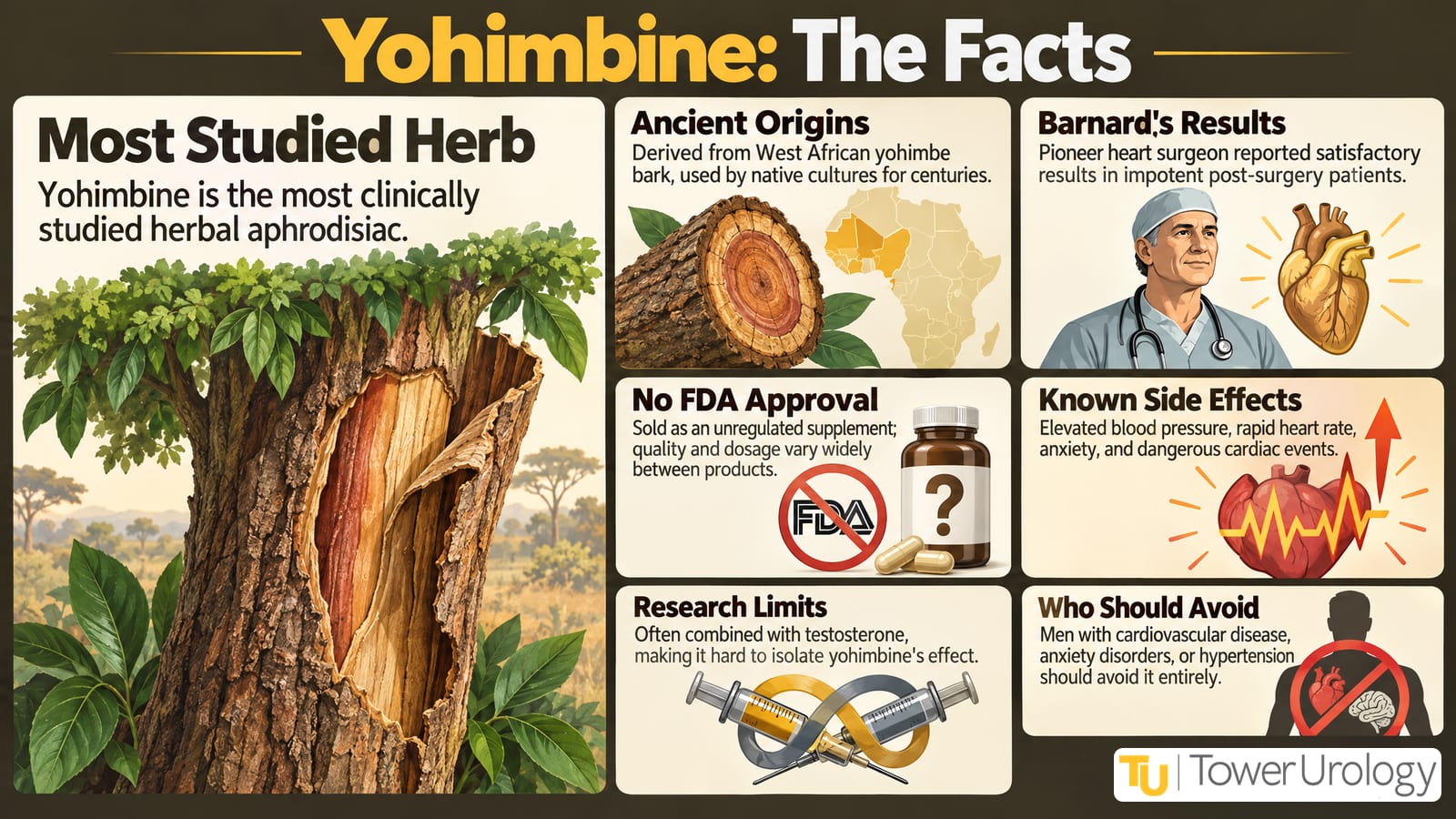
However, the picture is more complicated today. The FDA has not approved yohimbine as a prescription drug for sexual dysfunction, and it is sold as an unregulated dietary supplement in the United States, meaning quality and dosage vary widely between products. Known side effects include elevated blood pressure, rapid heart rate, anxiety, and, in higher doses, dangerous cardiac events. The original research was also methodologically limited because yohimbine was frequently used in combination with other drugs, primarily testosterone, making it difficult to isolate its effect.
Men with cardiovascular disease, anxiety disorders, or hypertension should avoid yohimbine entirely. Because supplement labels are not regulated the same way prescription medications are, the amount of active compound in any given product can differ dramatically from what is printed on the bottle – making safe, consistent dosing nearly impossible without medical supervision. If you are considering it, discuss it with your physician first.
Ginkgo Biloba
Ginkgo has been studied for its potential to improve blood flow and, by extension, sexual function. Some early research suggested it could help with antidepressant-induced sexual dysfunction, but larger, well-controlled trials have not consistently confirmed this benefit. It also carries a risk of bleeding, particularly for those on blood thinners.
L-Arginine
L-arginine is an amino acid that serves as a precursor to nitric oxide, the molecule that relaxes blood vessels and enables erections. Some clinical studies have found that L-arginine supplementation, particularly in combination with other compounds like pycnogenol, modestly improves erectile function. It is one of the more biologically plausible supplements on the market, though it is not a substitute for prescription treatment in men with significant erectile dysfunction.
Tribulus Terrestris and Fenugreek
Both are frequently marketed as testosterone boosters and libido enhancers. The evidence for tribulus terrestris improving testosterone levels in healthy men is weak; it may have a modest effect in men with clinically low testosterone. Fenugreek has shown slightly more promise in small trials, with some studies reporting improvements in sexual desire and testosterone levels. Neither should be considered a reliable treatment for clinically significant sexual dysfunction.
A Note on Rhino Horn and Other Animal-Based Remedies
Tragically, nearly an entire species of magnificent white rhinos has been slaughtered to macerate their horns because of a belief that the resulting powder enhances sexual experiences. Medical science has found no evidence that this or similar animal-based remedies work. The placebo effect may account for some reported benefits, but the human and ecological cost is devastating and entirely unjustified.
Substances to Approach With Caution or Avoid
Nitroglycerin Paste and Minoxidil
One of my patients, in a dicey self-experiment, applied a nitroglycerin paste to his penile shaft. Because of its vasoactive profile, he concluded it could increase blood flow and improve erections. He eventually had to stop. During sex, the substance was absorbed by his wife’s vaginal mucosa, giving her severe headaches. The same concern applies to the off-label use of minoxidil, which is marketed to aid hair growth in balding men. Because it is also a vasoactive substance, some have suggested it might produce better erections. I urge you to refrain from self-experiments with such products. Plenty of proven, safe alternatives are available through a urologist.
Alcohol and Drugs
Alcohol is perhaps the most widely used “social aphrodisiac.” A glass of red wine may lower inhibitions and reduce performance anxiety, and in that narrow sense it can feel like it enhances desire. But Shakespeare captured the pharmacological reality perfectly: alcohol increases desire while simultaneously impairing performance. Even moderate alcohol consumption reduces testosterone levels and impairs the neurological and vascular mechanisms required for erection. Chronic heavy drinking causes lasting hormonal disruption, nerve damage, and long-term erectile dysfunction. The short-term loosening effect is real; the long-term cost is significant.
Other recreational substances follow a similar pattern – a perceived short-term boost that masks real physiological damage over time.
Cannabis: Many users report heightened sensory awareness and increased desire, but cannabis also elevates anxiety in some individuals and suppresses testosterone with regular use. Chronic use has been linked to reduced sperm quality and blunted arousal response, making it a poor long-term strategy for sexual health.
Cocaine and stimulants: Cocaine may temporarily increase libido by flooding the brain’s dopamine pathways, but it simultaneously causes vasoconstriction – the opposite of what’s needed for erection. Regular use leads to vascular damage, hormonal dysregulation, and persistent erectile dysfunction that can outlast the habit itself.
Opioids: Prescription painkillers and illicit opioids are among the most potent suppressors of testosterone and sexual function. They directly inhibit the hypothalamic-pituitary axis, the hormonal control center that regulates testosterone production, often causing low libido, delayed ejaculation, and erectile dysfunction even at therapeutic doses.
If you’ve noticed changes in sexual function connected to alcohol or substance use, it’s worth speaking with a specialist. These effects are often reversible with the right support, and a urologist can evaluate whether underlying hormonal or vascular damage needs personalized care and treatment. This is a safe space to have that conversation.
Prescription Treatments and Evidence-Based ED Care
No single development over the past thirty years has changed the landscape of men’s sexual health as dramatically as the widespread use of erectile dysfunction medications. But men and their partners must understand that Viagra (sildenafil), Cialis (tadalafil), and Levitra (vardenafil) are not aphrodisiacs. They do not create desire. More accurately, these medications give a man the capacity to exercise his sexual potential by enhancing blood flow to erectile tissue in response to arousal that is already present.
These drugs are remarkably effective in patients with an organic, biological reason for their erectile dysfunction. However, they have very little impact on men who are achieving adequate erections but hope to make sex better as a performance-enhancing measure.
For men who do not respond to oral medications, or who prefer non-pharmaceutical options, the spectrum of evidence-based treatments is broader than many realize. Low-intensity shockwave therapy has shown promise for improving vascular erectile function. Penile injections, vacuum erection devices, and, for appropriate candidates, penile prosthesis implantation offer highly effective solutions. Hormone therapy may be indicated when testosterone deficiency is confirmed. A urologist can evaluate your specific situation and recommend the right pathway.
Who Should Not Use Aphrodisiacs and When to See a Urologist
Not everyone should experiment with aphrodisiacs, even natural ones. The following groups should consult a physician before trying any supplement or herbal remedy marketed for sexual function:
Men with cardiovascular disease: Many vasoactive substances interact dangerously with heart medications, particularly nitrates. Yohimbine, in particular, can raise blood pressure and trigger cardiac events.
Men taking prescription medications: Herbal supplements can interact with blood thinners, antidepressants, antihypertensives, and immunosuppressants in clinically significant ways.
Men with anxiety disorders: Stimulant-based supplements like yohimbine can worsen anxiety and panic symptoms.
Men with hormone-sensitive conditions: Supplements that claim to boost testosterone should be used only under medical supervision.
You should see a urologist rather than self-treating if your sexual difficulties have been present for more than a few weeks, if they are accompanied by other symptoms such as fatigue, depression, or urinary changes, or if you have risk factors for cardiovascular disease or diabetes. Erectile dysfunction is frequently an early warning sign of vascular disease, and it deserves proper clinical evaluation, not a supplement from a health food store.
Other Evidence-Based Ways to Increase Sexual Desire
Before reaching for any supplement, consider that the most effective interventions for low libido are lifestyle-based and, in many cases, free:
Exercise: Regular aerobic exercise improves testosterone levels, cardiovascular health, body image, and mood – all of which directly support sexual desire and function.
Sleep: Testosterone is primarily produced during deep sleep. Men who sleep fewer than five hours per night show significantly lower testosterone levels than those who sleep seven to nine hours.
Stress reduction: Chronic stress elevates cortisol, which suppresses testosterone and sexual desire. Mindfulness, therapy, and structured relaxation can measurably improve libido.
Hormone evaluation: If lifestyle changes do not help, a simple blood test can determine whether low testosterone or another hormonal imbalance is contributing to the problem. Testosterone replacement therapy, when clinically indicated, is one of the most effective treatments for low libido in men.
The Greatest Aphrodisiac: Love Itself

After decades of clinical practice, I have reached a conclusion that no clinical trial has yet managed to disprove: the most powerful aphrodisiac ever invented is love itself. And just as love is an aphrodisiac, the opposite is equally true – the biggest enemy of sexual desire is hate. For men in intimate relationships, nothing will diminish desire as quickly as anger, hostility, or resentment toward a partner. The situation worsens when men fail to express their feelings and resolve their conflicts.
My clinical experience has confirmed repeatedly that diminished desire caused by anger leads to sexual difficulties. Of all the factors that can affect a man’s sexuality, the single most powerful is the nature of his relationship. If you harbor animosity toward your partner, rehash angry feelings without expressing them, or let resentment accumulate until it obscures the love that brought you together, it will inevitably affect what happens in bed.
This is why a man who aspires to a great sex life should learn to deal effectively with his feelings and not let them contaminate his relationships. As time goes by, as the fires of passion settle into something steadier, and as the novelty of sex becomes routine, emotions guide the course of sexuality more than any supplement ever could.
What I tell my patients is this: remove the anger and resentment from your relationship, and your love life will be strong and long-lasting. Keep the love and affection alive. Do not take your partner for granted. Do not let appreciation wane. Do not let petty animosities overshadow the qualities that have kept you together.
Two mature people with a strong commitment have the greatest potential for mutually satisfying sex. Every relationship has conflicts – money, children, in-laws, and the thousand small annoyances of everyday life. Every conflict affects your sexuality. The most effective response is to work things out in a healthy, honest way. Communicate. If you cannot do it alone, find a counselor who can help. Get your feelings into the open – not by venting destructively, but by discussing issues in an atmosphere of fairness and mutual respect where each person listens and speaks.
Do not be afraid to show vulnerability. If you are angry, express it rather than holding it in until it explodes at an inopportune moment. If your relationship is built on a solid foundation, your partner will respond with equally genuine feelings. When that happens, the love buried beneath the anger has a good chance of rising to the surface, and your sexual desire is likely to rise with it. If you can do this, you will not need to search far and wide for concoctions to improve your sex life.
Dudley Seth Danoff, MD, FACS, is president and founder of the Cedars-Sinai Medical Center Tower Urology Group in Los Angeles, a Diplomate of the American Board of Urology, a Fellow of the American College of Surgeons, and author of The Ultimate Guide to Male Sexual Health.
Frequently Asked Questions About Aphrodisiacs

Some substances have genuine biological mechanisms that support sexual function – maca, saffron, ginseng, and L-arginine have the most credible clinical evidence. However, no substance reliably creates sexual desire from scratch. The placebo effect is also real and should not be dismissed; if a person believes something will work, that expectation itself can influence arousal. For most people, addressing the underlying cause of low libido – hormonal, vascular, psychological, or relational – is far more effective than any supplement.
Based on the available clinical evidence, maca root and Korean red ginseng have the strongest support for improving sexual desire and erectile function respectively. Saffron has shown particular promise for individuals with antidepressant-induced sexual dysfunction. That said, the most powerful driver of sexual desire in a long-term relationship is emotional intimacy and relationship health – something no supplement can replicate.
Safety varies widely by substance. Foods like oysters, dark chocolate, and pomegranate are safe for most people. Herbal supplements like yohimbine carry real risks, particularly for men with cardiovascular disease or anxiety. Vasoactive substances applied topically can affect partners as well as the user. Always consult a physician before starting any supplement, especially if you take prescription medications.
Foods that support vascular health and hormonal balance are most likely to support libido over time. Oysters (zinc for testosterone), maca root, dark chocolate (flavonoids and phenylethylamine), pomegranate (antioxidants and blood flow), and watermelon (citrulline for nitric oxide production) are among the most evidence-adjacent options. A Mediterranean-style diet overall is associated with better erectile function and sexual health in multiple large studies.