DHEA (dehydroepiandrosterone) and its sulfated form, DHEA-S, are hormones produced primarily by the adrenal glands, with smaller amounts made in the testes. Both serve as precursors to testosterone and estrogen and decline sharply with age – dropping to less than 20 percent of peak values by your 60s. That decline is directly tied to changes in sexual desire, energy, mood, and overall vitality that many men notice but rarely connect to a single hormonal shift.
DHEA (dehydroepiandrosterone) is a steroid hormone produced by the adrenal glands that acts as a precursor to sex hormones like testosterone and estrogen. As men age, natural DHEA levels decline, leading some to consider supplementation to potentially enhance libido and erectile function. While some studies indicate DHEA may offer a modest improvement in sex drive and erectile function, especially in individuals with low baseline levels, its role as a definitive treatment for sexual dysfunction requires more comprehensive research.
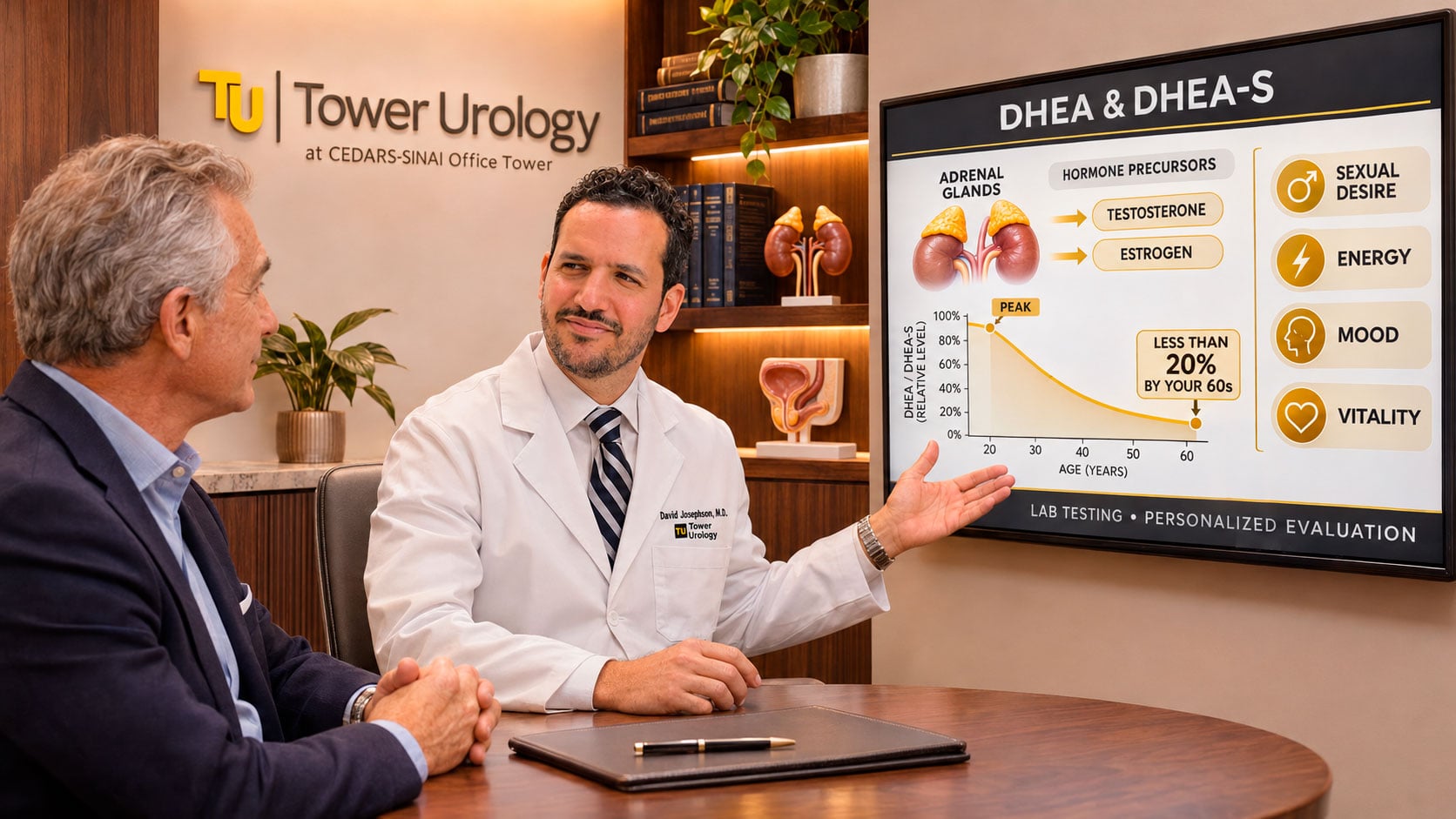
How DHEA affects male libido and sexual function
Low DHEA-S is one of the most consistent hormonal findings in men who report reduced libido and erectile dysfunction. The relationship is not coincidental. DHEA converts into testosterone, the primary driver of sexual desire in men, so when adrenal output falls, libido often follows. The inverse correlation is direct: as DHEA-S levels drop, reports of low sex drive and difficulty with erections rise.
It’s worth separating these two symptoms, because they’re related but distinct. Libido – your baseline drive and interest in sex – is heavily influenced by androgen levels, and DHEA is a key upstream precursor to those androgens. When DHEA-S declines, the hormonal raw material for testosterone production shrinks, and many men notice a quiet but persistent erosion of sexual desire well before they experience any mechanical difficulty with erections. In clinical practice, low libido is often the first complaint, and low DHEA-S is frequently part of the picture when we investigate why.
The Massachusetts Male Aging Study – one of the largest population studies of its kind – found that DHEA-S was the only hormone among many tested to show a statistically significant inverse correlation with erectile dysfunction prevalence. Men with ED had meaningfully lower DHEA-S levels than healthy controls.
Other research has reinforced the DHEA-libido connection more directly. Studies tracking men with low sexual desire – independent of erectile function – consistently find suppressed DHEA-S as a common denominator.
The hormone appears to act on central pathways governing motivation and arousal, not just the vascular mechanics of an erection. This is why some men with normal testosterone still report low libido: DHEA’s influence on desire operates through multiple channels, and a deficiency can dampen drive even when other hormonal markers look acceptable on paper.
A randomized controlled trial found that DHEA supplementation was associated with higher average scores across all five domains of the International Index of Erectile Function (IIEF), a validated questionnaire used to measure erectile function, orgasmic function, sexual desire, intercourse satisfaction, and overall satisfaction. The proposed mechanism involves DHEA stimulating vascular smooth muscle to relax, improving blood flow to erectile tissue. Notably, the sexual desire domain of the IIEF showed improvement alongside the erectile function domain, reinforcing that DHEA’s benefit extends to libido itself, not just the physical capacity for erections. While the evidence base is still growing and the consensus remains cautious, Tower Urology’s clinical experience with this patient population has been consistently positive.
How is DHEA-S Measured?
DHEA-S is measured with a simple blood draw. Unlike cortisol, fasting isn’t required, and the time of day the sample is collected doesn’t significantly affect results, making it a convenient add-on to any routine lab panel.
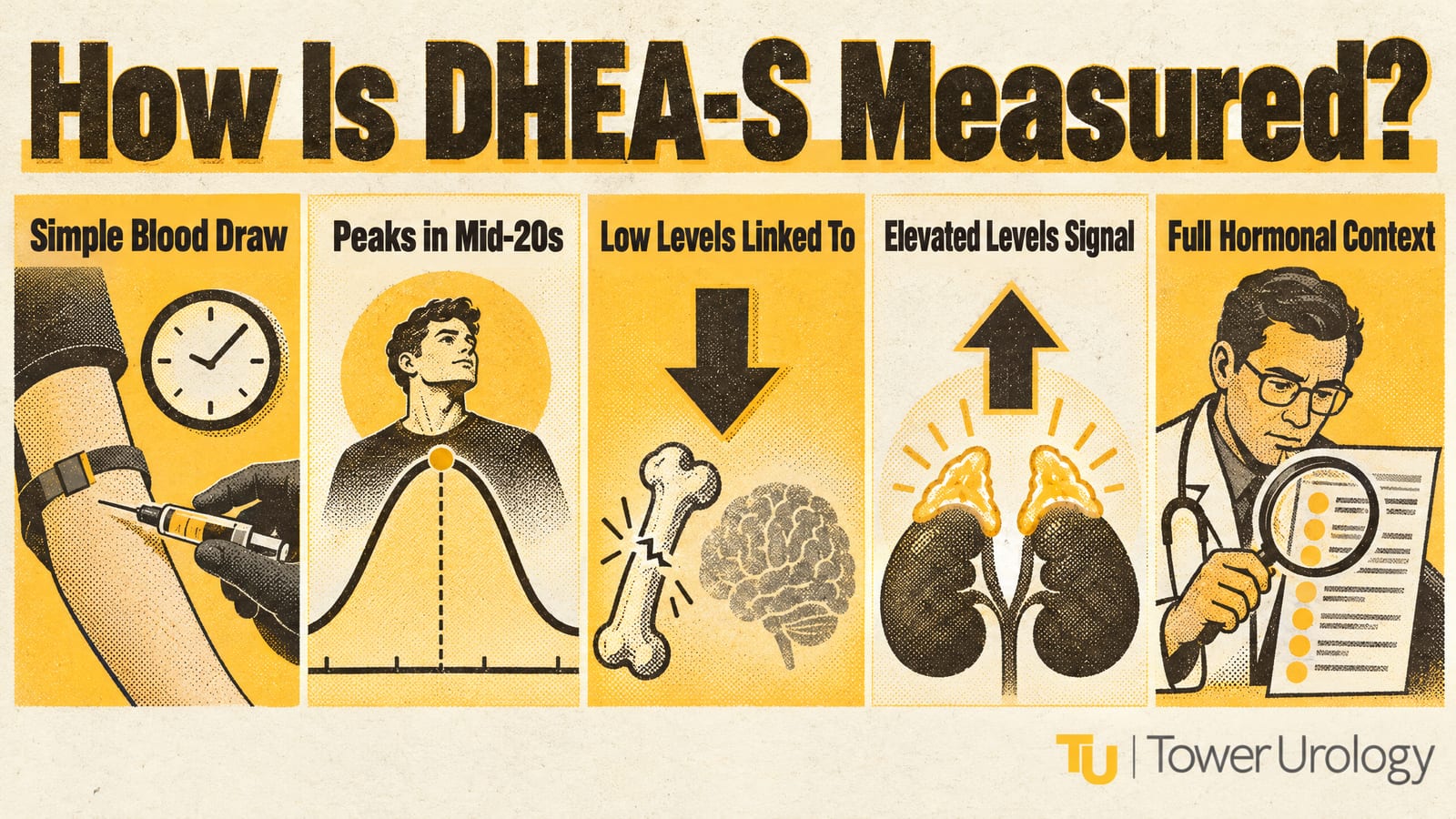
Normal DHEA-S levels vary by age. In men, peak values (roughly 280-640 mcg/dL) occur in the mid-20s and decline steadily; by age 70, levels below 100 mcg/dL are common. Low DHEA-S is associated with adrenal insufficiency, systemic lupus erythematosus, Alzheimer’s disease, cardiovascular disease, depression, diabetes, and osteoporosis. Elevated levels can indicate adrenal tumors or congenital adrenal hyperplasia. Tower Urology physicians can order and interpret this test in the context of your full hormonal picture, rather than treating a number in isolation.
Benefits of DHEA beyond sexual health
DHEA’s role extends well past the bedroom. Research and clinical experience point to several meaningful benefits when levels are restored to a healthy range – and for men who come in concerned about libido, these additional effects are often a welcome surprise.
Bone health: DHEA supports bone mineral density, and low levels are associated with osteoporosis – a concern for aging men that is often underappreciated. Because DHEA converts to testosterone and estrogen, both of which help maintain bone density, declining DHEA-S levels in your 40s and 50s can quietly accelerate bone loss long before a fracture occurs.
Mood and depression: Reduced DHEA-S is linked to depressive symptoms; some randomized trials show supplementation improves mood scores, particularly in men with adrenal insufficiency. One frequently cited NIMH-funded trial found that DHEA supplementation produced a significant reduction in depression scores compared to placebo – meaningful news for men whose low mood and low libido often arrive together as a package deal.
Immune function: DHEA modulates immune response and may help counter the immune decline that accompanies aging. Animal and early human studies suggest DHEA supports T-cell activity and reduces inflammatory cytokines – which matters because chronic low-grade inflammation is increasingly recognized as a driver of fatigue, poor recovery, and reduced sexual desire in older men.
Metabolic health: Low DHEA-S correlates with metabolic syndrome and obesity; restoring levels may support healthier body composition. This relationship likely runs in both directions – excess body fat accelerates the conversion of androgens to estrogen, which further suppresses DHEA and testosterone, creating a cycle that’s easier to break when hormone levels are properly evaluated and addressed.
Energy and cognitive function: Many patients report improved energy, memory, and mental clarity – consistent with DHEA’s broad role in neurosteroid activity. DHEA and its sulfate form cross the blood-brain barrier and act directly on brain receptors involved in memory and mood, which is why men with very low DHEA-S sometimes describe a mental “fog” that lifts once levels are optimized.
Skin health and anti-aging: DHEA supports collagen production and skin thickness, contributing to the anti-aging interest in this hormone. While this benefit tends to get more attention in women’s health literature, men notice it too – particularly improved skin resilience and wound healing, both of which reflect the broader tissue-supportive role DHEA plays throughout the body.
These benefits are most reliably seen when DHEA supplementation is guided by actual lab values rather than self-diagnosis. Our board-certified urologists routinely check DHEA-S as part of a comprehensive men’s sexual health evaluation, so any decision to supplement is grounded in your individual hormone picture – not guesswork.
How do DHEA, testosterone, and exercise interact?
There is limited but intriguing evidence that DHEA supplementation can support testosterone levels, particularly under physical stress. One published study followed eight middle-aged men who took a DHEA supplement the night before beginning a high-intensity interval training (HIIT) program. Results indicated that DHEA appeared to increase testosterone levels and blunt the testosterone decline that typically occurs during intense exercise – a finding relevant to men who train hard and notice recovery or libido issues.
What is the recommended DHEA dosage, supplement forms, and quality considerations?
DHEA is available without a prescription in the United States, but physician supervision matters. The typical starting dose is 25 mg daily, with titration upward based on follow-up DHEA-S levels and symptom response – some men require 50 mg or more under medical guidance.
Form affects both absorption and appropriate use:
Oral tablets or capsules are the most common and well-studied delivery method for men.
Sublingual preparations bypass first-pass liver metabolism and may absorb faster, though standardized dosing is less established.
Topical creams offer an alternative for those who prefer transdermal delivery, with absorption varying by skin site.
Vaginal (intrarosa/prasterone) is an FDA-approved prescription form specifically for postmenopausal vaginal dryness – not a men’s formulation, but worth knowing if a partner is affected.
Regardless of form, supplement quality is critical. DHEA is not FDA-regulated as a drug, so potency and purity vary widely. Choose products from manufacturers that conduct third-party testing and publish certificates of analysis. Your Tower physician can recommend trusted sources.
What are the side effects of DHEA, its long-term safety, and cancer-risk considerations?
Most men tolerate DHEA well at standard doses, but side effects do occur and are worth understanding before you start. Importantly, many of these effects are dose-dependent – meaning they become more likely or more pronounced as the dose climbs above the 25-50 mg range most urologists consider appropriate for physiologic replacement.
Acne and oily skin are the most common complaints, reflecting increased androgen activity as DHEA converts to testosterone. For most men, this is mild and manageable, but if you’re already prone to acne, it’s worth flagging before you start supplementing.
Reduced HDL cholesterol has been observed at higher doses – relevant for cardiovascular risk assessment. This is one reason routine bloodwork before and during supplementation matters; your urologist can catch this shift early and adjust your dose accordingly.
Heart palpitations and mood changes (including mania in susceptible individuals) have been reported, particularly at doses above 50 mg. These effects are uncommon at physiologic doses but clearly signal that DHEA is not a supplement to self-prescribe and escalate without medical oversight.
Male-pattern hair changes can occur as testosterone conversion increases. This is generally a cosmetic concern rather than a health risk, but it’s worth discussing if you have a family history of androgenic alopecia.
Long-term safety data remain limited, and board-certified urologists take that uncertainty seriously. Most studies on DHEA supplementation run for weeks to months – not years – so extrapolating long-term outcomes requires clinical judgment rather than a simple reading of the literature. The most clinically significant uncertainty involves hormone-sensitive cancers.
Because DHEA converts to both testosterone and estrogen, there is a theoretical concern that supplementation could stimulate hormone-sensitive prostate cancer. Current evidence does not confirm this risk at physiologic replacement doses, but men with a history of prostate cancer, elevated PSA, or a strong family history of prostate cancer should discuss this carefully with their urologist before starting DHEA.
At Tower Urology, our nationally recognized team of urologists routinely monitors PSA alongside DHEA-S and testosterone levels in men on supplementation – because personalized care means tracking the full hormonal picture, not just the number you came in asking about. This is precisely the kind of nuanced, compassionate conversation our board-certified urologists have with patients every day.
Who should not take DHEA and potential drug interactions
DHEA is not appropriate for everyone. Contraindications include:
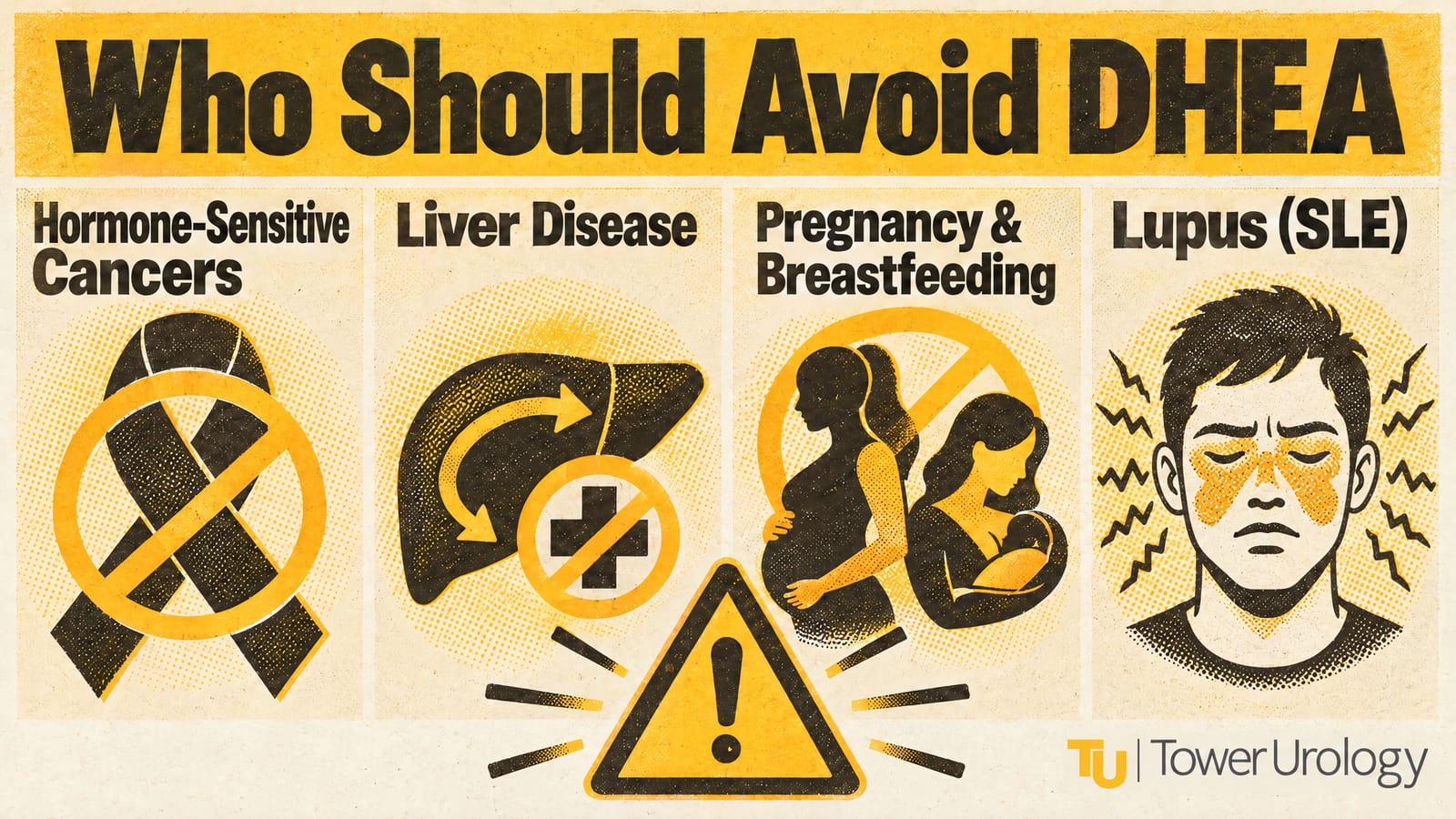
Active or history of hormone-sensitive cancers (prostate, breast, ovarian, uterine)
Liver disease, as DHEA is hepatically metabolized
Pregnancy and breastfeeding
Systemic lupus erythematosus (SLE) – DHEA may modulate immune activity in ways that are unpredictable in autoimmune conditions
Drug interactions to discuss with your physician:
Insulin and diabetes medications: DHEA may affect insulin sensitivity and require dose adjustments.
Anticoagulants (e.g., warfarin): Hormonal changes can influence clotting factors.
Hormone therapies (testosterone replacement, estrogen): Combining these with DHEA can produce additive androgenic or estrogenic effects that require monitoring.
Antidepressants and psychiatric medications: Given DHEA’s mood-modulating effects, interactions with SSRIs and mood stabilizers are possible.
When should you talk to a Tower Urology physician about your sexual health concerns related to DHEA?
If you are experiencing low libido, erectile difficulties, fatigue, or mood changes, a DHEA-S level is a simple, actionable starting point. Board-certified, fellowship-trained urologists at Tower Men’s Health will connect you with an experienced physician who can evaluate your full hormonal profile, interpret your results in clinical context, and guide you toward the right treatment – whether that involves DHEA supplementation or another approach entirely. Contact Tower Men’s Health at (310) 854-9898.