Most men never fully stop ejaculating, but ejaculation changes significantly with age. Understanding what is normal – and what warrants a urologist’s attention – helps men stay in control of their sexual health across every decade.
Men typically do not stop ejaculating at a specific age, as the physiological capacity for ejaculation can persist throughout their lives. However, aging often brings changes in ejaculatory function, including decreased frequency, reduced force, and longer refractory periods. These changes are influenced by hormonal shifts, prostate health, and overall physiological alterations that occur with age.
How Ejaculation Changes Across the Decades
Changes typically become noticeable in the 40s and progress gradually through the 50s, 60s, and beyond. Declining testosterone levels, reduced nerve sensitivity, and prostate changes all contribute. Sperm production continues into old age, but the ejaculatory experience shifts in predictable ways.
What five changes in ejaculation can men expect as they age?
As men move through their 40s, 50s, 60s, and beyond, ejaculation changes in predictable ways. None of these shifts mean sex is over – but knowing what to expect helps you tell the difference between normal aging and something worth discussing with a urologist.
Reduced ejaculatory force. The pelvic floor muscles that contract during orgasm gradually lose strength with age, which means semen travels a shorter distance at climax. Testosterone decline also plays a role, as it affects the smooth muscle tone involved in ejaculation. This is a normal part of aging and does not affect pleasure or sexual satisfaction.
Lower semen volume. The prostate and seminal vesicles produce less fluid as they age, resulting in noticeably smaller ejaculate volume – often becoming apparent in the 50s and 60s. Reduced testosterone levels and changes in prostate function both contribute to this decline. While the difference is visible, it has no bearing on the quality of orgasm.
Longer refractory period. Recovery time between orgasms extends from minutes in younger men to hours or even days in men over 60. This is driven by hormonal shifts – particularly falling testosterone – alongside changes in nerve sensitivity and dopamine signaling after climax. It is a physiological reality, not a sign of dysfunction, and varies considerably from man to man.
Delayed ejaculation. It takes longer to reach orgasm as nerve sensitivity decreases and testosterone levels drop. Men in their 50s and beyond often need more direct, sustained stimulation to climax than they did in earlier decades. While this can feel frustrating at first, many couples find the extended intimacy genuinely beneficial – and it is worth noting that delayed ejaculation only requires evaluation when it causes significant distress or becomes impossible to achieve.
Dry orgasm or anejaculation risk. In older men, little or no semen may be released at climax. Retrograde ejaculation – where semen travels backward into the bladder rather than out through the urethra – becomes more common with age, particularly after prostate procedures or when taking certain medications such as alpha-blockers. A dry orgasm can feel physically identical to a normal one, but it is worth flagging to your urologist, especially if it appears suddenly, as it can occasionally signal an underlying condition.
When to See a Urologist About Ejaculation Changes
Gradual changes are expected, but certain symptoms warrant professional evaluation. Contact Tower Urology if you experience:
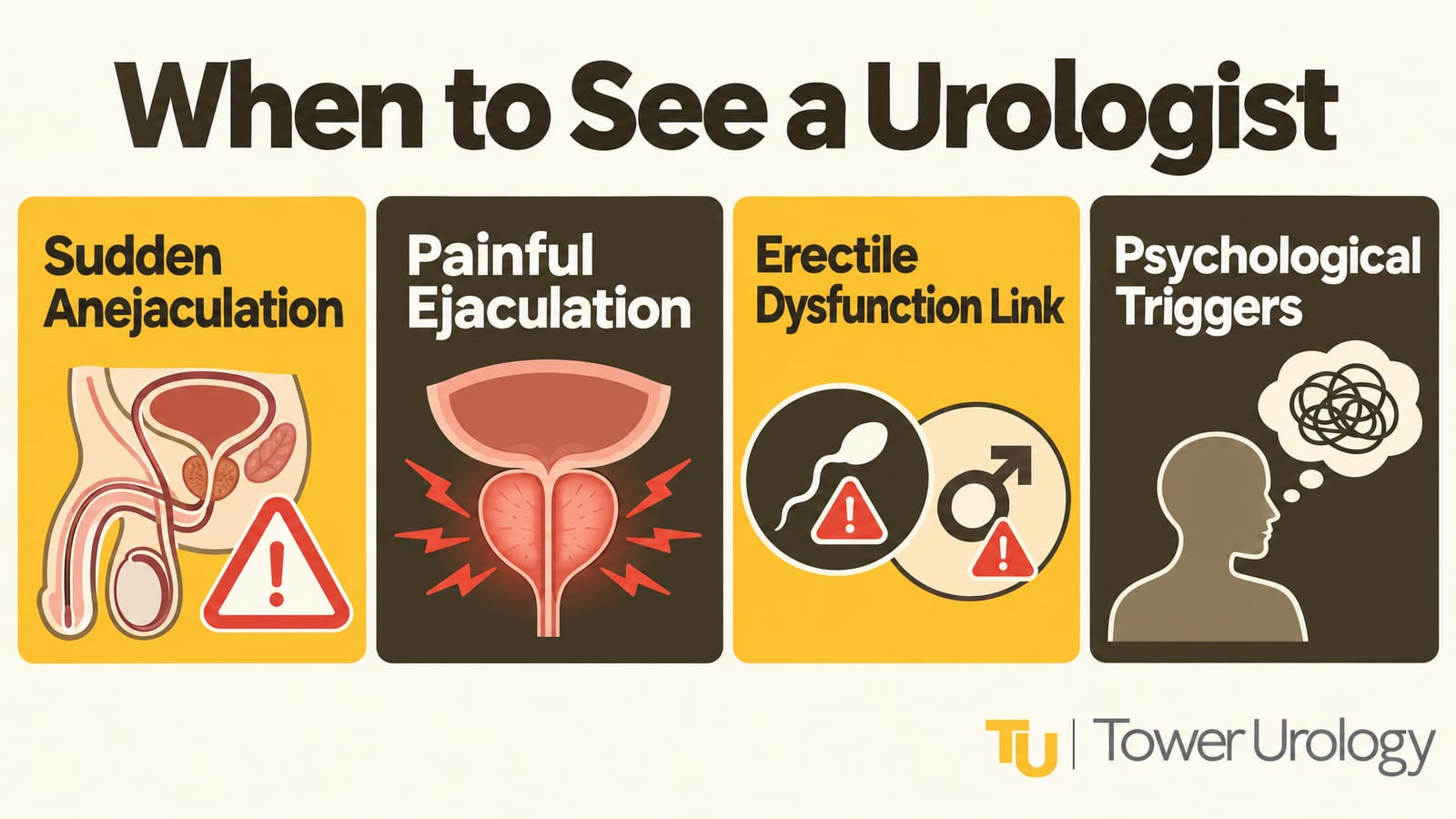
Complete anejaculation or anorgasmia with sudden onset
Painful ejaculation, which can signal infection or prostate issues
Ejaculation changes accompanied by erectile dysfunction
Psychological factors – such as anxiety or relationship stress – that appear to be situational or acquired triggers
A urologist can determine whether changes reflect normal aging or an underlying condition, and discuss treatment options tailored to your health history.
Maintaining a Fulfilling Sex Life as You Age
Sexual health does not decline on a fixed schedule. Men who stay physically active, manage chronic conditions, and communicate openly with partners consistently report satisfying intimacy well into their 70s and beyond. Experience, emotional connection, and the right mindset are genuine advantages – and they only grow with time.