 Alex received an elevated Prostate-Specific Antigen (PSA) level during his yearly checkup. This led to a prostate cancer diagnosis that came at the worst possible time. Still grieving from the loss of a loved one, he couldn’t bear to bring another crisis to his family.
A personal recommendation from Dr. Gary Leach led him to Dr. Premal Desai at Tower Urology. At Tower, honest conversations about treatment options, transparent discussions about risks, and cutting-edge single-port robotic surgery changed everything. Now living in New York, Alex travels back to Los Angeles for follow-ups with the surgeon who gave him back his peace of mind.
How a routine yearly checkup and elevated PSA led to the discovery of prostate cancer
Alex explained, “It all began when I was doing my annual checkup with my primary care doctor. We discovered I had an elevated PSA. My doctor monitored the results and recommended I see a specialist to find out what was really going on.”
That progression from routine screening to concerning result is common, but it never feels routine when it happens to you. While an elevated PSA doesn’t always indicate cancer, it does require further investigation since higher levels can also signal benign prostate enlargement (BPH) or inflammation. Still, the uncertainty about what an elevated PSA might mean creates immediate anxiety.
“So, I know Dr. Gary Leach personally, through one of the clubs we both belong to, and he is such a blessing,” Alex continued. “He told me, ‘I will tell you what I would tell one of my family members,’ and he went on to recommend one of his top doctors, Dr. Desai.”
Personal recommendations carry significance, especially when they come from a trusted physician. Dr. Leach’s endorsement, framed as what he’d tell his own family, gave Alex confidence as he faced this frightening situation.
What does comprehensive prostate cancer testing with Dr. Desai look like before surgery?
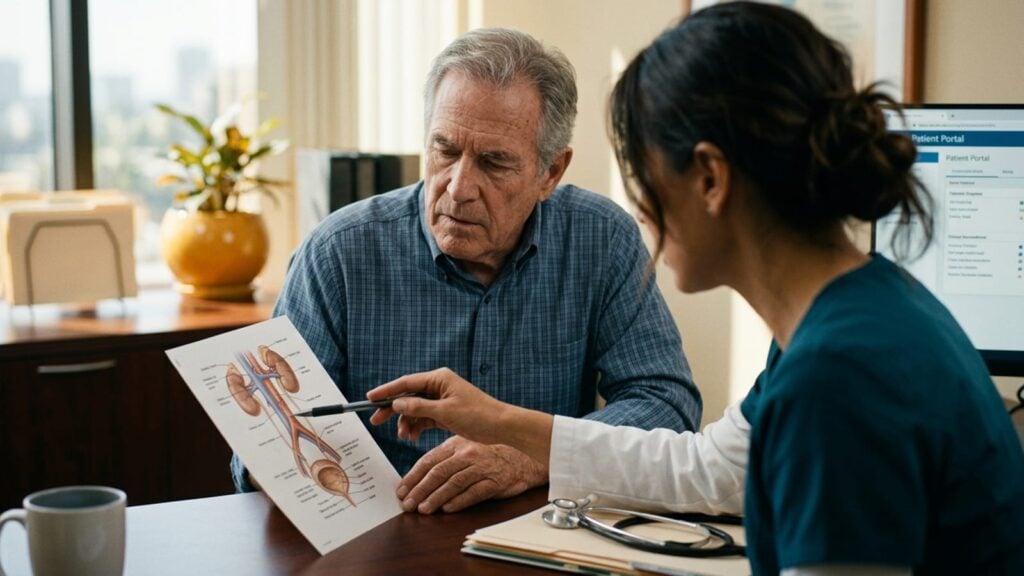
“So, I made an appointment with Dr. Desai, and I went to see him. He wanted to do additional testing,” Alex recalled. “We did two tests. First to check for a problem and then to check the stage of the problem. We found out that I had prostate cancer.”
This thorough approach, which includes multiple biopsies to accurately stage Alex’s localized prostate cancer, demonstrates the kind of careful assessment that leads to appropriate treatment recommendations. Understanding the extent and aggressiveness of cancer cells determines which surgical procedures or other treatment options make sense.
Why did Dr. Desai present multiple prostate cancer treatment options without pressure?
Expert professionals in urologic surgery like Dr. Desai have an extensive knowledge base of treatment options and possible outcomes. However, for people like Alex who are experiencing prostate cancer for the first time, there is a learning curve. It will take them time to understand which option is best for their unique, personal situation. Usually, being under pressure to make a decision does not lead to the best possible outcome. Dr. Desai understands this.
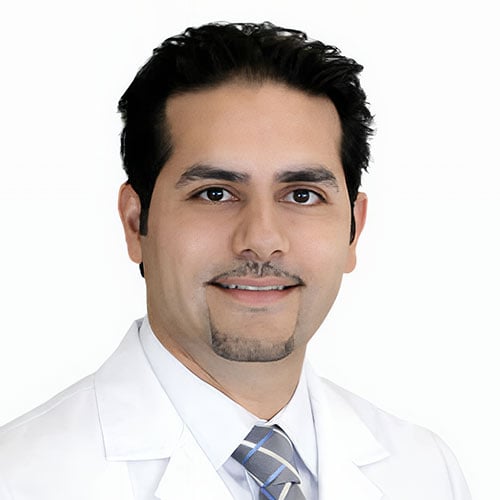
“Dr. Desai gave me a few options, like the wait-and-see approach, and another option to insert something into the prostate to target and treat the cancer with ultrasound or radiation, or a total prostatectomy,” Alex explained. “He told me the pros and cons of each. He didn’t pressure me in one direction or another; he wanted me to make the decision that was best for me.”
Presenting options from active surveillance to focal therapy to robot-assisted radical prostatectomy respects patient autonomy while providing expert guidance. For some men with very early-stage disease, watchful waiting makes sense. For others, targeted treatments offer a middle ground. For Alex, understanding all the options helped him make an informed choice.
“We recently experienced a family loss,” Alex told us. “I lost my son, and as I reflected on this, I didn’t want to bring more hardship to my family. I wanted to get rid of the cancer in the safest way possible for me, which was the least risky.”
Alex needed certainty, not uncertainty. He wanted the cancer gone, not monitored.
What makes Dr. Desai’s transparency about surgical risks different from that of other surgeons?
Many patients worry that surgeons either downplay risks or oversell outcomes. Dr. Desai does neither. Instead, his honest discussion about potential effects on continence and sexual function, including realistic probabilities rather than guarantees, builds trust. Understanding what could happen, even if unlikely, helps patients prepare mentally, accept their decision, and better cope with the outcomes (even if they are unexpected).
After Alex chose a total robotic prostatectomy, “Dr. Desai outlined the risks of the procedure, including how it could affect my urinary and sexual function,” Alex explained. “He was very transparent and upfront, which I deeply appreciated.”
“I sought opinions from people I trust, and they confirmed that the option I was considering, prostatectomy, was a valid choice,” Alex continued. “And Dr. Desai is among the best urologists anywhere. My people reassured me that I was in good hands, and it was helpful to hear that the option I was considering was probably the best.”
That external validation confirmed what Alex felt during his consultations with Dr. Desai: Dr. Desai’s blend of surgical skill in minimally invasive procedures and sincere communication built trust.
Why does single-port robot-assisted radical prostatectomy deliver better outcomes, faster recovery and less pain?

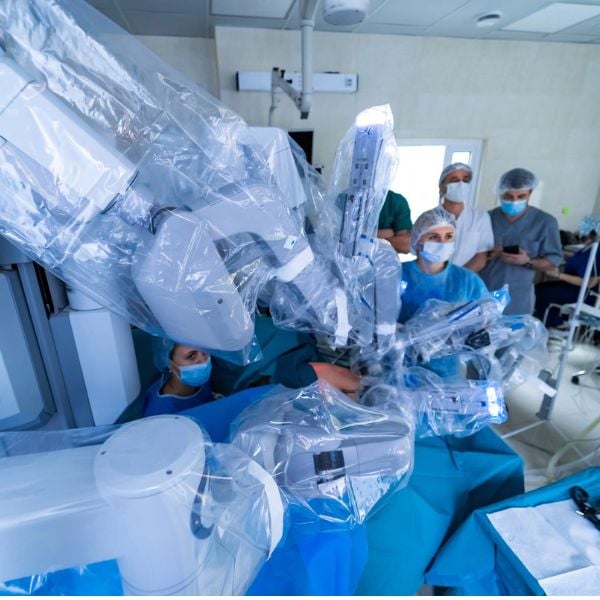
The first reason is the reduced number of incisions. Dr. Desai performed an extraperitoneal single-port robotic surgery, an advanced technique utilizing the Da Vinci SP robot system. Unlike traditional multiport robotic surgery that requires multiple small incisions, single-port robotic surgery uses just one small incision.
The second reason is that the surgery takes place outside the abdominal cavity. The extraperitoneal approach, accessing the prostate without the need for an abdominal surgery, further reduces surgical trauma. This technique, combined with the Da Vinci single-port robotic system, represents the cutting edge of urologic procedures for prostate cancer.
Thirdly, the Da Vinci SP robotic platform, which can be used for radical or simple prostatectomy, enables precise nerve-sparing techniques through enhanced visualization and control, improving sexual function and continence outcomes.
This SP system approach, which is part of the latest advancements in robotic platforms, offers potential benefits including less postoperative pain, reduced blood loss, and faster recovery compared to conventional laparoscopic or multiport methods. There is also the potential for same-day discharge.}
“Everything with the procedure went very smoothly,” Alex reported. “He did a tremendous job, and I had no complications afterward.”
Dr. Desai’s persistent post-surgery follow-up is appreciated by patients
“Post-surgery, he was always checking in, asking how everything was. I know he is very busy, but he always wanted to know how I am,” Alex emphasized. “He always follows up, even now. My wife was very happy with him, too. He is a ten out of ten. He did a great job and was very nice.”
In the perioperative period and beyond, consistent communication from your surgeon provides reassurance. For Alex’s wife, watching her husband go through cancer treatment while still processing the loss of their son, Dr. Desai’s attentiveness offered comfort during a vulnerable time.
“My daughter is a doctor, and the quality I value the most in a physician is being competent, that they truly know what they are doing,” Alex reflected. “Sometimes, though, with the best doctors, being friendly and well-spoken can fall by the wayside.”
“But that was not the case with Dr. Desai. He is such a highly skilled doctor who’s also very kind and caring. He treated me extremely well, always told me the truth, and made me feel very comfortable the entire time,” Alex noted.
The combination of exceptional surgical expertise and genuine kindness creates the complete package. Dr. Desai’s mastery of robotic prostatectomy, including the most advanced single-port robotic techniques, paired with his transparent communication and compassionate approach, delivered both excellent functional outcomes and emotional support.
Why does Alex still travel from New York to see Dr. Desai for cancer follow-up care?
The answer is excellent care.
Alex’s story illustrates what excellent cancer care looks like: accurate diagnosis, honest discussion of options, respect for patient autonomy, surgical excellence using the most advanced techniques, consistent follow-up, and genuine human connection throughout.
“I had to move to New York for work, but I still fly six hours each way to see Dr. Desai for my follow-ups. And I plan to continue seeing him to make sure everything looks good,” Alex explained.
“The surgeon who walked me through the scariest time of his life, who answered every question honestly, who performed cancer surgery with precision and care, who checked in consistently afterward, that’s not a relationship you abandon just because geography changes.”
Why choose Tower Urology for advanced single-port robotic prostate surgery?
First, at Tower Urology, specialists like Dr. Desai offer the latest advancements in minimally invasive surgery, including single-port robot-assisted radical prostatectomy using the Da Vinci SP robotic system. Second, whether you’re facing an elevated PSA requiring investigation, dealing with a new prostate cancer diagnosis, or seeking a second opinion about treatment options, comprehensive expert care is available. And as you read above, our excellence includes a genuine human connection because our approach is personal—we treat patients, not just pathology.
We invite you to establish care with Tower Urology. Please make an appointment online or call us at (310) 854-9898.
Tower Urology is a proud affiliate of Cedars-Sinai Medical Center, ranked #1 in California and #2 nationwide by U.S. News & World Report. Our years of experience and access to world-class facilities ensure exceptional urological care.
Tower Urology is conveniently located for patients throughout Southern California and Los Angeles, including Beverly Hills, Santa Monica, West Los Angeles, West Hollywood, Culver City, Hollywood, Venice, Marina del Rey, Burbank, Glendale, and Downtown Los Angeles.
Sources:
Radical Perineal Prostatectomy Makes a Comeback Thanks to Robotics
https://consultqd.clevelandclinic.org/radical-perineal-prostatectomy-makes-a-comeback-thanks-to-robotics
Screening Tests for Prostate Cancer
https://www.cancer.org/cancer/types/prostate-cancer/detection-diagnosis-staging/tests.html