What Is Peptide Therapy for Men?
Amino acids are the body’s natural building blocks for protein. When short chains of amino acids link together, they form peptides – signaling molecules that tell your body to perform specific biological tasks. Peptide therapy introduces targeted peptides to stimulate processes that slow down with age: hormone production, tissue repair, immune regulation, and cellular health.

For men, peptide therapy is increasingly used to address the hormonal decline that begins in the late 20s and accelerates through the 40s and beyond. Clinical applications include:
Supporting optimal testosterone and natural hormone production
Increasing lean muscle growth and aiding fat loss
Improving cognitive function and energy
Enhancing sexual performance and libido
Accelerating injury recovery and reducing inflammation
Improving collagen synthesis, skin elasticity, and metabolic health
Supporting healthspan and anti-aging goals
Who Is a Good Candidate for Peptide Therapy?
The benefits of peptide therapy are most pronounced in men experiencing age-related hormonal decline or specific health challenges. Ideal candidates include:
Men over 35 who notice reduced energy, muscle mass, or libido as natural peptide and hormone production declines.
Athletes and active individuals seeking faster recovery, better performance, and more effective injury healing.
Men with hormonal imbalances, including low testosterone, reduced libido, or erectile dysfunction.
Men managing chronic conditions such as obesity, diabetes, or cardiovascular disease, which can disrupt peptide and hormone regulation.
Men with lifestyle stressors – poor diet, inadequate sleep, chronic stress – that accelerate hormonal decline.
Men experiencing persistent fatigue despite adequate rest.
At Tower Urology, we see men from all walks of life – executives, weekend warriors, and retirees – seeking to optimize their health through peptide therapy.
How We Diagnose the Need for Peptide Therapy
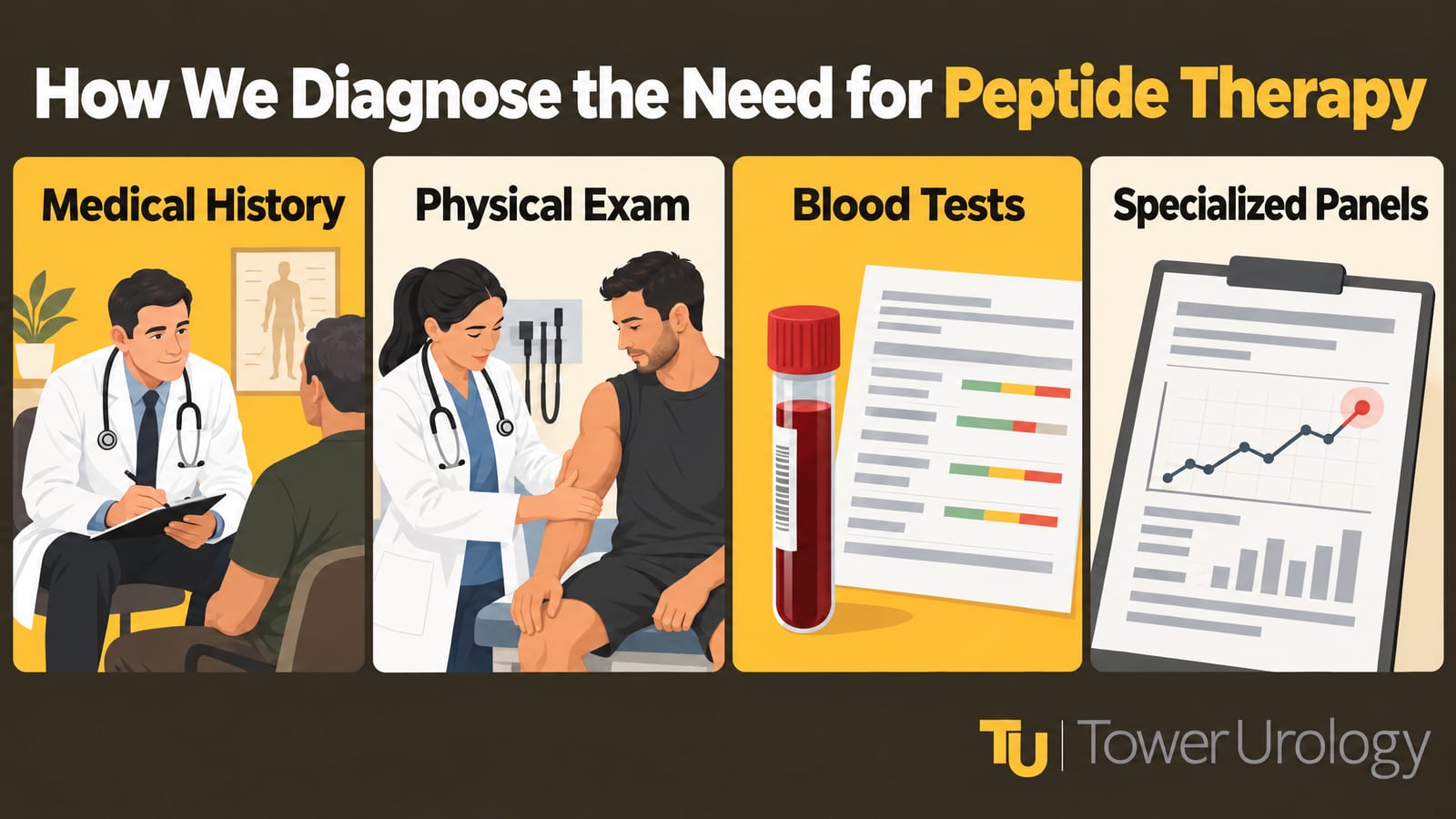
Diagnosis begins with a comprehensive evaluation at Tower Urology:
Medical history review: We listen carefully to assess your symptoms, lifestyle, and risk factors.
Physical exam: To identify underlying issues such as muscle loss or fatigue.
Blood tests: To measure testosterone, growth hormone, IGF-1, and other relevant markers.
Specialized assessments: Inflammation markers or metabolic health panels when indicated.
What age should men start peptide therapy?
There’s no single magic number, but most men fall into one of two camps: those who start peptide therapy as a preventive measure in their late 20s to early 30s, and those who turn to it for restoration in their 40s, 50s, and beyond. Both approaches are valid – the right timing really depends on what your body is telling you right now.
In your late 20s and early 30s, natural growth hormone output begins its slow, steady decline – even if you feel fine on the surface. Some men in this age group use men’s peptides proactively to support recovery, maintain lean muscle, and protect the hormonal foundation they’ve built. Think of it less like treating a problem and more like maintaining a high-performance engine before it starts knocking.
By your 40s, the conversation shifts. Testosterone dips become more noticeable, energy flags, sleep quality drops, and sexual health concerns start creeping in. This is when many men first notice the changes described in our guide on five common changes men experience with age. Peptide therapy at this stage is about restoring what time has quietly taken away.
For men over 50, the case for peptide therapy often becomes even more compelling – particularly when low testosterone, reduced libido, or body composition changes are affecting quality of life.
The honest answer? The best age to start is whenever your symptoms – or your lab work – suggest your body needs support. At Tower Urology, our team provides personalized care and comprehensive diagnostics to help you understand where you stand and which approach makes the most sense for you.
What Age Should Men Start Peptide Therapy?
There is no single right age, but understanding the biology helps set realistic expectations.
Growth hormone and its downstream signal, IGF-1, peak in your early 20s and decline roughly 1-2% per year after that. By the late 20s to early 30s, some men notice the first signs: slower recovery, creeping body fat, less restful sleep. For men in this range, peptide therapy can serve as a preventive measure – preserving the hormonal environment that supports peak performance before significant decline sets in.
For men in their 40s and beyond, the goal shifts toward restoration. The pituitary gland produces less growth hormone, testosterone trends downward, and the cumulative effects of hormonal decline become harder to ignore. Here, peptides like Sermorelin and CJC-1295/Ipamorelin work by stimulating the pituitary to release more growth hormone naturally – rather than replacing it externally – which helps preserve the body’s own regulatory systems.
Start when your symptoms and lab values indicate a clinical need. A comprehensive evaluation at Tower Urology will determine whether peptide therapy is appropriate for your age and health profile.
Tower Urology’s Peptide Therapy Treatment Options
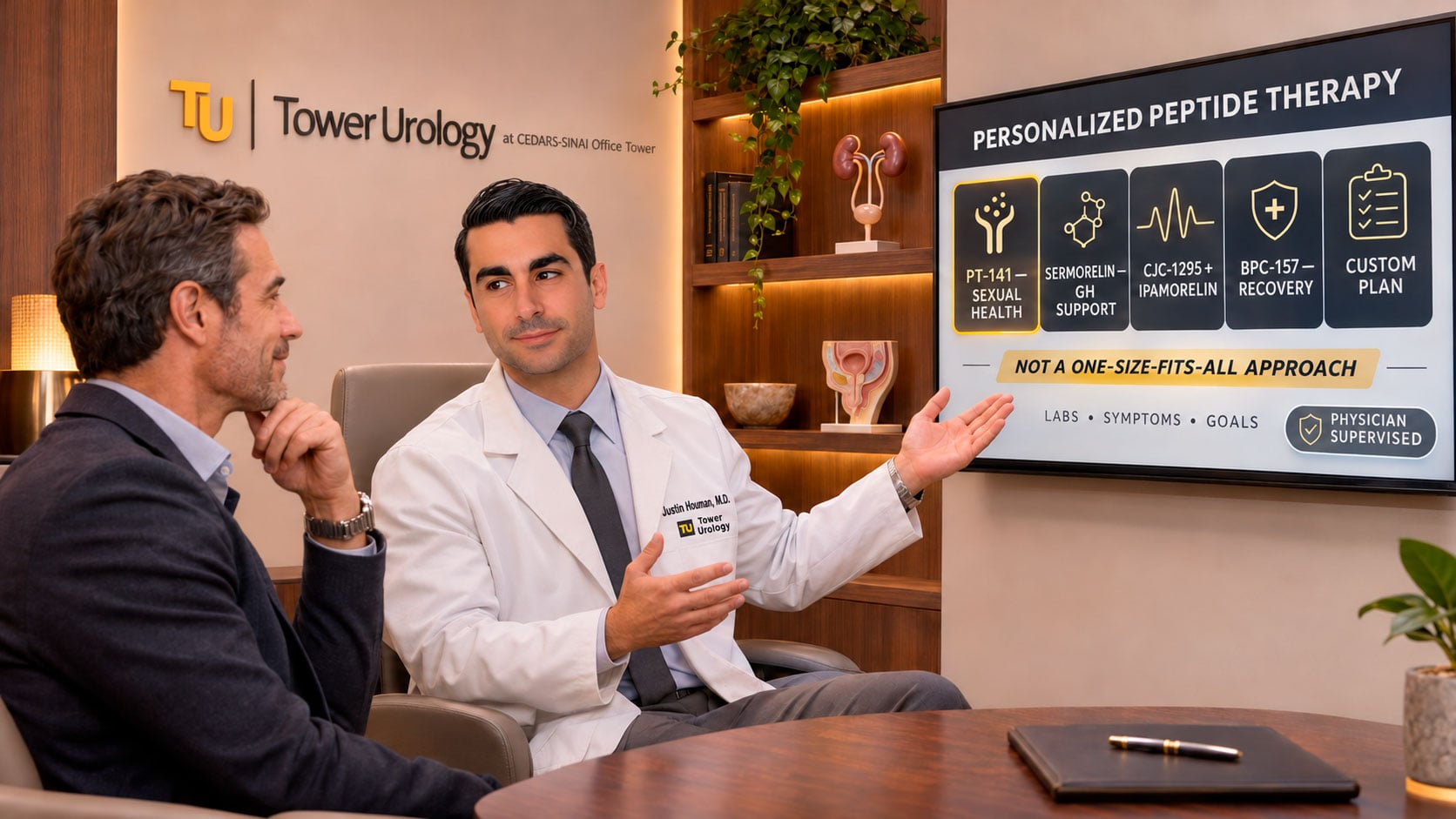
Tower Urology does not believe in a cookie-cutter approach. Our board-certified urologists offer a range of medical-grade peptides, selected and combined based on your specific goals:
Sermorelin
A growth hormone secretagogue that stimulates the pituitary gland to produce more natural growth hormone. It supports energy, lean muscle, fat metabolism, and sleep quality – with a safety profile that preserves the body’s own feedback loop rather than bypassing it.
Mechanistically, Sermorelin mimics growth hormone-releasing hormone (GHRH), binding to receptors in the pituitary and triggering a pulse of growth hormone that closely mirrors what a younger body produces naturally. Because it works with your hypothalamic-pituitary axis rather than flooding the system with exogenous hormone, the risk of suppressing your own production is significantly lower than with direct HGH administration.
For men in their 40s and beyond who are experiencing the gradual decline in GH output that begins around age 30, Sermorelin offers a clinically sound way to restore that baseline without the regulatory and safety concerns tied to synthetic HGH.
CJC-1295 / Ipamorelin
This pairing amplifies growth hormone pulses and raises IGF-1 levels, improving body composition, vitality, and weight loss. The combination is popular for men over 40 seeking meaningful restoration of their hormonal baseline.
Here’s why the pairing matters: CJC-1295 is a long-acting GHRH analog that keeps growth hormone-releasing signals elevated for days at a time, while Ipamorelin is a selective growth hormone secretagogue that triggers sharp, clean GH pulses without meaningfully raising cortisol or prolactin – two hormones that can undermine the very results you’re chasing.
Together, they work on two separate receptor pathways simultaneously, producing a synergistic spike in both growth hormone and downstream IGF-1 (insulin-like growth factor 1). IGF-1 is the molecule that actually carries out most of growth hormone’s tissue-building, fat-burning, and recovery-promoting effects at the cellular level.
Men who have tried Sermorelin alone and plateaued often find that upgrading to a CJC-1295/Ipamorelin protocol delivers a noticeably stronger response in body composition and energy within the first eight to twelve weeks.
BPC-157
A peptide with strong evidence for healing muscles, tendons, and joints. Ideal for injury recovery and men dealing with chronic inflammation. BPC-157 (Body Protection Compound 157) is a synthetic peptide derived from a protein found naturally in gastric juice. Its primary mechanism involves upregulating growth factor signaling – particularly VEGF (vascular endothelial growth factor), which accelerates the formation of new blood vessels in damaged tissue.
This makes it especially valuable for men recovering from rotator cuff injuries, Achilles tendon issues, or the kind of chronic joint inflammation that accumulates after years of training or physical work. It also shows promise for gut lining integrity, which matters because systemic inflammation often has a gastrointestinal root.
At Tower Urology, BPC-157 is frequently incorporated into protocols for men whose chronic pain or slow recovery is limiting their ability to stay active – because physical activity is one of the most powerful amplifiers of any hormonal optimization program.
PT-141 for sexual health
Unlike Viagra, which works by increasing blood flow, PT-141 acts on the central nervous system, specifically melanocortin receptors in the brain, to produce a more natural, neurologically driven libido response. This mechanistic distinction matters for men whose ED or low desire has a psychological or neurological component. In practical terms, this means PT-141 can address the desire side of sexual dysfunction, not just the mechanical side.
A man can have perfectly adequate blood flow and still experience low libido or difficulty initiating arousal – that’s a central nervous system issue, and it’s one that PDE5 inhibitors like Viagra simply aren’t designed to solve. PT-141 (bremelanotide) activates the same melanocortin pathways involved in natural sexual arousal, making it a genuinely complementary option rather than a substitute. Our urologists often recommend it as part of a broader men’s sexual health protocol that may also include testosterone optimization or shockwave therapy, depending on the underlying cause of the dysfunction.
Customized peptide blends
We combine peptides like CJC-1295 and Ipamorelin for synergistic effects tailored to your goals, something many practices cannot offer due to limited expertise in compounding pharmacy protocols. This is where Tower Urology’s evidence-based approach and relationships with licensed compounding pharmacies create a meaningful clinical advantage.
Off-the-shelf peptide supplements sold online are typically oral formulations with bioavailability that can be 10 to 20 times lower than medical-grade injectable peptides; peptide molecules are fragile, and the digestive system breaks most of them down before they reach systemic circulation. Our protocols use pharmaceutical-grade compounded peptides administered via subcutaneous injection, which delivers the active compound directly into the bloodstream at therapeutic concentrations. Your protocol is built around your lab work, your symptoms, and your goals, not a generic stack pulled from a fitness forum.
How Is Peptide Therapy Administered?
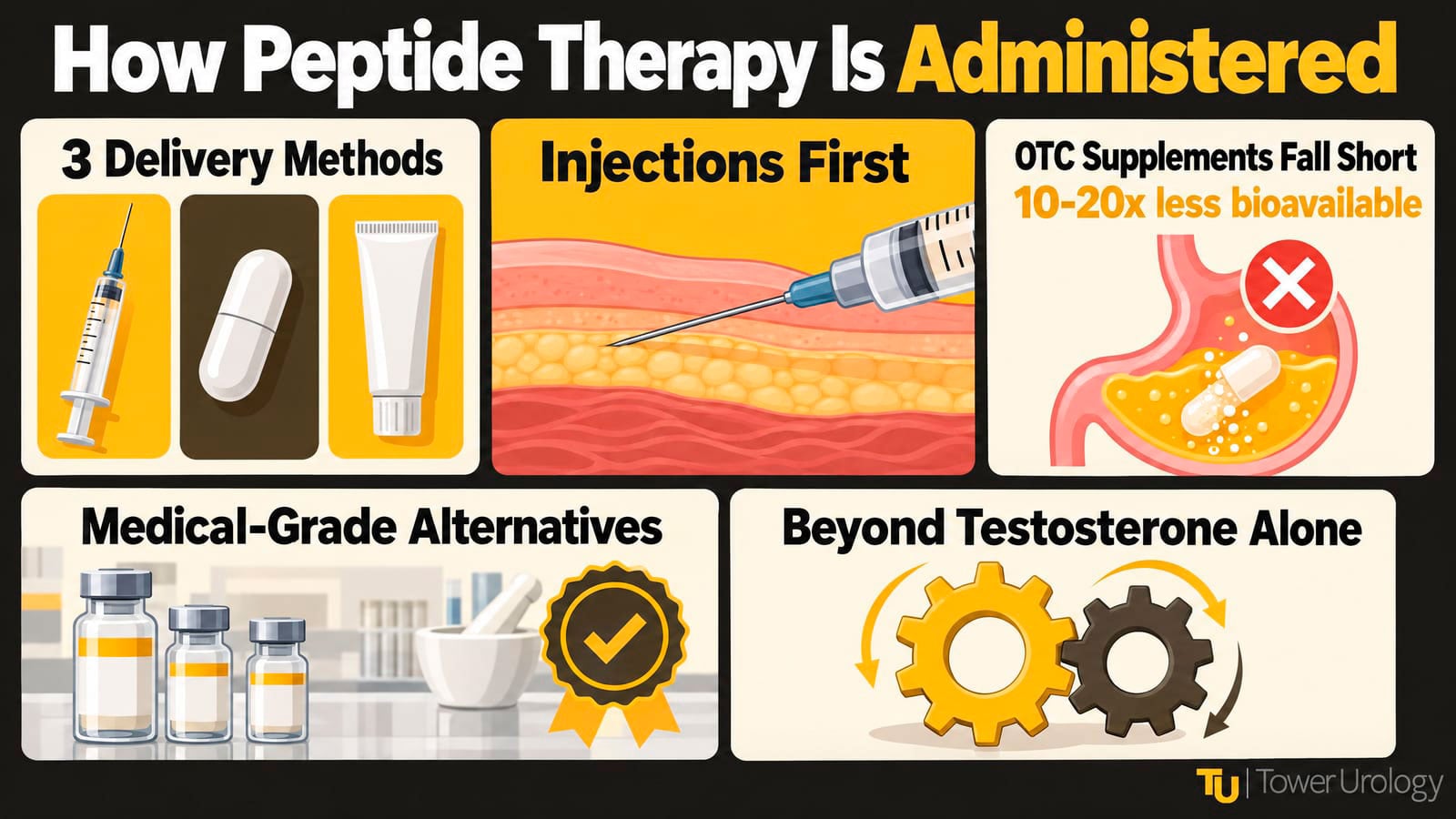
Peptides can be delivered via subcutaneous injection, oral capsule, or topical cream. The method matters significantly for results.
Medical-Grade Injections vs. OTC Supplements
Tower Urology prioritizes subcutaneous injections – a small needle placed just under the skin – because they deliver peptides directly into the bloodstream for optimal absorption. When patients prefer non-injection options, we use only medical-grade oral or topical formulations sourced from licensed compounding pharmacies.
Over-the-counter peptide supplements are 10-20x less bioavailable than medical-grade injections; most are degraded by stomach acid before they reach systemic circulation. We do not recommend or prescribe them.
We also do not rely on testosterone replacement alone. Integrating peptides to support natural hormone production reduces dependency and preserves the body’s own regulatory systems over the long term.
What Happens After Peptide Therapy?
Recovery is minimal. Injections take minutes, and you can return to daily activities immediately. Most men notice initial improvements – better sleep, increased energy – within the first few weeks. Full effects on muscle growth, body composition, and libido typically develop over 3-6 months. We monitor your progress with regular follow-ups and adjust your protocol as needed.
Are peptides safe? Risks and side effects men should know
Peptide therapy is generally well-tolerated, but that doesn’t mean it’s completely without risk – and any provider who tells you otherwise isn’t being straight with you. Here’s an honest look at what men should know before starting.
The most common side effects are mild and localized. If you’re using subcutaneous injections, you may notice temporary redness, minor swelling, or slight bruising at the injection site. These reactions typically resolve within a day or two and tend to diminish as your body adjusts to the protocol.
Beyond injection-site reactions, some men report transient fatigue, water retention, or mild headaches during the early weeks of therapy – particularly with growth hormone-stimulating peptides like Sermorelin or Ipamorelin. These effects are usually short-lived and often signal that your body is responding to hormonal shifts.
One area worth understanding is the FDA’s regulatory stance. Many therapeutic peptides are compounded medications, meaning licensed compounding pharmacies prepare them rather than mass-manufacture them. This is standard practice in personalized medicine, but it underscores why sourcing matters enormously. Medical-grade peptides prescribed and monitored by a qualified urologist are fundamentally different from over-the-counter peptide supplements, which lack the purity standards, dosing precision, and clinical oversight that make therapy safe and effective. That 10-20x bioavailability gap between OTC oral peptides and properly administered medical-grade injections isn’t just a marketing claim – it’s a clinical reality.
Men with a history of hormone-sensitive conditions, active cancer, or certain metabolic disorders should discuss their full medical history before starting. At Tower Urology, every peptide protocol begins with comprehensive lab work and a personalized evaluation, so you’re never guessing. Learn more about what doctors wish men knew about sexual health before making any treatment decisions.
Are Peptides Safe? Risks and Side Effects Men Should Know
This is a fair and important question, and we’d rather be upfront than gloss over it.

Most peptides used in men’s health are not FDA-approved drugs – they are prescribed off-label through licensed compounding pharmacies under physician supervision. “Medical-grade” means the peptide is compounded to pharmaceutical standards, tested for purity and potency, and prescribed by a licensed clinician who monitors your response. This differs significantly from buying peptide supplements online.
Common, mild side effects include temporary injection-site redness, mild flushing, and occasional water retention, particularly in the early weeks of growth hormone secretagogue therapy. Some men report transient joint pain as IGF-1 levels rise, which typically resolves with dose adjustment.
More serious risks are rare when therapy is physician-supervised, but they exist. Unsupervised use – especially with peptides sourced outside a licensed pharmacy – carries real risks of contamination, incorrect dosing, and unknown long-term safety consequences. Long-term safety data for some newer peptides is still emerging, and we are transparent about that with every patient.
At Tower Urology, our board-certified urologists oversee every protocol. We start conservatively, monitor labs, and adjust based on your individual response. If a peptide is not right for you, we will tell you.
Why Choose Tower Urology for Peptide Therapy?
You don’t have to accept decline as inevitable. Our board-certified urologists bring specialized expertise that general wellness clinics simply cannot replicate – deep clinical knowledge of the hormonal and urological systems that govern men’s health, not just familiarity with a peptide menu.
Urological specialization: We understand the interplay between testosterone, growth hormone, sexual function, and urological health at a clinical depth that informs every protocol we write.
Medical-grade peptides only: All peptides are sourced from licensed compounding pharmacies and prescribed under physician supervision – never OTC supplements. This matters because medical-grade injectable peptides deliver 10-20x greater bioavailability than the oral peptide products sold online, where stomach acid degrades most of the active compound before it reaches your bloodstream.
Integrated hormone and peptide protocols: Rather than defaulting to testosterone replacement alone, we use peptides to support and enhance your body’s natural hormone production, reducing long-term dependency and preserving testicular function.
Customized peptide blends: Our experience combining peptides for a synergistic effect is a genuine clinical differentiator. Most practices prescribe single peptides in isolation. Tower’s urologists design stacked protocols – pairing, for example, a GHRH peptide with a GHRP to amplify growth hormone release beyond what either achieves alone – safely and with ongoing lab monitoring to confirm results.
Every protocol begins with comprehensive bloodwork and a one-on-one consultation, so your plan reflects your biology, your goals, and your baseline – not a generic template.
Tower Urology serves patients throughout Southern California and the Los Angeles area, including Beverly Hills, Santa Monica, West Los Angeles, West Hollywood, Culver City, Hollywood, Venice, Marina del Rey, and Downtown Los Angeles.
Maximizing your peptide therapy results: lifestyle habits that matter
Peptide hormone therapy is a powerful clinical tool, but it works best when your daily habits are pulling in the same direction. Think of your lifestyle as the foundation – the peptides amplify what’s already there. If that foundation is shaky, you’re leaving real results on the table.
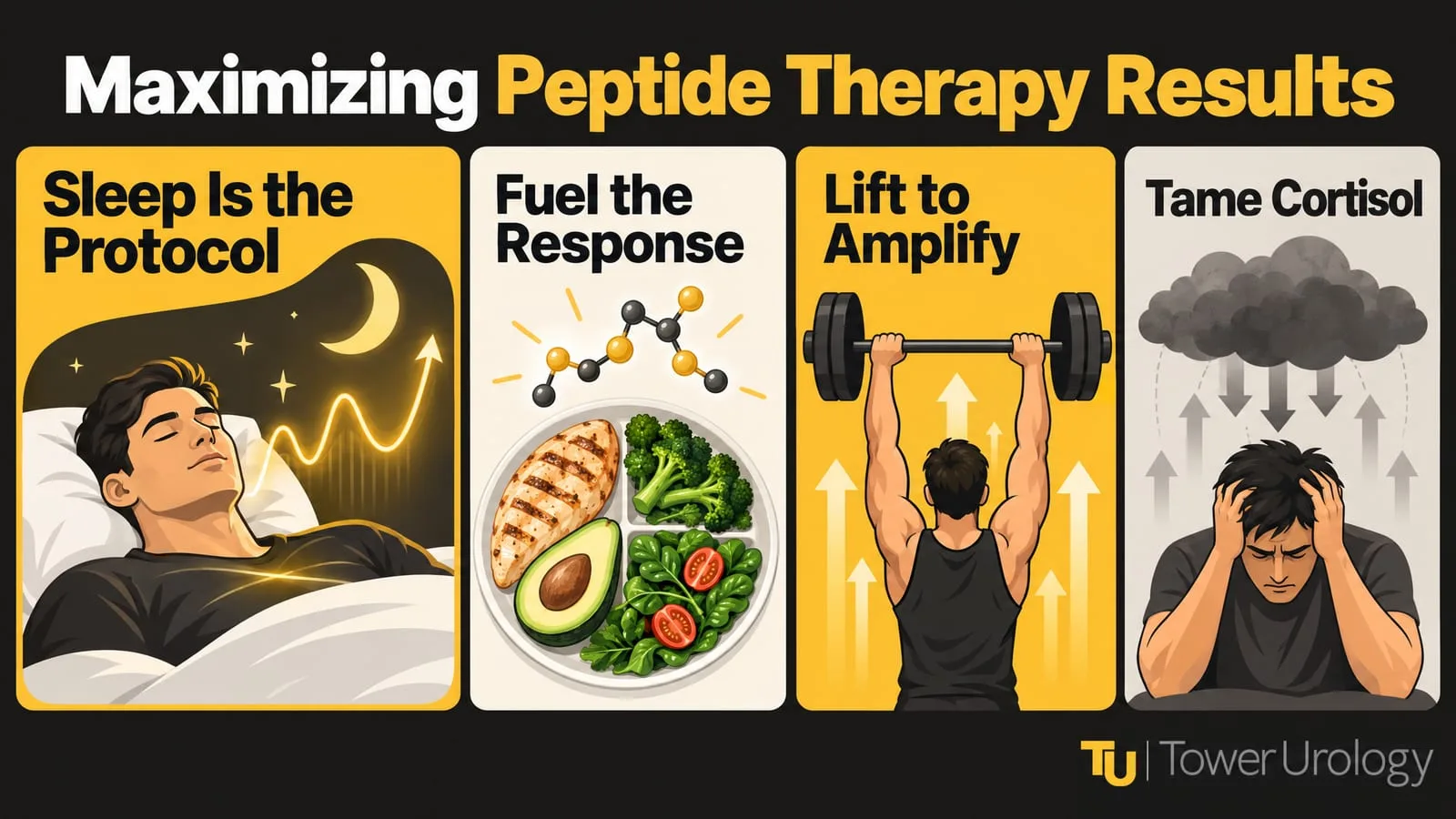
Sleep is non-negotiable. Many men’s peptides, particularly growth hormone secretagogues like Sermorelin and Ipamorelin, work in sync with your body’s natural GH pulses – which peak during deep sleep. Consistently getting seven to nine hours of quality sleep isn’t just good advice; it’s part of the clinical protocol. Chronic sleep deprivation actively blunts the hormonal response you’re paying for.
Nutrition shapes your hormonal environment. A diet rich in lean protein, healthy fats, and micronutrients gives your body the raw materials to respond to peptide signaling. Excess sugar and processed foods drive inflammation and insulin resistance, both of which work against the metabolic and sexual health benefits you’re targeting. If you’re curious about how diet directly affects your love life and hormonal health, the connection is stronger than most men realize.
Resistance training is a natural amplifier. Lifting weights stimulates the same growth hormone pathways that peptides support. Even two to three sessions per week can meaningfully enhance body composition changes and energy improvements you’d see from therapy alone.
Stress management matters more than you think. Chronically elevated cortisol suppresses testosterone and growth hormone simultaneously – essentially working against your treatment. Mindfulness, breathwork, or simply protecting downtime can measurably improve how well your body responds.
At Tower Urology, our team doesn’t just prescribe peptides and send you on your way. We take a comprehensive, personalized approach, discussing the lifestyle factors that will genuinely move the needle for you. These habits don’t replace your clinical protocol; they make it work harder. That team-based approach delivers the best possible outcomes.
Peptide Therapy FAQs

As a general treatment category, peptide therapy is not specifically FDA-approved. This is because peptides are naturally occurring substances in the body.
However, the FDA has approved individual peptide-based medications and therapies. The FDA approved these treatments after rigorous testing and clinical trials to ensure safety and efficacy. Some notable FDA-approved peptide drugs include:
- Semaglutide (Ozempic, Rybelsus) for type 2 diabetes and weight loss.
- Tirzepatide (Mounjaro/Zepbound) for weight management and glycemic control.
- Dulaglutide (Trulicity) for diabetes treatment.
Learn more about FDA-approved peptide therapies.
Most insurance providers do not cover peptide therapy. It is typically considered an elective treatment. But there are some exceptions:
- Insurance policies may cover peptide therapy if it is deemed (shown to be) medically necessary for addressing hair loss due to certain underlying conditions.
- Some plans might cover certain peptides prescribed for specific medical conditions.
- GLP-1 peptide therapy, such as Ozempic, Mounjaro, and Trulicity, may be covered, depending on your insurance.
A prescription is required for medical and therapeutic peptides. Such peptides include:
- Injectable peptides for medical purposes that a licensed healthcare provider must prescribe.
- FDA-regulated peptides used for treating specific medical conditions.
- Peptide hormones like those used in HGH therapy.
Choosing the right urologist involves evaluating credentials, subspecialty training, hospital affiliation, and diagnostic capabilities. Read our step-by-step guide to help you make the right decision.
No. Steroids are synthetic hormones that replace your body’s natural production and suppress its own regulatory systems.
Peptides are signaling molecules that stimulate your body to produce more of its own hormones, working with your biology rather than overriding it.
Most men notice improved sleep and energy within the first 2-4 weeks. Meaningful changes in body composition, libido, and recovery typically develop over 3-6 months of consistent therapy.
Yes, and the combination is often more effective than either alone. Peptides that stimulate natural growth hormone production complement testosterone therapy by addressing a different hormonal axis. Your Tower Urology physician will assess whether an integrated protocol suits you.
Viagra increases blood flow to the penis by relaxing smooth muscle; it is a vascular mechanism. PT-141 works centrally, activating melanocortin receptors in the brain to generate a neurologically driven desire response. For men whose sexual dysfunction has a psychological or neurological component, PT-141 addresses the root mechanism more directly.
Generally, no. Most oral peptide supplements are broken down by stomach acid before reaching systemic circulation, making them 10-20x less bioavailable than medical-grade injections. Medical-grade peptides prescribed through a licensed physician and compounded to pharmaceutical standards are a fundamentally different product.
Most peptide therapy protocols aren’t covered by insurance because many peptides are prescribed off-label through compounding pharmacies. Tower Urology will discuss costs transparently during your consultation so you can decide with confidence.
The best starting point is a comprehensive evaluation – medical history, physical exam, and blood work, including testosterone, IGF-1, and growth hormone markers. If your labs and symptoms indicate a clinical need, your Tower Urology physician will recommend a protocol tailored to your goals. If peptide therapy is not the right fit, we will tell you that too.