The pudendal nerve is the main nerve of the perineum – the area between the genitals and the anus. It carries sensation to and from the genitals, urethra, bladder, rectum, and perineal skin, and controls the sphincter muscles that regulate bladder and bowel function. Pudendal nerve irritation is more common in women than men and typically presents in adulthood, though it remains underdiagnosed across all demographics.
Pudendal nerve irritation is a condition where the pudendal nerve, a major pelvic nerve originating from sacral nerve roots S2, S3, and S4, becomes compressed or damaged. This irritation typically manifests as chronic pain in the perineum, genitals, rectum, or buttocks, often described as burning or stabbing, and can be exacerbated by sitting. Causes include trauma, prolonged sitting, or entrapment by surrounding tissues, with treatment options ranging from physical therapy and nerve blocks to surgical decompression. Tower Urology emphasizes a comprehensive approach to managing this often debilitating condition.

Pudendal Nerve Anatomy: Why Location Matters
The pudendal nerve originates from sacral nerve roots S2, S3, and S4. It exits the pelvis through the greater sciatic foramen, wraps around the sacrospinous ligament, and re-enters through the lesser sciatic foramen to travel through Alcock’s canal – a fibrous tunnel along the inner surface of the obturator internus muscle. Inside Alcock’s canal, the nerve is particularly vulnerable to compression and entrapment.
From there, it divides into three terminal branches: the inferior rectal nerve (serving the anal region), the perineal nerve (serving the perineum and genitals), and the dorsal nerve of the penis or clitoris. This branching pattern explains why symptoms can appear in seemingly unrelated areas, why sitting compresses the nerve directly at Alcock’s canal, and why diagnosis is so clinically challenging.
What Is Pudendal Nerve Irritation?
Pudendal nerve irritation – also called pudendal neuralgia, or pudendal nerve entrapment when the nerve is physically compressed – occurs when the nerve becomes inflamed, compressed, or damaged, producing chronic pelvic pain. The pudendal nerve originates from the sacral nerve roots S2, S3, and S4, travels through the greater sciatic notch, wraps around the sacrospinous ligament, and re-enters the pelvis through the lesser sciatic notch to run inside Alcock’s canal – a fibrous tunnel along the inner surface of the obturator internus muscle. This winding path through multiple tight anatomical corridors is precisely why prolonged sitting, cycling, or pelvic trauma can compress or irritate the nerve so easily. Because prolonged bicycle seat pressure is a classic trigger, it is sometimes called cyclist’s syndrome.
What are the Common Symptoms of Pudendal Nerve Irritation
Symptoms vary by which terminal branch is affected, but typically include:
Burning, stabbing, aching, or electric-shock-like perineal pain
Pain that worsens with sitting and eases when standing or lying down
Allodynia – pain triggered by light touch or clothing contact
Dyspareunia (pain with sexual activity)
Rectal discomfort or constipation
Reduced quality of life due to inability to sit comfortably for work or travel
Numbness or tingling in the genitals, perineum, or inner thighs
A sensation of a foreign object in the rectum or vagina (sometimes described as “sitting on a golf ball”)
Sexual dysfunction, including difficulty reaching orgasm or reduced genital sensation
No single symptom confirms pudendal nerve irritation. This condition is particularly challenging and often misdiagnosed because the pudendal nerve serves such a wide territory. Depending on which of its three terminal branches is most affected, one patient may present primarily with bladder symptoms while another experiences mostly rectal or genital discomfort. Pain is almost always one-sided, at least early on, and that asymmetry can help distinguish pudendal nerve irritation from other pelvic pain conditions. If several of these symptoms sound familiar, especially the characteristic relief when standing, a comprehensive evaluation with a specialist is an important next step toward personalized care and a better quality of life.
What Causes Pudendal Nerve Irritation?
Pudendal nerve irritation rarely has a single, obvious trigger. In most cases, it develops from sustained mechanical pressure, trauma, or structural changes that gradually compromise the nerve as it passes through the pelvis. Common causes include:
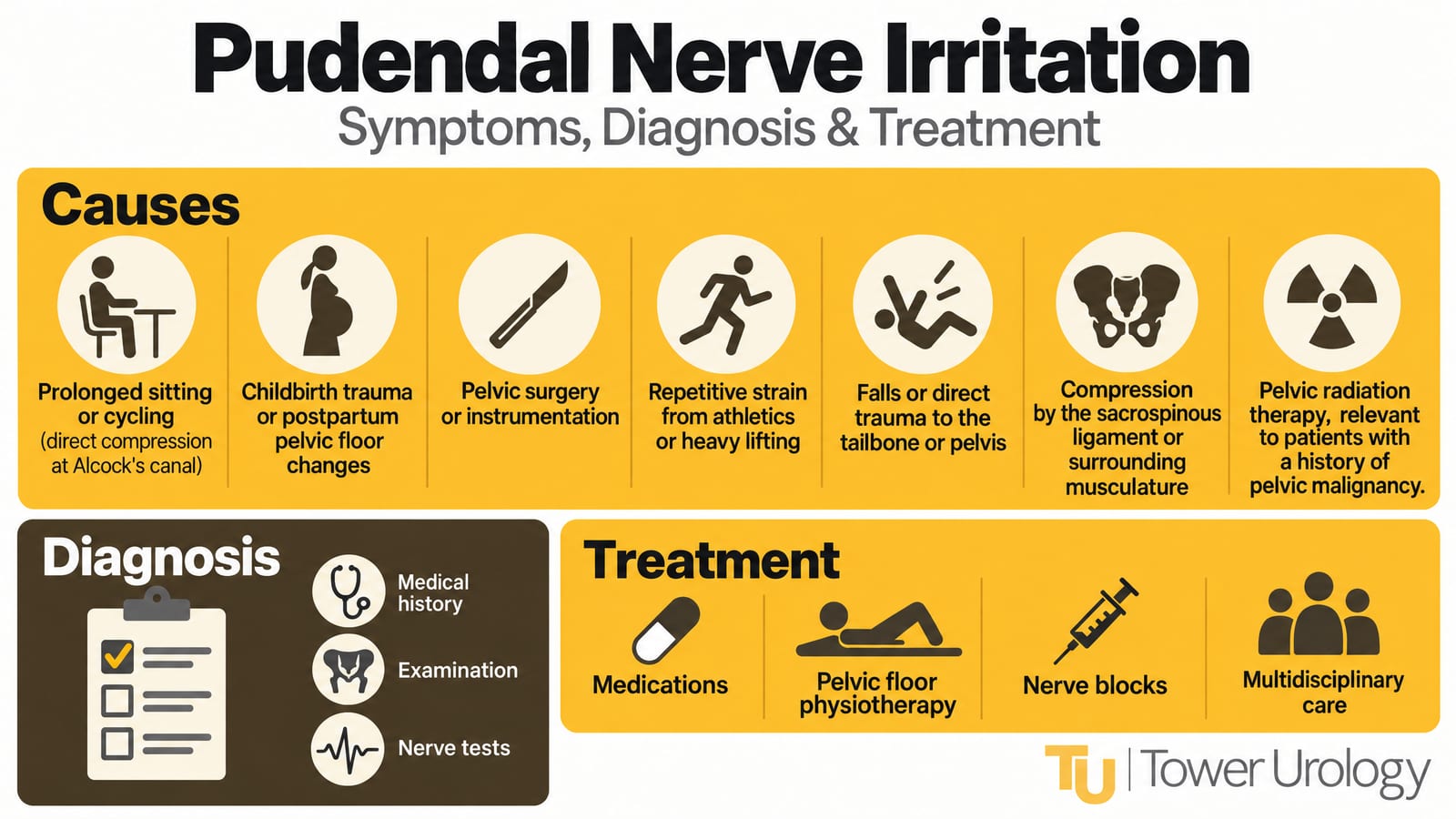
Prolonged sitting or cycling (direct compression at Alcock’s canal)
Childbirth trauma or postpartum pelvic floor changes
Pelvic surgery or instrumentation
Repetitive strain from athletics or heavy lifting
Falls or direct trauma to the tailbone or pelvis
Compression by the sacrospinous ligament or surrounding musculature
Pelvic radiation therapy, relevant to patients with a history of pelvic malignancy
That last point is worth highlighting for anyone who has undergone radiation treatment for prostate, cervical, or rectal cancer. Radiation can cause fibrosis – a gradual stiffening of soft tissue – around the nerve’s course through the pelvis, leading to irritation that may not surface until months or even years after treatment ends. If you’re experiencing new pelvic or perineal pain following cancer care, pudendal nerve involvement is a possibility worth discussing with your care team.
Who is most at risk for pudendal nerve irritation?
Understanding who tends to develop pudendal nerve irritation can help you recognize whether your lifestyle or health history may put you at greater risk. While this condition can affect virtually anyone, certain groups show up far more often in clinical practice.
Women are diagnosed with pudendal nerve irritation more frequently than men, and symptoms often first appear during or after significant pelvic events. Childbirth is a major trigger – prolonged labor, instrumental deliveries, and perineal tearing can all stretch or compress the pudendal nerve. Postpartum women who experience persistent pelvic pain, burning, or urinary changes should consider this as a possible explanation.
Cyclists are another high-risk group, particularly those who log long hours in the saddle. Narrow or poorly fitted bike seats place direct, sustained pressure on the perineum – right where the pudendal nerve travels – making this one of the most well-documented occupational and recreational risk factors.
Desk workers and sedentary individuals who sit for extended periods are also vulnerable. Prolonged sitting compresses the nerve against the ischial spine, which is exactly why so many patients describe their pain getting worse throughout the workday and improving when they stand or lie down.
Athletes who perform repetitive hip flexion movements – runners, rowers, and weightlifters, for example – can develop irritation through chronic muscle tightness around the nerve’s pathway. Previous pelvic surgeries, including procedures for post-prostatectomy incontinence, can also increase susceptibility due to scar tissue formation near the nerve.
Recognizing yourself in one of these groups is an important first step toward getting the personalized care and accurate diagnosis you deserve.
Who Is Most at Risk?
Certain groups are disproportionately affected. Cyclists and indoor spin enthusiasts face sustained perineal pressure. Postpartum women may experience nerve stretch or compression during delivery. Desk workers and long-haul drivers spend hours seated each day. Runners and athletes who perform repetitive hip-flexion movements can irritate the nerve through muscular tension. Women overall are diagnosed more frequently than men, likely due to anatomical differences in the pelvic floor and the additional stressors of pregnancy and childbirth.
How Pudendal Nerve Irritation Is Diagnosed
Diagnosis is primarily clinical, and because pudendal nerve irritation shares symptoms with so many other pelvic conditions, a structured, methodical approach is essential. The internationally recognized Nantes criteria provide that framework: five clinical benchmarks that help specialists confirm nerve involvement before committing to treatment.
Pain in the anatomical territory of the pudendal nerve – discomfort localized to the perineum, genitals, rectum, or anus, consistent with the nerve’s three terminal branches.
Pain that is predominantly worse when sitting – because sitting compresses Alcock’s canal and increases pressure directly on the nerve trunk.
Pain that does not wake the patient from sleep – a key distinguishing feature, since positional relief when lying down points away from most other pelvic pain diagnoses.
No objective sensory loss on examination – irritation and entrapment typically produce pain rather than numbness, so a normal sensory exam is actually consistent with the diagnosis.
Positive diagnostic pudendal nerve block – temporary but meaningful pain relief following a targeted nerve block confirms pudendal nerve involvement and rules out purely central or referred sources of pain.
No single criterion is sufficient on its own; the Nantes framework is most reliable when multiple criteria are met, which is why an experienced specialist’s clinical judgment remains central.
Supporting investigations include electrophysiological testing – nerve conduction studies that assess pudendal motor latency and can reveal slowed conduction consistent with entrapment – and MRI to exclude structural lesions such as tumors, cysts, or significant nerve compression requiring surgical attention. CT-guided nerve blocks serve a dual purpose: they both confirm the diagnosis by delivering anesthetic precisely to the nerve and provide meaningful therapeutic relief, making them one of the most valuable tools in the diagnostic workup. A multidisciplinary approach – involving urology, pain medicine, and pelvic floor physical therapy – is considered best practice and reflects the kind of personalized, team-based care that leads to the best possible outcomes.
Treatment Options for Pudendal Nerve Irritation
Treatment follows a stepwise ladder from conservative to interventional. Because pudendal nerve irritation varies so much in severity and underlying cause, a personalized care plan – ideally coordinated across urology, physical therapy, and pain management – tends to produce the best possible outcomes.
Conservative Approaches
Activity modification: Avoiding prolonged sitting, using ergonomic cushions, and adjusting bicycle fit
Pelvic floor physical therapy: Targeted relaxation and down-training of the levator ani and surrounding musculature – this is often the cornerstone of early treatment, since a hypertonic (overly tight) pelvic floor is one of the most common drivers of pudendal nerve irritation. A skilled pelvic floor therapist uses internal and external manual techniques to release tension along the nerve’s path, including through Alcock’s canal.
Medications: Nerve-calming agents such as gabapentin or amitriptyline help dampen the abnormal pain signals traveling along the nerve. Topical lidocaine or compounded creams may also provide localized relief for perineal or vulvar symptoms.
Interventional Options
CT-guided pudendal nerve blocks: Corticosteroid injections to reduce inflammation around the nerve at the ischial spine or within Alcock’s canal. Beyond providing relief, a positive response to a nerve block is itself a valuable diagnostic clue confirming the pudendal nerve as the pain source.
Pulsed radiofrequency (PRF): Modulates nerve signaling without destructive ablation, making it a well-tolerated option for patients who respond partially to nerve blocks but need longer-lasting relief.
Ganglion impar block: Targets the ganglion impar at the sacrococcygeal junction, useful when coccydynia or rectal pain predominates
Advanced and Surgical Options
Sacral neuromodulation and dorsal root ganglion (DRG) stimulation: Implantable therapies that modulate pain signals at the spinal level, offered at specialized pain and neuromodulation centers. DRG stimulation, in particular, has shown promising results for focal pelvic and perineal pain because it can precisely target the S2-S4 nerve roots that give rise to the pudendal nerve.
Surgical decompression: Reserved for confirmed nerve entrapment unresponsive to conservative care; performed by specialized pelvic surgeons. The goal is to release any fibrous bands or ligamentous structures compressing the nerve along its course – most commonly at the sacrospinous ligament or within Alcock’s canal. While not appropriate for every patient, surgical decompression can provide meaningful, lasting relief for carefully selected cases.
Most patients with pudendal nerve irritation see meaningful improvement with a combination of conservative and interventional strategies. Early diagnosis and a comprehensive, team-based approach are key – the longer nerve irritation goes untreated, the more entrenched the pain cycle can become. If you’re experiencing chronic pelvic or perineal pain, our compassionate team at Tower Urology can help guide you toward the right next step.
Symptoms of Pudendal Nerve Irritation That Overlap With Other Pelvic Pain Conditions
Pudendal neuralgia is notorious for mimicking several other conditions, which is why the average time to diagnosis can stretch years. Understanding where the symptom overlap lies – and where the key differences are – is essential for getting the right diagnosis and the right care. Here’s how the symptom overlap breaks down:
Interstitial Cystitis (IC) / Bladder Pain Syndrome
Both IC and pudendal nerve irritation cause pelvic pressure, urinary urgency, and pain that worsens with sitting. The key distinction is that IC pain typically centers on the bladder and improves after urination, whereas pudendal neuralgia pain is not relieved by emptying the bladder and is more closely tied to perineal or genital burning. A cystoscopy that comes back normal is often the first clue that the pudendal nerve – not the bladder – is the real culprit.
Vulvodynia
Chronic vulvar burning and sensitivity can look almost identical to pudendal neuralgia in women. The differentiating factor is distribution: vulvodynia tends to be localized to the vulvar vestibule, while pudendal nerve irritation can radiate across the entire perineum, into the rectum, and down the inner thighs. Pudendal neuralgia also characteristically worsens with prolonged sitting and improves when standing or lying down – a pattern less consistently seen in vulvodynia.
Chronic Prostatitis / Chronic Pelvic Pain Syndrome (CP/CPPS)
Men with pudendal nerve irritation are frequently misdiagnosed with chronic prostatitis because both conditions produce perineal aching, penile tip pain, and discomfort with ejaculation. However, CP/CPPS typically involves the prostate gland itself and may respond to antibiotics or alpha-blockers, while pudendal neuralgia does not. If multiple rounds of treatment for prostatitis have failed, pudendal nerve involvement deserves serious consideration.
Pelvic Floor Dysfunction
Hypertonic pelvic floor muscles can compress the pudendal nerve directly, meaning these two conditions frequently co-exist rather than simply overlap. Pelvic floor dysfunction alone tends to respond well to targeted physiotherapy; if significant burning or neuropathic pain persists after treating the muscles, an underlying pudendal nerve component is likely contributing.
Coccydynia (Tailbone Pain)
Pain at the base of the spine that worsens with sitting is a hallmark of both coccydynia and pudendal neuralgia. Coccydynia is typically pinpointed directly over the coccyx and reproduced by palpating the tailbone, whereas pudendal nerve irritation produces a broader perineal or genital burning quality that is not fully explained by coccyx tenderness alone.
Because so many of these conditions overlap, a personalized, team-based approach to evaluation is essential. At Tower Urology, our specialists take the time to map your symptoms carefully, review prior workups, and pursue the precise diagnosis that leads to the best possible outcomes – rather than defaulting to the most common label.
Interstitial Cystitis(IC) / Bladder Pain Syndrome
Both cause urinary urgency, urinary frequency, pelvic pressure, and pain that worsens with a full bladder. The key difference is that IC pain is typically centered in the bladder itself, while pudendal pain is more perineal, but patients and even clinicians often can’t distinguish between them without targeted testing.
Chronic Prostatitis / Chronic Pelvic Pain Syndrome (CP/CPPS) in Men
This is one of the most common misdiagnoses. Both conditions cause perineal aching, scrotal or penile pain, painful ejaculation, urinary symptoms, and pain that worsens with sitting. Many men diagnosed with “chronic prostatitis” who don’t respond to antibiotics may actually have pudendal nerve involvement.
Pelvic Floor Dysfunction (PFD)
Overlapping symptoms include perineal pressure, pain with intercourse, urinary and bowel irregularities, and sitting-related discomfort. The relationship is also bidirectional — pudendal nerve irritation can cause pelvic floor muscle tension, and hypertonic pelvic floor muscles can compress the pudendal nerve.
Vulvodynia/ Vestibulodynia in Women
Both cause burning, stinging, or rawness in the vulvar region, pain with intercourse (dyspareunia), and sensitivity to touch. Vulvodynia is sometimes a localized manifestation of pudendal nerve dysfunction rather than a distinct condition.
Levator Ani Syndrome

Both cause chronic dull aching or pressure deep in the pelvis and rectum, often aggravated by sitting. Levator ani syndrome specifically involves spasm of the levator ani muscle, but the nerve irritation and muscle dysfunction frequently coexist.
Coccydynia (Tailbone Pain)
Tailbone pain and pudendal nerve irritation share overlapping symptoms—sitting-related pain, perineal discomfort, and referred pain into the buttocks. Both can also be triggered by falls or trauma.
Endometriosis
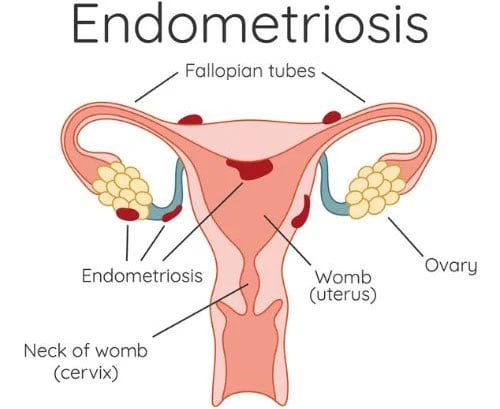
In women, both can cause deep pelvic pain, painful intercourse, and bowel-related symptoms. Endometriosis is hormonally driven and often cyclical, which helps distinguish it.
However, when both conditions coexist, the symptom picture becomes far more complex, often overlapping and intensifying discomfort. This can make diagnosis challenging and requires specialized evaluation to identify each source of pain and guide appropriate treatment.
Proctodynia / Proctalgia Fugax
Both can cause rectal pain, pressure, and spasm. Pudendal nerve irritation affecting the inferior rectal branch can closely mimic these anorectal pain syndromes.
Both can cause rectal pain, pressure, and spasm. Pudendal nerve irritation affecting the inferior rectal branch can closely mimic these anorectal pain syndromes.
The core diagnostic challenge is that the pudendal nerve supplies such a broad anatomical territory that its irritation can convincingly replicate nearly any pelvic pain condition. A pudendal nerve block that produces significant temporary relief is often the clearest diagnostic signal that the pudendal nerve is the primary driver, which is why it’s such an important diagnostic tool.
Prognosis: What Patients Can Expect
Pudendal nerve irritation is chronic, but most patients can improve meaningfully. Those with early-stage irritation – particularly from reversible causes like cycling posture or postpartum strain – often respond well to conservative care within weeks to months. Patients with true nerve entrapment may require interventional treatment, and recovery can take longer. Surgical decompression carries favorable outcomes in carefully selected cases. Honest expectations matter: complete pain resolution isn’t guaranteed, but significant pain reduction and restored daily function are realistic goals with a structured, multidisciplinary plan.
At Tower Urology, our board-certified, fellowship-trained urologists provide expert evaluation for pudendal nerve irritation and coordinate care with the specialists you need. Schedule an appointment online or call us at (310) 854-9898.