Loss of bladder control (urinary incontinence) after prostate surgery is a devastating complication that has a significant negative impact on quality of life. The ‘good news’ is that with appropriate evaluation and treatment, incontinence is usually treatable, with substantial improvement in quality of life.
Post-prostatectomy incontinence, a common side effect after prostate surgery, can be effectively managed through various treatment options aimed at restoring bladder control. These options range from conservative approaches like pelvic floor muscle exercises and lifestyle modifications to medical devices such as penile clamps. For more persistent cases, surgical interventions like male slings or the implantation of an artificial urinary sphincter (AUS) offer durable solutions to significantly improve quality of life.
It is not unusual that lack of bladder control is a problem for the first few months following radical prostatectomy. A biofeedback program may help restore bladder control during this period. When urinary incontinence persists more than 3-6 months after radical prostatectomy, appropriate bladder testing, called urodynamics, is critical to evaluate bladder and sphincter (valve) muscle function and determine the exact cause of post-prostatectomy incontinence (PPI).
Urodynamic testing is performed in the office and typically takes approximately 20 minutes to complete. The test involves filling the bladder through a special catheter inserted in the penis while measuring the pressures in the bladder. During the test, the clinician performs various maneuvers to evaluate bladder function, demonstrate urinary incontinence, and identify the cause of the urine loss.
Normally, as the bladder fills, bladder pressure changes little, and the sphincter remains closed, allowing the man to stay dry. When incontinence occurs following prostatectomy, this normal balance of bladder and sphincter function is disturbed.
Our research has defined three main causes of PPI based upon urodynamic findings:
1. High pressure (with ‘spasms’ of the bladder) developing in the bladder as the bladder fills (50% of men with PPI). These bladder spasms may be related to nerve damage that may occur as a result of the prostatectomy. These bladder spasms may cause urge incontinence (the need to rush to get to the bathroom), frequent urination, and sometimes loss of urine at night. This high-pressure bladder dysfunction can also occur following pelvic radiation therapy. Normally, when the bladder fills, the pressure remains low, even with any spasms.
2. Damage to the sphincter muscle (35% of men with PPI). This damage causes stress incontinence, characterized by urine loss during position changes, coughing, straining, or vigorous physical activity.
3. A combination of bladder spasms and sphincter damage (10% of men with PPI). Men with this combined problem usually experience “mixed incontinence” symptoms with a combination of both urge and stress incontinence.
Treatment Options for Post-Prostatectomy Incontinence
Understanding your treatment options for post-prostatectomy incontinence starts with knowing what’s driving the problem. After radical prostatectomy, incontinence typically results from one of two causes – or a combination of both. Stress incontinence happens when the urinary sphincter is weakened or damaged during surgery, causing leakage with physical activity, coughing, or sneezing. Urge incontinence occurs when the bladder itself becomes overactive, generating high pressures and sudden, difficult-to-control urges to urinate. Identifying which type you have – or whether you have “mixed” incontinence – is the first step toward choosing the right treatment. At Tower Urology, our team-based approach uses urodynamic testing and a thorough evaluation to map out a personalized care plan built around your specific situation.
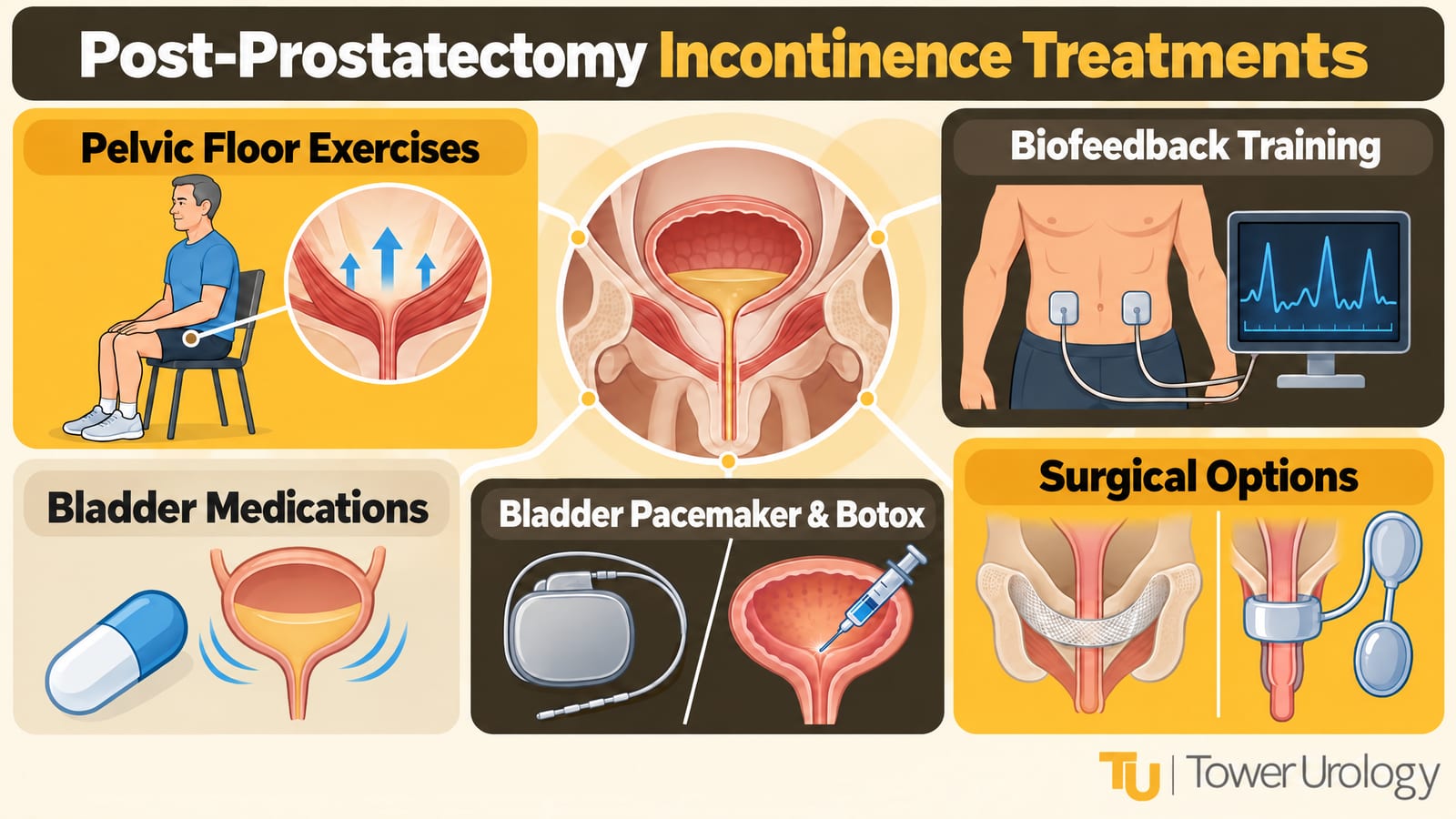
Step 1: Pelvic Floor Exercises (Kegels)
For most men, the first-line recommendation is a structured program of pelvic floor muscle exercises, commonly known as Kegels. These exercises strengthen the sphincter and surrounding pelvic muscles that support bladder control. Starting Kegels before surgery – and resuming them immediately after catheter removal – is associated with faster recovery of continence. A typical program involves contracting the pelvic floor muscles for 5-10 seconds, relaxing, and repeating 10-15 times per set, three to four times daily. Consistency is key: many men see meaningful improvement within 6-12 weeks of dedicated practice.
Step 2: Biofeedback and Pelvic Floor Training
Biofeedback and pelvic floor training may be a treatment choice in men who are incontinent and desire treatment early after radical prostatectomy (especially within the first 3-6 months following surgery). Biofeedback is also a useful treatment option in men who have more minor degrees of incontinence. The treatment program consists of weekly one-hour sessions with a trained therapist. A special sensor is inserted into the rectum and attached to the biofeedback computer. During the treatment session, the patient learns to contract and strengthen the pelvic muscles, with the resulting contraction displayed on the computer screen.
Additionally, the therapist can send an electrical signal to these pelvic muscles to help strengthen them. Each week, the goal is to strengthen the muscles. Many men experience significant improvement in bladder control with this biofeedback program.
Step 3: Bladder-Relaxing Medications
When the main cause of the incontinence is high bladder pressures, medications to relax the bladder are usually effective. These medicines work by blocking nerve receptors in the bladder. Blocking these receptors decreases bladder contractility and improves bladder spasms. Medicines to relax the bladder (generally known as anticholinergics) include Enablex, Vesicare, Ditropan XL, Detrol LA, the oxytrol patch, oxybutynin 3% gel, and imipramine.
Side effects may include dry mouth, constipation, and blurry vision. These drugs should not be used in patients with uncontrolled narrow-angle glaucoma or in men who do not empty their bladders well. A newer class of oral medication, Myrbetriq (mirabegron), is a beta-3 agonist that helps relax the bladder by stimulating different receptors in the bladder wall. Because it works through a different mechanism, Myrbetriq does not cause the typical dry mouth and constipation side effects commonly associated with anticholinergics. However, approximately 10% of those who take Myrbetriq may experience some increase in blood pressure. Many men who have not been able to tolerate traditional medications benefit from this newer option.
In select cases, your urologist may also discuss duloxetine, a serotonin-norepinephrine reuptake inhibitor that can improve sphincter muscle tone and reduce stress incontinence episodes, or PDE5 inhibitors (such as low-dose tadalafil), which have shown benefit in reducing post-prostatectomy lower urinary tract symptoms in some patients. These options are considered individually as part of a comprehensive, personalized care plan.
Step 4: Interstim Bladder Pacemaker
When oral medications fail to control high bladder pressures, the Interstim “bladder pacemaker” device can be an excellent treatment option. You can test this bladder pacemaker in the office, with 70% of patients responding promptly during the seven-day test. If the seven-day test shows a beneficial response, you can consider implantation of a permanent bladder pacemaker. This procedure is performed as an outpatient under local anesthesia.
Step 5: Botox Bladder Injection
Another option for controlling high bladder pressures when oral medications are not successful is Botox injection into the bladder. Botox is injected in an office setting through a cystoscope, with a success rate of approximately 50%. Botox typically provides benefit for about six months and requires regular repeat injections to maintain its effects. There is also a 5% risk of urinary retention associated with Botox injection. Should urinary retention occur, the patient may be required to perform self-catheterization 3 to 4 times per day until the effect of the Botox diminishes. Medicare now covers both the Interstim bladder pacemaker device and Botox injection.
Step 6: Male Urethral Sling
For men with mild-to-moderate stress incontinence caused by sphincter weakness, the male urethral sling is a minimally invasive surgical option. A mesh sling is placed beneath the urethra to provide support and reduce leakage during physical activity. The procedure is performed on an outpatient basis, and most men return to normal activities within a few weeks. The sling is best suited for men with moderate leakage – typically those using one to three pads per day – and is less effective for severe incontinence.
Step 7: Artificial Urinary Sphincter
For men with severe stress incontinence or those who have not responded to less invasive approaches, the artificial urinary sphincter (AUS) is considered the gold-standard surgical treatment. The device consists of a fluid-filled cuff placed around the urethra, a pressure-regulating balloon, and a small pump in the scrotum. The patient manually activates the pump to release the cuff when urinating; the cuff then automatically refills to maintain continence. Long-term success rates are high, and most men report a dramatically improved quality of life after implantation.
Options for treatment of sphincter damage include biofeedback, injection therapy (which is generally not successful), the artificial urinary sphincter, and the male sling procedure. Those men with “mixed” bladder and sphincter malfunction undergo initial treatment (usually with anticholinergic drugs, Interstim, or Botox) to improve their bladder function (i.e., lower their bladder pressures), followed by treatment to address the weak sphincter (if necessary). Commonly, follow-up urodynamic studies evaluate the response to each stage of therapy.
Recovery Timeline and When to Seek Further Evaluation
Most men experience some degree of urinary leakage immediately after catheter removal, and gradual improvement is the norm. Many patients regain significant continence within 3-6 months; for others, recovery continues for up to 12-18 months. If you are still using more than one pad per day after six months, or if leakage is significantly affecting your daily life, it is time to seek a comprehensive evaluation. At Tower Urology, our nationally recognized team is committed to setting a new standard for post-prostatectomy outcomes – because improvement is not just possible; it is achievable with the right expert, compassionate care behind you.
Interstim “Bladder Pacemaker”
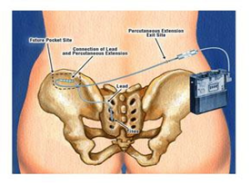
When the usual medical treatments to lower high bladder pressures are not successful, the Interstim “bladder pacemaker” may be an excellent alternative. This treatment involves an office test with placement of wires next to the nerves that control the bladder with local anesthesia. For seven days, the patient wears a battery-powered belt that sends an electrical signal to the nerves controlling the bladder, causing the bladder to relax.
The office test of the Interstim device has an approximately 70% success rate. The patient responds well to the office test; the permanent Interstim device is implanted as an outpatient procedure in the hospital under local anesthesia. This procedure involves placing a special stimulation electrode in the lower back next to the main nerve that controls the bladder (Figure 1a). This stimulation electrode is placed through a special needle under local anesthesia without the need for a large incision.
Next, the team implants an internal ‘pacemaker’ generator attached to the stimulation electrode and programs it through the skin (Figure 1b). The generator is similar to a heart pacemaker and contains a battery that typically lasts 8 to 10 years.
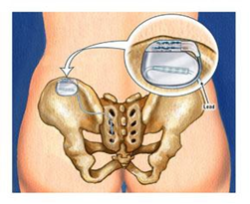
Overall, approximately 70% of patients respond to the office trial of test stimulation. With permanent implantation, about 85% of patients respond excellently. Use of the Interstim “bladder pacemaker” is an effective, relatively “non-invasive” treatment option for those patients who have high-pressure bladder dysfunction and do not respond to the usual forms of medical treatment.
Surgical treatments of stress incontinence due to sphincter damage following prostatectomy include the Artificial Urinary Sphincter (AUS) and the Male Sling Procedure. In general, injection therapy (i.e., collagen, Durasphere, etc.) has not been successful in men with sphincter weakness. This lack of success is because the injected material migrates away from the sphincter area after injection.
The Artificial Urinary Sphincter (AUS)
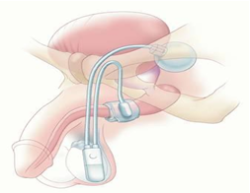
Perfected over the last 30 years, the artificial urinary sphincter is a device implanted to correct stress incontinence in men with significant sphincter damage. The AUS has three components: a cuff that helps close the urethra, a pump placed in the scrotum, and a pressure-regulating balloon placed in the lower abdomen (see Figure 2). When the man wants to urinate, he squeezes the pump in the scrotum, which opens the cuff around the urethra. After 3-5 minutes, the fluid returns to the cuff, allowing it to close automatically. After the device is tested during surgery, the cuff is “locked” open and is only activated when swelling around the pump is gone (usually about 4-6 weeks after surgery).
With the current model of the AUS, long-term patient satisfaction has been excellent, with a mechanical malfunction rate of less than 15% at 10 years after device implantation. Despite these excellent long-term results, however, some men are hesitant to have this prosthetic device placed. For these men, as well as for those with more minor degrees of PPI (or for men who do not have the manual dexterity to squeeze the pump in the scrotum), the male sling is a promising alternative.
Male Sling Procedure
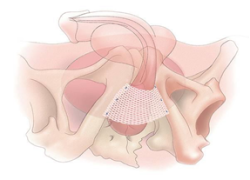
Over the last few years, the male sling procedure has become a viable treatment alternative for men with PPI due to sphincter damage causing stress incontinence. The “best” candidates for the male sling are men with more minor degrees of stress incontinence (< 2 pads/day), men with no previous history of pelvic radiation therapy, and men who have not had a previous AUS inserted. The sling implantation procedure takes about one hour and can be done on an outpatient basis or with an overnight hospital stay. The “sling” compresses the urethra and helps eliminate urine loss with coughing, sneezing, or vigorous activity.
The sling is placed via an incision between the scrotum and rectum (see figure 3). In the author’s experience, the most effective sling material is a specially prepared synthetic patch that compresses the urethra. A catheter is usually left in place for 24 hours, and most men can urinate with good control immediately after removal.
Thus far, the results with the male sling in properly selected patients have been encouraging. Approximately 30% of men are completely dry, 40% are significantly improved, and 30% are considered failures. If the male sling is not effective, an artificial urinary sphincter may be a second option.
Summary
Recent advances in the evaluation and treatment of men with incontinence following prostate surgery have allowed many men to regain their urinary control and improve their quality of life. Men with significant incontinence following treatment for prostate cancer should have an appropriate evaluation (i.e., urodynamic testing) to determine the exact cause of their incontinence. Appropriate treatment based on these results usually restores bladder control and improves quality of life.
-
Post-prostatectomy incontinence: urodynamic findings and treatment outcomes
G Leach, B Trockman, and A Wong, et al.: Post-prostatectomy incontinence: urodynamic findings and treatment outcomes. J. Urology 155:1256,1996.
https://pubmed.ncbi.nlm.nih.gov/8632545/ -
Quality of life and continence assessment of the artificial urinary sphincter in men with minimum 3.5 years of followup.
F Haab, B Trockman, P Zimmern, and G Leach: Quality of life and continence assessment of the artificial urinary sphincter in men with a minimum of 3.5 years of follow-up. J. Urology 158:435-439,1997.
https://pubmed.ncbi.nlm.nih.gov/9224318/